[pageLogInLogOut]

#Raw Materials

Cotton Review: the 2018/19 season featured rollercoaster prices, with decreasing production, area and yields

Global stocks at the start of the 2018/19 season were 1% higher than the previous season at an estimated 18.7 million tonnes. At 84 cents per pound, the international reference price of cotton was lower than the previous season’s ending average of 88 cents per pound.

Highlights from the latest ‘Review’ regarding the 2018/19 season include:

  • The year started with rising prices and ended with falling prices
  • Global area decreased by 1% to 32.6 million hectares (ha) and yield declined 2% to 790 kg/ha
  • World production slipped 3% to 25.7 million tonnes
  • More than half of global stocks (52%) are now being held outside of China
  • After a few years of relative calm, world agricultural markets face policy uncertainty and trade tensions

After a 99.5 cent per pound price at the start of the season, prices fell throughout the year. Global area under cotton decreased by 1% to 32.6 million hectares. Global yield decreased slightly by 2% to 790 kg/ha but remained above the ten-year average of 776 kg/ha. As a result, global production decreased by 3% to 25.7 million tonnes.


Weakening economic growth amidst trade issues set the environment for a decrease in consumption with a near 1% loss to 26.2 million tonnes. With consumption exceeding production, global ending stocks for the season decreased by 2% to 18.3 million tonnes.

As ending stock levels in China lowered, the ratio of stocks held in China and stocks held outside of China inverted with 52% of global stocks now being held outside of China. Trade in cotton lint increased by 2% to 9.2 million tonnes with the USA, Brazil, West Africa and Australia leading in global exports.

New uncertainties have emerged in addition to the usual risks facing agriculture. Following several years of relatively calm market conditions, world agricultural markets today face mounting risks, including policy uncertainty from trade tensions. Open, transparent and predictable trade is important for the cotton market and its role as an important commodity in the global economy.

More News from International Cotton Advisory Committee (ICAC)

#Natural Fibers

ICAC to collaborate with Uzbekistan and Bizpando on regenerative agriculture

The Government of Uzbekistan has allocated 55,000 hectares of land to implement a regenerative agriculture program for cotton as part of a collaborative project with the International Cotton Advisory Committee (ICAC) and Bizpando, a company with a a blockchain-based internet platform designed to ensure supply chain compliance.

#Natural Fibers

Bangladesh becomes World's largest importer in 2024/25 after China cuts imports by 65% to 1.1 million tonnes

As we prepare to turn the calendar on 2025, world cotton lint production currently is estimated to be about 25.4 million tonnes — roughly the same as the last season — surpassing the world cotton lint consumption by 392,000 tonnes.

#Natural Fibers

ICAC announces postponement of the 83rd Plenary Meeting in Tanzania

Due to unforeseen circumstances arising from the recent developments in Tanzania, the ICAC has announced that its upcoming 83rd Plenary Meeting has been postponed. Scheduled for Nov. 17-20 in Mwanza, the delay was recommended by Tanzania, and the decision was made out of an abundance of caution, prioritizing the safety and well-being of all participants.

#Natural Fibers

World Cotton Trade declined 4.1% in 2024/25, according to ICAC's 2025 World Cotton Trade Report

Washington, DC — The International Cotton Advisory Committee (ICAC) has released the 2025 World Cotton Trade Report, which covers trade developments in raw cotton since 1980. An annual publication, it provides analysis of world trade by region; import/export projections by country; matrices of trade flows; and seasonal estimates of export commitments to date.

More News on Raw Materials

#Raw Materials

Better Cotton Initiative opens enrollment in the US with promising opportunities for producers

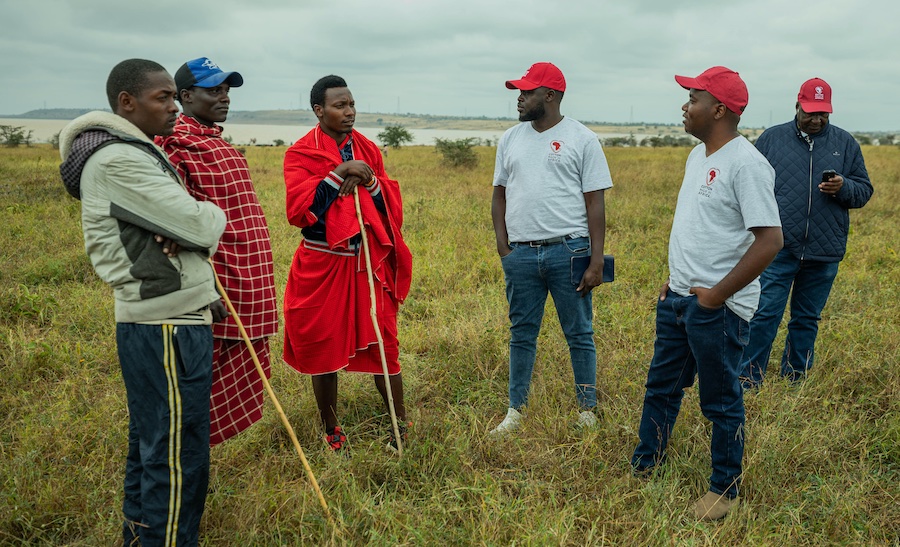
Producer enrollment for the US Program of the Better Cotton Initiative (BCI) is open until May 15 for the 2026-2027 season. With over 2,600 members spanning the cotton supply chain and more than 11,000 users of its Better Cotton Platform (BCP) as of 2025, BCI’s standard is implemented in 15 countries and covers one fifth of global cotton production.

#Natural Fibers

Modern testing methods for raw cotton

The 38th International Cotton Conference Bremen will take place from 25 to 27 March 2026 at the Bremen Parliament. This conference has traditionally stood for in-depth expertise and international exchange. The program will focus on technical innovations, market trends, and regulatory frameworks across the entire value chain – from agriculture to the circular economy. With high-profile speakers, the conference is regarded as the key meeting point for the global cotton industry. Today’s focus: Cotton quality and testing methods.

#Natural Fibers

38th International Cotton Conference Bremen: Let´s Talk about Cotton!

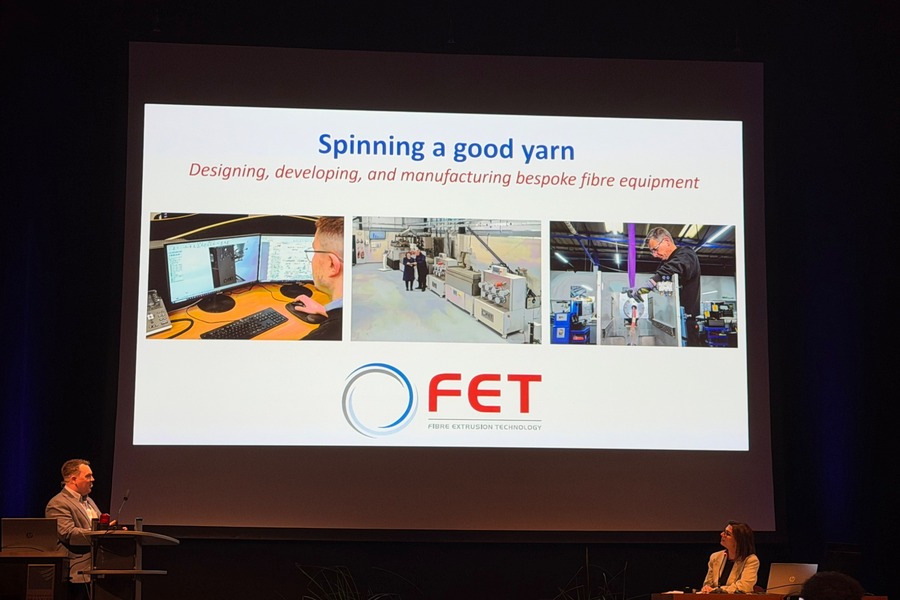
The 38th International Cotton Conference Bremen, to be held on 25-27 March 2026 in Bremen’s parliament building on market square, once again sends a powerful signal for professional excellence and international dialogue. The focus is on the latest market trends and technical innovations throughout the entire value chain – from agriculture and quality assurance to processing and the circular economy. With its high-calibre speakers, the conference remains an indispensable forum for anyone involved in shaping the cotton industry scientifically, technically, or economically.

#Natural Fibers

Human Rights Day: Cotton made in Africa reinforces its commitment to ensuring respect for human rights in cotton production

The sustainable cotton standard Cotton made in Africa (CmiA) has always focussed on respect for human rights, including by prohibiting child labour and discrimination. With the new version of the CmiA standard coming into force, AbTF raises requirements for due diligence in the areas of human rights and risk management.

Latest News

#Technical Textiles

Cinte Techtextil China 2026: redefining business encounters for trending sub-sectors and cutting-edge technologies

The essence of a good trade fair is to create chance encounters to deliver tangible business value to its participants. Driven to stay ahead, Cinte Techtextil China is constantly seeking fresh strategies to keep the industry attuned to emerging trends, pinpointing high-potential segments for technical textiles and nonwovens. With a new zone and upgraded fringe events introduced, the last edition saw an impressive 17% increase in visiting numbers[1], and this year’s fair is set to leverage that success from 1 to 3 September at the Shanghai New International Expo Centre.

#Spinning

Rieter completes acquisition of Barmag

Rieter has successfully completed the acquisition of Barmag as of February 2, 2026. This strategically important acquisition makes Rieter the world’s leading system provider for natural and synthetic fibers.

#Digital Printing

Epson launches SureColor G9000: high-production Direct-To-Film printer delivering greater productivity and reliability

Epson today announces the launch of the SureColor G9000, a new high-production Direct-To-Film (DTFilm) printer designed to meet growing global demand for flexible and efficient textile transfer printing. Expanding Epson’s DTFilm line-up alongside the SC-G6000, the SC-G9000 introduces enhanced speed, reliability and ease of maintenance for commercial garment decorators and textile producers.

#Nonwoven machines

Three ANDRITZ spunlace lines start operating at Alar Silk Road New Materials in China

Alar Silk Road New Materials and ANDRITZ have successfully commissioned three spunlace lines in crosslapped configuration at Alar’s facility in Aral City, Xinjiang, China.

TOP