[pageLogInLogOut]

#Other suppliers

Shelton Vision pushes the needle on AI-assisted quality control
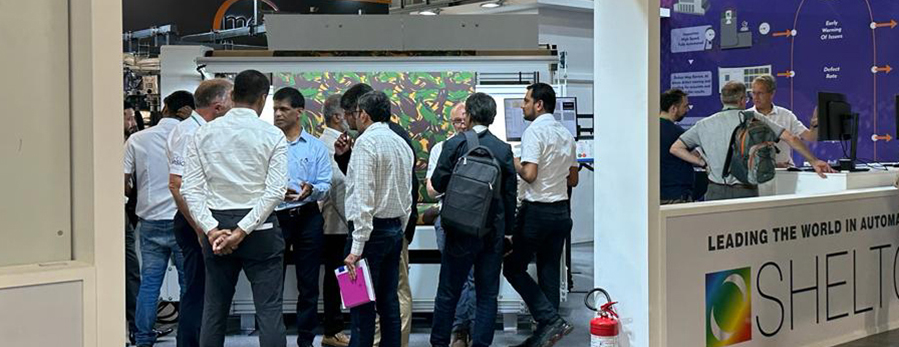
Shelton’s always packed stand at ITMA 2023 in Milan. © 2023 BTMA
Having successfully demonstrated its WebSpector automated fabric inspection system detecting faults on camouflage fabrics at speeds of up to 100 metres a minute during ITMA 2023, BTMA member Shelton Vision has secured an unprecedented number of new orders in many fields of the textile industry.

Company’s most successful ITMA exhibition in over 50 years sees demand escalate for unique automated fabric inspection systems. 

The company has subsequently been recruiting additional staff in order to beef up its operations to meet delivery times and to grow capacity for the ongoing increased demand.

“We are definitely seeing a ‘sea change’ across the textile industry, with a new generation of management rapidly embracing imaging technology and fully automated fabric inspection,” says Shelton Vision CEO and Managing Director Mark Shelton. “On top of all the throughput and first quality yield improvement benefits our automated fabric inspection can bring, companies throughout the industry, face difficulties in recruiting, training and retaining staff, especially those needed to carry out repetitive manual fabric inspection.”
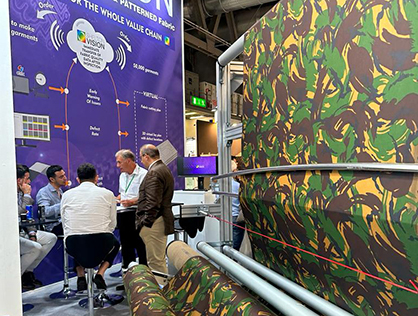
The WebSpector automated fabric inspection system was demonstrated detecting faults on camouflage fabrics at speeds of up to 100 metres a minute during ITMA 2023. © 2023 BTMA


At best, he adds, studies show that manual inspection can detect around 65% of faults present in the fabric, while the WebSpector offers automated defect detection of over 98%.

“Not only this, using machine learning, the vision system automatically trains new styles and our AI platform is continuously updating to achieve high accuracy of real time defect naming and grading to eliminate false positives and provide consistently accurate data for both roll cutting optimisation and yield increase, as well as for optimising fabric utilisation in panel cutting processes”.

Patterned fabric inspection

Building on its market leading vision system for plain, single colour textiles, Shelton’s patent-pending image processing techniques recognise and adapt to complex patterns – even those on fabric with significant distortion and deformation. Fabrics are not rigid and can be sheared or stretched while also being subject to local distortion, but the WebSpector system successfully deals with such anomalies in real time to provide a reliable inspection process at the same levels of plain fabric. The unique and advanced software techniques ensure a totally clean image, allowing the full detection of faults on fabrics running at high speeds.

Prior to ITMA 2023, the effectiveness of these techniques had already been validated through factory trials and the installation of the first systems sold.


To fully demonstrate and provide new customers with the opportunity to see the technology operating on their own fabrics, Shelton has invested in creating a purpose-built, full scale high speed in-house demonstration system at its headquarters in Leicester, UK. The increased level of interest is being further demonstrated by the constant stream of rolls now being received for new customer demonstrations .

While the automotive interiors and one-piece woven airbags sectors remain major destinations for this advanced technology, further finished fabric WebSpector systems are now currently being supplied to manufacturers of performance wear and high-end fashion, denim, outdoor upholstery, sunscreen, mattress ticking, window dressings and even carbon fibre composites. In addition to finished fabric inspection, there is also a growing demand for fabric forming/grey cloth inspection to streamline mending of both plain and patterned fabric.

Brand backing

“We are being greatly assisted by the increased quality expectations across value chains and the realisation by brands and larger corporations of what our technology can do – and on a more fundamental level, that a reliable fabric inspection system technology actually exists, after disappointments with previous technologies,” Shelton says. “These brands and corporations are actively promoting the adoption of our system to their fabric suppliers.”

“Shelton and the BTMA did some market research recently and early results show that even in lower labour cost markets there is now a strong appetite for investing in machine vision to automate the last major part of fabric manufacturing – quality control,” adds Jason Kent, CEO of the British Textile Machinery Association (BTMA). “There is huge potential for this member of the BTMA to see its technology become the preferred solution for fault-free fabric manufacturing over the next few years. In fact, it’s already happening. With a unique digital imaging technology focused on the textile industry, Shelton is now benefitting from years of organic investment in research and development and has become the preferred provider of automated textile inspection.”

Founded in 1940, the British Textile Machinery Association actively promotes British textile machinery manufacturers and their products to the world. The non-profit organisation acts as a bridge between its members and the increasingly diverse industries within the textile manufacturing sector.
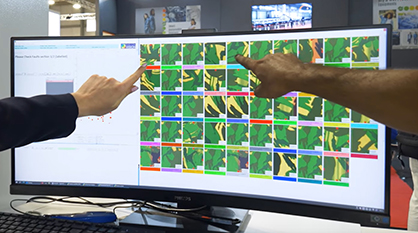

Using machine learning the vision system automatically trains new styles and Shelton’s AI platform is continuously updating to achieve high accuracy of real time defect naming and grading. © 2023 BTMA


More News from TEXDATA International

#Techtextil 2026

Performance Apparels: Functional textiles drive innovation at Techtextil 2026

From high-performance fibres and advanced membranes to smart textiles and sustainable material concepts – functional apparel is becoming one of the most dynamic innovation fields in technical textiles. At Techtextil 2026, exhibitors demonstrate how new materials, finishing technologies and digital functions are shaping the next generation of protective, workwear and outdoor systems.

#Texprocess 2026

Texprocess 2026: Automation, digitalisation and AI reshape textile processing

Investment decisions in textile processing have become increasingly complex. Rising energy prices, labour shortages and geopolitical uncertainties are forcing companies to prioritise technologies that deliver measurable improvements in efficiency and process stability. This applies not only to apparel production, but also to the processing of technical textiles and high-performance materials. Modernisation projects are therefore being evaluated more selectively – but the pressure to upgrade production systems continues to grow. Texprocess 2026 reflects this tension between cautious investment behaviour and increasing technological demand.

#Techtextil 2026

Textile Chemicals & Dyes: Innovation in Textile Chemistry moves into focus at Techtextil 2026

From PFAS-free finishes and water-saving dyeing technologies to advanced coatings and recycling-compatible formulations, innovation in textile chemistry is accelerating across the industry. Reflecting this development, Techtextil 2026 introduces Textile Chemicals & Dyes as a dedicated product segment, highlighting the growing role of chemical solutions in shaping the next generation of technical textiles.

#Recycling / Circular Economy

textile.4U publishes special edition “Top 100 Textile Recycling Companies 2025”

With a comprehensive 176-page special edition, textile.4U is dedicating its latest issue entirely to one of the most dynamic and influential topics in today’s textile industry: textile recycling. The new issue, published exclusively in high-quality print, presents the Top 100 textile recycling companies researched and selected by TexData – organizations that already play a key role in the transition to circular textiles or are expected to have a significant impact in the near future.

More News on Other suppliers

#ITMA Asia + CITME Singapore 2025

Asteks to meet the global market at ITMA ASIA + CITME Singapore 2025

Getting ready to take its place at ITMA ASIA + CITME Singapore 2025 with advanced grinding solutions and a wide range of aprons and cots, Asteks is expanding its target for the Asian market. The company, focusing on strengthening relations with current and potential customers, will highlight the “Made in Türkiye” label with its innovative and competitive products.

#Dyeing, Drying, Finishing

WickView Moisture Management Tester recognized by new AATCC industry standard

James Heal’s WickView Moisture Management Tester now has an official industry standard, with the new test method just released by The American Association of Textile Chemists and Colorists (AATCC), TM217-2025 – Liquid Moisture Management Vertical and Horizontal Wicking - Image Analysis.

#Other suppliers

New impulses for the textile care industry: Texcare 2024 supporting programme

The focus of Texcare International 2024 (6-9 November) will be on the major challenges facing the textile care industry, including automation, energy saving, circular models and textile hygiene. Together with its partners, the leading trade fair has designed a supporting programme that can offer progressive impulses for the future of the sector.

#Other suppliers

Microfactory for filter bags developed in Sweden

After an intensive few years of development, ACG Kinna Automatic and ACG Nyström – members of TMAS, the Swedish textile machinery association –have delivered the first microfactory for the production of fully finished filter bags to a major international filtration industry customer, in cooperation with JUKI Central Europe.

Latest News

#Research & Development

Textile cascade filter for removing microplastics from wastewater

Microplastics are now found almost everywhere, even in remote regions of Antarctica. They enter the human body through the food chain. Studies indicate that microplastics may have negative effects on the human health.

#Textile processing

Jeanologia showcases the future of product development

Jeanologia is showcasing how software is transforming product development in the fashion industry at PI Apparel Europe: The Fashion Technology Show, taking place on March 30–31 in London.

#Techtextil 2026

Groz-Beckert showcases cross-segment innovations for technical textiles in Frankfurt

From April 21 to 24, 2026, Groz-Beckert will present its latest innovations and solutions across the product areas of knitting, weaving, nonwovens and sewing at Techtextil 2026 in Frankfurt (Hall 12, Booth B90).

#Techtextil 2026

VANDEWIELE Group at Techtextil 2026 – Textile innovations together

The VANDEWIELEGroup will showcase its latest technologies for technical textiles at Techtextil 2026 in Frankfurt from April 21–24 (Hall 12.0, Stand C21). As a global leader in textile machinery, the group brings together specialised brands to support the evolving demands of high-performance textile applications. Visitors will discover solutions in laboratory testing, yarn joining, yarn feeding and thread tension monitoring, designed to create measurable value across the textile value chain.

TOP