[pageLogInLogOut]

#Other suppliers

WickView Grading System turns moisture management on its head

UK-based textile testing solutions provider James Heal has announced a revolutionary new grading system for moisture management testing that literally turns the assessment of wicking behaviour within a fabric on its head.

In 2019 James Heal launched their innovative WickView moisture management test instrument, enabling the wicking properties of a textile to be tested both vertically and horizontally, to better reflect real-life wear conditions. Many other instruments and test methods available test only horizontally.

The WickView instrument technology has advanced more quickly than the industry test standards, these use basic distance and time as a measure to assess the spread of moisture, rather than the exact movement in multiple directions. To address this James Heal has created a test method and system of grading to ensure systematic, accurate product testing in laboratories, and a software system that also enables the sharing of data and real-time video footage recorded of the actual test, electronically with colleagues or partners based in other locations. 
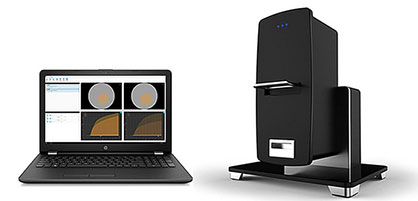
WickView in its vertical testing position alongside laptop showing example wicking test data. © 2023 James Heal


Integrated cameras are mounted either side of the test specimen within the WickView, that combined with intuitive TestWise software, uniquely track, record and measure the multidirectional movement of moisture through a fabric on both skin and face sides. Numerous parameters can be measured for comparison, and features in the software allow users to identify and discount aspects that may skew the results such as the effects of gravitational pull and run-off, giving the most precise results.

Now with the James Heal test method and grading system users can be confident that they are testing correctly to achieve the most realistic, accurate results. A wealth of data is available within the WickView software, from watching recordings of the live test on each side of the specimen through to the resulting graphs and tables showing the grades of performance across a range of parameters. Results can be read individually or in different combinations to suit the scope of the testing, enabling users to understand and interpret their meaning in the context of the textile being tested, and where needed shared via email or online with their customers such as retailers or brand owners.


James Heal Head of Technical, Guy Smithurst comments, “The WickView has pushed the boundaries of moisture management testing, and together with TestWise software offers a totally fresh approach. Having designed the instrument, written the test method and developed the grading system, the entire James Heal team including Innovation, Software Developers and Technical Specialists working in collaboration have created a new concept in this area of performance testing, providing manufacturers with a system to identify moisture movement and behavioural pattern, giving a ‘true wicking value’ of a fabric.”

Wicking is the transference and management of liquid moisture in or on a textile or garment. A good wicking fabric or textile needs to encompass characteristics which allow the movement of moisture effectively across a large area using capillary action. This is incredibly important to wearer comfort and also safety in many circumstances such as extreme heat or cold conditions.
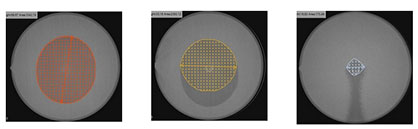
Sample images from 3 example tests, from left to right: Large wicking area indicated in orange; Yellow depicts user-selected wicking area for test data with gravitational pull discarded by the user; Small wicked area in blue selected for evaluation with moisture run off and gravitational pull discarded. © 2023 James Heal


Established in Halifax, West Yorkshire in 1872, James Heal design and manufacture textile testing instruments, which are sold worldwide. The brand became part of the wider PPT Group in 2014, with a number of sister brands each focusing on testing many aspects of materials and products.

More News from James Heal

More News on Other suppliers

#ITMA Asia + CITME Singapore 2025

Asteks to meet the global market at ITMA ASIA + CITME Singapore 2025

Getting ready to take its place at ITMA ASIA + CITME Singapore 2025 with advanced grinding solutions and a wide range of aprons and cots, Asteks is expanding its target for the Asian market. The company, focusing on strengthening relations with current and potential customers, will highlight the “Made in Türkiye” label with its innovative and competitive products.

#Other suppliers

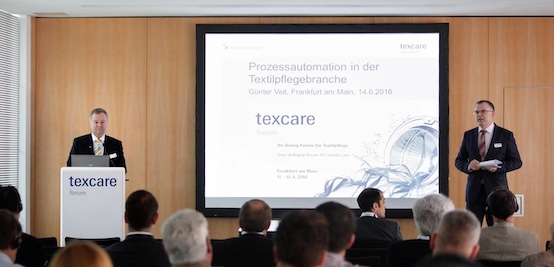
New impulses for the textile care industry: Texcare 2024 supporting programme

The focus of Texcare International 2024 (6-9 November) will be on the major challenges facing the textile care industry, including automation, energy saving, circular models and textile hygiene. Together with its partners, the leading trade fair has designed a supporting programme that can offer progressive impulses for the future of the sector.

#Other suppliers

Microfactory for filter bags developed in Sweden

After an intensive few years of development, ACG Kinna Automatic and ACG Nyström – members of TMAS, the Swedish textile machinery association –have delivered the first microfactory for the production of fully finished filter bags to a major international filtration industry customer, in cooperation with JUKI Central Europe.

#Other suppliers

Vickers Oils secures OEM approval from Lonati

Vickers Oils has announced a significant milestone in the company’s partnership with Lonati S.p.a., Italy; earning OEM approval for VICKERLUBE SOCK 46 needle oil.

Latest News

#Research & Development

Innovation center for textile circular economy inaugurated

Just over eight months after the foundation stone was laid, the new Innovation Center for Textile Circular Economy was officially inaugurated today at TITK Rudolstadt. Thuringia's Minister President Mario Voigt, TITK Director Benjamin Redlingshöfer, and other guests of honor cut the ribbon to the modern building complex and viewed the premises, which are now ready for occupancy. The “DICE – Demonstration and Innovation Center for Textile Circular Economy” is TITK's largest single investment to date. The Free State of Thuringia supported the total cost of €11.5 million with €8 million in GRW and FTI funding.

#Research & Development

Sustainable design of Geosynthetics and roof underlayments made from recyclates

Is it possible to recover plastic recyclates from previously unused waste streams in order to produce high-quality fibers and films? How can bio-based polymer fibers be manufactured so as to allow adjustable biodegradability? These are the questions being addressed by researchers from the Fraunhofer Cluster of Excellence Circular Plastics Economy CCPE in the Zirk-Tex project.

#Associations

Waste2Fashion: FTTH Committed to advancing Circular Fashion in the Mediterranean

As an official partner of the Waste2Fashion project, the Tunisian Federation of Textile and Apparel (FTTH) participated in the Kick-off Meeting held on 10–11 December in Spain. The event brought together project partners from across the Mediterranean, including Spain, Italy, Egypt, Lebanon, and Tunisia, to align on a shared vision and initiate the first implementation steps.

#Associations

AATCC announces 2025 Herman & Myrtle Goldstein Graduate Student Paper Competition winners

The American Association of Textile Chemists and Colorists (AATCC) recognized the winners of the 2025 Herman & Myrtle Goldstein Graduate Student Paper Competition. Founded in 1982 to give student members the chance to conduct and present original research, the competition was renamed in 1994 in honor of Herman and Myrtle Goldstein, following their US$60,000 endowment. Their gift is a lasting remembrance of their dedication to young people in the textile industry.

TOP


