[pageLogInLogOut]

#Nonwovens / Technical Textiles

FET's expertise in meltblown technology and processing much in demand
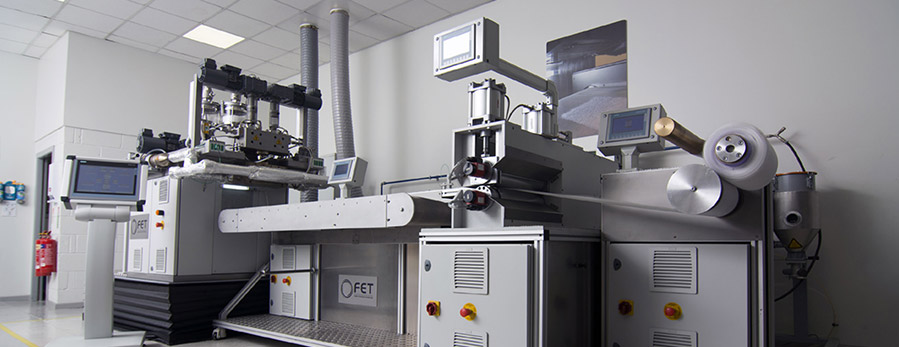
The inhouse meltblown system at FET. (c) 2020 FET
Fibre Extrusion Technology (FET), the Leeds, UK-based specialist in process solutions and equipment for the manmade yarns and fibre extrusion industry,has received unprecedented enquiries about its nonwoven meltblowing systems since the onset of the Coronavirus crisis.

“We’re currently running trials, preparing samples and defining specifications for companies in Germany and Italy, as well as the UK, and we could already have sold the lab line we have here many times over,” says managing director Richard Slack. “It’s primarily designed for R&D and pilot scale applications, but trials have proven it to be suitable for the low volume production of critical meltblown face mask materials. Some of the customers to whom we’ve supplied similar lines have already pivoted their production to this, which has generated further interest.

“We feel, however, that we are ideally placed to offer services to nonwoven companies who may be exploring alternatives to polypropylene in meltblown, due to our experience in working with such a wide range of fibre types.”
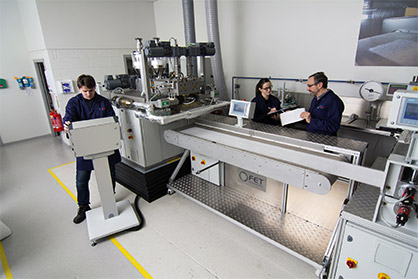
Many trials and test with sustainable polyamides and polyesters, as well as with PHAs and a range of of PLAs, have been undertaken by the company. (c) 2020 FET


Medical

FET’s meltblown system was originally developed for companies looking to process high melt viscosity medical grade resorbable polymers such as PGA (polyglycolic acid), PLLA (polylactic acid) and PGH (polyhydroxl btyrate), mainly for use in implantable products and other medical devices.

The key applications for these fibres are in hernia repair patches, staple reinforcement buttresses, artificial skin, adhesion barriers periodontal and ringival repair materials and those fortendon and ligament repair.

“Our meltblowing system provides medical companies and others dealing in such fibres with a  simpler processing route than other techniques such as needlepunchingand a wide range of structural and mechanical properties is obtainable from batch production,” Slack says. “There are also numerous options for post-processing of the webs,by calendering, point bonding or lamination.”

Performance polymers such as TPU polyurethanes and TPE thermoplastic elastomers are also processed by a number of leading sportswear companies on FET meltblown systems, while engineering polymers such as ABS and PEEK, as well as polycarbonate and halogenated polymers, are other possible raw materials.

Sustainable resins

It is in the area of sustainable resins, however, that FET believes much more can be achieved.

Meltblown polpropylene nonwovens are the critical component of the face masks needed for Covid-19 frontline workers and their scarcity on the open market has in part been the reason for the reported shortages around the world.

An estimated 40 million face masks and other disposable nonwoven-based PPE items are currently estimated to be being consumed each day, amounting to a daily 15,000-ton mountain of waste –much of which must be incinerated.

“We’ve done  a lot of work with sustainable polyamides and polyesters, as well as with PHAs and a range of of PLAs,” Slack says. “In the longer term, there has to be a more sustainable option than poypropylene in these products and the opportunity to explore potential alternatives –drawing on the know how from the extensive body of tests and trials we’ve carried out in the past, as well as the machines run commercially by our customers –is something I believe makes us pretty unique in the services we can offer nonwovens manufacturers.

Conventional meltblown and spunbonded systems are usually designed for high capacity systems and are not suitable for product development, he adds.

“They consume high quantities of materials and as a consequence are not suitable for development work with high value materials or for niche applications. They also rely on specially formulated low viscosity polymers which is a further limitation which does not apply to us.

In processing finer filaments, FET has achived structures with average mean filament diameters of 1.68 microns and 58% of between 0.5 to 1.5 microns, in web thicknesses of  37 microns with bulk density of 98 mg/ml and porosity of around 92%.

FET’s system is designed for the processing of pure polymer with no no need for processing aids or additives.

“A wide range of structural and mechanical properties areobtainable, with numerous options for post-processing of the web, such as by calendering, point bonding or lamination,” Richard Slack concludes. “More effective and sustainable PPE solutions could well be achieved through further product development.”
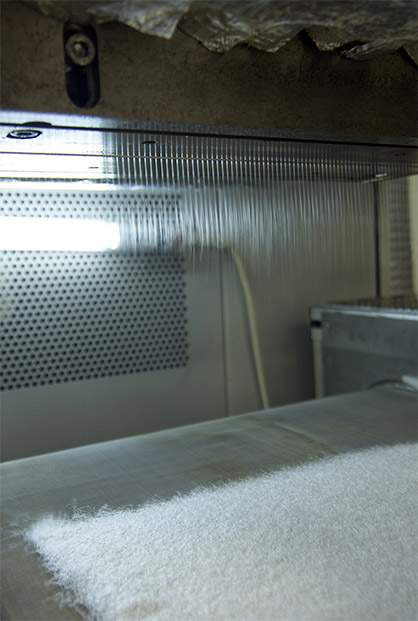

Meltblown polpropylene nonwovens are the critical component of the face masks needed for Covid-19 frontline workers. (c) 2020 FET


More News from TEXDATA International

#Texprocess 2026

Texprocess 2026: Automation, digitalisation and AI reshape textile processing

Investment decisions in textile processing have become increasingly complex. Rising energy prices, labour shortages and geopolitical uncertainties are forcing companies to prioritise technologies that deliver measurable improvements in efficiency and process stability. This applies not only to apparel production, but also to the processing of technical textiles and high-performance materials. Modernisation projects are therefore being evaluated more selectively – but the pressure to upgrade production systems continues to grow. Texprocess 2026 reflects this tension between cautious investment behaviour and increasing technological demand.

#Techtextil 2026

Textile Chemicals & Dyes: Innovation in Textile Chemistry moves into focus at Techtextil 2026

From PFAS-free finishes and water-saving dyeing technologies to advanced coatings and recycling-compatible formulations, innovation in textile chemistry is accelerating across the industry. Reflecting this development, Techtextil 2026 introduces Textile Chemicals & Dyes as a dedicated product segment, highlighting the growing role of chemical solutions in shaping the next generation of technical textiles.

#Recycling / Circular Economy

textile.4U publishes special edition “Top 100 Textile Recycling Companies 2025”

With a comprehensive 176-page special edition, textile.4U is dedicating its latest issue entirely to one of the most dynamic and influential topics in today’s textile industry: textile recycling. The new issue, published exclusively in high-quality print, presents the Top 100 textile recycling companies researched and selected by TexData – organizations that already play a key role in the transition to circular textiles or are expected to have a significant impact in the near future.

#Recycling / Circular Economy

Responsible Textile Recovery Act of 2024 signed by Governor

Senator Josh Newman (D-Fullerton) is proud to announce that Senate Bill 707 (SB 707), the Responsible Textile Recovery Act of 2024, has been signed into law by the Governor of California, Gavin Newsom. This groundbreaking legislation establishes the country’s first Extended Producer Responsibility (EPR) textile recycling program, marking a significant step forward in the state’s efforts to combat waste and promote sustainability.

More News on Nonwovens / Technical Textiles

#ITMA Asia + CITME Singapore 2025

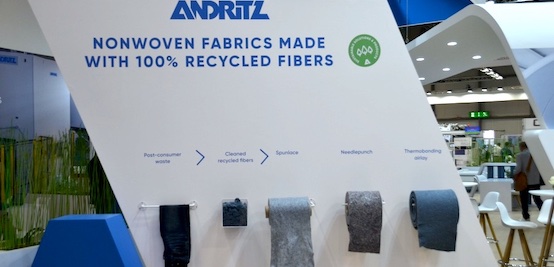
ANDRITZ sets focus on textile recycling and durable nonwoven production technologies at ITMA Asia 2025

International technology Group ANDRITZ will be presenting its innovative nonwovens production and textile solutions at ITMA ASIA + CITME 2025 in Singapore, from October 28 to 31, 2025 (Hall 2, D106). ANDRITZ will showcase its MMCF production plants, textile sorting and recycling, bast fiber processing, needlepunch, airlay, and life-cycle service technologies, with a focus on sustainable solutions. Discover how these innovations can grow your business opportunities and support a greener future.

#ITMA Asia + CITME Singapore 2025

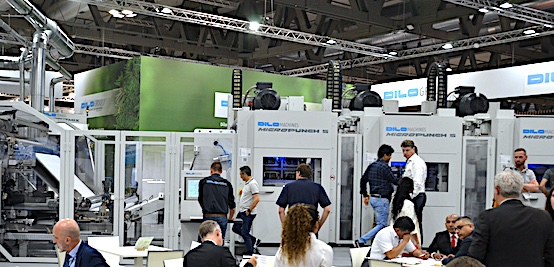
Dilo Group at ITMA ASIA Singapore 2025

At ITMA ASIA Singapore, the Dilo Group will exhibit at Booth No. H2 – D202. Together with Kansan Materials, Izmir, the company will present its latest developments and looks forward to welcoming visitors to exchange ideas and explore innovations in needling technology.

#Nonwovens

OUTLOOK™ 2025: Charting a sustainable and innovative future for the Nonwovens Industry

EDANA concluded its flagship event, OUTLOOK™ 2025, last week, marking it as a major success and addressing the biggest questions facing the industry. The three-day conference highlighted the urgent need for a unified approach to sustainability, regulation, and innovation in the absorbent hygiene and wipes sectors.

#Nonwovens

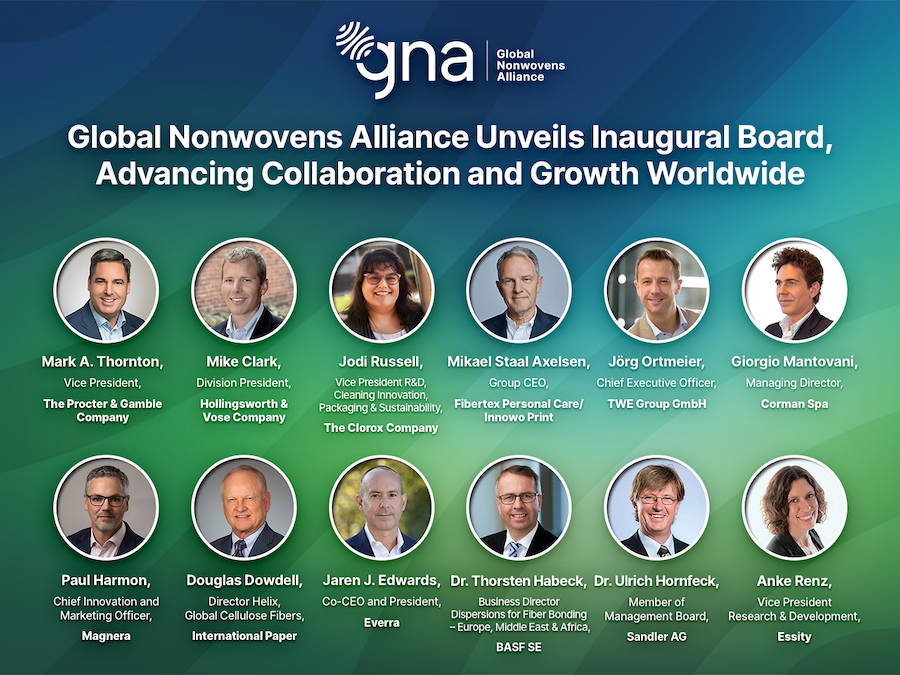
Global Nonwovens Alliance unveils Inaugural Board, advancing collaboration and growth worldwide

The Global Nonwovens Alliance (GNA), a tax-exempt federation jointly founded by INDA, the Association of the Nonwoven Fabrics Industry, and EDANA, the Voice of Nonwovens, announces the appointment of its founding Board of Directors. This group of leaders represents some of the most influential executives across the nonwovens value chain and reflects GNA’s mission to foster global collaboration, innovation, and growth in the industry.

Latest News

#Techtextil 2026

Gebr. Otto highlights versatility at Techtextil with regional supply chains, yarn innovations and new hygiene segment

At this year’s Techtextil, Gebr. Otto places its versatility at the center of its presentation. In addition to spinning, twisting and dyeing – traditionally focused on fine cotton – textile processors will also find a competent development partner for technical specialty solutions. The Dietenheim-based spinning mill has now built up a decade of experience in the production of technical yarns, particularly from aramids. A new hygiene segment has also been established, where yarns for medical and hygiene products are currently being produced. In the future, this department could also develop textile products for the food sector. Gebr. Otto will once again be present at the BW-i joint stand, booth D81, hall 12.1. What is wound onto the spool is determined by the customer: Gebr. Otto develops according to specific customer requirements and transforms its own ideas into yarn innovations.

#Europe

Commission presents proposal for EU Inc. - unlocking the full potential of the Single Market for Europe's entrepreneurs

Today, the European Commission presented its proposal for EU Inc., a new single set of corporate rules, building the cornerstone and starting point for the EU's 28th regime. EU Inc. is an optional, digital-by-default European corporate framework. It will make it easier for businesses to start, operate and grow across the EU – incentivising them to stay in Europe, and encourage those who once looked elsewhere to return.

#Man-Made Fibers

OnceMore® from Södra brings end-to-end traceability for circular Man-made Cellulosic Fibers (MMCF) using TextileGenesis

OnceMore® from Södra, the world’s first large-scale process for recycling blended fabrics into high‐quality dissolving pulp, will begin using TextileGenesis, a Lectra company, to strengthen traceability from raw material to retail across the value chain. OnceMore® produces dissolving pulp made from blended textile waste and wood sourced from responsibly managed Swedish forests. By integrating TextileGenesis, OnceMore® supports the growing need for verified data and secure, transparent tracking throughout increasingly complex supply chain.

#Sustainability

Experts publish APAC policy priorities

Cascale today announced the publication of its APAC Policy Priorities Paper, developed by the Asia-Pacific (APAC) Policy Member Expert Team (MET) to identify key regional sustainability challenges and provide practical, aligned recommendations for policymakers and industry stakeholders across Asia-Pacific.

TOP