[pageLogInLogOut]

#Sustainability

Aid by Trade Foundation turns 20, invests half a million Euros in new biodiversity fund
To effectively promote nature conservation and biodiversity, the Aid by Trade Foundation (AbTF) announced at the second Hamburg Sustainability Conference (HSC) that it would be investing 500,000 euros in the ‘AbTF Biodiversity Fund’ to mark the foundation's 20th anniversary. Since it was established in 2005 by the entrepreneur Prof. Dr Michael Otto, AbTF has been committed to transforming the textile and fashion industries.
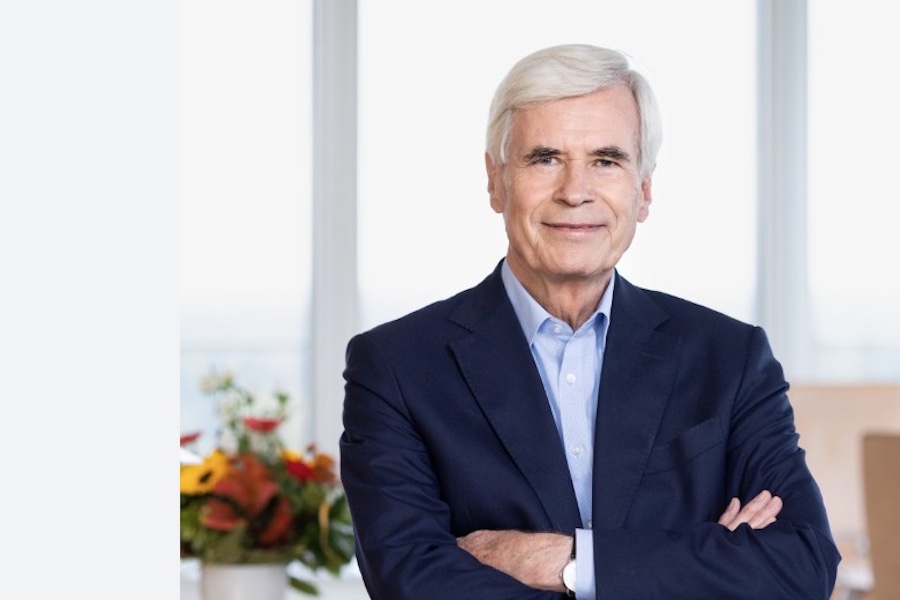
Prof. Dr Otto, Entrepreneur and Founder of the Aid by Trade Foundation © 2025 Aid by Trade Foundation


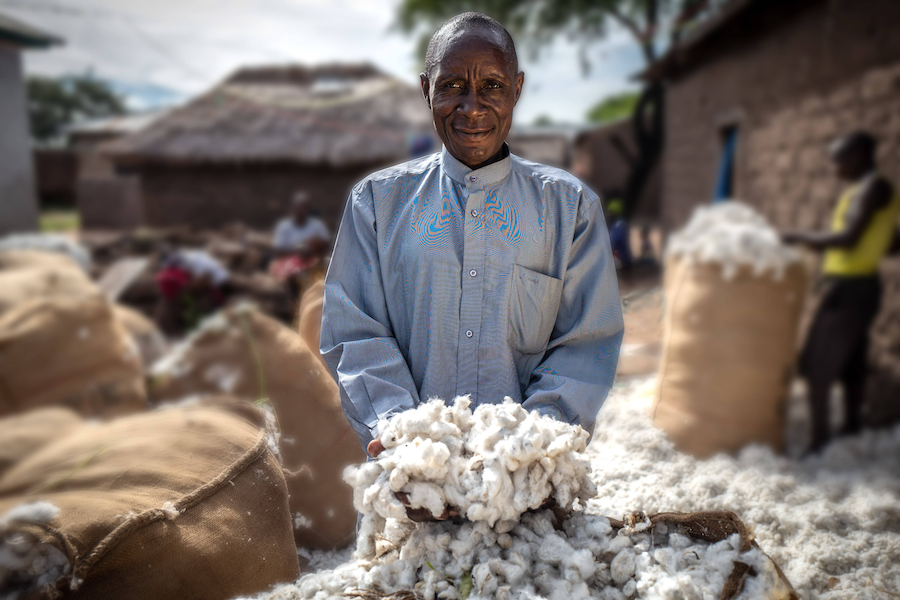
The foundation has made it its mission to conserve nature in areas where cotton and cashmere are produced. It pursues these goals through its internationally recognised sustainability standards as well as by supporting farming families in optimising their agricultural operations. Its support enables them to improve their living conditions and build up the resilience of their farming to climate change and market fluctuations.

Aid by Trade Foundation launches biodiversity fund

“In view of the global climate and environmental crises, we need to fundamentally rethink our actions and their impact on the environment,” explains Tina Stridde, the managing director of the Aid by Trade Foundation, adding, “Our ‘Aid by Trade’ approach is succeeding in activating trade to create positive effects for nature, people, and animals and to provide essential funding for an issue close to our hearts: the preservation of biodiversity.”

The first project funded by the AbTF Biodiversity Fund will be implemented in collaboration with African People and Wildlife (APW), a renowned organisation for community-oriented nature conservation based in Tanzania. APW has earned international recognition for its efforts in promoting peaceful coexistence between people and endangered wildlife.

The Aid by Trade Principle

The Aid by Trade Foundation has changed the textile and fashion industry worldwide over the past 20 years through its sustainability standards: Cotton made in Africa® (CmiA), Cotton made in Africa Organic, The Good Cashmere Standard® (GCS), and the Regenerative Cotton Standard® (RCS).

In 2005, against the backdrop of the WTO conference in Cancún in 2003, AbTF was founded by the entrepreneur Prof. Dr Michael Otto with three primary aims: making a decisive and measurable contribution to the sustainability of raw-material producers and their communities, improving their working and living conditions, and protecting nature. What began with Cotton made in Africa in three African countries is now a global foundation that maintains four recognised sustainability standards for cotton and cashmere. These standards are opening doors for retailers and brands, raw-material producers, and the textile supply chain, not to mention for consumers. AbTF has always remained true to the principle of activating market forces to provide aid—and this approach is only growing more successful.

“Who, in 2005, would have thought that a global alliance of fashion brands and textile companies would now be demanding raw materials verified according to the standards of the Aid by Trade Foundation?” asks Prof. Dr Michael Otto. “I am thrilled that this is the case today,” he continues, “and I am convinced that the foundation will keep making a significant contribution to sustainable fashion and will lead the way for people and the environment through its new biodiversity fund.”

Success in Trade and in the Field

The Aid by Trade Foundation has been continuously expanding its operations since 2005. Every year, millions of textiles bearing a label of the Hamburg-based Aid by Trade Foundation are sold. More than 3,000 partners in the market are implementing their sustainability goals with AbTF. By partnering with the foundation, they also make a significant contribution to nature conservation, animal welfare, and more dignified working and living conditions in cultivation regions.

AbTF launched its first initiative, CmiA, in 2006 with 100,000 small-scale farmers in three countries in Africa South of the Sahara. Now, in 2025, CmiA works with 22 cotton companies, 65 retailers and brands, and approximately 800,000 small-scale farmers in ten African countries. This means that the standard is verifying over one third of all cotton produced in Africa.

Eventually, two other cotton standards were added: Cotton made in Africa Organic and Regenerative Cotton Standard®. The launch of RCS with its holistic approach also represented AbTF’s first expansion of a cotton standard beyond Africa, to India. The Good Cashmere Standard®, established in 2019 as the first standard for sustainable cashmere from Inner Mongolia, has also proved its effectiveness. Having quickly risen to become a global leader in verifying sustainable cashmere production, GCS is now in demand by more than 50 fashion brands and textile companies, including H&M, J.Crew, Zadig&Voltaire, and The White Company. In China’s Inner Mongolia, GCS works with around 5,500 herders on whose farms 2.4 million goats live.


More News from Aid by Trade Foundation (AbTF)

#Raw Materials

Aid by Trade Foundation reaches new milestones in supply chain transparency

The Aid by Trade Foundation (AbTF) is reaching new milestones as it leads the way towards greater physical traceability for Cotton made in Africa® (CmiA) cotton. With around 700 suppliers and producers in a total of 25 countries, the Aid by Trade Foundation has reached a new record number of partners who can trace CmiA cotton from the product back to its origin. This is more than double the previous year’s figure.

#Natural Fibers

Cashmere producers stress the importance of The Good Cashmere Standard®

At the invitation of the Aid by Trade Foundation (AbTF), over 70 experts from the cashmere production and supply chain, as well as other specialists, met at the GCS Unit Meeting in Shanghai, China to discuss the progress and new objectives of The Good Cashmere Standard (GCS). The meeting focused on implementation and verification of the standard, important aspects of animal welfare and the importance of the standard in the global textile market.

#Natural Fibers

Aid by Trade Foundation publishes 2024 annual report: Growing impact for environment and people

The Aid by Trade Foundation (AbTF) is on a growth track. Despite a challenging global economy, AbTF increased its income by six percent from 2023 to 2024, reaching a total of EUR 8.6 million. This revenue has been invested in comprehensive measures for the sustainable production of cotton and cashmere as well as for expanded measures to ensure transparency in global value chains. In addition to gaining new partners in 2024—including big names like Mango, Nordstrom, and CWS Workwear—AbTF was able to expand its global stakeholder network active in the production of raw materials or textiles.

#Raw Materials

Aid by Trade Foundation receives Honorary Award of the German Africa Foundation 2025

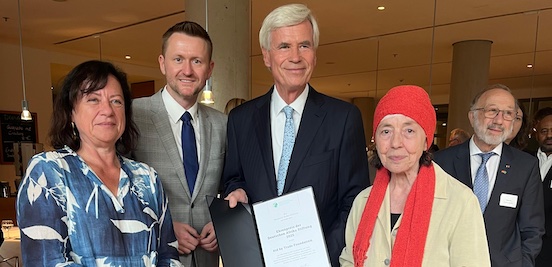
On the evening of 25 June, the Hamburg-based Aid by Trade Foundation (AbTF) received the Honorary Award of the German Africa Foundation 2025. Prof. Dr Michael Otto, the foundation’s founder and a prominent entrepreneur, accepted the award at a ceremony held at the German Bundestag. The Parliamentary State Secretary to the Federal Minister for Economic Cooperation and Development (BMZ), Dr Bärbel Kofler, presented the award in the presence of guests from politics, business and civil society as well as representatives of African embassies.

More News on Sustainability

#Sustainability

GOTS version 8.0 released: advanced supply chain accountability, from fibre to finished product

Global Standard is pleased to announce the release of GOTS Version 8.0, the latest update to the world's leading processing standard for organic textiles. The updated Standard strengthens requirements for air emissions and waste management, as well as criteria for product safety. It introduces new provisions on circularity, microfibre management and updates in residue testing. Version 8.0 also elevates due diligence obligations and formalises governance requirements, including ESG disclosure, anti-corruption policies and conflict-of-interest safeguards, to support credible, responsible business conduct.

#Sustainability

The nova-Institute establishes new Renewable Feedstock Department to lay the groundwork for industrial defossilisation

The transition from fossil-based to renewable carbon – sourced from biomass, CO₂ utilisation and recycling – is the cornerstone of a climate-neutral chemical industry. The nova-Institute’s new department is dedicated to providing the essential data, analyses and strategic roadmaps required to secure a reliable future feedstock supply and make this transition a commercial and ecological reality.

#Sustainability

Textile Exchange unveils commitment-based pathway for members to accelerate responsible raw material production

Textile Exchange has unveiled further details about its new membership structure, designed to guide the fashion, textile, and apparel industry in a collective course of action toward preferred production systems for raw materials and fibers.

#Textile chemistry

Jeanologia urges industry to accelerate PP Spray phase-out following ZDHC Watchlist update

Potassium permanganate has officially entered the Chemical Watchlist of the ZDHC Foundation, signaling increased scrutiny and potential phase-out of one of the most hazardous chemicals still used in denim finishing. The inclusion confirms an industry shift that Jeanologia anticipated more than a decade ago.

Latest News

#INDEX 2026

EDANA unveils nominees for INDEX™26 Awards: Highlighting the next generation of nonwoven excellence

EDANA is proud to unveil the highly anticipated nominees for the INDEX™26 Awards, the nonwoven industry’s highest accolade for technical and sustainable excellence. Out of a record-breaking field of entries, these finalists represent the cutting edge of material science—from bio-based hygiene fibers and PFAS-free protective textiles to revolutionary water-filtration machinery. Each nominee has been selected by a jury of industry experts for their ability to solve critical global challenges, including the transition to a circular economy and the pursuit of enhanced consumer performance.

#Raw Materials

Lenzing Group positions bio‑based materials as a strategic asset for Europe’s economic security

The Lenzing Group, a leading supplier of regenerated cellulose fibers for the textile and nonwovens industries, hosted a high‑level roundtable in Brussels to discuss how bio‑based materials can strengthen Europe’s economic security and support the shift toward a fossil‑free future. Organized in cooperation with Euractiv, the event brought together representatives of the European Commission, the UK Mission to the EU, academia, civil society, and industry.

#Natural Fibers

Beyond Cotton: Natural Fibres in the Spotlight at the Bremen Cotton Conference - Branded by DNFI

Climate targets, fragile supply chains, and rising regulatory requirements are fundamentally changing the perspective of the textile industry - the focus is increasingly shifting toward the base material. Not only cotton, but natural fibres are gaining significant importance: they stand out not only because of their outstanding functional properties, but also because they make a valuable contribution to the bioeconomy and responsible product development.

#Textiles & Apparel / Garment

Coats to showcase innovative reinforcement and filler materials for leather goods and accessories at APLF 2026

Coats, a world-class Tier 2 manufacturer and trusted partner for the apparel and footwear industries, will be promoting four advanced materials from its ‘Lifestyle Solutions’ portfolio at APLF 2026 in Hong Kong in March. Each innovation has been specifically engineered to help luxury and premium brands elevate the craft, durability, sustainability and creative expression required in the manufacturing of handbags, purses, and other high-end designer accessories.

TOP