[pageLogInLogOut]

#Natural Fibers

Dr Charudatta Mayee is the 2025 ICAC Researcher of the Year

The International Cotton Advisory Committee (ICAC) is pleased to announce that Dr Charudatta Mayee, President of both the Cotton Association of India and the South Asia Biotech Center, has been named the 2025 ICAC Researcher of the Year, according to Dr Keshav Kranthi, Chief Scientist of the ICAC and himself a winner of the award in 2009.

The ICAC honors a leading cotton researcher each year by awarding a certificate of recognition, a shield, and an honorarium of $1,000. Dr Mayee was selected by an independent panel of five eminent experts from five different countries.

Dr Mayee, a pioneer in cotton biotechnology, played a pivotal role in India's Bt cotton revolution, overseeing biosafety evaluations and regulatory approvals as Co-Chair of the Genetic Engineering Appraisal Committee. His expertise spans plant pathology, cotton biotechnology, and agricultural policy, with a lifelong commitment to improving farmer livelihoods.

Dr Mayee has received numerous accolades spanning five decades, recognizing his transformative contributions to agricultural science. He is an Alexander von Humboldt Fellow and has received lifetime achievement awards from multiple institutions. His early career was marked by the Prof MJ Narasimhan Academic Award (1974) and VP Gokhale Award (1998), followed by national honors like the Vasantrao Naik Krishi Award (2002), ICAR Outstanding Team Research Award (2003), and Dr B Vishwanath Award (2005). 

His recent work focuses on promoting high density planting systems (HDPS) and sustainable pest management solutions for smallholder cotton farmers. Dr Mayee remains actively engaged in farmer welfare initiatives through organizations like Agrovision Foundation and the South Asia Biotech Center. He continues to conduct field demonstrations, develop sustainable farming solutions, and advocate for policies that support smallholder cotton farmers across India.

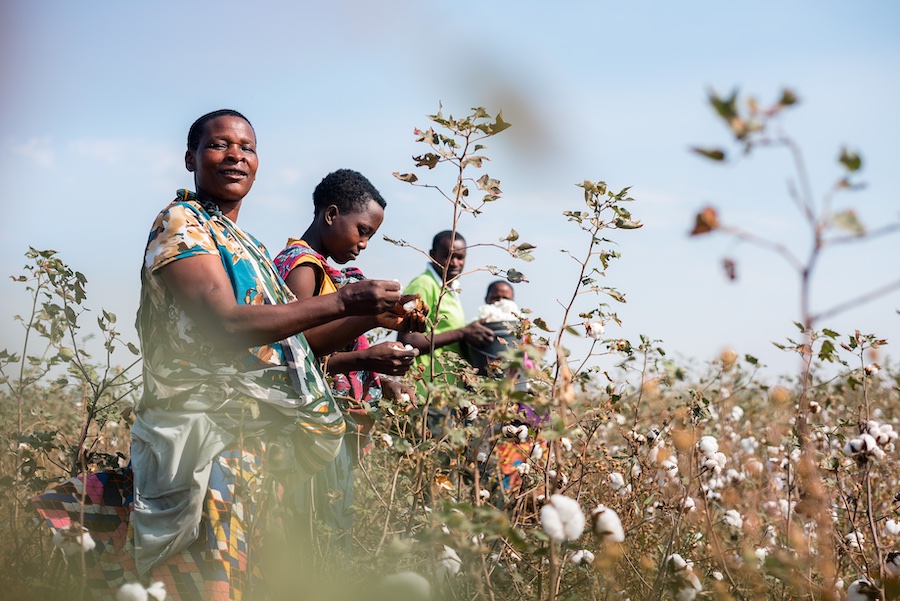
Dr Charudatta Mayee © 2025 ICAC


More News from International Cotton Advisory Committee (ICAC)

#Raw Materials

Global production expected to decline in 2026/27 as policy shifts and weak demand reshape trade

Early projections for the 2026/27 season indicate that global cotton lint production will decline by 4% to 24.9 million tonnes, while world consumption is expected to remain stable at approximately 25 million tonnes, according to the April 2026 issue of Cotton This Month.

#Raw Materials

The 83rd Plenary Meeting: Reports from the ICAC Secretariat

Every year, one of the most anticipated sessions at the International Cotton Advisory Committee's (ICAC) Plenary Meeting is the Reports from the Secretariat — and the 83rd edition in Bremen, Germany, did not disappoint.

#Raw Materials

ICAC projects slight decline in production, relative stability for consumption

Global cotton production is projected to decline by 4% in the 2026/27 season to 24.8 million tonnes, while consumption is expected to remain relatively steady at 25.0 million tonnes, according to the March 2026 edition of Cotton This Month.

#Europe

ICAC to support European Commission on pending PEF legislation

The International Cotton Advisory Committee (ICAC) is proud to announce that it has been included as a member of the European Commission’s Technical Advisory Board (TAB) on the Product Environmental Footprint methodology. The Commission developed the Product Environmental Footprint (PEF) to assess and communicate the life cycle environmental performance of products and organizations.

More News on Natural Fibers

#Raw Materials

New study shows low environmental impact by Cotton made in Africa Organic Cotton from Tanzania

Today, the Aid by Trade Foundation (AbTF) is announcing the results of a comprehensive life-cycle analysis (LCA) for cotton produced in Tanzania under the Cotton made in Africa Organic (CmiA Organic) standard. The study emphasises the small ecological footprint of CmiA Organic verified cotton. This can largely be traced back to the absence of synthetic pesticides, artificial fertilisers, and artificial irrigation. Consequently, CmiA Organic cotton can help the textile industry meet regulatory requirements as well as science-based targets. The results also show that the consequences of climate change threaten the livelihoods of these cotton farmers, even though the type of agriculture they practise barely contributes to climate change.

#Raw Materials

Better Cotton Initiative strengthens regenerative focus in standard update

The Better Cotton Initiative (BCI) has strengthened the regenerative focus of its field-level standard with the launch of a new version of its Principles & Criteria (P&C), which marks the next step in the organisation’s journey to becoming a regenerative standards system.

#Natural Fibers

Global Standard gGmbH launches second public consultation for GRTS Draft 2 for the textile industry (1–30 April 2026)

Global Standard gGmbH is pleased to announce the release of Draft 2 of the Global Responsible Textile Standard (GRTS) for its second public consultation. The consultation will be open from 1 April 2026 to 30 April 2026, inviting stakeholders across the textile and apparel value chain to provide input and contribute to the further development of this new Standard.

#Raw Materials

Textile Exchange publishes cotton Life Cycle Assessment study to strengthen impact data

Textile Exchange has published the first in a series of seven Life Cycle Assessment (LCA) studies designed to improve the quality and robustness of environmental impact data for raw material production across the fashion, textile, and apparel industry. The first LCA study focuses on cotton and addresses critical data gaps and methodology variability through new high-quality data across key producing countries. The study includes organic, regenerative, recycled, and country averages for conventional cotton production systems, providing a clearer picture of the associated environmental impact.

Latest News

#Denim

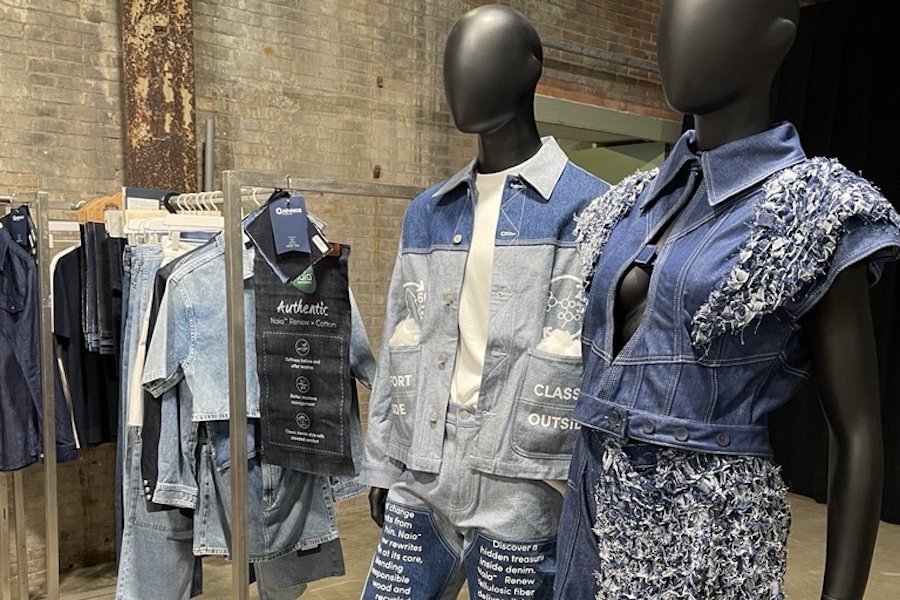
Eastman Naia™ debuts at Kingpins Amsterdam, transforming Denim from the inside out

At Kingpins Amsterdam (April 15–16, 2026), Naia™ by Eastman Chemical Company makes its debut, presenting its approach to circularity and comfort in denim at Stand 1, Ground Level (Blue Area). The brand also highlights its growing global ecosystem, connecting mill partners, designers and brands working to expand denim possibilities through fiber innovation.

#Denim

ISKO introduces a new chapter of denim innovation at Kingpins Amsterdam with FW 27/28

At Kingpins Amsterdam, ISKO presents its latest FW27/28 collection, a forward-looking exploration of denim that merges advanced color technologies, innovative fabric engineering, and contemporary finishing techniques. Designed to meet the evolving demands of the industry, the collection reflects ISKO’s commitment to pushing the boundaries of authenticity, performance, and responsible innovation, while also embracing a strong lifestyle perspective.

#Techtextil 2026

Asahi Kasei Advance to showcase high-performance non-woven and fibers at Techtextil 2026

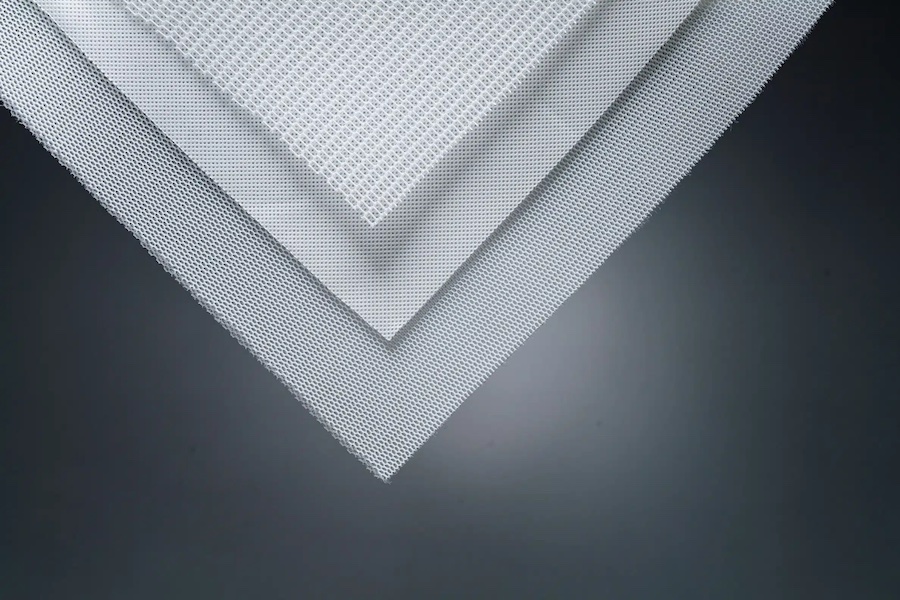
Asahi Kasei Advance will present its portfolio of high-performance nonwovens, flame-retardant fabrics, and advanced textile and fiber solutions designed for various industries during its first-ever exhibition at Techtextil 2026. Techtextil is the leading international trade show for technical textiles and nonwovens, taking place from April 21-24, 2026, in Frankfurt, Germany. Asahi Kasei Advance will highlight 14 brands, with special focus on four key materials as its debut at the exhibition in Hall 12.1 at booth C35.

#Texprocess 2026

VEIT Group presents product highlights and innovations at Texprocess 2026

At Texprocess 2026 in Frankfurt am Main (April 21–24, Hall 8.0, Stand A18), the VEIT Group presents its latest solutions and product highlights for the industrial production of clothing and the processing of technical textiles. The focus is on efficient technologies for ironing, pressing, fusing, laminating and textile refinishing processes, covering applications from the apparel industry through to technical textiles as well as interior and automotive sectors.

TOP