[pageLogInLogOut]

#Man-Made Fibers

Selenis acquires Polisan Hellas assets and expands specialty copolyester production to more than 200,000 tonnes by 2028

Duarte Matos Gil, CEO of Selenis © 2026 Selenis
Continuous polymerisation joins Selenis’ existing lines in Portugal, Italy, Tunisia and the United States. Customers get the same grades from more than one site, supply from within their region and the cost base of continuous production for high-volume grades. Priority markets: shrink sleeves, film and sheet, healthcare, 3D printing filaments and textile to textile recycling.

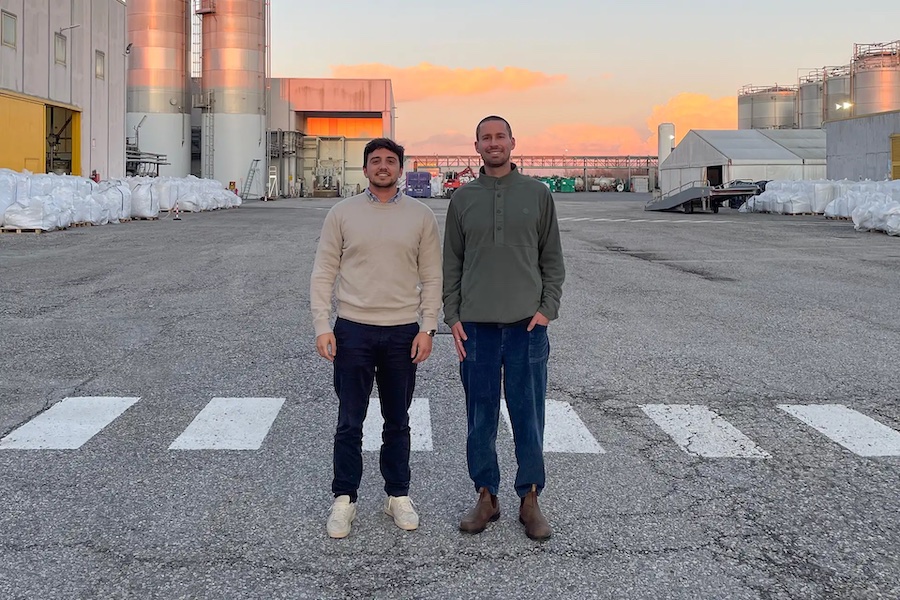
Selenis, the only specialty copolyester producer manufacturing in Europe, has acquired the production assets of Polisan Hellas in Greece for installation in Portugal. Including these assets, Selenis will operate more than 200,000 metric tonnes (MT) of annual installed specialty copolyester capacity by 2028, across production sites in Portugal, Italy, Tunisia and the United States. The capacity expansion is 100% funded by the IMG Group.

The acquisition adds continuous polymerisation to a manufacturing base built on flexibility. Continuous production serves the high-volume markets, where standardisation, consistency and cost per tonne matter. Batch production serves specialty and custom grades, where smaller volumes, fast changeovers and formulation depth are key. With both technologies now part of its manufacturing platform across four countries, Selenis can serve the full spectrum of the market, from high-volume applications to specialised grades, combining the scale and efficiency of continuous production with the flexibility of batch manufacturing.

“We believe Europe needs a strong specialty materials manufacturing base, and we are investing to build it,” said Duarte Matos Gil, CEO of Selenis. “When customers qualify our materials, they make a long-term commitment. Our responsibility is to invest ahead of their needs, to put more than one plant behind every grade and to give them a cost base that lets them compete. This acquisition puts industrial capacity behind that commitment, and further steps will follow.”

Supply resilience is central to the expansion. Selenis will work with customers to qualify selected grades at more than one manufacturing site, so a converter can hold the same specification from two plants, with no dependency on a single line or region and with the flexibility to move volume between sites as demand and logistics change. Qualification will follow the technical and approval requirements of each application. European converters are supplied from Europe and American converters from the United States, with shorter lead times and lower safety stocks than imported resin requires.

“Our ambition is to be the supplier customers choose for their next generation of products,” added Duarte Matos Gil. “That takes technical depth, dependable supply from more than one plant and the capacity to grow with them. We are building Selenis for that responsibility.”

The continuous assets also change the cost base. Continuous polymerisation runs at a lower conversion cost per tonne than batch, and Selenis will direct its standard grades for shrink sleeves, film and sheet onto that line. That competitiveness supports long-term supply agreements with customers who commit volume: multi-year, qualified and predictable on both sides.

The investment supports growth in four priority markets. Shrink sleeves, film and sheet, where the continuous line brings uniform high-volume grades at a competitive cost base, backed by the packaging know-how of the wider IMG Group. Healthcare, through Selcare®, where multi-site qualification and continuity of supply are conditions of doing business. 3D printing, where Mimesis™ product range supplies PETG and PCTG resin to filament producers serving industrial manufacturing, automotive, electronics, education and consumer markets, in applications from functional prototypes to end-use parts. And textile-to-textile recycling, where Texnascis™ works with chemical recycling partners to turn recovered monomers into new polyester; Selenis brings the polymerisation expertise and industrial scale these technologies need to reach commercial volume.

The Polisan Hellas assets will be installed in Portugal, in line with the capacity doubling already announced and underway. Selenis’ industrial footprint spans Portugal, Italy, the United States and Tunisia, and the Group is already assessing the next investments. “We are evaluating new investments in Germany in the bio-based field and in Tunisia, where we are exploring textile-to-textile opportunities through DMT technology. Each investment adds a capability to one manufacturing platform, and each is chosen for the markets where our customers see the strongest long-term growth,” said Eduardo Santos, Strategy & Integration Director at IMG Group.

Eduardo Santos, Strategy & Integration Director at IMG Group © 2026 Selenis


Selenis’ expansion strategy is designed to provide long-term security, scale, and operational flexibility to customers requiring reliable global specialty copolyester supply across highly technical and demanding applications.


More News from Selenis

#Man-Made Fibers

IMG Group, parent of Evertis and Selenis, launches Everbio Innovation Hub backed by €15 million in financing from C2 Capital Partners

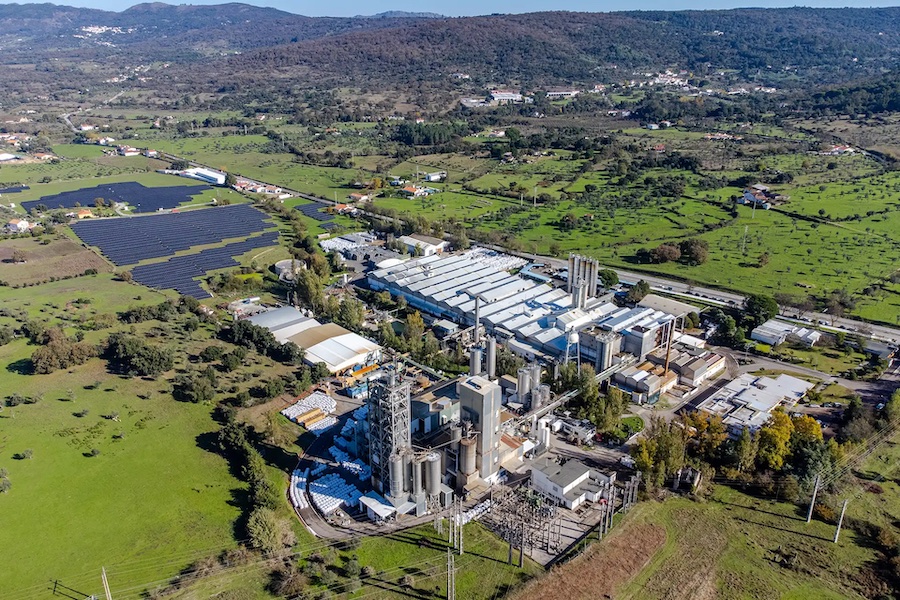
IMG Group launched the Everbio Innovation Hub, backed by €15 million in financing from C2 Capital Partners. Located at the Group’s industrial site in Portalegre, Portugal, the Everbio Innovation Hub brings together the capabilities of Evertis (PET-based packaging films), Selenis (specialty copolyester resins), Renascis (advanced multilayer recycling) and Renewis (renewable energy) to develop, test and mature the next generation of recycled and bio-based polymer materials and technologies.

#Man-Made Fibers

Selenis and Kintra Fibers partner to scale 100% bio-based synthetic fiber technology

Selenis, a leading global specialty polyester manufacturer, today announced a strategic manufacturing partnership with materials science company Kintra Fibers to scale Kintra’s patented fiber-grade PBS resin - a 100% bio-based and biodegradable material designed for textile applications.

#Recycled Fibers

Selenis to double capacity in Portugal by Q3 2027 - Accelerating the Global transition to circular and low-carbon polyesters

Selenis, a global leader in high-performance specialty polyesters and part of the IMG Group, has announced a transformational expansion of its industrial headquarters in Portalegre, Portugal. This strategic investment is set to double the site’s production capacity by the third quarter of 2027, significantly accelerating the industrial scale-up of bio-based, medical-grade, and circular co-polyesters.

#Recycling / Circular Economy

Selenis launches Texnascis for textile circularit

Selenis, a leading global manufacturer of specialty polyesters, today announced the launch of Texnascis, its new brand dedicated to textile-to-textile recycling. Texnascis will become the vehicle to deliver Selenis mission to drive the textile industry towards a circular future by transforming textile waste into innovative products for re-use.

More News on Man-Made Fibers

#Man-Made Fibers

Lenzing improves profitability as strategic transformation gains momentum

The Lenzing Group reported improved operating profitability in the first nine months of 2026 despite declining revenue and a challenging market environment. Revenue decreased by 2.3 percent to EUR 1.93 billion, while adjusted EBITDA remained stable at EUR 353 million. The adjusted EBITDA margin increased from 17.9 percent to 18.3 percent, reflecting progress in the company's strategic transformation under its “Grow Nonwovens. Reset Textiles.” strategy.

#Man-Made Fibers

Spinnova and Outlast to develop new textile materials for thermal insulation and temperature regulation

Spinnova Plc, a Finnish materials technology company developing textile fibres from wood pulp and other cellulose-based raw materials, has signed a non-binding Letter of Intent (LOI) with Germany-based Outlast Technologies GmbH, a specialist in temperature regulation and insulation technologies. The collaboration aims to explore the development of high-performance textile materials combining SPINNOVA® fibre with Outlast's functional technologies.

#Man-Made Fibers

Kraig Biocraft Laboratories launches performance yarn development program based on spider silk

Kraig Biocraft Laboratories has launched a development program for high-performance yarns based on its recombinant spider silk technology. The initiative follows the company's first commercial shipment of a custom spider silk yarn to a performance apparel customer and includes the delivery of spider silk samples to a textile technology company with experience in aerospace-related material development.

#Nonwovens

EDANA welcomes definitive EU anti-dumping measures on Chinese PET spunbond

EDANA, the international association serving the nonwovens and related industries, has welcomed the European Commission's decision to impose definitive anti-dumping duties on imports of PET spunbond originating in China. The association considers the measures an important step towards restoring fair competition and safeguarding European industrial capacity.

Latest News

#India ITME 2026

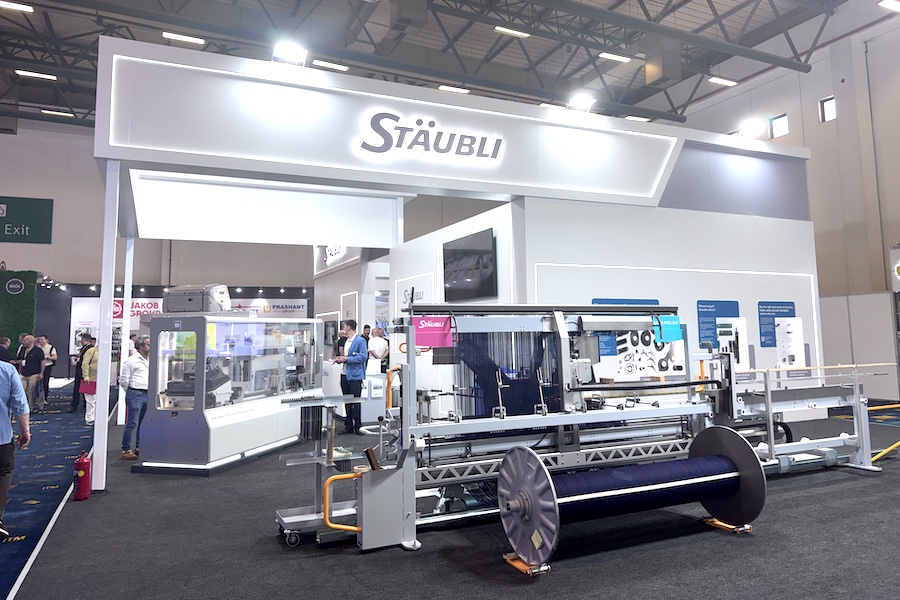
Stäubli to introduce new S3292 dobby for high-speed weaving at ITME India 2026

Stäubli will introduce its new S3292 dobby at ITME India 2026, taking place from December 4 to 9 at the India Expo Centre & Mart in Greater Noida, Uttar Pradesh. Designed for high-speed air-jet weaving, the new machine will be among the highlights of the company's presentation, which also includes warp preparation systems, cam motions, Jacquard technologies and digital services.

#Research & Development

DITF develops bio-based binding fibers for wood-fiber insulation materials

As part of the CelluWoodFlex project, the German Institutes of Textile- and Fiber-Research in Denkendorf (DITF) are developing bio-based cellulose ester fibers as alternative binding fibers for flexible wood fiber insulation materials. In addition to the spinning process and the production of suitable staple fibers, the institute is also investigating how wood and cellulose fibers can be separated and recycled at the end of their useful life.

#Recycled Fibers

Reju expands textile-to-textile recycling network with six international fabric manufacturers

Reju, a textile-to-textile regeneration company, is expanding its industrial network through collaborations with six fabric manufacturers in Europe and the Americas. The initiative aims to accelerate the integration of regenerated polyester into textile manufacturing and support the development of finished fabrics for commercial applications.

#Nonwovens

Magnera highlights HighPleat™ filtration media technology at FiltXPO 2026

At FiltXPO 2026, held on October 28–29 at the Minneapolis Convention Center in Minneapolis, Minnesota, Magnera highlighted advances in air filtration media architecture, with a particular focus on its HighPleat™ platform for MERV 8–10 applications. The technology combines a lofted fiber structure with optimized pore architecture to address the challenge of balancing filtration efficiency, airflow resistance and contaminant-holding capacity.

TOP