#Man-Made Fibers
Dornbirn GFC 2027 launches call for papers with a focus on industrial and market impact
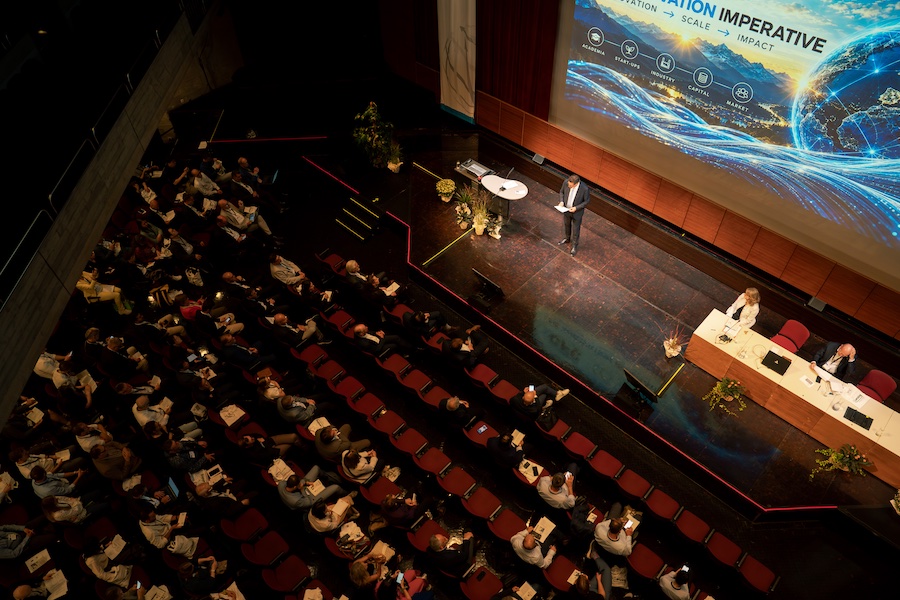
The 2027 edition will provide an international platform for sharing innovative ideas, presenting the latest research findings and exploring opportunities to translate technological advances into industrial applications and commercial success.
The six thematic areas reflect the broad transformation of the global fibre and textile industry, ranging from next-generation fibre materials and industrial-scale recycling to advanced processing technologies, high-performance applications, decarbonisation and regulatory requirements.
Fibre innovation: Next-generation materials and functionalities
The congress will explore developments in man-made, bio-based, natural and high-performance fibres. Topics include cellulosic fibres such as lyocell and viscose, new solvent routes, and alternative and recycled pulp sources, as well as bio-based and biodegradable polymers and bio-attributed feedstocks.
Further attention will be given to natural fibres, including wool, flax, hemp and agricultural residues, alongside high-performance fibres such as carbon, aramid, UHMWPE and basalt, as well as composites. Functional and sensor-integrated smart fibres will complement this thematic area.
Circular and recycling technologies: From pilot to industrial scale
Scaling up textile recycling technologies and establishing economically viable circular value chains will be another major focus of Dornbirn GFC 2027.
The programme will address collection, automated and AI-supported sorting, pre-processing and the removal of disruptors. Mechanical recycling topics will include fibre length retention, blending strategies and yarn quality, while chemical and thermo-mechanical recycling will cover depolymerisation, dissolution and the separation of fibre blends, including polyester/cotton blends and materials containing elastane.
Design for recycling, mono-material concepts and the economics of circularity will also be addressed, including extended producer responsibility (EPR) financing, offtake agreements and investment models. Recycled-content verification, standards and quality grading of secondary raw materials will complete this thematic area.
Processing technology: Efficiency, flexibility and digitalisation
Covering spinning, knitting, weaving, nonwoven formation, dyeing and finishing, this thematic area will focus on the technological requirements of processing recycled and bio-based fibres, including short staple fibres, variable material qualities and new fibre blends.
Energy- and water-efficient wet processing technologies, such as low-liquor, waterless and digital dyeing, will be discussed alongside bio-based finishes, dyes and colourants, with particular attention to performance, durability and cost compared with conventional chemistry.
Further topics include safe-chemistry finishing, PFAS-free functional finishes, artificial intelligence, predictive maintenance, digital twins and inline quality control. Automation, flexible small-batch production and nearshoring will also feature on the agenda.
Protective, defence and medical textiles: Performance under new chemical rules
The development of high-performance textiles in response to changing chemical regulations and application requirements will form another key area of the congress.
Topics include PFAS-free repellency and barrier performance, bio-based and other alternatives, performance trade-offs and testing methods, as well as flame-retardant, thermal, ballistic and CBRN protection.
Smart personal protective equipment (PPE), integrated sensors and monitoring systems, circular workwear, durability, industrial laundering and closed-loop recovery will also be addressed. Supply security and the specific requirements of the defence sector, together with medical textiles and infection control, will broaden the scope of this thematic area.
Nonwovens, pulp and paper: Fibre-based alternatives to plastics
The congress will examine the growing potential of fibre-based materials as alternatives to plastics, including plastic-free wipes and hygiene products, with a focus on flushability and biodegradability under real environmental conditions.
Wetlaid, airlaid and pulp-based nonwovens, the substitution of synthetic fibres with cellulose and bio-based binders as alternatives to synthetic latex will be among the topics discussed.
Durable nonwoven applications in filtration, automotive, construction, geotextiles and battery separators will also feature, alongside the potential of nonwovens as a high-volume outlet for recycled fibres. Fibre-based packaging and paper–textile hybrid materials will complete this thematic area.
Decarbonisation, environment, data and regulation: Transparency and trust as a competitive advantage
The sixth thematic area will address the energy transition in fibre and textile production, including electrification, heat recovery and renewable energy, as well as life cycle assessment (LCA) and the Product Environmental Footprint (PEF).
Digital Product Passports, data architecture, traceability and fibre identification will be discussed alongside the implications of ecodesign and extended producer responsibility requirements for fibre producers and textile converters.
Further topics include the environmental fate of textiles in marine, freshwater and soil environments, the release of chemicals and microfibres from textiles, and chemicals management.
Connecting research, industry and markets
With its 2027 theme, Dornbirn GFC places particular emphasis on the connection between innovation and its industrial and commercial implementation. The congress invites researchers, developers and companies to showcase their innovations to an international audience, exchange ideas with industry experts and contribute to the ongoing development of the global fibre industry.
66th Dornbirn GFC 2027
Date: 14–16 September 2027
Location: Dornbirn, Austria
Deadline for presentation proposals: 15 February 2027
Further information: Dornbirn GFC – Call for papers 2027