[pageLogInLogOut]

#Recycled Fibers

Selenis to double capacity in Portugal by Q3 2027 - Accelerating the Global transition to circular and low-carbon polyesters
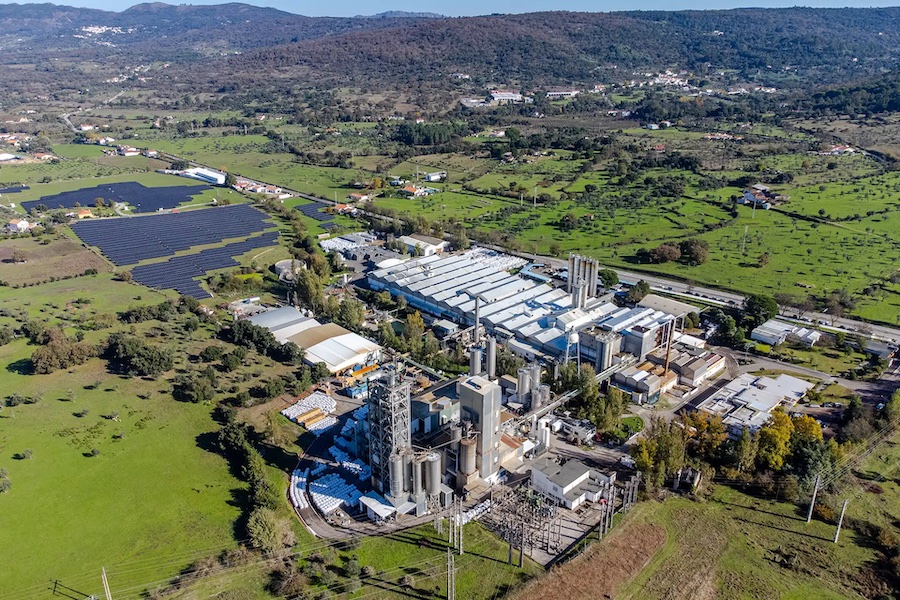
Selenis, a global leader in high-performance specialty polyesters and part of the IMG Group, has announced a transformational expansion of its industrial headquarters in Portalegre, Portugal. This strategic investment is set to double the site’s production capacity by the third quarter of 2027, significantly accelerating the industrial scale-up of bio-based, medical-grade, and circular co-polyesters.

This expansion reinforces Selenis’ position as a leader in the transition towards a circular polymer economy. By integrating cutting-edge technology, the project not only boosts output but structurally improves the facility’s energy efficiency and carbon emissions profile, aligning with the global demand for sustainable materials.

Duarte Gil, CEO of Selenis, stated: "This expansion is a bold step forward. We are doubling our capacity to meet accelerating demand while ensuring we remain fully aligned with the evolving European regulatory framework. Circularity is no longer just a concept; it is our industrial reality."

The timing of this investment is critical. The new PPWR mandates that all packaging on the EU market be recyclable by 2030, introducing strict targets for recycled content and rigorous traceability requirements. Furthermore, recent updates to the Single-Use Plastics Directive have formally recognised advanced recycling and certified mass-balance approaches, including chemically recycled content, as valid pathways to meeting these targets.

While industry experts at Plastics Europe anticipate that chemical recycling capacity could double every decade starting in 2030, Selenis is moving ahead of the curve. By reaching its own doubling of recycled polyester capacity by 2027, through providing both chemically recycled PCR and ISCC+ bio-mass balance solutions that are fully compliant with current European traceability frameworks.

Carlos Paiva, Chief Operating Officer, stated “This expansion is built on a foundation of measurable environmental progress. By adopting continuous polymerisation, we are drastically reducing the energy intensity of every tonne we produce, while our shift towards electrification and reduced natural gas consumption fundamentally lowers our carbon footprint. When paired with our on-site solar farm, these strategic areas ensure that our growth remains firmly aligned with long-term global decarbonization objectives.”

At the heart of the Portalegre expansion is the addition of a next-generation Continuous Polymerization (CP) platform alongside our established traditional batch technology. By combining both systems, we enhance flexibility and enable a continuous, highly consistent production flow that significantly optimises energy consumption per tonne of product.

Integrated with advanced vacuum systems, the new CP line enables a structural shift in the site’s energy profile by reducing natural gas reliance and increasing electrification. A substantial portion of this electricity will be supplied by Selenis’ newly commissioned on-site solar park, ensuring that the growth in production is fuelled by renewable energy.

The additional capacity will support growing demand across food, healthcare and textile markets, providing customers with reliable access to circular and low-carbon polyesters at industrial scale.

By doubling capacity ahead of regulatory timelines and industry projections, Selenis is reinforcing its position as a first mover in advanced circular polymers, translating regulatory momentum into industrial leadership.

This expansion marks a decisive step for Selenis, setting a new benchmark for scalable, low-carbon polyester production in Europe and beyond.

More News from Selenis

More News on Recycled Fibers

#Recycling / Circular Economy

ABB and Syre partner to explore technologies for industrial-scale textile recycling

ABB has signed a Memorandum of Understanding (MoU) with Swedish textile impact company Syre to jointly explore technologies to support the development of Syre’s first textile-to-textile recycling plant in Vietnam. The agreement establishes a framework for collaboration to investigate how ABB’s automation, electrification and digital technologies could contribute to safe, efficient and scalable operations. It will also explore how these capabilities could further optimize process and quality control performance as Syre advances its ambition to produce circular polyester at industrial scale.

#Recycling / Circular Economy

Circ awarded on TIME’s America’s Top GreenTech Companies 2026 list

Circ has been awarded on TIME’s list of America’s Top GreenTech Companies 2026. This prestigious award is presented by TIME and Statista Inc., the leading statistics portal and industry ranking provider. The award list was announced on March 25th, 2026, and can be viewed on TIME’s website.

#Recycling / Circular Economy

Europe needs tipping point to scale textile-to-textile recycling, BCG and ReHubs say

A new report from Boston Consulting Group (BCG) and ReHubs, titled “Advancing Textile Circularity – Europe’s textile waste challenge: Scaling Textile-to-Textile requires enabling mechanisms”, highlights the urgent need for systemic action to tackle Europe’s growing textile waste and scale a circular textile economy.

#Recycled Fibers

Circ deepens access to recycled fibers with Xinxiang Bailu Chemical Fiber Co., Ltd. partnership agreement

Circ®, a global leader in textile‑to‑textile recycling, today announced a new partnership agreement with Xinxiang Bailu Chemical Fiber Co., a Canopy Dark Green Shirt producer and one of the world’s leading producers of viscose filament. The agreement marks a significant step in Circ’s continued expansion in China and strengthens its position within the country’s rapidly evolving circular textile ecosystem; further supporting Circ’s ability to supply recycled fibers near existing fashion supply chains.

Latest News

#Techtextil 2026

From Nature Performance to Circular Economy: Techtextil 2026 focuses on the future market for technical textiles

Alternative materials and recycling technologies are one of the most important future segments and drivers of innovation in technical textiles. Sustainability goals and regulatory requirements increase their relevance, while advances in performance and economic viability enhance their market competitiveness. Taking place from 21 to 24 April 2026, Techtextil reflects this key industry trend with a growing number of specialised exhibitors. With the new “Nature Performance” label, the leading global trade fair bundles relevant market offerings and facilitates access to new solutions – from natural fibres and yarns to bio-based materials and circular approaches.

#Research & Development

Textile cascade filter for removing microplastics from wastewater

Microplastics are now found almost everywhere, even in remote regions of Antarctica. They enter the human body through the food chain. Studies indicate that microplastics may have negative effects on the human health.

#Textile processing

Jeanologia showcases the future of product development

Jeanologia is showcasing how software is transforming product development in the fashion industry at PI Apparel Europe: The Fashion Technology Show, taking place on March 30–31 in London.

#Techtextil 2026

Groz-Beckert showcases cross-segment innovations for technical textiles in Frankfurt

From April 21 to 24, 2026, Groz-Beckert will present its latest innovations and solutions across the product areas of knitting, weaving, nonwovens and sewing at Techtextil 2026 in Frankfurt (Hall 12, Booth B90).

TOP