[pageLogInLogOut]
RETECH expert at drawing your fibers to perfection

#Man-Made Fibers

ADVA®terra – A biodegradable Polyester fibre from ADVANSA brings eco-conscious comfort to home textiles

As global concern over synthetic textile pollution and microplastic accumulation in landfills and oceans continues to rise, initiatives like Plastic Free July and World Nature Conservation Day (July 28) are calling for urgent action. In response, ADVANSA is proud to highlight ADVA®terra – a polyester filling fibre that is made from 100% recycled materials, fully recyclable and biodegradable.
© 2025 ADVANSA
© 2025 ADVANSA


COMFORT MEETS SUSTAINABILITY

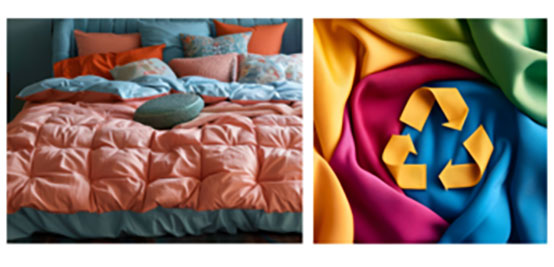
Designed for use in pillows, duvets, and mattresses, ADVA®terra combines environmental responsibility without compromising comfort. Engineered for pillows, duvets, and mattresses, ADVA®terra delivers exceptional comfort, durability, and breathability - while offering the added benefits of being machine-washable and dryer-safe. 

What sets ADVA®terra apart is its ability to biodegrade in biologically active environments, including landfills and marine ecosystems. According to independent laboratory tests (ASTM D5511 / D6691), the fibre achieves:

+ Over 90% degradation in landfill conditions within 2 years 

+ More than 85% degradation in marine environments within 5 years?- rates comparable to natural fibres.

By offering a sustainable alternative to conventional synthetic fillings, ADVA®terra directly addresses the challenge of microplastic pollution and the environmental impact of synthetic textiles which escape collection and recycling systems. Unfortunately, textile recycling at scale is not yet available in most communities and end-of-life polyester can often end up in landfills or - via fibre shedding in laundry - end up as microplastic pollution in our oceans.

CERTIFIED RESPONSIBILITY

Certified by OEKO-TEX®, the Global Recycled Standard (GRS), and compliant with REACH, ADVA®terra guarantees full traceability and environmental integrity throughout its production chain. ADVANSA also supports responsible marketing and transparent labelling practices, empowering brands and consumers to make informed, sustainable choices. With ADVA®terra, businesses can offer products that promote a restful, eco-conscious sleep - and contribute to a cleaner, healthier planet.


More News from ADVANSA

#Functional Fabrics

Advansa launches Allerban®+ – biocide-free dust mite allergen protection for bedding

German fibre manufacturer Advansa has introduced Allerban®+, a new generation of bedding fibre designed to provide dust mite allergen protection without the use of biocides. The development reflects a growing market shift towards healthier and more sustainable home textile solutions.

#Recycling / Circular Economy

ADVANSA launches ADVA®tex: A new step toward textile-to-textile recycling

ADVANSA has introduced ADVA®tex, a new filling fibre made entirely from recycled pre-consumer textile waste, positioning the material as a significant step forward in textile-to-textile (T2T) recycling. The fibre is designed for use in duvets, pillows, mattresses, and furniture applications and is available in three versions.

#Sustainability

Over 200,000 plastic bottles kept out of the Mediterranean thanks to Aerelle® Blue

ADVANSA, in collaboration with Plastic Bank, has successfully prevented more than 200,000 plastic bottles from entering the Mediterranean Sea in just one year. This achievement is made possible through Aerelle® Blue, a sustainable comfort fibre made from recycled plastic bottles.

#Recycling / Circular Economy

ADVA®TEX 100% textile-to textile recycling 100% sustainable comfort

ADVA®tex is a comfort filling fibre made entirely from recycled textile scraps from the textile industry. The fibres help minimize CO2 emissions during the production of mattresses, cushions, and printed duvets. This significantly reduces dependency on new raw materials and plastics - without compromising on quality or comfort.

More News on Man-Made Fibers

#Research & Development

Fraunhofer IAP paves the way for "Green" carbon fibers

A new pilot plant in Guben is set to enable the production of bio-based carbon fibers. The plant is part of the Carbon Lab Factory Lausitz and will make an important contribution to the transformation of the Lausitz region—from a traditionally raw material- and basic industry-oriented region to a hub for innovative high-performance materials. The German federal government and the state of Brandenburg are providing the Fraunhofer Institute for Applied Polymer Research IAP with 53.3 million euros for this purpose.

#Nonwovens

VEOCEL™ Lyocell production expands to Asia – Launching a new chapter for nonwovens in the region

VEOCEL™, Lenzing's flagship specialty nonwovens brand, expands production at its Thai plant in Prachinburi. This is the first-ever production of its nonwoven-grade lyocell fibers in Asia. Built in 2022 with a 100,000-ton annual production capacity, the facility - previously focused on fibers for textile applications - now can directly meet the demand for VEOCEL™’s biodegradable¹, wood-based lyocell fibers for nonwovens products. These fibers are an essential ingredient for high-quality nonwovens products, ranging from baby wipes to facial sheet masks and everyday personal hygiene items.

#Raw Materials

Textile Exchange publishes cotton Life Cycle Assessment study to strengthen impact data

Textile Exchange has published the first in a series of seven Life Cycle Assessment (LCA) studies designed to improve the quality and robustness of environmental impact data for raw material production across the fashion, textile, and apparel industry. The first LCA study focuses on cotton and addresses critical data gaps and methodology variability through new high-quality data across key producing countries. The study includes organic, regenerative, recycled, and country averages for conventional cotton production systems, providing a clearer picture of the associated environmental impact.

#Raw Materials

Fashion for Good mobilises industry to adopt mass balance attribution and accelerate decarbonisation

Fashion for Good launches today the Mass Balance Demonstrator project, a collaborative industry initiative to implement and scale the mass balance attribution (MBA) chain-of-custody model for biomass-attributed PET in textile applications. The project represents a concrete step toward accelerating brand-driven decarbonisation across the apparel value chain.

Latest News

#Composites

KARL MAYER strengthens partnerships in the composites industry at JEC World 2026

KARL MAYER further strengthened its role as a reliable and competent partner to the composites industry at JEC World 2026. The global market leader in textile machinery manufacturing used the trade show to meet key customers, establish numerous new contacts, and engage in in-depth technical discussions.

#Recycling / Circular Economy

ABB and Syre partner to explore technologies for industrial-scale textile recycling

ABB has signed a Memorandum of Understanding (MoU) with Swedish textile impact company Syre to jointly explore technologies to support the development of Syre’s first textile-to-textile recycling plant in Vietnam. The agreement establishes a framework for collaboration to investigate how ABB’s automation, electrification and digital technologies could contribute to safe, efficient and scalable operations. It will also explore how these capabilities could further optimize process and quality control performance as Syre advances its ambition to produce circular polyester at industrial scale.

#Techtextil 2026

From Nature Performance to Circular Economy: Techtextil 2026 focuses on the future market for technical textiles

Alternative materials and recycling technologies are one of the most important future segments and drivers of innovation in technical textiles. Sustainability goals and regulatory requirements increase their relevance, while advances in performance and economic viability enhance their market competitiveness. Taking place from 21 to 24 April 2026, Techtextil reflects this key industry trend with a growing number of specialised exhibitors. With the new “Nature Performance” label, the leading global trade fair bundles relevant market offerings and facilitates access to new solutions – from natural fibres and yarns to bio-based materials and circular approaches.

#Research & Development

Textile cascade filter for removing microplastics from wastewater

Microplastics are now found almost everywhere, even in remote regions of Antarctica. They enter the human body through the food chain. Studies indicate that microplastics may have negative effects on the human health.

TOP