[pageLogInLogOut]
TRÜTZSCHLER SPINNING - FROM WASTE TO VALUE

#Industry 4.0 / Digitalization

Artificial intelligence helps shape change in the chemical industry
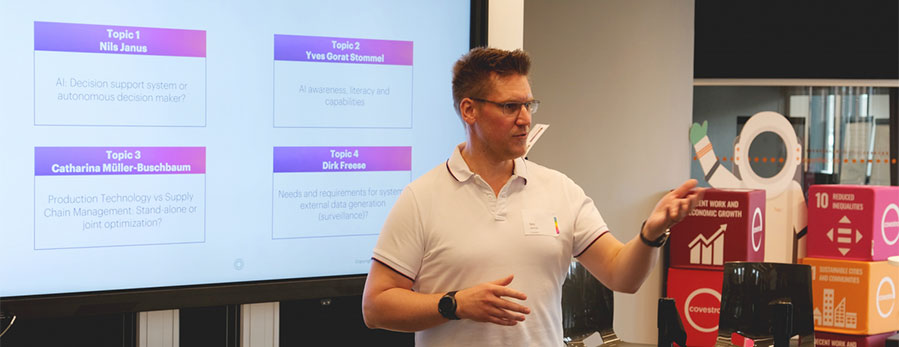
What do experts from the chemical industry think about AI? Covestro, Evonik and Accenture gathered top minds at the “Chemicals Peer Exchange” to discuss opportunities and challenges. Among them was Nils Janus, Head of Advanced Analytics at Covestro. © Covestro
The industry is discovering more and more possibilities for the use of artificial intelligence (AI). However, when implementing and using AI in the chemical industry, many peers face similar challenges that still need to be solved. For this reason the chemical companies Covestro and Evonik as well as the consulting firm Accenture invited managers from production and technology divisions of Bayer, Clariant, Wacker, Shell, Lanxess and other companies to a two-day Chemicals Peer Exchange for the fourth time.

"For me, the chemical industry is predestined for the use of AI because we have a lot of complex processes going on that cannot be described by fixed rules," says Walter Grüner, Head of IT & Digitalization at Covestro. "They are not suitable for automation. We rather need learning systems to which we grant a certain degree of decision-making autonomy. In doing so, we focus primarily on the development of systems that work in a complementary manner to humans and support their abilities."

With the introduction of AI in the chemical industry, questions about technical, operational and organizational implementation are also increasingly emerging. This includes, for example, the role of AI in decision-making, but also its implementation along value chains.

Artificial Intelligence – great opportunity for chemical industry

Under the motto "Shaping industrial change with AI", the participants exchanged in a generic way views on the following topics:

  • AI system to assist decision making or as an autonomous decision-maker
  •  AI awareness, literacy and capabilities
  • Production technology vs. supply chain management: independent or joint optimization
  • Needs and requirements for external data generation (monitoring)

"It is precisely the exchange across company boundaries that helps us a lot in the upcoming transformation because overall challenges become clearer," says Nils Janus, Global Head of Advanced Analytics at Covestro. "This increases efficiency and saves time."


Overall, there was agreement among the participants: Artificial intelligence offers great opportunities for the chemical industry. The new systems help to create a common ecosystem for cross-divisional production planning. It must be decided on a case-by-case basis and each company has to decide individually and independently how much autonomy these systems will be given. With regard to access to the systems, the participants saw a strong democratization of artificial intelligence. Companies could support employees in learning more about data and AI and bring them into contact with experts when it comes to the widespread use of AI solutions in the company. The generation and dissemination of ESG (Environmental, Social and Governance) data are currently the biggest drivers for using external data sources. Here, all participants saw opportunities to intensify the use of external sources.


Digitalization drives sustainability

Digitalization is a key driver to improve sustainability and make the circular economy a reality. Covestro is focusing on more data-oriented corporate governance to drive digital transformation.

Covestro is advancing the use of artificial intelligence (AI) both in its own company and in the chemical industry. To this end, the materials manufacturer is investigating how digital technologies can make processes more efficient and sustainable as part of several pilot projects across different divisions.




More News from Covestro AG

#Smart Textiles

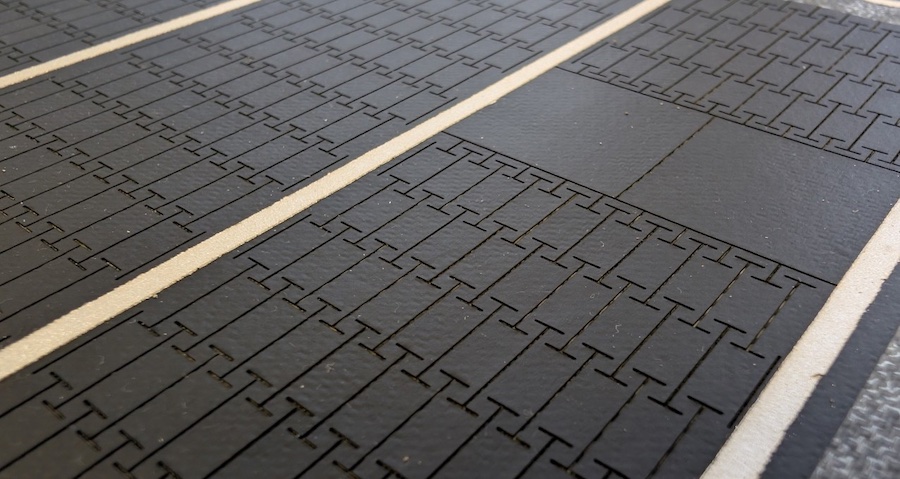
Covestro, FILK Freiberg, and OUT e.V. develop flexible, conductive polymer smart textile system

As the smart textiles market continues to grow across healthcare, personal protection, sportswear, and automotive applications, developers are seeking new ways to integrate electronic functionality directly into textiles, without the rigidity and complexity of conventional wiring. To address this challenge, FILK Freiberg Institute, an independent research institution with expertise in polymer coatings for textile applications, collaborated with Optotransmitter-Umweltschutz-Technologie (OUT) e.V. The joint project, funded under the German Industrielle Gemeinschaftsforschung (IGF) program of the Bundesministerium für Wirtschaft und Energie (BMWE), focused on developing flexible, conductive polymer surfaces for next-generation smart textiles.

#Techtextil 2026

Covestro to exhibit solutions for a more sustainable and productive textile industry at Techtextil 2026

Covestro will present a broad portfolio of material innovations for textile coatings, adhesive films and thermoplastic polyurethanes (TPUs) at Techtextil 2026 (Hall 11.0, Booth C79). The exhibits will demonstrate how advanced solutions can enhance durability, recyclability and manufacturing efficiency across applications such as automotive, infrastructure, protective apparel and sportswear. A particular focus will be on more sustainable coating technologies, including antimicrobial systems based on INSQIN® in combination with AGXX from Heraeus Precious Metals, as well as the integration of Pontacol® thermoplastic adhesive films into Covestro’s offering.

#Technical Textiles

Covestro showcases monomaterial concept in autonomous SUE People Mover

UE | STUDIOS has unveiled the fully autonomous electric minibus “Self-driving Urban E-Shuttle” (SUE), placing strong emphasis on sustainable material design. Developed within a project funded by the Federal Ministry for Economic Affairs and Energy (BMWE) and the European Union, the vehicle will begin public road testing this year. At the core of the concept is the consistent use of recyclable monomaterials to improve circularity at end of life.

#Textile chemistry

Covestro and Heraeus Precious Metals collaborate to enable safer, more sustainable antimicrobial textile coatings

Laboratory tests reveal that AGXX antimicrobial surface technology from Heraeus Precious Metals is fully compatible with Impranil® PU dispersions which are part of the waterborne INSQIN® textile coating technology from Covestro, paving the way for more sustainable antimicrobial textile coatings. This discovery comes at a key moment for the textile coatings industry. As the sharing economy continues to grow, more people are coming into regular contact with high-use surfaces, creating ideal conditions for bacteria, viruses, and other microorganisms to thrive.

More News on Industry 4.0 / Digitalization

#Research & Development

Textilfabrik 7.0 launched: Mönchengladbach becomes a real-world lab for sustainable textile production

With the official kick-off event of the Textilfabrik 7.0 (T7), a major transformation project for the German textile and apparel industry has been launched in the Monforts Quarter in Mönchengladbach. At the “Textile Roundtable,” an event format organized by the Zukunftsagentur Rheinisches Revier, representatives from industry, research, politics, and the regional economy came together to jointly lay the foundation for CO₂-neutral, circular, and economically viable textile production in Germany.

#Man-Made Fibers

OnceMore® from Södra brings end-to-end traceability for circular Man-made Cellulosic Fibers (MMCF) using TextileGenesis

OnceMore® from Södra, the world’s first large-scale process for recycling blended fabrics into high‐quality dissolving pulp, will begin using TextileGenesis, a Lectra company, to strengthen traceability from raw material to retail across the value chain. OnceMore® produces dissolving pulp made from blended textile waste and wood sourced from responsibly managed Swedish forests. By integrating TextileGenesis, OnceMore® supports the growing need for verified data and secure, transparent tracking throughout increasingly complex supply chain.

#Denim

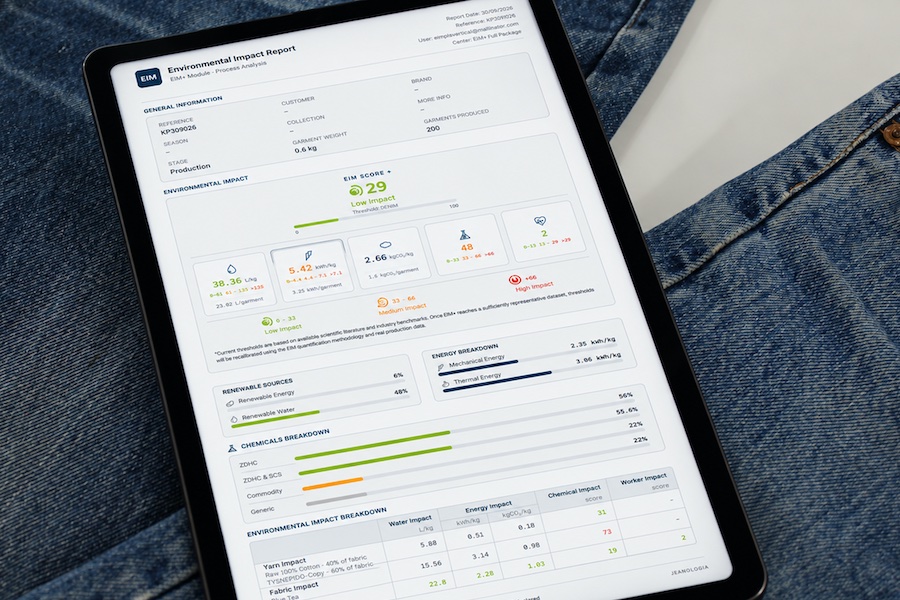
Jeanologia launches Billy

The new AI extracts precise laser designs from a garment image in minutes, transforming how vintage denim is recreated for production. If Jeanologia’s laser changed the way jeans were made at the end of the last century, its AI now takes the next step: moving from reproducing wear to designing it. / archive photo © 2026 Jeanologia

#Dyeing, Drying, Finishing

Monforts unveils interactive digital platform for textile finishers

Monforts has launched a new digital platform designed to give textile manufacturers faster, more intuitive access to the company’s finishing technologies, technical expertise and aftersales support worldwide.

Latest News

#Digital Printing

Kornit Digital announces commercial availability of Atlas MATRIX following successful global Beta program

Kornit Digital (NASDAQ: KRNT, "Kornit Digital", "Kornit", or the "Company"), a global leader in sustainable, on-demand digital fashion and textile production technologies, today announced the commercial availability of the Atlas MATRIX platform following the successful completion of a global beta program across leading production environments in Europe and North America. The announcement, made ahead of FESPA 2026 in Barcelona, marks a major milestone in the evolution of digital apparel production.

#INDEX 2026

“We clearly see that reliability, flexibility, service and total cost of ownership are becoming increasingly important again.”

The nonwovens industry continues to face a challenging market environment. Nevertheless, AUTEFA Solutions reports successful projects, new line sales and growing demand for energy-efficient and flexible solutions. In this interview, André Imhof of AUTEFA Solutions talks about competitiveness against Chinese suppliers, new service and recycling concepts, the growing importance of application development and the opportunities created by countercyclical investments.

#INDEX 2026

“Needle punching technology is more universal and sustainable than ever!”

Needle punching technology was long regarded as a rather traditional and comparatively slow technology within the nonwovens industry. In this interview, Johann Philipp Dilo explains why needle punching is more relevant than ever today – ranging from energy efficiency and resource conservation to hygiene applications, new machine concepts and design-oriented nonwoven solutions.

#Research & Development

Textile climate control system in workwear – exhibition at the 2026 SME Innovation Day!

Conventional protective workwear often reaches its limits during strenuous physical activity. In particular, the transport of sweat and excess body heat poses a problem. The German Institutes of Textile and Fiber Research (DITF) conducted research on flow-optimized, air-conducting textile structures that enable targeted climate control directly on the body. These structures can be integrated straight into protective work garments. The textile climate control system supports the body’s natural thermoregulation. This contributes to improved workplace safety and comfort.

TOP