[pageLogInLogOut]

#Industry 4.0 / Digitalization

Going digital: Swiss textile machinery shows the way

Digitalization is a big story in the world of business. It’s all about change, making use of technology to transform attitudes and create new opportunities to grow revenue. At its heart is innovation, with new systems and intelligent use of data. In textiles, the entire value chain is going digital, as evidenced by the commitment of Swiss Textile Machinery Association member firms. Their story – presented here in six ‘chapters’ – spans industry sectors through spinning, weaving, finishing and nonwovens.

Innovative technology for new business models

Cost savings and more

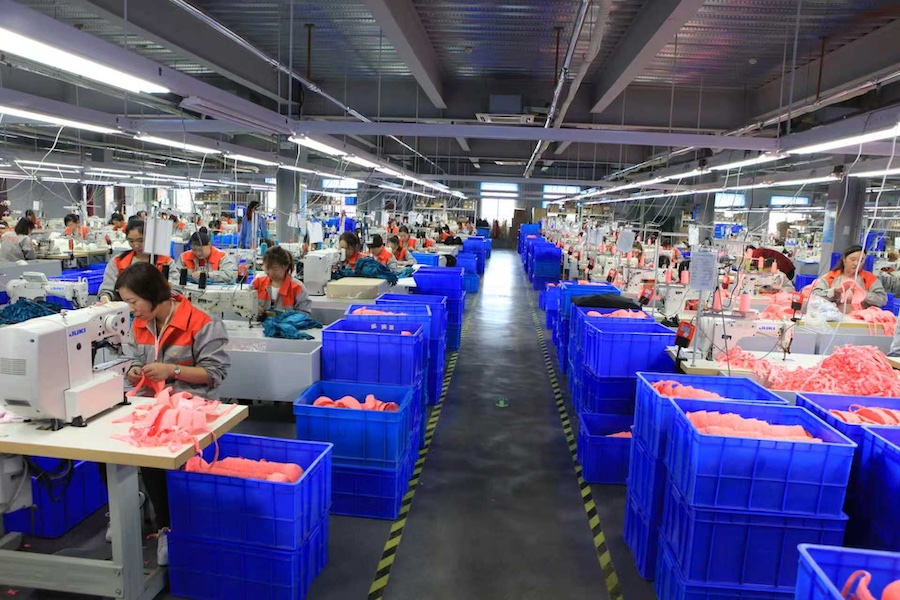
The process of digitalization in the textile industry today is continuous – faster in some segments than others – but noticeable everywhere. Automation is promising in many areas of finishing and making-up, where initial investments are being made. An example is folding of finished goods, previously a slow manual operation. Now, high-performance automatic folding machines from Swiss company Espritech deliver the potential for cost savings, unlocking new options for positive change at this most labor-intensive stage of production. For manufacturers in low-cost areas, the benefit results from its volume and is a simple financial one. In higher-cost segments, the application of this technology can be part of a completely new business model, taking production closer to the end customer. 

© 2022 SWISSMEM
© 2022 SWISSMEM


Better process, better workplace

Pioneering in the field of digitalization embraces social responsibility along with the introduction of bold new technological innovation. That’s a commitment made by Uster, as it aims to shape future working practices in the textile industry in areas where its systems are applied. In fabric inspection, that means combining the strengths of human capabilities with the performance of Artificial Intelligence. Automatic defect classification with machine learning technology is the next leap in digitalization for fabric manufacturers, following on from automated detection of fabric faults, which is already well established in weaving and finishing mills. This will bring benefits in profitability for the manufacturer – as well as an improved working environment for their operatives, freed from repetitive tasks.

Information, flexible and fast

Access to data is critical in the digitalized world of textiles. It must be flexible, fast and secure, and available to all levels of the company – worldwide. Jakob Muller serves the narrow fabrics industry ideally with a digitalization portal, perfectly developed to provide essential production information. The portal is a browser-based production data acquisition system, with direct access to the machine controls. The system offers unique data monitoring and communication on a global framework. Digitized weave rooms present information 24/7 on desktops at the customer’s plant, as well as on tablets and smartphones remotely.


Making the most of it

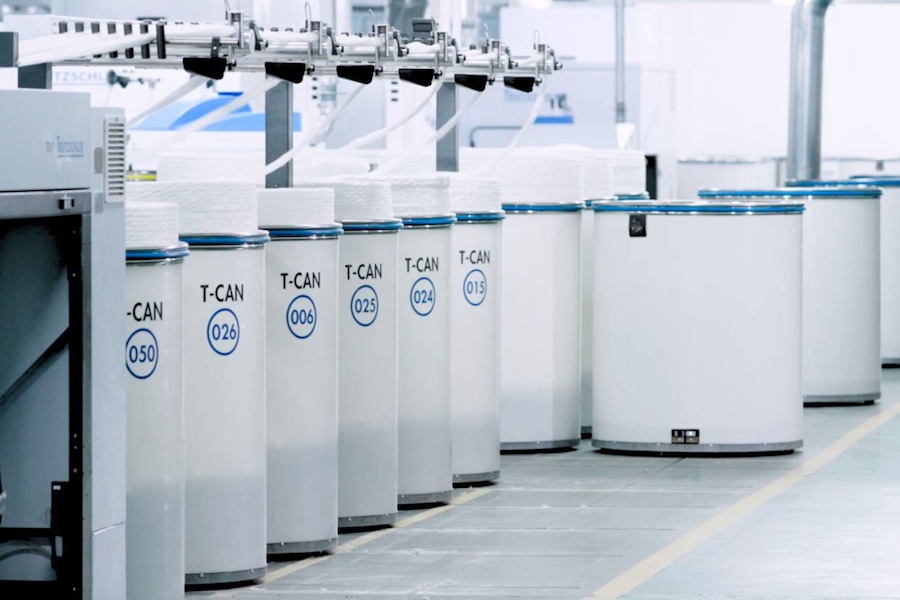
Rieter takes advantage of latest digital technology to offer customers a unique experience. Their digital spinning suite helps spinners overcome their daily challenges and manage costs and efficiency more effectively. This all-in-one mill management system connects all the machinery, giving quick access to the right information and a holistic view, from bale to yarn. Users profit from full transparency, and are presented with recommendations based on long-standing experience and know-how. This is digitalization at its most practical, applied to allow spinners to make the most of their installed machinery.

Production, service, training – digital everything

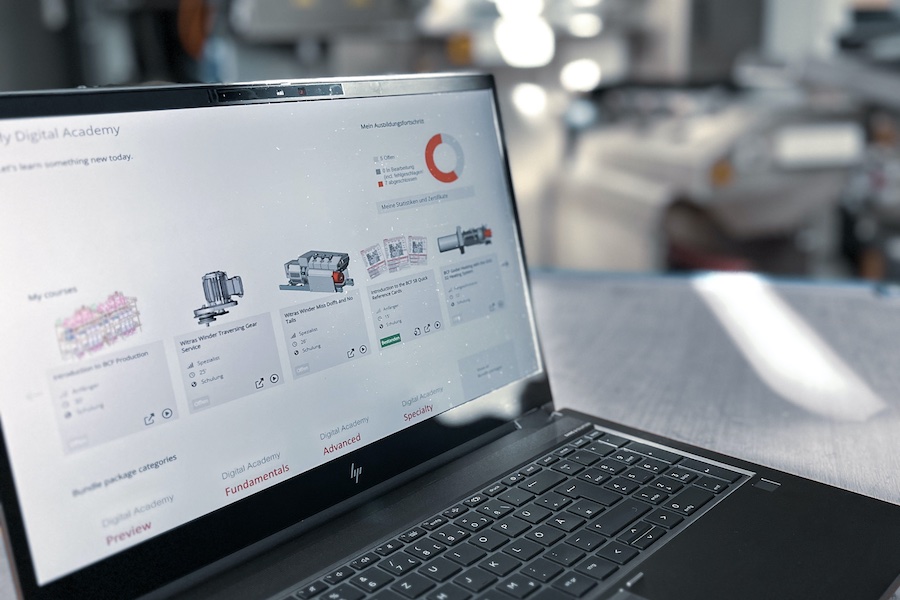
As a solutions provider, Saurer puts digitalization at the core of business, integral to its technology offering to customers. Some latest examples include self-optimization of spinning machines, and a fully automated transport of cylindrical or conical cross-wound packages. These are automatically stored in an internal buffer system, for later feeding to subsequent processes. Of course after-sales service is also digital: the e-shop and machine information hub, together with the web-based training centre, ensure that knowledge is transferred to customers – turning employees into experts.

See the future system today

Autefa Solutions uses the concept of digital twinning, visualizing any real-world concept of a nonwovens line to make it easier for potential customers to grasp the idea. It’s also a big help for training and servicing needs. Most of all they digitalize important parts e.g. of a baling press line with perfectly interconnecting software tools. This is an excellent method for reducing commissioning times. Ordered bale presses reach technical readiness in the form of a digital twin, before they are commissioned in the real world. This typically halves the total time to get the line up and running.

Speaking on behalf of Swiss Textile Machinery Association members, André Imhof, CEO of Autefa Solutions Switzerland AG, says: “Making digitalization our friend opens doors for business model innovations, which is essential for our industry competitiveness. The approach is to digitalize everything that can be digitalized. We won’t stop.”

It’s also quite certain that there will be many more chapters of the digitalization story invented in Switzerland.

More News from Swissmem Textile Machinery Division

More News on Industry 4.0 / Digitalization

#Sustainability

OEKO-TEX® chooses TextileGenesis to advance digital traceability for organic cotton

OEKO-TEX® today announced a full collaboration with TextileGenesis, a Lectra company, to digitally trace and authenticate organic cotton, strengthening fraud prevention across the supply chain. This announcement follows a successful pilot and brings together OEKO-TEX®’s certification expertise and closed testing system with TextileGenesis’ digital traceability platform to deliver a secure, end-to-end solution for managing certified organic cotton flows.

#Research & Development

Kick-off for the Textile Production of the Future: Establishment of a Textile Technology and Development Centre in Mönchengladbach, Germany

The Institut für Textiltechnik (ITA) of RWTH Aachen University, together with its partners, is pleased to announce that it has received approval for its joint initiative, ‘Textile Factory 7.0’. The goal of the project is the establishment of a technology and development centre for the textile industry in Mönchengladbach.

#Research & Development

Exchange data between textile companies openly, securely and cost-effectively without a central platform – ITA makes it possible

The Institut für Textiltechnik (ITA) of RWTH Aachen University has launched a new demonstrator for an open and secure data space in the textile industry at the Digital Innovation Centre Europe (DICE). For the first time, the demonstrator shows directly and clearly how companies can share their data securely with each other without the need for a central platform. Data exchange is based on shared, freely usable technical foundations.

#Software

Tunicotex Group boosts OTDP to 85%, cuts planning time by 25% & expands production capacity by 40%

Coats Digital is delighted to announce that following the implementation of FastReactPlan, leading Tunisian premium knitwear manufacturer, Tunicotex Group, has significantly improved its on-time delivery performance from 75% to 85%, reduced planning time by 25%, minimised delays and penalty costs, and unlocked 40% additional capacity to take on more customer orders and support sustained business growth.

Latest News

#Research & Development

Fabolose: Fabricating vegan and circular leather alternatives from bio-tech-derived cellulose

Fabulose is an EU funded project coordinated by the German Institutes of Textile and Fiber Research (DITF). Its consortium consists of leading research institutes, biotech innovators, and industry stakeholders who aim to create high-performance, biobased and recyclable leather-like fabrics, using efficient biotech production routes for bacterial cellulose, cyanophycin and bacterial pigments

#Textiles & Apparel / Garment

Connecting the ASEAN textile sector: sustainability, trends, and technology take centre stage at this week’s VIATT 2026

Opening this week Thursday, the Vietnam International Trade Fair for Apparel, Textiles, and Textile Technologies (VIATT) is set to welcome visitors from ASEAN’s dynamic textile market and beyond. From 26 to 28 February, VIATT 2026 – the fair’s third editions – will reinforce its strategic proposition with an integrated showcase of the three core sectors of the entire textile value chain. Beyond new sourcing opportunities in Apparel Fabrics & Fashion, Home & Contract Textiles, and Technical Textiles & Technologies, the fair will present an expanded fringe programme.

#Spinning

Measure and control the fiber – optimize yarn quality

Producing consistent yarn quality is an everyday challenge – and a very difficult one. Detailed knowledge and understanding of the fiber raw material is absolutely critical to achieving the best possible quality in the yarn. To help spinners, Uster experts have put together guidelines for avoiding yarn irregularity claims, in a special edition of the Uster News Bulletin.

#Software

Coats Digital appoints Himanshu Mehrotra as Managing Director to lead next phase of cloud and AI-driven innovation

Coats Digital is delighted to announce the appointment of Himanshu Mehrotra as Managing Director to lead the company’s strategic direction, innovation agenda, and global growth as it accelerates the development of its cloud-native, AI-powered software solutions for the global apparel and footwear supply chain.

TOP