[pageLogInLogOut]

#Composites

Notus Composites launches new low temperature curing NE7 Epoxy Prepreg
© 2021 Notus
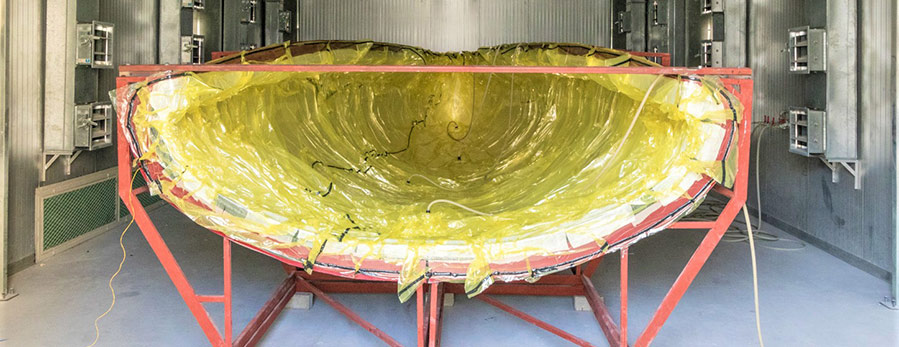
Notus Composites (UAE), the award-winning producer of epoxy prepreg materials, is proud to announce the latest addition to its high-performance epoxy range with the launch of its new NE7 low temperature curing prepreg system. The entirely new Notus NE7 formulation allows composite manufacturers to cure components at temperatures as low as 70?C, reducing energy consumption and enabling more cost-effective tooling options.

Notus Composites has developed the new NE7 prepreg systems for applications across the Marine, Architecture, Industrial and Wind Energy sectors, with the novel low temperature curing chemistry delivery significant cost benefits. Existing prepreg manufacturers can now use more cost-effective composite tooling, with new prepreg users able to switch easily from existing infusion or wet laminating processes without creating expensive new high temperature tooling. 
© 2021 Notus
© 2021 Notus


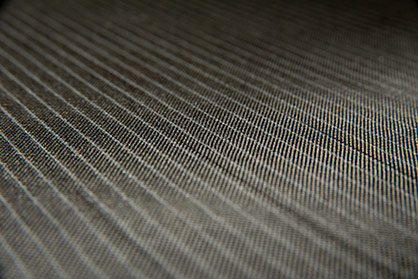
NE7 prepregs can be cured at temperatures as low as 70?C, with the standard cure cycle being 12 hours at 70?C, matching the typical cycle time for an infused part with a component Tg of 85?C. NE7 materials have a good outlife of 30 days at 20?C and are available in all prepreg and Notus single sided N1-Preg formats with unidirectional, multiaxial, and woven reinforcements. NE7 can also be supplied as a resin film.


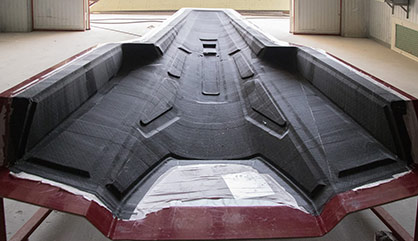
Notus has recently supplied NE7 low temperature prepregs to Dubai based Aeolos Composites for the production of their new Aeolos P30 racing yacht. The P30 is a futuristic new craft created by top German sailor and designer, Hans Genthe, with a super light carbon fibre construction and large sail area that promises spectacular on the water performance for a thirty foot yacht. Notus delivered a range NE7 prepregs for the build, including woven, multiaxial, and unidirectional carbon fibre reinforcements as well as adhesive films for core bonding.
© 2021 Notus
© 2021 Notus


“With the new NE7 prepreg system from Notus we are able to build our latest P30 design quickly, cleanly and with absolute consistency. We were clear from the outset that the P30 would be a full carbon boat, and the NE7 materials provided a perfect package of mechanical performance, excellent processability, good outlife on the shop floor, low temperature curing, which made the choice of prepreg versus infusion an easy one. The P30 structure we have produced is so light and stiff it's incredible,” said Hans Genthe, Owner, Aeolos Composites.

Notus Composites is also well known for the outstanding fire performance of its’ specialist epoxy FR prepregs. The company’s EPFR-609 FR prepreg materials (tested and certified to NFPA 285, ASTM E84 and EN13501-1) are now available with the NE7 low temperature curing technology, combining additional processing options with market leading fire performance.
More News from TEXDATA International

#ITM 2026

ITM 2026: The new geography of textile production

New production hubs are emerging across North Africa and Central Asia, while Türkiye is accelerating its transformation toward higher-value, technology-driven and more sustainable textile manufacturing.

#Research & Development

“Production is a product”

From technical textiles and AI-driven robotics to the limitations of textile circularity: Professor Dr Thomas Gries looks back on more than two decades of development at ITA Aachen. In the interview, he explains why production technology remains a decisive success factor, discusses international collaborations and innovation ecosystems, and shares his views on the transformation of production landscapes and the challenges facing an increasingly regulated industry.

#Knitting & Hosiery

“We need to move away from the price trap and return to a value-driven mindset.”

With its new Textile Innovation Center, KARL MAYER is sending a strong signal for innovation, collaboration, and the future of textile applications. In this interview, Karl Josef Mayer discusses new opportunities in warp knitting, the processing of staple fibres, recycling, the changing role of machinery manufacturers, and why the textile industry must once again focus more strongly on the value of textiles. by Oliver Schmidt

#Associations

“Innovation, resilience and international experience remain the great strengths of the Swiss textile machinery industry”

Geopolitical uncertainty, growing competitive pressure from China, new free trade agreements and the shift towards a circular economy are currently reshaping the global textile industry. In this interview, Cornelia Buchwalder discusses the current mood within the Swiss textile machinery sector, the industry’s distinctive innovative strength, new market opportunities in India and Asia, and the technological trends that could shape the upcoming trade fair cycle leading up to ITMA 2027.

More News on Composites

#Research & Development

Novel flame-retardant and recyclable fiber-reinforced composite

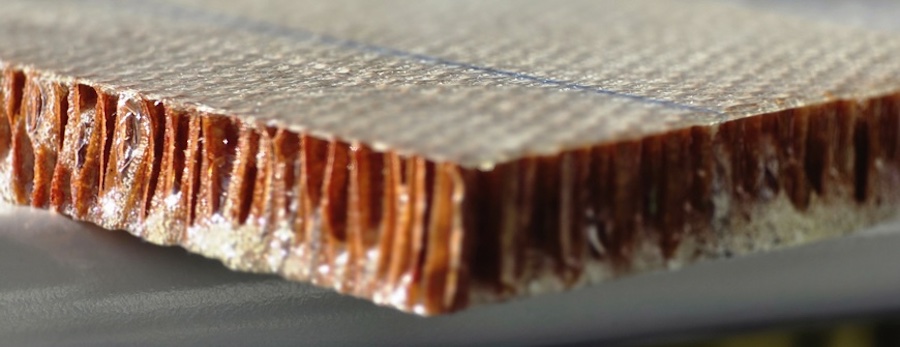
Airplanes and passenger trains must meet strict safety requirements, including fire safety standards. This calls for materials that are flame-retardant, lightweight, robust, and scalable. Empa researchers, in collaboration with their industry partner Elantas, have now succeeded for the first time in making such a material – a composite – fully recyclable.

#Composites

WHILL selects Teijin’s tough, lightweight Carbon Fiber Composite for new last-mile mobility

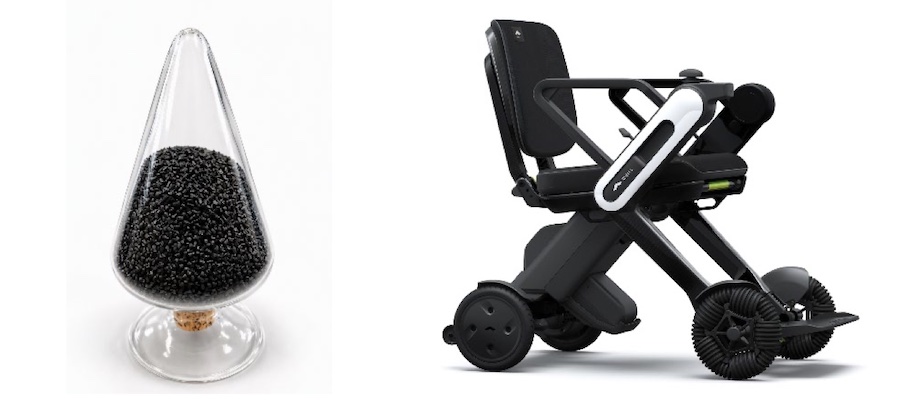
Teijin Limited announced today that WHILL Inc., a global leader in inclusive mobility technology, has selected Sereebo® P CFP series, a carbon fiber-reinforced thermoplastic (CFRTP) material, for key structural components of the upcoming WHILL Model C Lite. Sereebo® P CFP series provides high strength, light weight, design flexibility and system cost advantages to the Model C Lite, which is a battery powered, single-seat, last-mile device. This new model combines maneuverability with light weight and one-handed folding to ensure ease of handling and operation.

#Composites

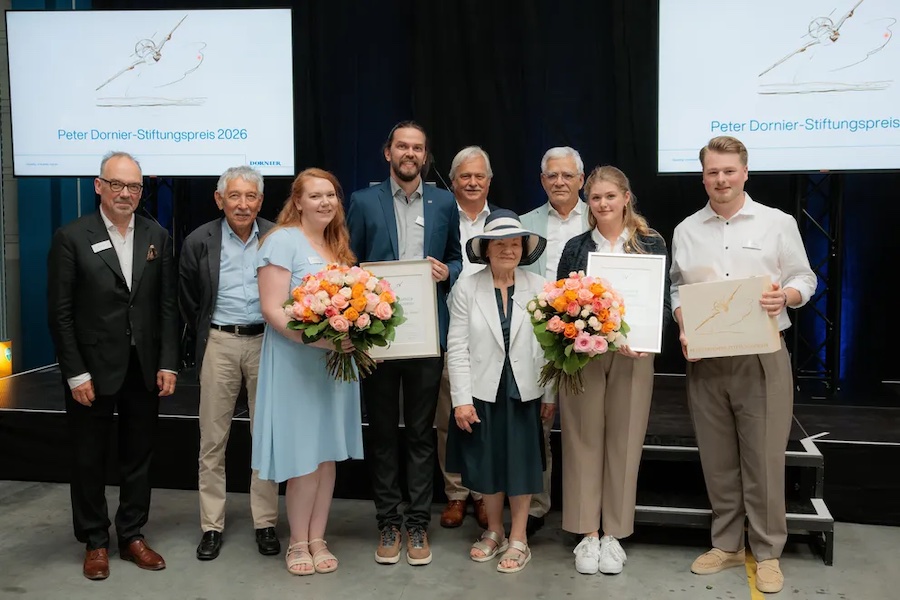
Fewer pores, greater impact tolerance: Peter Dornier Foundation Prize 2026 honours material research on fibre-reinforced composite components for aerospace industry

Microscopically small pores that form during manufacture, or barely visible impact damage, can severely impair the load-bearing capacity and service life of fibre-reinforced composite components. Two young researchers have presented groundbreaking work in this field and will both be awarded the 2026 Peter Dornier Foundation Prize: Dr.-Ing. Benedikt Neitzel from the Technical University of Ilmenau for his doctoral thesis on pore minimisation in the RTM process, and Johanna Buschmann, M.Sc., for her master’s thesis, completed at the German Aerospace Centre, on the improved impact tolerance of 3D fabrics compared to 2D laminates.

#Composites

Carbon Revolution wins Composites Australia Engineering Team Excellence Award

Carbon Revolution has won the Engineering Team Excellence Award at the 2026 Composites Australia Annual Industry Awards.

Latest News

#Industry 4.0 / Digitalization

Coats Digital launches AI-powered GSD RealMotion for motion analysis

Coats Digital has launched GSD RealMotion, an AI-powered solution designed to provide apparel manufacturers with greater visibility into factory-floor operations. By analysing shop-floor video and applying Coats Digital’s GSD methodology, the solution turns video recordings into structured, motion-by-motion method studies.

#Textile chemistry

Archroma and Lameirinho partner in pioneering deployment of InOneGO single-step dyeing

Archroma, a global leader in specialty chemicals, and Lameirinho, a leading home textiles manufacturer based in Portugal, are collaborating to bring InOneGO by Archroma, a new single-step dyeing process, into commercial production. Lameirinho’s first InOneGo bedlinens collection is now available worldwide.

#Knitting & Hosiery

KARL MAYER launches extra-wide HKS 3-M EL for increased productivity

KARL MAYER has launched a new extra-wide version of its HKS 3-M EL tricot machine, designed to increase productivity particularly in the manufacture of textiles for sports, activewear and athleisure applications.

#Research & Development

Reducing development times for technical textiles by accelerated thermo-oxidative aging in a high-pressure autoclave

Synthetic polymers used in technical textiles can be effectively protected against degradation caused by heat, oxygen, and water through the use of stabilizer systems. This enables service lives of several decades, extending to more than 50 years. As the use of durable technical textiles continues to grow, so does the demand for reliable methods to predict their service life within economically feasible testing periods. For the first time the German Institutes of Textile and Fiber Research Denkendorf (DITF) developed methods for robust service life prediction for textiles in an IGF research project.

TOP