#Recycling / Circular Economy
DITF establishes CYCLOTEXUM recycling center to advance mechanical and solvent-based textile recycling
Mechanical recycling: From production waste to high-quality textiles
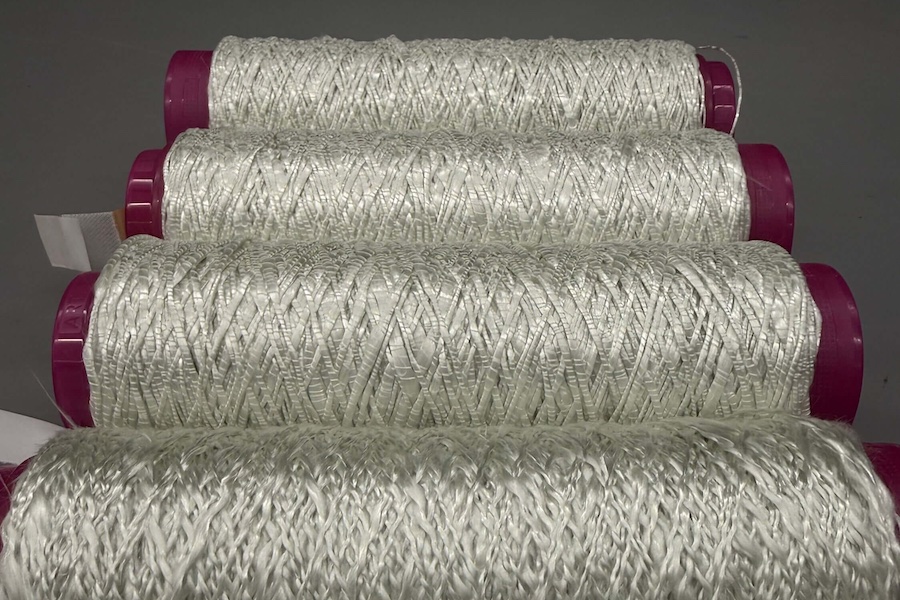
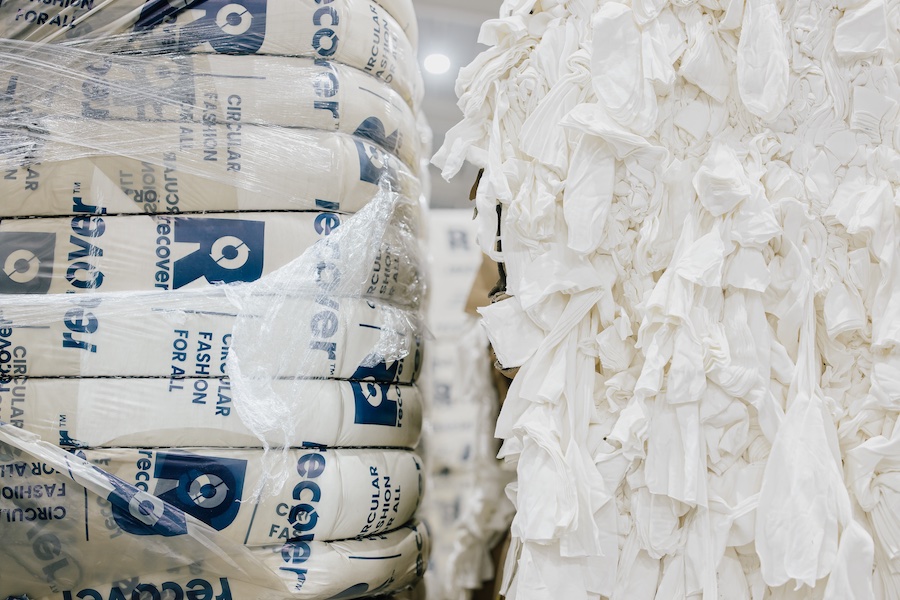
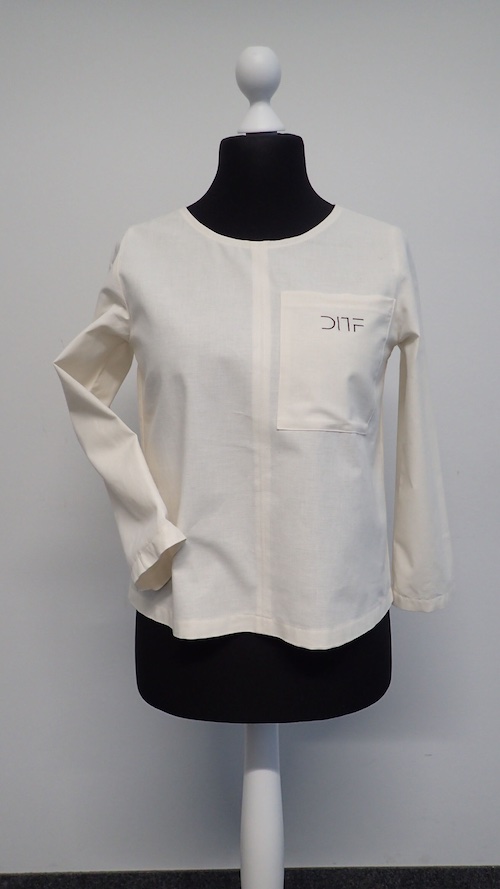
Over the course of seven and a half months, two modules were worked on in parallel as part of the CYCLOTEXUM research project: In Module A (mechanical recycling), fiber data for mechanically torn secondary raw materials were determined, and a processing strategy was developed that enables the estimation of industrial processes based on small laboratory-scale quantities. Using the process chain set up at the DITF, production waste was exemplarily processed into a woven blouse made from 100 percent recycled fibers. The spinning mill models for material flow and cost accounting developed in the project enable a technical, economic, and ecological evaluation of the recycled yarns and textile fabrics.
Fiber quality determines economic and environmental performance
The studies show that high-quality yarns can be produced from high-quality recycled fibers that have been tested for their properties. The production costs are not higher than when using primary raw materials. The major advantage is that the use of recycled fibers reduces CO₂ emissions.
In contrast, low-quality recycled fibers result in yarns of inadequate quality, high waste rates, frequent process disruptions, and increased staffing requirements in production, making them less efficient. This leads to high costs and a negative carbon footprint.
This work forms the basis for advising the industry on the technical, economic, and environmental evaluation of recycled yarns.
Solvent-based recycling: Successful separation of flame retardants from PET
Module B investigated the solvent-based recycling of flame-retardant poly(ethylene terephthalate) (PET). The solvents sulfolane and γ-valerolactone (GVL) proved suitable for primary materials, production waste, and end-consumer waste alike: the flame retardant could be completely separated from the base polymer.
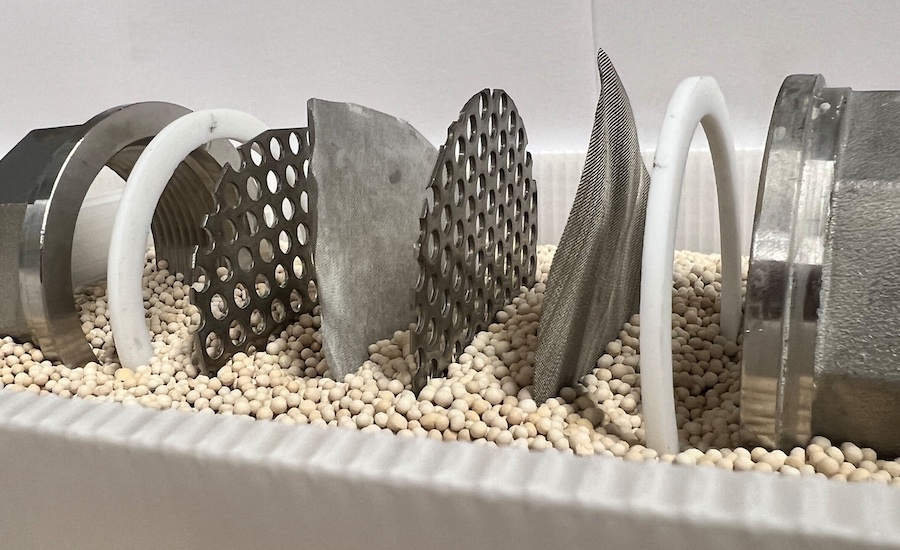
In addition, filtration systems were developed on a laboratory and pilot scale, and it was demonstrated that the systems are also effective for post-consumer waste on the scale of a 5-liter reactor using GVL.
The laboratory and pilot-scale facilities developed in Module B expand the scope of filtration-based recycling processes, for example, for PET-cotton blends or for the separation of elastane. This provides capacity for further research and industrial projects.
New opportunities for textile recycling and beyond
The methods, models, and technical facilities developed in the CYCLOTEXUM project are transferable to many applications in the apparel, home textiles, nonwovens, and technical textiles industries. The solvent-based recycling and filtration capacities can also be used for blended textiles, such as PET-cotton blends, as well as for the separation of elastane or other polymers. It is possible to apply these methods to polymer-based waste streams from other sectors, such as the automotive, construction, medical, and plastics industries. The newly established CYCLOTEXUM recycling center at the DITF serves as an interface between research and industry, thereby ensuring the transfer of results.
The CYCLOTEXUM project was funded by state funds approved by the Baden-Württemberg State Parliament.