[pageLogInLogOut]

#Industry 4.0 / Digitalization

Digitalization brings movement to the sports, fitness and wellbeing sector

As a wearables specialist, KARL MAYER is a partner of the DiMo - DigitalMotion project

Trends such as fitness lifestyle and vitality, the quantified self movement, active ageing and the outdoor boom will significantly change the sports, health and wellness sector in the coming years. In addition, technical innovations will redefine the way people stay fit and healthy.

The DiMo - Digital Motion joint project aims to help shape the transformation process. It ran in its first round in 2023 and will be continued for another four years with DiMo-NEXT.

The project aims to conduct transdisciplinary research into how people's experience of exercise can be improved, performance increased and a sustainable lifestyle made possible. The potential offered by digital technologies, particularly in the field of sensors, plays a key role here. The topic of clothing is also important as an interface between technological solutions and people. This is why KARL MAYER and Grabher are among the 26 project partners from industry and research, representing the textile industry.
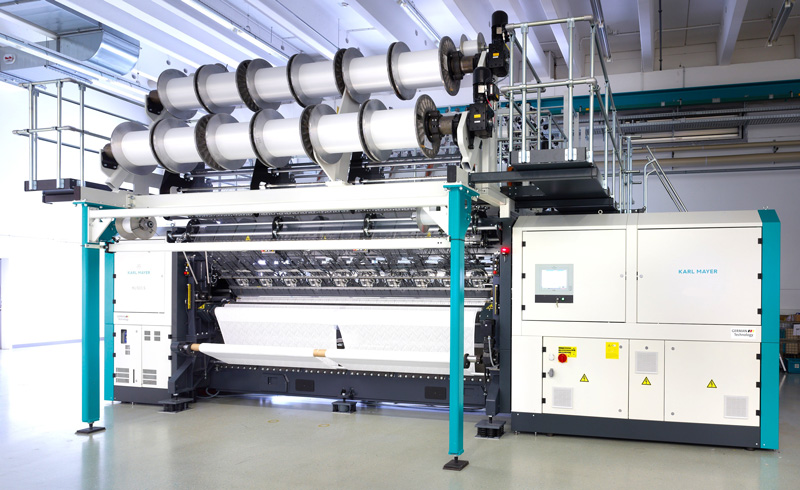
(c) 2024 KARL MAYER - MJ 52/1 S


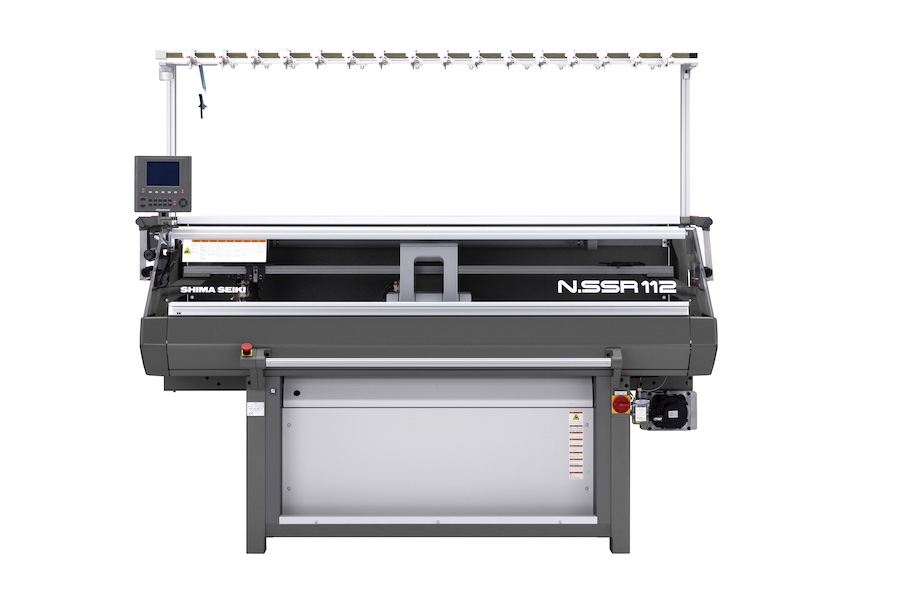
The innovative textile machinery manufacturer KARL MAYER is contributing its expertise in the field of wearables to the project work. The TEXTILE CIRCUIT team of its TEXTILE MAKERSPACE has already successfully implemented various projects in this area. In addition, an MJ 52/1 S from KARL MAYER is used at V-Trion, Grabher's research company in Lustenau, for the production of electrically conductive textiles.

DiMo-NEXT will be launched on April 1, 2024, shortly before Techtextil 2024 in Frankfurt am Main. KARL MAYER will present its contribution to the project work at the leading international trade fair for the sector.

Interacting instead of just analyzing

Ever smaller, cheaper and more precise sensors are already leading to new products and services, but these are only suitable for recording and analyzing data, for example on the length, frequency and speed of activities. DiMo-NEXT goes one step further: integrated motion sensors and psychophysiological sensors are to be combined with new, intuitive interaction concepts to support consumers in their physical activities and ensure greater motivation, performance and well-being. This approach is based on expanding the performance potential of clothing.
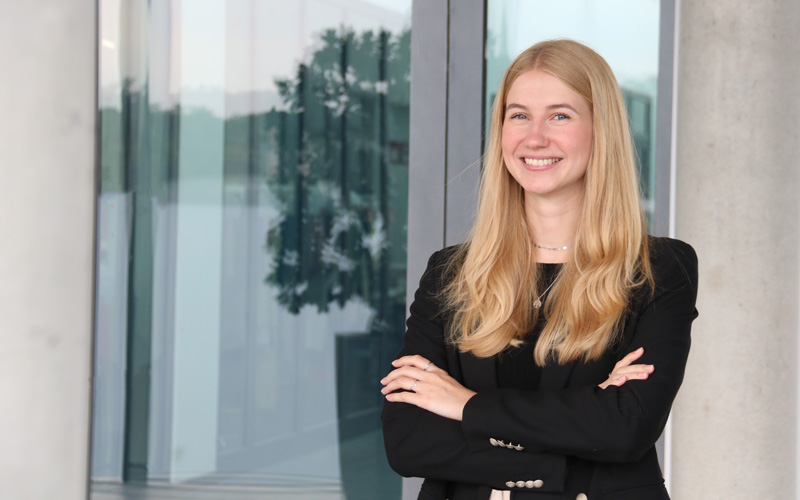
(c) 2024 KARL MAYER - Franziska Guth, Product Developer for Textile Technology


"For us as textile product developers, DiMo's objective means that we have to deal with the implementation of next-generation wearables," says Franziska Guth, Product Developer for Textile Technology at KARL MAYER.

The processing of electronics in textiles to record vital data has already been successful and proven. Now it is important to use the clothing to interact with the wearer, for example to optimize movement sequences and training sessions.
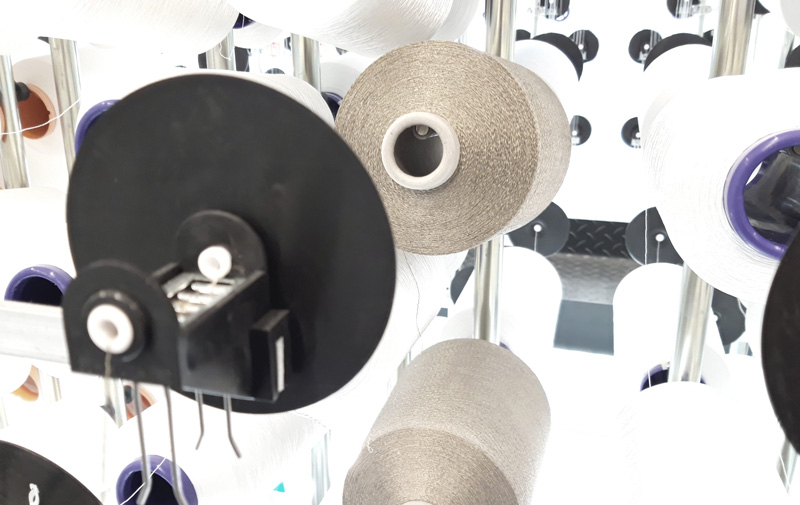
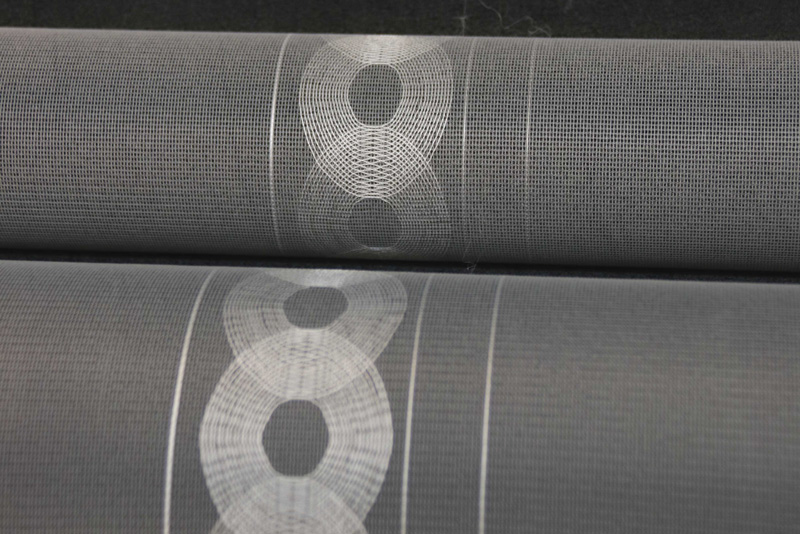
(c) 2024 KARL MAYER - Conductive yarn


(c) 2024 KARL MAYER - Inductive charging structure


KARL MAYER will be demonstrating how this can be achieved at Techtextil in Frankfurt am Main from April 23 to 26. The manufacturer is looking forward to meeting its guests in Hall 12.0, Stand B73. Franziska Guth and her colleagues look forward to welcoming their visitors.
More News from

#Sustainability

Number of GOTS-certified facilities grow 15% globally as demand for credible sustainability standards continues to strengthen

Global Organic Textile Standard (GOTS) certification continued to grow in 2025, with nearly 18,000 certified facilities worldwide, despite ongoing geopolitical uncertainty and rapidly evolving regulatory requirements across global textile supply chains.

#Raw Materials

ECCO introduces first shoe featuring innovative protein-based fibre

ECCO, in partnership with Spinnova, announces the launch of the limited edition ECCO BIOM® 720, a first-of-its-kind shoe utilising an often overlooked leather by-product, transformed into a protein-based fibre. The fibres are produced using patented technology that advances material innovation while reducing waste and supporting full resource use across the leather and textile industry.

#Man-Made Fibers

The LYCRA Company strengthens sustainability leadership, appoints Alistair Williamson as VP of Product Sustainability

The LYCRA Company has appointed longtime executive Alistair Williamson as vice president of product sustainability, reaffirming its commitment to developing sustainable solutions for apparel and personal care products. In this role, he will guide the company’s next chapter of sustainability strategy and oversee all initiatives aimed at reducing environmental impact across products, operations, and innovation platforms.

#Raw Materials

Kraig Biocraft Laboratories reports major progress converting record-setting spider silk cocoon production into reeled silk

Kraig Biocraft Laboratories, Inc. (OTCQB: KBLB) (“the Company”, “Kraig Labs”, or “Kraig’s”), a world leader in spider silk technology*, today announced significant progress in the processing of its recently produced recombinant spider silk cocoons into reeled silk.

More News on Industry 4.0 / Digitalization

#Research & Development

Textilfabrik 7.0 launched: Mönchengladbach becomes a real-world lab for sustainable textile production

With the official kick-off event of the Textilfabrik 7.0 (T7), a major transformation project for the German textile and apparel industry has been launched in the Monforts Quarter in Mönchengladbach. At the “Textile Roundtable,” an event format organized by the Zukunftsagentur Rheinisches Revier, representatives from industry, research, politics, and the regional economy came together to jointly lay the foundation for CO₂-neutral, circular, and economically viable textile production in Germany.

#Man-Made Fibers

OnceMore® from Södra brings end-to-end traceability for circular Man-made Cellulosic Fibers (MMCF) using TextileGenesis

OnceMore® from Södra, the world’s first large-scale process for recycling blended fabrics into high‐quality dissolving pulp, will begin using TextileGenesis, a Lectra company, to strengthen traceability from raw material to retail across the value chain. OnceMore® produces dissolving pulp made from blended textile waste and wood sourced from responsibly managed Swedish forests. By integrating TextileGenesis, OnceMore® supports the growing need for verified data and secure, transparent tracking throughout increasingly complex supply chain.

#Denim

Jeanologia launches Billy

The new AI extracts precise laser designs from a garment image in minutes, transforming how vintage denim is recreated for production. If Jeanologia’s laser changed the way jeans were made at the end of the last century, its AI now takes the next step: moving from reproducing wear to designing it. / archive photo © 2026 Jeanologia

#Dyeing, Drying, Finishing

Monforts unveils interactive digital platform for textile finishers

Monforts has launched a new digital platform designed to give textile manufacturers faster, more intuitive access to the company’s finishing technologies, technical expertise and aftersales support worldwide.

Latest News

#Textile processing

trinamiX mobile NIR spectroscopy: New applications for the footwear and textile industry

trinamiX GmbH expands its solution portfolio for the circular economy, now enabling the identification of materials used in the footwear and textile industries. With its mobile near-infrared (NIR) spectroscopy solutions, trinamiX supports manufacturers, sorters, recyclers, and brand owners in reliably identifying materials and improving transparency across increasingly complex value chains.

#Sustainability

bluesign technologies introduces bluepass

bluesign technologies ag (www.bluesign.com) today announces the launch of bluepass, a new certification mark and product labeling system created to deliver clear, substantiated, and verifiable sustainability claims at scale.

#Texprocess 2026

Texprocess 2026: Style3D | ASSYST showcases AI, 3D, 2D and automation and meets strong industry response

Four days, countless discussions and a clear signal from the industry: the future of fashion is digital and AI-driven. At Texprocess 2026, Style3D | ASSYST demonstrated how AI, 3D and automation are already fundamentally transforming processes from design to production.

#Dyeing, Drying, Finishing

Smart Quality Control for Technical Textiles

In the end, what matters is the result: a filter that performs reliably, a membrane that remains stable in storm conditions, a composite material with precisely defined properties. But the path to achieving this is demanding. In the production of technical textiles, numerous parameters interact – and even the smallest deviations can have major consequences.

TOP