[pageLogInLogOut]

#INDIA ITME 2022

DILO shows latest developments to solve urgent problems at India ITME
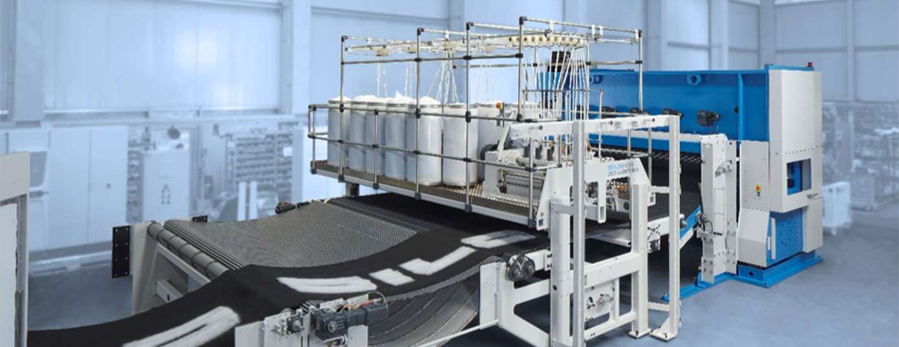
© 2022 Dilo
India ITME 2022 is an important exhibition for the textile industry and thus offers a central forum for dialogue within the textile production sector with the relevant supply chain comprising textile machine building, fibre production, ancillaries and accessories. For DiloGroup I(Hall H12.0, booth No. H12B23) this event is a good oppportunity to inform customers and interested parties about new developments aimed at improving production technologies with a focus on needlefelts.

It becomes more evident that the textile industry comes into the focus of regulatory authorities who push respecting sustainability principles and who initiate a new body of laws. Hence all industrial sectors are requested to achieve savings in material and energy. The textile machine building, of course, plays an important role by seizing this initiative and offering solutions for fibre pulp recycling and reduction of energy, water and ancillaries. DiloGroup has made big efforts to meet these challenges together with a circle of partner companies. In this regard focal points of the development work are:
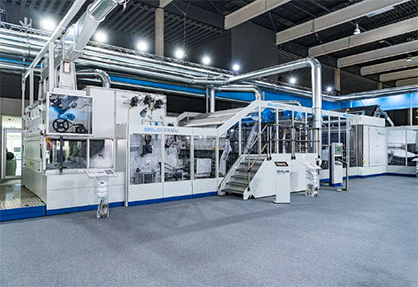
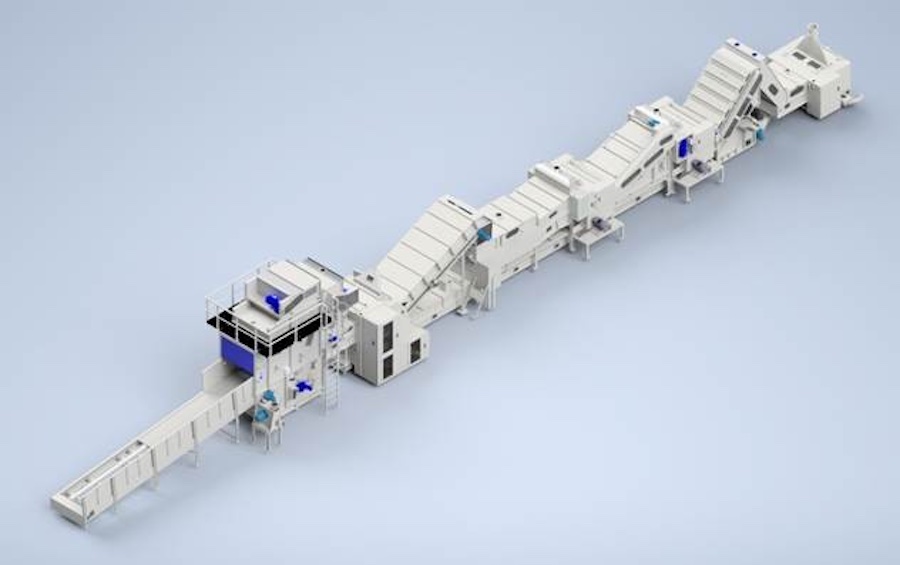
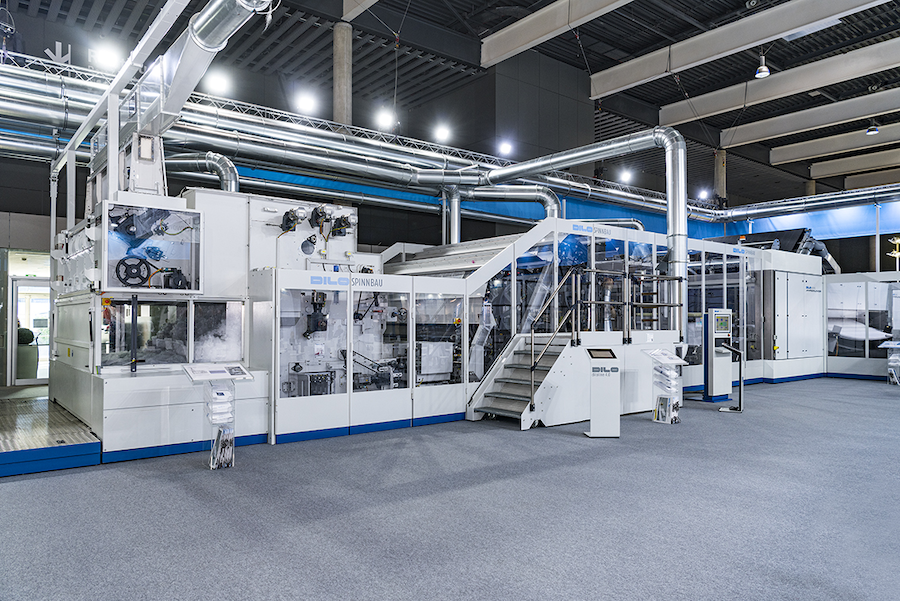
Dilo needling line © 2022 Dilo


1. Intense Needling

Needling per se is a mechanical production method with a high energy efficiency. For this reason, the development efforts of DiloGroup aim at producing nonwovens by “intense needling” instead of water entangling, even for light nonwovens made of fine fibres for the medical and hygiene sector with an area weight of 30 – 100 g/m2. This would result in a reduction of the environmentally relevant production costs; per annum to about 1/3 to 1/5 of current.

Despite the prospective advantages of the mechanical intense needling method over the hydrodynamical, water entanglement is at the moment the most important production method for low area weights and highest production capacity and is also offered by the DiloGroup as general contractor in cooperation with partner companies.


2. “Fibre Pulp Recycling”

Fibrous material in nonwovens and particularly used clothes can be successfully recycled, if staple length can be conserved in the tearing process. In the classical tearing process, staple lengths are dramatically reduced and therefore these fibres can only be used as base material for inferior uses in thermal or acoustic insulation or in protective textiles, transportation or protective covers etc.

When recycling textile waste in the context of the collection of used clothes, the so called “filament-saving” tearing using special tearing machines and methods must be used to produce fibres with longer staple lengths which can be fed to a nonwoven installation. Hence product characteristics can be better specified and controlled.

3. Additive nonwoven production

The additive production method of the “3D-Lofter” is especially suited for automotive parts with differently distributed masses; but there may also be potential for increasing uses in the sector of apparel and shoe production.

4. “IsoFeed”-card feeding

In the field of card feeding, the “IsoFeed” method offers great potential for a more homogeneous card feeding at the same time reducing the variation in cross-machine fibre mass distribution and thus the fibre consumption while conserving the end product quality.

DiloGroup would like to discuss the above mentioned developments of needling technology as well as modules of Industry 4.0 applications for further digitalization during the Techtextil exhibition. We will, of course, also inform about the numerous universal and special applications of the complete nonwovens technology.
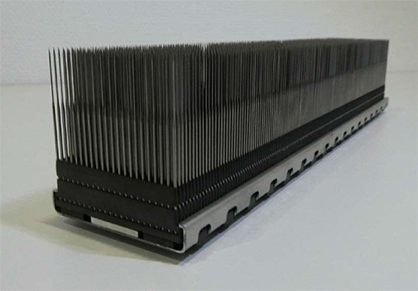
Needle module holder © 2022 Dilo


More News from Dilo, Oskar Maschinenfabrik KG

#ITMA Asia + CITME Singapore 2025

Dilo Group at ITMA ASIA Singapore 2025

At ITMA ASIA Singapore, the Dilo Group will exhibit at Booth No. H2 – D202. Together with Kansan Materials, Izmir, the company will present its latest developments and looks forward to welcoming visitors to exchange ideas and explore innovations in needling technology.

#Nonwoven machines

ALMA boosts floor covering production with high-performance line from DiloGroup

ALMA in Florence is a specialist in the floor covering sector providing high quality products in a vast range of styles, colours and aesthetics. For its own fibre supply Messrs. ALMA keep an inhouse production of PP fibre in order to accommodate their need of excellent raw materials and broad production needs.

#Nonwoven machines

Dilo Systems and Kansan Group partnership announcement

Dilo Systems GmbH, a Germany-based manufacturer specializing in complete nonwoven lines, and Kansan Group, a Turkish manufacturer specializing in nonwoven converting lines, end-of-line solutions, and Wetlaid Nonwoven machinery, have signed a strategic partnership agreement to supply custom nonwoven lines.

#IDEA 2025

Dilo Systems and Kansan Group announce partnership

Dilo Systems GmbH, a Germany-based supplier specializing in complete nonwoven lines, and Kansan Group, a Turkish manufacturer specializing in nonwoven converting lines, end-of-line solutions, and Wetlaid Nonwoven machinery, have signed a strategic partnership agreement.

More News on INDIA ITME 2022

Latest News

#Research & Development

Innovation center for textile circular economy inaugurated

Just over eight months after the foundation stone was laid, the new Innovation Center for Textile Circular Economy was officially inaugurated today at TITK Rudolstadt. Thuringia's Minister President Mario Voigt, TITK Director Benjamin Redlingshöfer, and other guests of honor cut the ribbon to the modern building complex and viewed the premises, which are now ready for occupancy. The “DICE – Demonstration and Innovation Center for Textile Circular Economy” is TITK's largest single investment to date. The Free State of Thuringia supported the total cost of €11.5 million with €8 million in GRW and FTI funding.

#Research & Development

Sustainable design of Geosynthetics and roof underlayments made from recyclates

Is it possible to recover plastic recyclates from previously unused waste streams in order to produce high-quality fibers and films? How can bio-based polymer fibers be manufactured so as to allow adjustable biodegradability? These are the questions being addressed by researchers from the Fraunhofer Cluster of Excellence Circular Plastics Economy CCPE in the Zirk-Tex project.

#Associations

Waste2Fashion: FTTH Committed to advancing Circular Fashion in the Mediterranean

As an official partner of the Waste2Fashion project, the Tunisian Federation of Textile and Apparel (FTTH) participated in the Kick-off Meeting held on 10–11 December in Spain. The event brought together project partners from across the Mediterranean, including Spain, Italy, Egypt, Lebanon, and Tunisia, to align on a shared vision and initiate the first implementation steps.

#Associations

AATCC announces 2025 Herman & Myrtle Goldstein Graduate Student Paper Competition winners

The American Association of Textile Chemists and Colorists (AATCC) recognized the winners of the 2025 Herman & Myrtle Goldstein Graduate Student Paper Competition. Founded in 1982 to give student members the chance to conduct and present original research, the competition was renamed in 1994 in honor of Herman and Myrtle Goldstein, following their US$60,000 endowment. Their gift is a lasting remembrance of their dedication to young people in the textile industry.

TOP