[pageLogInLogOut]
You can feel it's Benninger!

#Dyeing, Drying, Finishing

Jeanologia joins forces with HKRITA and the H&M Foundation in the new Open Lab in Hong Kong
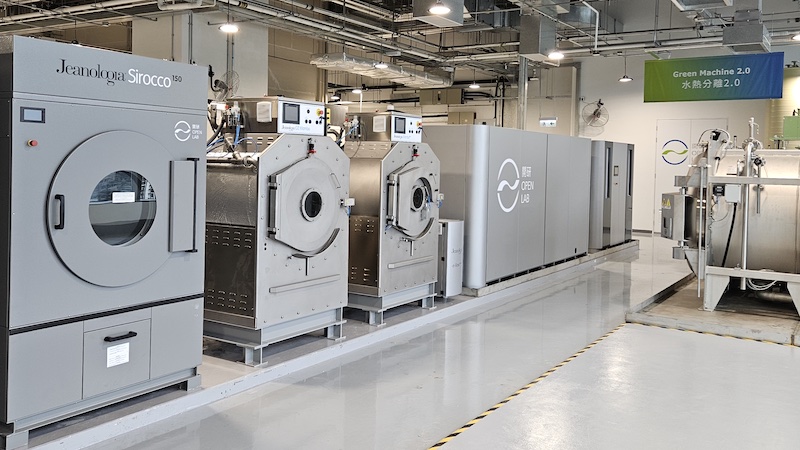
Jeanologia has joined the Open Lab initiative, a project led by the Hong Kong Research Institute of Textiles and Apparel (HKRITA) and the H&M Foundation. The initiative aims to create a dynamic hub for the entire textile value chain, driving innovations to tackle the challenges of climate change. The Spanish company is contributing its technology and R&D expertise to the lab to support the ambitious Green Machine 2.0 project.
Jeanologia machines in the new Open Lab © 2024 Jeanologia


Located in Hong Kong’s Advanced Manufacturing Centre, this pioneering lab spans 1,800 square meters and is dedicated to the research and development of sustainable textile solutions. It will host over 80 projects focused on sustainability and serve as a meeting point for brands, manufacturers, and suppliers to develop scalable technologies that promote greater circularity and efficiency in the industry. The lab bridges the gap between research-phase innovations and their practical application in textile production.

Jeanologia, aligned with HKRITA’s values, is part of the Open Lab ecosystem, contributing its technology and R&D to advance the Green Machine project. As Enrique Silla, CEO and founder of Jeanologia, explains, “The creation of the Open Lab presents a unique opportunity to unite brands, manufacturers, and suppliers in a collaborative, innovation-driven environment. We are confident that, together with HKRITA and the H&M Foundation, we will make significant strides toward a more circular and efficient textile future."

In this cutting-edge space, Jeanologia has introduced some of its most advanced technological solutions aimed at reducing water, chemical, and energy use in the textile industry. Key innovations include the H2 Zero water recovery system, a closed-loop process that allows for the reuse of water without chemicals, while also minimizing energy consumption. The lab also features the eco-efficient Smart Box washing line, which significantly cuts water, energy, and chemical use during textile washing. Additionally, e-Flow technology uses nanobubbles to precisely apply chemicals to garments with minimal water and zero waste. Another highlight is the G2 technology, which uses atmospheric air to generate ozone that interacts with textile dyes to create authentic worn finishes on garments, all without emissions and with substantial savings in water and chemicals.
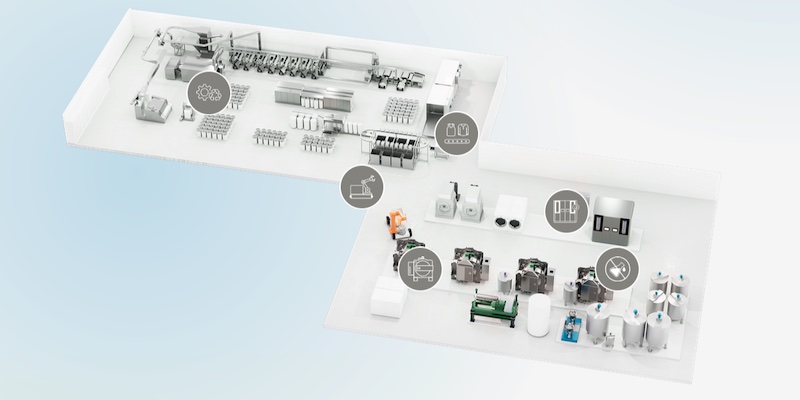
The new Open Lab will be one of the most advanced centers in the world for the research and development of sustainable textile technologies © 2024 Jeanologia


The new Open Lab, funded by the Innovation and Technology Commission of the Hong Kong government and housed at Hong Kong Polytechnic University, aims to become a global leader in applied research and industrial solutions. At the heart of the facility is the Pilot Plant, an industrial-scale recycling line designed for demonstrations and technology testing. It also features the Green Machine 2.0, which separates polyester fibers from PET-cotton blended textiles at scale, with the capacity to recycle up to one ton of material daily.

The Open Lab is expected to be fully operational by the end of 2024, cementing its status as one of the world’s most advanced centers for sustainable textile technology R&D.

Globally recognized for its disruptive innovations, Jeanologia reaffirms its leadership in transforming the textile industry with its involvement in this ambitious project. The Spanish company emphasizes its collaborative approach to addressing the pressing sustainability challenges the sector faces. “We firmly believe that the future of fashion will be eco-efficient, and through partnerships like this one, we are building that future today," says Enrique Silla, adding that "technological innovation is key to solving the industry’s most urgent challenges."


More News from JEANOLOGIA S.L.

#Denim

Denim moves towards sustainability

EIM (Environmental Impact Measurement), the global reference platform for measuring the environmental impact of garment finishing, presents the second edition of its annual report Denim Industry Progress & Insights 2025. The study analyses over 100,000 real denim finishing processes, providing an accurate and up-to-date view of the industry’s evolution towards more sustainable models.

#Textile processing

Jeanologia showcases the future of product development

Jeanologia is showcasing how software is transforming product development in the fashion industry at PI Apparel Europe: The Fashion Technology Show, taking place on March 30–31 in London.

#Denim

Jeanologia launches Billy

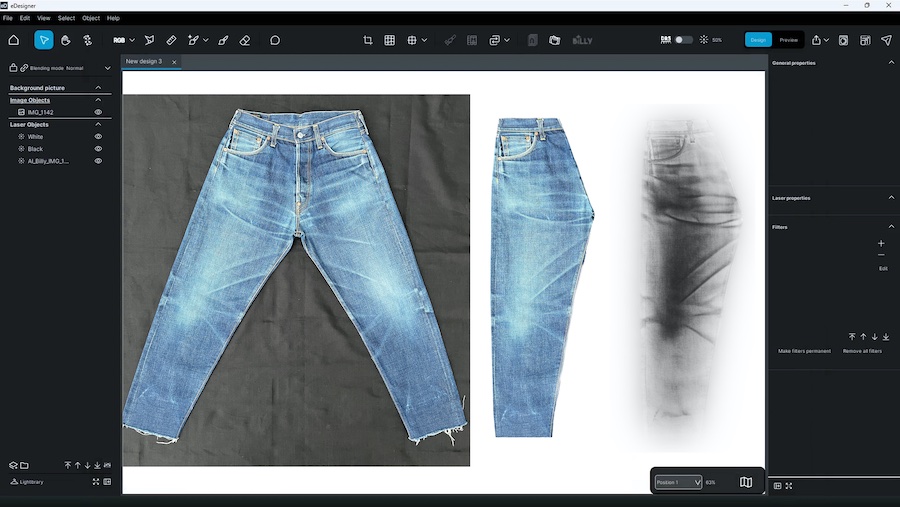
The new AI extracts precise laser designs from a garment image in minutes, transforming how vintage denim is recreated for production. If Jeanologia’s laser changed the way jeans were made at the end of the last century, its AI now takes the next step: moving from reproducing wear to designing it. / archive photo © 2026 Jeanologia

#Textile chemistry

Jeanologia urges industry to accelerate PP Spray phase-out following ZDHC Watchlist update

Potassium permanganate has officially entered the Chemical Watchlist of the ZDHC Foundation, signaling increased scrutiny and potential phase-out of one of the most hazardous chemicals still used in denim finishing. The inclusion confirms an industry shift that Jeanologia anticipated more than a decade ago.

More News on Dyeing, Drying, Finishing

#Dyeing, Drying, Finishing

Smart Quality Control for Technical Textiles

In the end, what matters is the result: a filter that performs reliably, a membrane that remains stable in storm conditions, a composite material with precisely defined properties. But the path to achieving this is demanding. In the production of technical textiles, numerous parameters interact – and even the smallest deviations can have major consequences.

#ITM 2026

The address for environmentally friendly dyeing and finishing systems: ITM 2026

Dyeing and finishing technologies, one of the most critical and value-added areas of the textile sector, have gained strong growth momentum on a global scale. Technologies that are pioneers of this transformation focused on sustainability, quality and efficiency will meet with sector professionals at the ITM 2026 International Textile Machinery Exhibition. Dyeing and Finishing Hall (11–12) will host the latest technologies that increase efficiency, optimize resource use and reduce environmental impact in textile finishing processes.

#Techtextil 2026

iNTERSPARE presents latest developments and upgrade solutions for technical textile finishing at Techtextil

iNTERSPARE Textilmaschinen GmbH will present its latest solutions for technical textile finishing at Techtextil 2026 in Frankfurt (VDMA joint stand, Hall 12 / Stand C55A). The focus will be on further developments within the Krantz, Artos and Babcock (BTM) product lines, in particular the Krantz K30 stenter as well as the reintroduction of the Artos Vari-Flex foulard. The presentation will be complemented by modular solutions for upgrading existing installations and new approaches in automation and digitalization.

Latest News

#INDEX 2026

STFI highlights textile circular economy and alternative fibres at INDEX™ 2026

From 19 to 22 May 2026, INDEX will invite visitors to Lake Geneva for the world's leading nonwovens trade fair. The Centre of Excellence in Nonwovens at the Sächsisches Textilforschung- sinstitut e.V. (STFI) will be in attendance to present the latest developments in nonwovens research. In the field of the textile circular economy, the STFI will present acoustically effective nonwovens made from chemical recycling residues. The range also includes innovations aimed at replacing conventional raw materials, such as the biobased and biodegradable polymer polybutylene succinate (PBS) and Kendyr as an alternative to cotton.

#Associations

Italian textile machinery sector faces weak start to 2026 despite domestic growth

In the first quarter of 2026, order intake for Italian textile machinery manufacturers recorded a decrease of 5% compared to the same period in 2025, reflecting a still challenging start to the year. The decline affected foreign markets (-7%), while the domestic market showed growth (+21%).

#Nonwovens

Temafa Maschinenfabrik GmbH supplies a complete decortication plant for processing hemp straw to Hanffaser Geiseltal eG

Temafa Maschinenfabrik GmbH, a leading supplier of machinery and plants for fibre processing, has successfully secured an order to supply a complete plant for processing hemp straw to Hanffaser Geiseltal eG, based in Mücheln.

#Techtextil 2026

FET’s revolutionary gel spinning system wins Techtextil Innovation Award

FET has received the prestigious Techtextil Innovation Award 2026 in the New Production Technology category. The Techtextil Innovation Award honours outstanding ideas in textile technology, sustainability, AI and the creation of technical textiles, selected by an international jury of experts. Ranging from new materials to new production technologies, this award recognises progressive ideas that are driving forces for numerous industries, such as automotive, medical and construction.

TOP