[pageLogInLogOut]

#Weaving

Automated solutions for quality satisfaction
© 2020 Uster
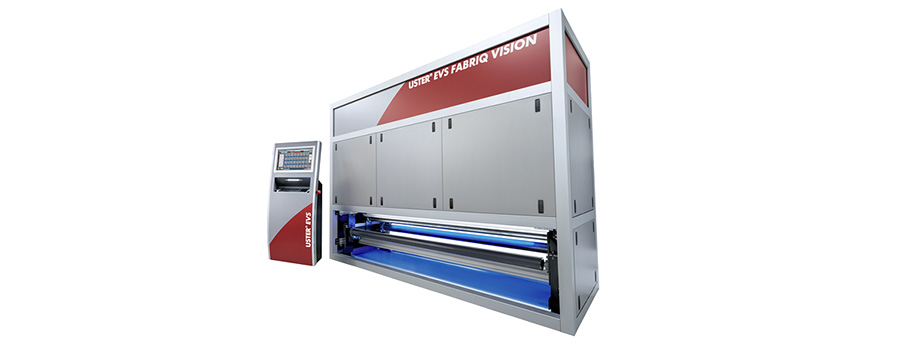
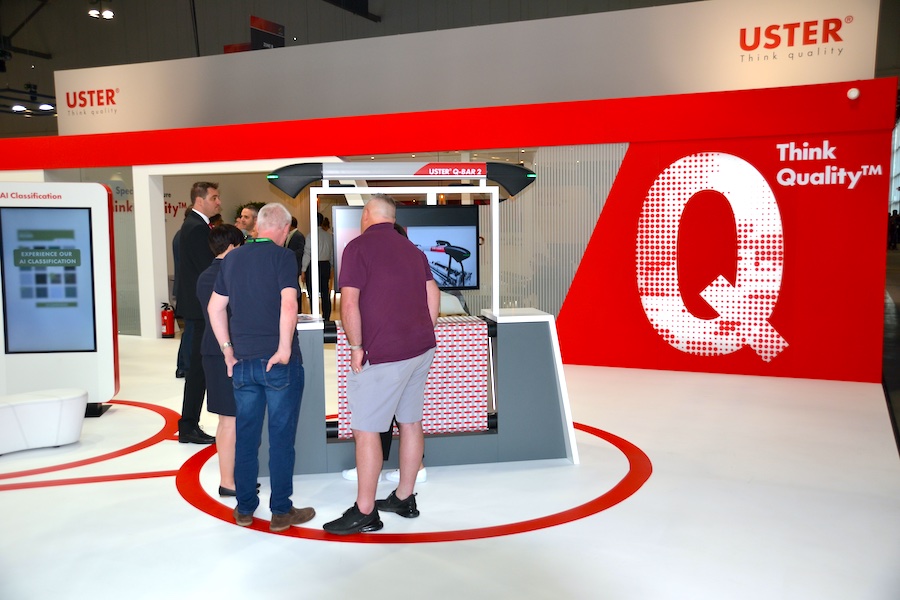
USTER® fabric inspection solutions cover the value chain from weaving to finishing. The ingenious design of USTER® Q-BAR 2 and USTER® EVS FABRIQ VISION fits every production line – delivering the right quality, while reducing waste and optimizing fabric yield.

USTER® fabric inspection systems also reduce waste and improve yield

USTER’s Think Quality approach now takes in automatic fabric inspection, bringing much-needed precision and security to demanding technical textiles applications – and to all weaving mills where quality matters. Quality standards everywhere are increasing all the time: in sectors such as the automotive industry, zero-defect levels are already mandatory. Applications such as airbags, headliners, upholstery and tire cords require flawless quality, continuously. But there are also many other textile industry segments which must fulfill the expectations of demanding customers. In today’s production environments, automated quality solutions are essential.
© 2020 Uster
© 2020 Uster


Automation: for trust and profitability

USTER offers two systems, ensuring that fabrics meet the quality standards required to protect fabric makers and finishers from costly claims and damaged reputations.

Both systems also add valuable extra benefits. The USTER® Q-BAR 2 fabric quality monitoring system prevents waste, while the USTER® EVS FABRIQ VISION fabric quality assurance system significantly improves first-quality yield for all applications. USTER® Q-BAR 2 and USTER® EVS FABRIQ VISION make a real impact on the business success of users – a fact confirmed in numerous installations worldwide. Across a range of different applications and businesses, these users share a common verdict: automated solutions for fabric inspection have earned their trust.

Quality and minimum waste

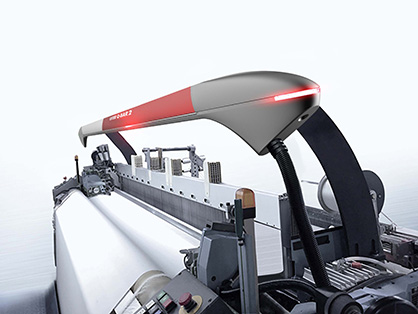
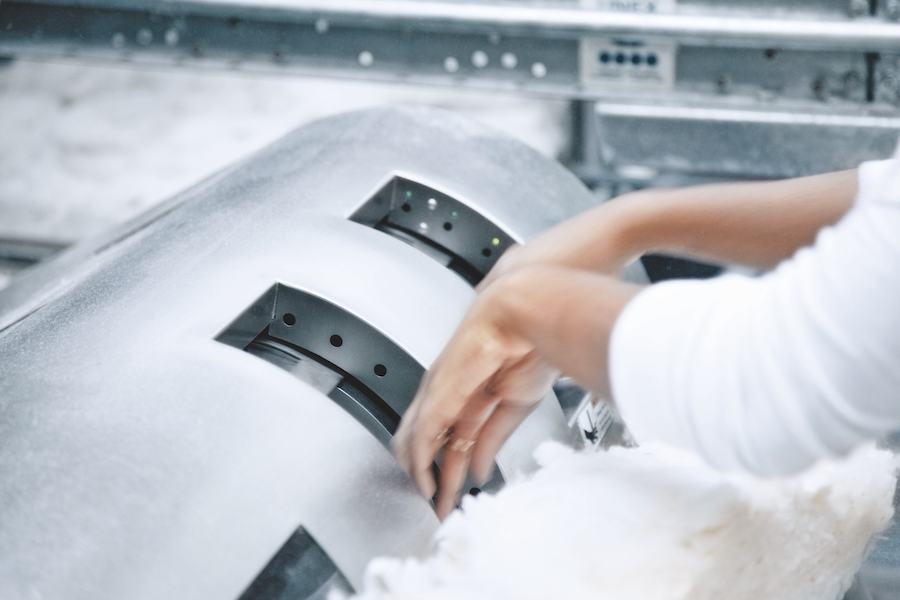
USTER® Q-BAR 2 is attracting attention through its elegant and slim design, developed for simple installation on existing weaving machines. It represents the latest generation of on-loom monitoring and inspection systems, offering operational improvements for weavers. Positioned directly above the reed on each machine, USTER® Q-BAR 2 is ideally located for earliest detection of fabric defects. This allows the operator to respond quickly to alarms and stop signals. Correcting problems immediately prevents quality issues from continuing, minimizing material waste.

USTER® Q-BAR 2 categorizes and saves fabric faults, creating a ‘defect map’ for each roll, which can be recalled and reviewed later via the intuitive touchscreen. The system offers different classification possibilities and allows rolls to be categorized according to number, size and position of defects, as well as customer criteria. It also grades rolls automatically. In summary, USTER® Q-BAR 2 reduces the need for post-weaving inspection for most applications.


Quality and maximum fabric yield

Fabric producers require a consistently high rate of defect detection and optimized efficiency in grading. USTER® EVS FABRIQ VISION achieves this by using automated control during intermediate and final inspection – and by creating roll inspection charts. This removes the need for slow, costly and unreliable manual inspection, freeing operators to focus on higher-skilled jobs. The system’s ability to capture any visible defects allows users to optimize fabric yield.

Best results are achieved by the cut optimization software module of USTER® EVS FABRIQ VISION. This optimizes fabric yield per class, according to the settings. During the inspection process, infrared ink is applied on the fabric. Defect positions are then synchronized with the cut optimization software module. Using the infrared ink marks, the inspection table stops at exactly the right position for each defect, minimizing the risk of errors.

Quality is crucial – and data essential

The increasing demand for assured quality is a significant trend, and achieving it clearly requires automation. A major benefit of automation in fabric inspection is continuity in collecting objective data. This comes with the bonus of automatic data analysis by the USTER® FABRIQ EXPERT quality system, with its fully-customizable reports displayed at the on-screen dashboard. For textile mills, online monitoring of the systems, with comprehensive statistics on inspected fabrics, and machine performance, serves to optimize production and facilitate automation.

USTER® FABRIQ EXPERT provides an overview of all connected USTER® Q-BAR 2 systems in the mill. The main focus is to show quality information – for example the number of defects over a given time – within the relevant context, such as running status or production speed. Technical alarms are highlighted to trigger early reactions, so that problems can be solved as soon as they occur.

Furthermore, smooth interfaces allow users to connect fabric inspection data with existing ERP systems, for true data flow and advanced production automation.

Controlling fabric faults, boosting business

Together, USTER® Q-BAR 2 and USTER® EVS FABRIQ VISION offer effective control over fabric defects and deliveries. “Well-known producers in various industries have already secured their businesses by installing USTER® solutions in their production lines,” says Ingo Kiefer, Product Manager Fabric Inspection at Uster Technologies.

Defects can’t be totally avoided, so it’s vital to locate them precisely. Automated inspection solutions, from weaving up to the end of the production process, allow producers to make correct quality decisions and secure profits.
More News from Uster Technologies AG

#Recycled Fibers

Driving circularity with Uster Recycled Fiber Matrix

The textile industry’s commitment to circularity continues to accelerate, and mechanical recycling is viewed as a targeted approach to cutting textile waste and its environmental impact. At the forefront of this drive, Uster has developed the Recycled Fiber Matrix, a two-dimensional assessment of mechanically recycled fibers to guide optimum processing and end-uses.

#ITM 2026

Uster’s new Recycling Opening Index guides spinners to the perfect blend

Uster AFIS 6 now offers the key data for better decisions when blending recycled fibers. Process control is decisive in determining the quality and economic outcome. The new R Recycling Module of AFIS 6 introduces the Recycling Opening Index (ROI), so spinners can optimize their circularity credentials. It was officially launched at ITM 2026 in Istanbul, Türkiye.

#Spinning

Measure and control the fiber – optimize yarn quality

Producing consistent yarn quality is an everyday challenge – and a very difficult one. Detailed knowledge and understanding of the fiber raw material is absolutely critical to achieving the best possible quality in the yarn. To help spinners, Uster experts have put together guidelines for avoiding yarn irregularity claims, in a special edition of the Uster News Bulletin.

#ITMA Asia + CITME Singapore 2025

Uster presents novelties at ITMA Asia + CITME 2025

There’s news from Uster Technologies to be announced for the industry’s upcoming event in Singapore. The Uster 360Q universe is growing with new products, solutions and services. Innovation developments can also be recorded in the fields of man-made fiber testing and fabric inspection. Uster innovations address the industry’s trending topics as mill management and process control, optimization of delivered fabric quality and yield.

More News on Weaving

#ITMA Asia + CITME 2026

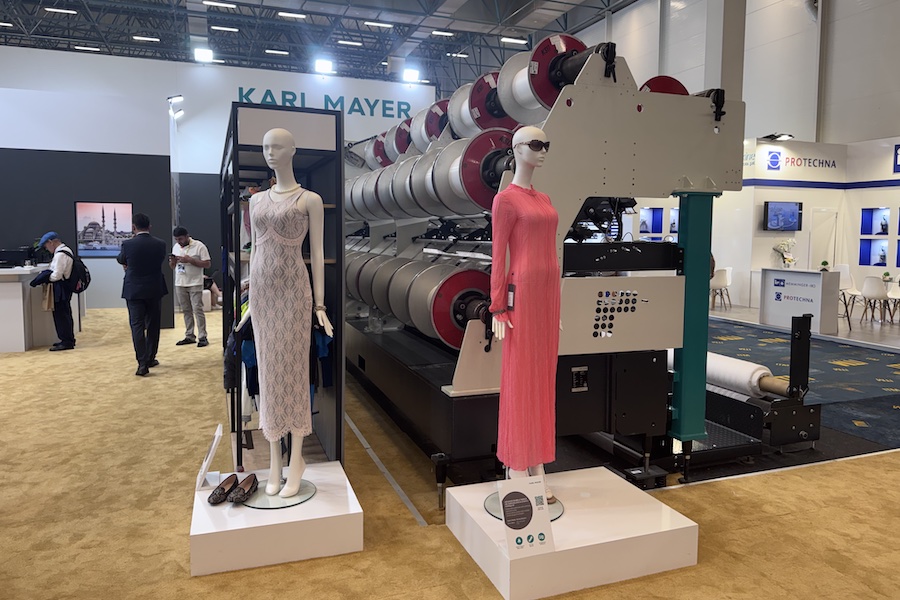
Three stages, multiple customer benefits: KARL MAYER during ITMA ASIA 2026

At ITMA ASIA in Shanghai, KARL MAYER will once again demonstrate that it understands the challenges facing the Asian textile industry – and will present tailor-made solutions.

#Weaving

Lindauer DORNIER GmbH welcomes new apprentices and dual-study students

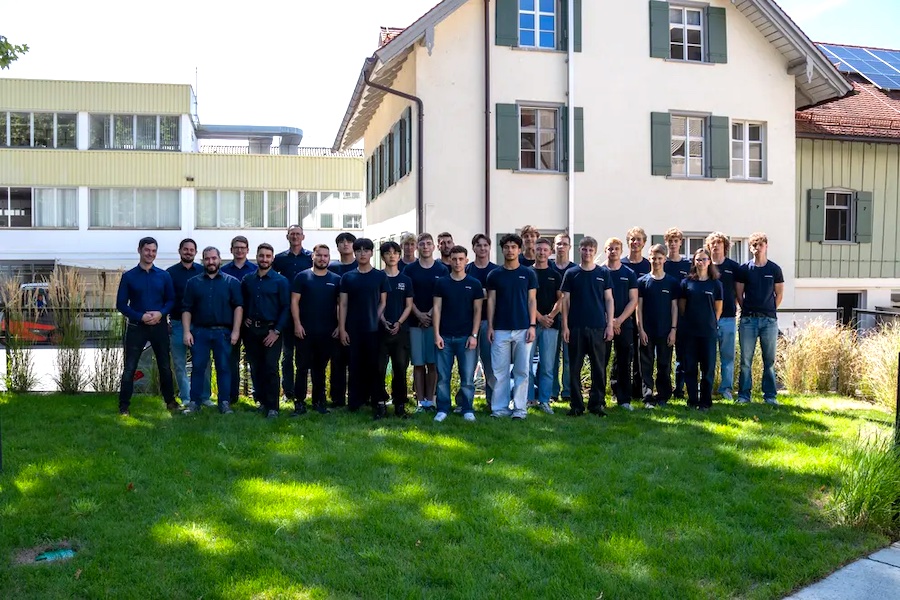
For 22 new “DORNIER Talents”, these days mark the beginning of a new chapter at Lindauer DORNIER. For the family-owned company, in-house training is a key pillar in developing skilled professionals and retaining them within the company for the long term.

#Weaving

"Dynamic markets do not only create uncertainty – they also create opportunities."

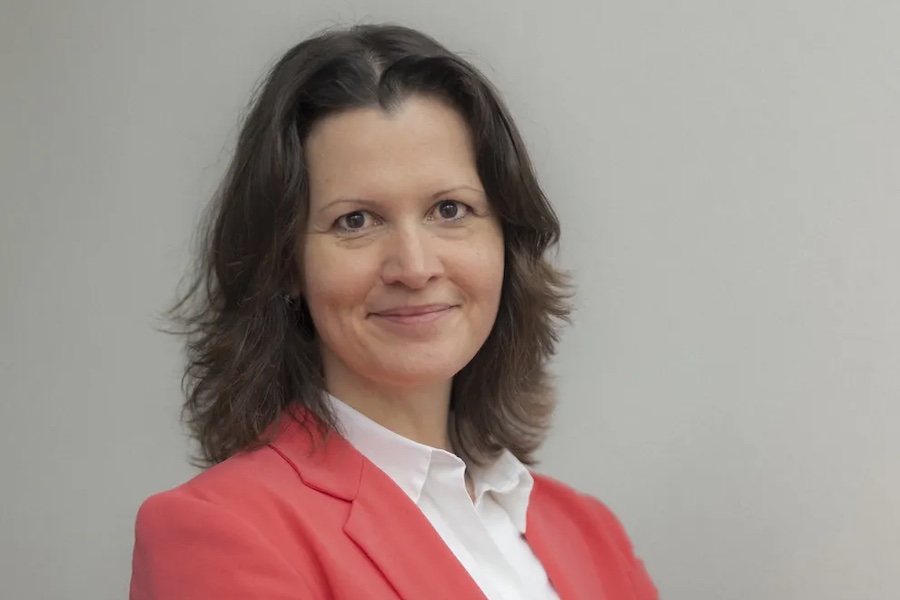
Volatile markets, increasingly complex materials and growing demands for flexibility are changing the weaving industry. At the same time, new opportunities are emerging in technical textiles, filtration, composites and many other specialised applications. Since taking over as Head of DORNIER's Weaving Machines Product Line at the beginning of 2026, Yvonne Schuberth has been helping to shape this development. In this interview with TexData, she explains why process stability and customer proximity remain the foundation of innovation, how digitalisation is transforming weaving mills, and why she believes the future belongs to technologically demanding applications.

#Weaving

More patterns, less effort: the MULTI-MATIC® at Rohleder

Rohleder is one of Europe’s most modern weaving mills. For over 80 years, the family-owned company has been developing and manufacturing premium fabrics for brands, retailers and private customers – 100% Made in Germany. This success is made possible by a consistent focus on design, quality, and functionality, as well as by continuous investment in state-of-the-art production facilities. Rohleder also relies on innovative technologies in warp preparation and has been collaborating with KARL MAYER for many years. As recently as 2023, a MULTI-MATIC® was delivered to the company’s headquarters in Konradsreuth.

Latest News

#Nonwovens

25 years in the room: EDANA’s OUTLOOK™ returns to Cascais to shape a changing industry

The market does not wait, and it does not grant easy answers. Across the absorbent hygiene, personal care, and wipes sectors, business is undergoing a period of intense, necessary adjustment. New European rules on packaging, single-use items, product safety, and end-of-life are forcing companies to drop old assumptions about materials and performance. At the same time, producers must keep their goods safe, reliable, and affordable for the babies and aging adults, who rely on them every day.

#Recycling / Circular Economy

Recover™ names Enes Adak and Fehmi Yüksel as Co-CEOs to accelerate its next growth phase

Recover™, a leading materials science company and global producer of consistent high-quality, recycled cotton fibers and circular material solutions at scale, today announced the appointment of Enes Adak and Fehmi Yüksel as Co-Chief Executive Officers. This leadership transition marks an important step in Recover’s evolution as the company enters its next stage of development.

#Research & Development

ADD-ITC 2026 highlights strong industry participation

The Aachen-Dresden-Denkendorf International Textile Conference (ADD-ITC) 2026 will place a strong focus on the exchange between textile research and industry when it takes place on November 26–27, 2026, at the International Congress Center Dresden. According to the preliminary conference program, more than two-thirds of all presentations will be contributed by companies or jointly presented by industry and research institutions.

#Recycling / Circular Economy

Arc'teryx introduces System 0™, a new framework for the future of product design and circularity

Arc'teryx Equipment, the global design company specializing in technical high-performance apparel and equipment, today introduced System 0™, a new framework that reimagines how products can be designed, manufactured, used, repaired, and ultimately regenerated. System 0 represents the next evolution for sustainability in the outdoor industry, as it embeds circular thinking across an entire product lifecycle while maintaining the uncompromising performance standards that define the Arc’teryx brand.

TOP