[pageLogInLogOut]

#Composites

Hexcel’s leading position in aerospace and automotive makes Hexcel a trusted partner for urban air mobility

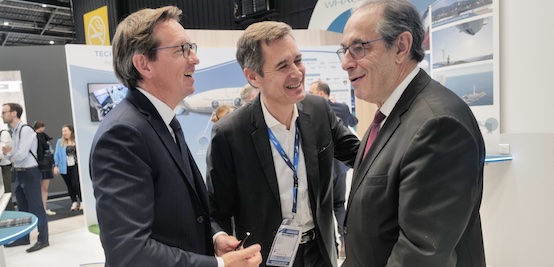
At this year’s JEC World in Paris on March 3-5, Hexcel will highlight the growing need for innovations in composite materials to support the emerging Urban Air Mobility (UAM) market.

Urban air mobility – urban transportation systems that move people by air or enable cargo deliveries – is the next big transportation innovation. Similar to taxis or ride sharing today, UAM will help remove congestion from our streets and provide a convenient, rapid method for travel in urban centers as well as in remote areas.

Advanced composite materials will be at the heart of UAM vehicles by providing lightweight, efficient, reliable, and cost-competitive options for manufacturing. “Materials have been a key driver of efficiency for aircraft today, and they will be even more important for the emerging UAM marketplace,” said Imad Atallah, Director of Strategic Marketing for Aerospace and Urban Air Mobility at Hexcel.

Already, Hexcel is a leader in advanced composite materials for the aerospace market and is a key supplier of composite materials to the automotive industry. So, the company is well positioned to offer solutions to meet the critical needs of high-rate and quick-part manufacturing cycles, in addition to low-cost needs for this space. Hexcel’s materials solutions approach for UAM is to make it greener and more sustainable, safer, more comfortable, and more affordable.


Hexcel’s broad range of carbon fiber and HexPly® prepreg solutions, including snap cure thermosets and thermoplastics, coupled with the most qualified positions on aerospace programs in the industry make the company a trusted partner for UAM. In addition to offering composite materials from carbon fibers, prepregs, honeycomb and reinforcements, Hexcel’s best-performing market solution in noise absorption on aircraft jet engines, Acousti-Cap®, provides a strong position of innovation to solve one of the most critical problems in the UAM space – community noise. “We are applying our technologies to the unique needs of urban air mobility vehicles,” Atallah said.

Hexcel’s ability to bring materials technology from the aerospace and automotive industries represents a unique strength in solving the critical challenges of UAM, especially around high-rate manufacturing, low-cost materials, light weighting, and noise. “Both thermoplastics and quick-cure thermoset materials are expected to have applications on UAM vehicles,” Atallah said. Furthermore, Hexcel’s broad product portfolio including unsized carbon fiber has proven to be the most compatible with thermoplastic resins from a consolidation perspective.

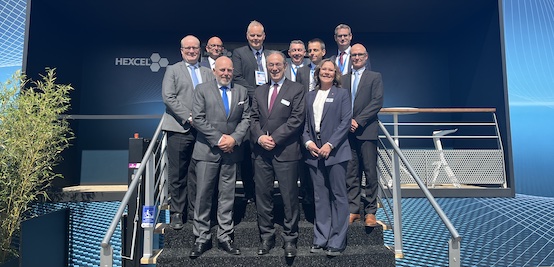
Visit the Hexcel booth at JEC World 2020, Hall 5, Booth J41.

More News from Hexcel Corporation

More News on Composites

#Research & Development

Novel flame-retardant and recyclable fiber-reinforced composite

Airplanes and passenger trains must meet strict safety requirements, including fire safety standards. This calls for materials that are flame-retardant, lightweight, robust, and scalable. Empa researchers, in collaboration with their industry partner Elantas, have now succeeded for the first time in making such a material – a composite – fully recyclable.

#Composites

WHILL selects Teijin’s tough, lightweight Carbon Fiber Composite for new last-mile mobility

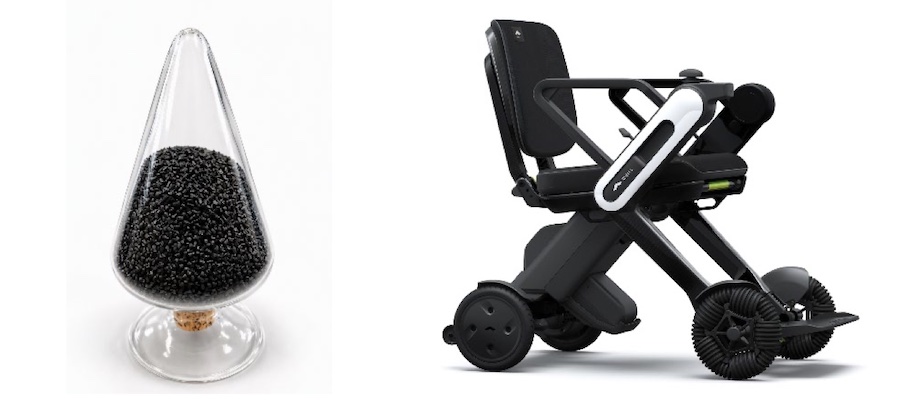
Teijin Limited announced today that WHILL Inc., a global leader in inclusive mobility technology, has selected Sereebo® P CFP series, a carbon fiber-reinforced thermoplastic (CFRTP) material, for key structural components of the upcoming WHILL Model C Lite. Sereebo® P CFP series provides high strength, light weight, design flexibility and system cost advantages to the Model C Lite, which is a battery powered, single-seat, last-mile device. This new model combines maneuverability with light weight and one-handed folding to ensure ease of handling and operation.

#Composites

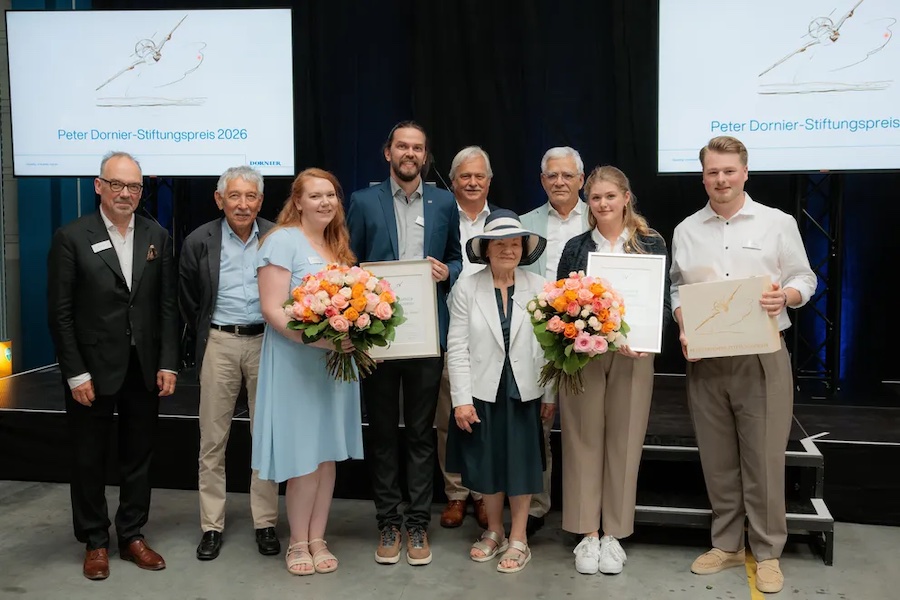
Fewer pores, greater impact tolerance: Peter Dornier Foundation Prize 2026 honours material research on fibre-reinforced composite components for aerospace industry

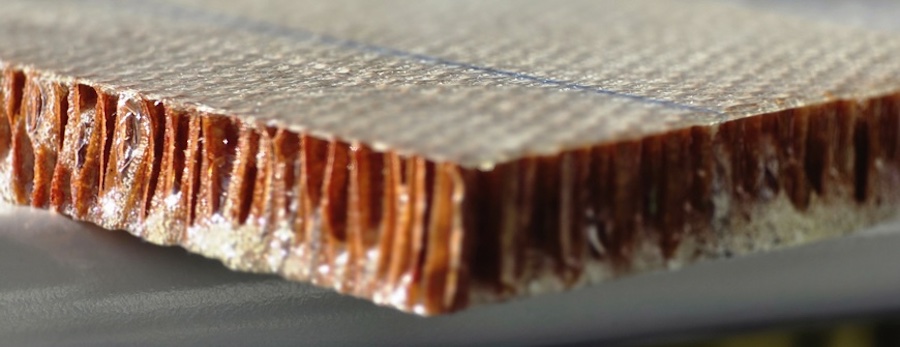
Microscopically small pores that form during manufacture, or barely visible impact damage, can severely impair the load-bearing capacity and service life of fibre-reinforced composite components. Two young researchers have presented groundbreaking work in this field and will both be awarded the 2026 Peter Dornier Foundation Prize: Dr.-Ing. Benedikt Neitzel from the Technical University of Ilmenau for his doctoral thesis on pore minimisation in the RTM process, and Johanna Buschmann, M.Sc., for her master’s thesis, completed at the German Aerospace Centre, on the improved impact tolerance of 3D fabrics compared to 2D laminates.

#Composites

Carbon Revolution wins Composites Australia Engineering Team Excellence Award

Carbon Revolution has won the Engineering Team Excellence Award at the 2026 Composites Australia Annual Industry Awards.

Latest News

#Industry 4.0 / Digitalization

Coats Digital launches AI-powered GSD RealMotion for motion analysis

Coats Digital has launched GSD RealMotion, an AI-powered solution designed to provide apparel manufacturers with greater visibility into factory-floor operations. By analysing shop-floor video and applying Coats Digital’s GSD methodology, the solution turns video recordings into structured, motion-by-motion method studies.

#Textile chemistry

Archroma and Lameirinho partner in pioneering deployment of InOneGO single-step dyeing

Archroma, a global leader in specialty chemicals, and Lameirinho, a leading home textiles manufacturer based in Portugal, are collaborating to bring InOneGO by Archroma, a new single-step dyeing process, into commercial production. Lameirinho’s first InOneGo bedlinens collection is now available worldwide.

#Knitting & Hosiery

KARL MAYER launches extra-wide HKS 3-M EL for increased productivity

KARL MAYER has launched a new extra-wide version of its HKS 3-M EL tricot machine, designed to increase productivity particularly in the manufacture of textiles for sports, activewear and athleisure applications.

#Research & Development

Reducing development times for technical textiles by accelerated thermo-oxidative aging in a high-pressure autoclave

Synthetic polymers used in technical textiles can be effectively protected against degradation caused by heat, oxygen, and water through the use of stabilizer systems. This enables service lives of several decades, extending to more than 50 years. As the use of durable technical textiles continues to grow, so does the demand for reliable methods to predict their service life within economically feasible testing periods. For the first time the German Institutes of Textile and Fiber Research Denkendorf (DITF) developed methods for robust service life prediction for textiles in an IGF research project.

TOP