[pageLogInLogOut]

#Associations

First anniversary of the EU textile strategy – celebration or mourning?
© 2023 EURATEX
On 30 March 2022, the European Commission presented its vision for the future of the textile industry[1]. The strategy mainly focuses on reducing the environmental footprint and promote sustainability and transparency in the value chain.

EURATEX has welcomed the publication of the strategy, as it recognises the strategic importance of the European textile industry, and its core competitive values of quality and creativity. At the same time, we have warned that translating that vision into reality is a delicate process, as we need to reconcile sustainability with competitiveness. Making the green (and digital) transition should make our companies stronger; the benefits should outweigh the costs.

This premise had a serious blow by the Russian war in Ukraine, which erupted at almost the same time when the strategy was launched, and has dramatically changed the economic context. Energy prices increased by a factor of 10 (!), putting the European industry at a significant disadvantage with its global competitors, leading to company shutdowns or relocations. Extended lock downs in China and defensive trade policies in the US and elsewhere have further generated uncertainty on the market and disrupted supply chains.

Today, 1 year after its publication, we remain carefully optimistic about the implementation of the strategy, but need to warn against some important pitfalls on the road ahead. 


1. Despite these turbulent times, the Commission is moving ahead “swiftly” in translating their EU Textile Strategy into (draft) legislation. At present, at least 16 pieces of legislation are on the table, which will turn the textile industry into a strictly regulated sector. The quality of this new regulatory framework is critical to the success of the strategy: upcoming rules need to be coherent, technically feasible and enforceable, and have a minimal cost for SMEs. We call for a realistic timetable and “competitiveness test” for each piece of legislation before it is adopted.

2. Textile companies need to be informed and supported to comply with this new framework. This requires substantial funding which should be earmarked exclusively to the sector, covering areas of innovation and digitalisation, skills development, support to start ups and internationalisation, as well as access to affordable energy. In this regard, EURATEX calls on the Commission to translate the current “good intentions” into concrete decisions.

3. The EU strategy will not work if there is no demand for sustainable textiles, both from individual consumers and public authorities (procurement). Concrete measures need to be taken to offer a competitive advantage to sustainable and high quality textile products, e.g. through a different VAT rate, strict procurement rules, closer cooperation between the brands/retailers, producers and consumers.

4. The EU strategy could also fail, if we ignore the global dimension of the textile industry. Up to 80% of clothing products are produced outside the EU; these products need to comply with the new framework, but it remains unclear how to ensure that level playing field. Market surveillance needs to be stepped up massively – also targeting on line sales – but this would require significant efforts from member states, which are not available as of today.

Despite these important challenges, EURATEX remains committed to the successful implementation of the EU Textile Strategy. Director General Dirk Vantyghem commented: “We want to be a global leader in sustainable textiles, building on the entrepreneurship, quality and creativity of nearly 150,000 European textile companies. Creating this new framework is an incredible challenge, requiring a close dialogue between the industry and the regulator. But if well designed and carefully implemented, it can set a new era for the European textile industry”.


[1] “EU Strategy for Sustainable and Circular Textiles”, COM(2022) 141 final

More News from European Apparel and Textile Confederation (EURATEX)

#Europe

Level playing field at stake: Europe’s textile industry demands decisive action

Yesterday, the European Parliament took a welcomed and necessary step by voting a resolution calling for stronger market surveillance, reinforced customs controls and faster enforcement of the Digital Services Act in case of infringements. For Europe’s textile and clothing manufacturers, this is the first political acknowledgement that the system is broken — and that enforcement must finally match the scale of the problem.

#Recycling / Circular Economy

EURATEX calls for a competitive and harmonised Circular Economy Act For Textiles

EURATEX, representing Europe’s textile and clothing industry with over 200,000 companies and 1.3 million workers, has submitted its official position paper to the European Commission’s consultation on the upcoming Circular Economy Act (CEA). The association welcomes the Commission’s initiative to shape a framework that strengthens Europe’s circular economy while maintaining industrial competitiveness.

#Associations

European textile and clothing federations mobilize against ultra-fast fashion

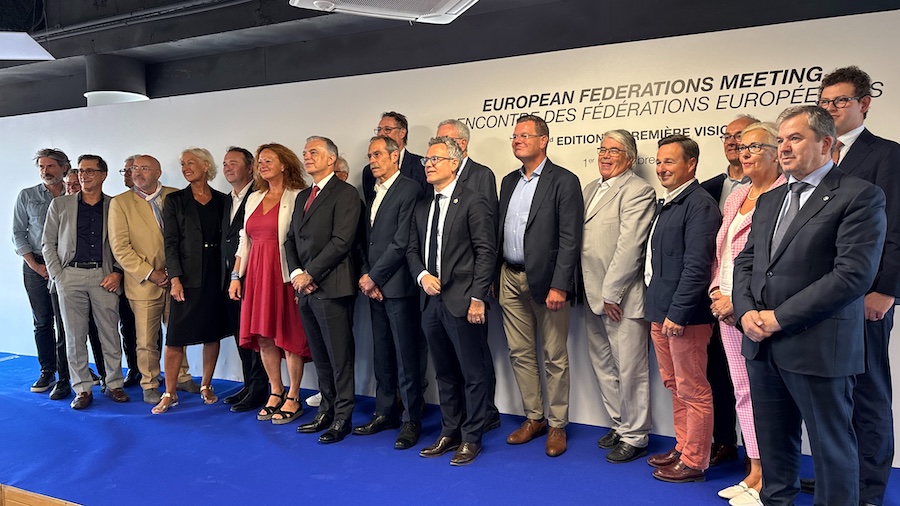
On the occasion of the Première Vision trade fair in Villepinte, the leading European textile and clothing federations issued a solemn call for urgent action against the rapid rise of ultra fast fashion. This model, driven by major non-European e-commerce platforms, already accounted for 4.5 billion imported parcels in the European Union in 2024—representing 5% of clothing sales (20% online)—and continues to grow at a staggering pace.

#Associations

Joint statement by EURATEX and Danish Fashion and Textiles

EURATEX and its Danish member Dansk Mode & Textil are calling upon the Danish Presidency of the EU to bring back stability and transparency to the European agenda. These last few months we have seen major upheavals and turbulence in global markets, as well as uncertainty surrounding a number of regulatory initiatives. All this creates a climate of uncertainty for European industry and anxiety with the consumers. As a result, demand for textile and garments is low, and entrepreneurs are hesitant to make any further investment decisions.

More News on Associations

#Associations

Joint Statement: Urgent clarification needed on scope of Textiles EPR for PPE and Medical Devices

EDANA, the voice of nonwovens, alongside fellow industry associations CIRFS (European Man-Made Fibres Association), EURATEX (The European Apparel and Textile Confederation), ESF (European Safety Federation), and EuroCommerce (Retail & Wholesale), has issued a joint statement raising critical concerns regarding the transposition of Directive (EU) 2025/1892, the targeted revision of the Waste Framework Directive.

#Associations

Young researchers recognised for cutting-edge work in recycling, fibre technology and textile mechanics

At the Aachen-Dresden-Denkendorf International Textile Conference held in Aachen at the end of November, Peter D. Dornier, Chairman of the Walter Reiners Foundation of the VDMA, honoured five successful young engineers. Promotion and sustainability prizes were awarded in the categories bachelor/project theses and diploma/master theses. Academic theses that develop solutions for resource-saving products and technologies, for example, are eligible for the sustainability awards.

#Natural Fibers

Better Cotton Initiative partners with Uzbek government agency to offset certification costs

The Better Cotton Initiative (BCI) has today announced a strategic agreement with Uzbekistan’s Light Industry Agency to increase financial support for cotton farming clusters adopting sustainable agricultural practices.

#India ITME 2026

India ITME Society pushes trade & technology alliances in Singapore

India ITME Society hosted India Networking Program - Fabricating the Future of Textile Industry- From Heritage to High-Tech” on 29th October 2025 at Singapore an exclusive gathering of Ministry of Textile Officials, Embassy Officials, Entrepreneurs, Technocrats, Industry Organizations and Media Personnel's designed to foster collaboration, exchange ideas and explore opportunities in the Indian Textile & Textile Engineering Sector.

Latest News

#Spinning

First PA66 spinning plant with EvoQuench successfully commissioned

With the successful commissioning of a multi-digit PA66 spinning line for microfiber yarns, Chinese textile company Shandong Nanshan Fashion Technology Co., Ltd. has added yarn production to its textile value chain.

#Knitting & Hosiery

SHIMA SEIKI returns to ShanghaiTex

Leading flat knitting solutions provider SHIMA SEIKI MFG., LTD. of Wakayama, Japan, together with its Hong Kong and Chinese market subsidiary SHIMA SEIKI (HONG KONG) LTD., will exhibit at the ShanghaiTex 2025 exhibition (Booth No.: Hall N3, Booth A20) held in Shanghai, China this month. This marks the return of SHIMA SEIKI to ShanghaiTex after a 14-year hiatus, its last exhibit at the show having been in 2011.

#Research & Development

Fraunhofer CCPE presents the “Monomaterial Design Set” – Innovative solutions for circular product design

Composite materials made from different types of plastic often extend the lifetime of products but make recycling more difficult in the circular economy. That is why Fraunhofer CCPE has developed the “Monomaterial Design Set”. This new approach helps to reduce the variety of plastics used in durable products and offers circular solutions for designers and product developers.

#Man-Made Fibers

arena introduces renewable LYCRA® EcoMade fiber in its latest swimwear collection

Italian swimwear specialist arena has unveiled a new collection that brings sustainability and performance even closer together. Launched on December 4, the line features swimsuits made from recycled nylon and renewable LYCRA® EcoMade fiber — the first time the bio-based spandex has been used commercially in swimwear.

TOP