[pageLogInLogOut]

#Associations

AATCC TM214: New approach to an old challenge

Moisture management comes in many forms and there are numerous test methods to address the phenomenon in textiles. In February 2023, AATCC introduced a new test method to measure accumulated condensation on a fabric.

AATCC TM214 Test Method for Measuring Condensation on Textiles in a Humid Microclimate can be purchased now as a downloadable PDF and will be included in the 2024 AATCC Manual of International Test Methods and Procedures.

Order AATCC TM124

Test Method for Measuring Condensation on Textiles in a Humid Microclimate

https://members.aatcc.org/store/tm214/3776/


AATCC TM214 applies to clothing systems, tenting fabrics, and medical and technical temporary shelters. The condensation rate heavily depends on temperature and vapor pressure across a fabric system.

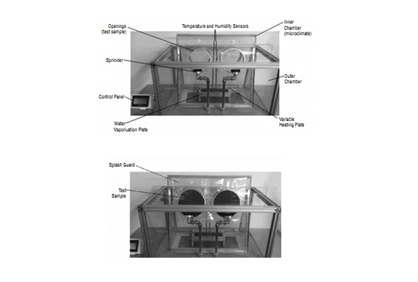
AATCC Research Committee RA63 Water Resistance Chair Kiarash Arangdad of Elevate Textiles shared that the new method is designed to measure the water condensation accumulation on the innermost (back) surface of waterproof fabrics in a humid microclimate. During the test, the outermost fabric (face) surface is subjected to dry and wet conditions (simulated precipitation). The condensation accumulation is determined by calculating the mass change of a filter paper attached to the inner chamber for a prescribed time.

© 2023 AATCC
© 2023 AATCC


Although several existing test methods measure the effectiveness of moisture transport mechanisms through fabric, this is the first method to measure condensation created by the microclimate of the textile product. TM214 is a valuable tool for the textile industry to assess the performance of fabrics in wet and dry conditions.


The test apparatus has an inner chamber (microenvironment) and an outer chamber (simulated precipitation). The test can be conducted inside an environmental chamber or under ambient conditions. This feature allows broad use across various textile systems for accurate representation of a company’s unique platform.

As businesses look for effective ways to drive sustainable practices within their value chains while addressing the challenges of changing climates across our global community, this test method is an important step forward in helping the textile industry better understand the role condensation plays on textile components. The insights gained by using this method will help organizations improve and develop new hydrophobic and water-repellent fabric systems.
© 2023 AATCC
© 2023 AATCC


Participate

All AATCC test methods are developed by industry experts. To be part of the process, join today! Committees, including RA63 on Water Resistance, are always looking for new ideas and new perspectives. If you’re already a committee member, be sure to log in to the new Communities platform to stay current on projects, discussions, and more.

Attend AATCC Research Committee Meetings

May 15-18

https://www.aatcc.org/aatcc-events/research/


The next round of meetings are May 15-18. There is no fee to attend and all are welcome. Share your thoughts on AATCC TM214 or suggest a new project. You can take part in person at the AATCC Technical Center or virtually from wherever you are.


More News from American Association of Textile Chemists and Colorists

#Associations

AATCC announces 2025 Herman & Myrtle Goldstein Graduate Student Paper Competition winners

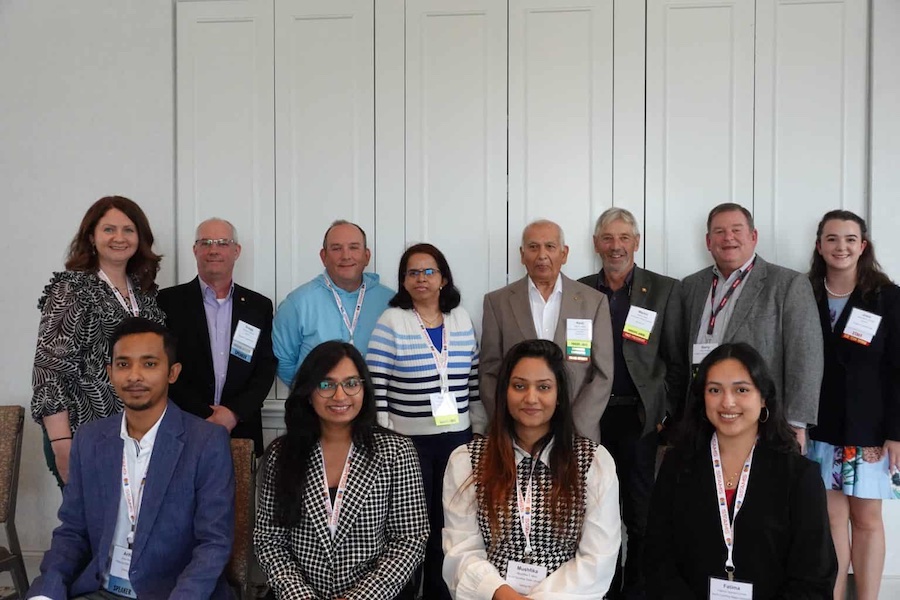
The American Association of Textile Chemists and Colorists (AATCC) recognized the winners of the 2025 Herman & Myrtle Goldstein Graduate Student Paper Competition. Founded in 1982 to give student members the chance to conduct and present original research, the competition was renamed in 1994 in honor of Herman and Myrtle Goldstein, following their US$60,000 endowment. Their gift is a lasting remembrance of their dedication to young people in the textile industry.

#Research & Development

New funding available for textile research

The AATCC Foundation Student Research Support Grant Program provides financial assistance for undergraduate and graduate students pursuing textile-related projects. Students may submit proposals now for funding to be awarded January 2026. Applications must be submitted by October 1, 2025, to be considered.

#Recycling / Circular Economy

AATCC’s Circularity Conference approaches as organization continues 2025 Sustainable Textile Event series

The American Association of Textile Chemists and Colorists (AATCC) announces that registration is closing soon for its highly anticipated Circularity Conference, continuing this year’s sustainability event series that has delivered significant value to industry professionals.

#Associations

AATCC Textile Standards adopted by Colombian and Sri Lankan Governments

AATCC test methods and procedures are international standards, meeting the criteria set forth by the World Trade Organization and used around the globe. The standards gain additional recognition through Memoranda of Understanding with Colombia and Sri Lanka.

More News on Associations

#Associations

Engineering depth and diversity for composites

Airbond is the latest member of the British Textile Machinery Association (BTMA) to receive recognition for contributions to the composites industry. The engineering firm based in Pontypool, South Wales, has just received the Make UK Energy and Sustainability Award for its Lattice 3D Printing project.

#Composites

Alliance for European Flax-Linen & Hemp expands bio-materials presence at JEC World 2026

The Alliance for European Flax-Linen & Hemp is pleased to announce its participation at JEC World 2026, featuring a significantly expanded presence and an enhanced offering for the global composites industry.

#Europe

FITA, ABIT and EURATEX underline strategic importance of Mercosur – EU Partnership Agreement for the textile and apparel industry

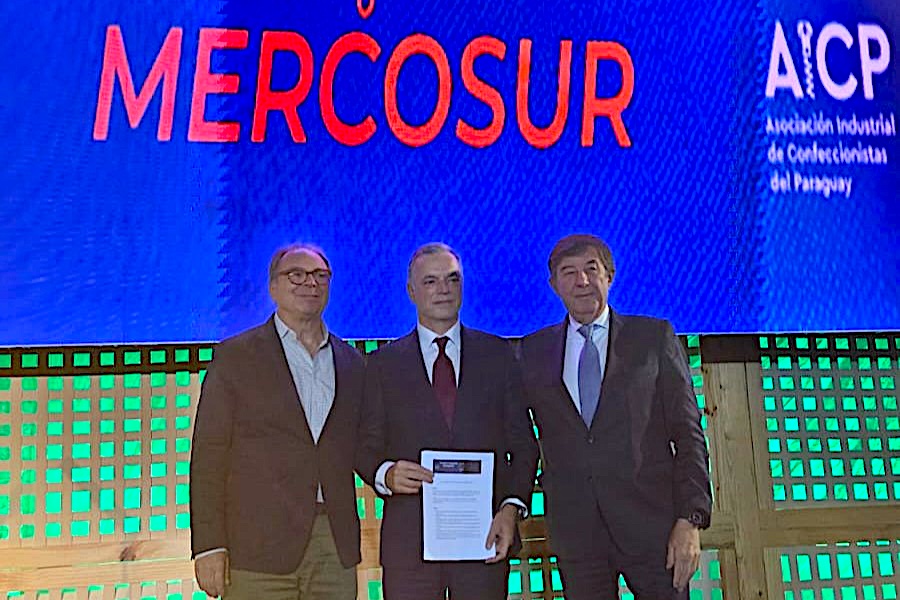
The Argentine Textile Industry Federation (FITA), the Brazilian Textile and Apparel Industry Association (ABIT), and the European Apparel and Textile Confederation (EURATEX) continue to monitor the process of internalizing the Mercosur-European Union Partnership Agreement. This agreement is essential for the competitiveness of our industries, on both sides of the Atlantic.

#Associations

Industry associations warn against state-run EPR models in the EU

European industry associations, led by Euratex, have raised concerns over a growing trend in several EU Member States to introduce state-run Producer Responsibility Organisations (PROs) within Extended Producer Responsibility (EPR) schemes.

Latest News

#Sustainability

Ying McGuire becomes new CEO of Cascale

Cascale today announced the appointment of Ying McGuire as Chief Executive Officer, effective June 1, 2026.

#Technical Textiles

Sustainable, lightweight, and sound absorbing: Polyester-based front trunk solution for BEVs

As car manufacturers look to further reduce their carbon footprint, Autoneum has developed an innovative front trunk solution for battery electric vehicles (BEVs), made entirely from polyester-based textile. The Ultra-Silent Frunk offers significant weight reduction, improved acoustic and thermal insulation, and uses up to 70 percent recycled material, supporting sustainable and efficient vehicle design. Autoneum, global technology leader in acoustic and thermal management for vehicles, has already received orders for the new frunk from three major OEMs in Asia and Europe to be built in three BEV models. Series production for two BEVs has been underway in China and Germany since last year.

#Raw Materials

Modern testing methods for raw cotton

The 38th International Cotton Conference Bremen will take place from 25 to 27 March 2026 at the Bremen Parliament. This conference has traditionally stood for in-depth expertise and international exchange. The program will focus on technical innovations, market trends, and regulatory frameworks across the entire value chain – from agriculture to the circular economy. With high-profile speakers, the conference is regarded as the key meeting point for the global cotton industry. Today’s focus: Cotton quality and testing methods.

#Spinning

Rieter responds to higher raw material prices

Global political and economic developments have been leading to rising raw material and energy costs for some time. The textile machinery industry is also affected by this trend. Rieter machines and components consist to a large extent of steel, copper, aluminum and electronics. These materials in particular have seen higher demand and higher prices in recent months.

TOP



