[pageLogInLogOut]

#Associations

Climate impact mapping of Swedish textile machinery

© 2022 TMAS
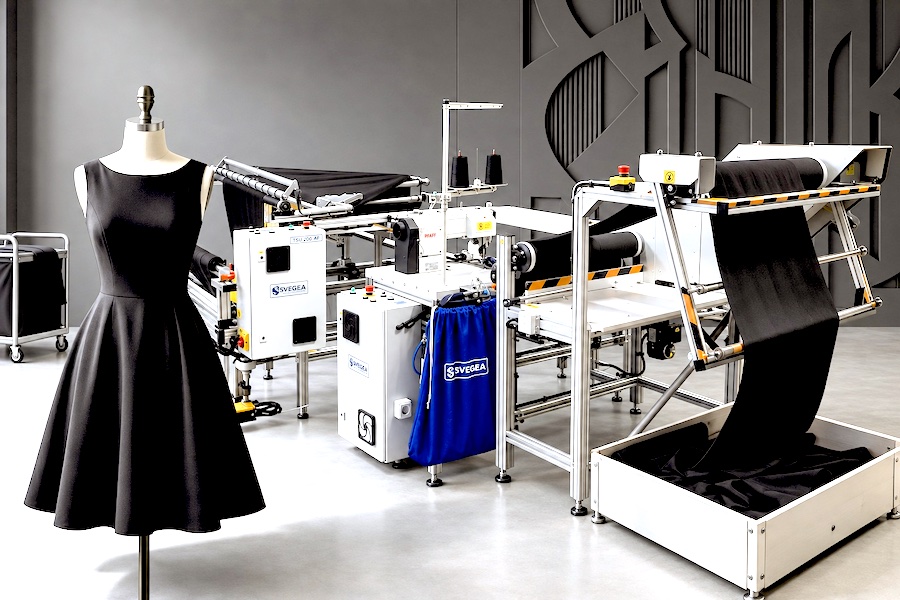
Over the past year, TMAS, the Swedish Textile Machinery Association, has been working with ClimatePartner on a corporate carbon footprint (CCF) mapping project with its member companies, as a natural step towards supporting a more sustainable textile industry.

Over half of the members of TMAS are participating in the project, which involves calculating each operation’s Scope 1, 2 and 3 emissions in order to identify the current climate impact and areas where reductions can be made.

“Integrating climate action into strategies is becoming increasingly important in Europe and we have decided to take a pro-active role,” says TMAS secretary general Therese Premler-Andersson. “There is growing pressure from customers to be more transparant in this area and forthcoming legislation will soon make it necessary for all to take climate actions. TMAS members, however, recognise the benefit of taking action now, not least in terms of taking responsibility and demonstrating credibility.”

The CCF project’s scope examines all aspects of a business split into five areas:

  • Facility Management (heating, electricity, water, cooling agents and waste disposal).
  • Employee Mobility (commuting and company cars).
  • Business Travel (flights travel by train, rental cars).
  • Procurement (production, packaging and office materials).
  • Logistics (inbound and outbound).


Primary data is being used wherever possible and emission factors originate from internationally recognised databases such as ecoinvent and GEMIS.

“Each company is very different in terms of size, structure and operations, but they share common goals in the design and production of textile machinery that is flexible and highly automated, and wherever possible enables savings in energy, water and chemicals consumption,” says Premler-Andersson. “The textile industry has become highly globalised over many decades and will benefit greatly from the close examination of practices and supply chains. The Covid-19 pandemic led to many new ideas about how to do things differenty, out of necessity. It saw the introduction of new and innovative digital tools and remote services that are here to stay, and will have important roles to play going forward.


The ClimatePartner measurement programme is based on the guidelines of the Greenhouse Gas Protocol Corporate Accounting and Reporting Standard (GHG Protocol), and factors in all greenhouse gases covered by the Kyoto Protocol. These are carbon dioxide (CO?), methane (CH?), nitrous oxide (N?O), hydrofluorocarbons (HFC), perfluorocarbons (PFC), sulphur hexafluoride (SF?) and nitrogen trifluoride (NF?).

Each of these gases affect the atmosphere differently and remain in the atmosphere for different lengths of time. Rather than reporting on each gas separately, they are expressed as a CO? equivalent (CO?e) for the sake of simplicity. A CO?e is essentially a conversion into a ‘global warming potential’ value that enables the influence of different gases on global warming to be compared.

“The work does not end here – on the contrary, now when we are recognising our current practices, our work to reduce emissions in an efficient way will continue,” Premler-Andersson concludes.

The Textile Machinery Association of Sweden (TMAS) are made up of the leading Swedish companies within textile technology, automation and production processes. The expertise of our members ranges from advanced systems for yarn fault detection and tension monitoring, to yarn feeding technology for weaving, automated sewing production lines, cutting machines, embroidery technology, effective material handling systems, spray application system for fabric finishing and much more.

Issued on behalf of TMAS by AWOL Media.

More News from Textile Machinery Association of Sweden

More News on Associations

#Associations

Joint Statement: Urgent clarification needed on scope of Textiles EPR for PPE and Medical Devices

EDANA, the voice of nonwovens, alongside fellow industry associations CIRFS (European Man-Made Fibres Association), EURATEX (The European Apparel and Textile Confederation), ESF (European Safety Federation), and EuroCommerce (Retail & Wholesale), has issued a joint statement raising critical concerns regarding the transposition of Directive (EU) 2025/1892, the targeted revision of the Waste Framework Directive.

#Associations

Young researchers recognised for cutting-edge work in recycling, fibre technology and textile mechanics

At the Aachen-Dresden-Denkendorf International Textile Conference held in Aachen at the end of November, Peter D. Dornier, Chairman of the Walter Reiners Foundation of the VDMA, honoured five successful young engineers. Promotion and sustainability prizes were awarded in the categories bachelor/project theses and diploma/master theses. Academic theses that develop solutions for resource-saving products and technologies, for example, are eligible for the sustainability awards.

#Europe

Level playing field at stake: Europe’s textile industry demands decisive action

Yesterday, the European Parliament took a welcomed and necessary step by voting a resolution calling for stronger market surveillance, reinforced customs controls and faster enforcement of the Digital Services Act in case of infringements. For Europe’s textile and clothing manufacturers, this is the first political acknowledgement that the system is broken — and that enforcement must finally match the scale of the problem.

#Natural Fibers

Better Cotton Initiative partners with Uzbek government agency to offset certification costs

The Better Cotton Initiative (BCI) has today announced a strategic agreement with Uzbekistan’s Light Industry Agency to increase financial support for cotton farming clusters adopting sustainable agricultural practices.

Latest News

#Spinning

First PA66 spinning plant with EvoQuench successfully commissioned

With the successful commissioning of a multi-digit PA66 spinning line for microfiber yarns, Chinese textile company Shandong Nanshan Fashion Technology Co., Ltd. has added yarn production to its textile value chain.

#Knitting & Hosiery

SHIMA SEIKI returns to ShanghaiTex

Leading flat knitting solutions provider SHIMA SEIKI MFG., LTD. of Wakayama, Japan, together with its Hong Kong and Chinese market subsidiary SHIMA SEIKI (HONG KONG) LTD., will exhibit at the ShanghaiTex 2025 exhibition (Booth No.: Hall N3, Booth A20) held in Shanghai, China this month. This marks the return of SHIMA SEIKI to ShanghaiTex after a 14-year hiatus, its last exhibit at the show having been in 2011.

#Research & Development

Fraunhofer CCPE presents the “Monomaterial Design Set” – Innovative solutions for circular product design

Composite materials made from different types of plastic often extend the lifetime of products but make recycling more difficult in the circular economy. That is why Fraunhofer CCPE has developed the “Monomaterial Design Set”. This new approach helps to reduce the variety of plastics used in durable products and offers circular solutions for designers and product developers.

#Man-Made Fibers

arena introduces renewable LYCRA® EcoMade fiber in its latest swimwear collection

Italian swimwear specialist arena has unveiled a new collection that brings sustainability and performance even closer together. Launched on December 4, the line features swimsuits made from recycled nylon and renewable LYCRA® EcoMade fiber — the first time the bio-based spandex has been used commercially in swimwear.

TOP