[pageLogInLogOut]

#Associations

Textile machinery: Pandemic accelerates digital transformation process in textile sector

The Covid-19 pandemic that hit the world a year ago has also severely impacted the textile machinery sector. At ACIMIT’s general assembly, the association representing the Italian textile machinery manufacturers, this was seen as an opportunity to consider what the sector had lost in 2020, while also presenting a variety of future projects to relaunch the industry.

In 2020, Italy’s production of textile machinery fell by 22% compared to the previous year, with a similar drop in exports (-21%). Weighing heavily on this situation was a near total stop in production between the first and second quarter of 2020, while the recovery in the second half of the year was only partial. Travel restrictions have contributed negatively to performance in the industry, and still do not allow companies to seize the opportunities created by a recovery of the textile sector.

ACIMIT president Alessandro Zucchi commented that, “in this first half of 2021, however, the overall economic situation appears to be improving both in terms of exports and in our own domestic market in Italy. The resumption of trade fair events in attendance in our sector has provided a positive sign of a progressive return to normal business conditions.”

Nonetheless, for many companies the pandemic’s legacy has also had a positive side. “Entrepreneurs in the industry have realised the urgency of enacting a digital transformation of their business,” stated Zucchi. “This is precisely why ACIMIT has accelerated its Digital Label project for certifying Italian textile machinery that adopt a common set of data, in order to more easily integrate with the operating systems of their client businesses (ERP, MES, CRM, etc.).”


“The competitive edge of each individual company, as for the entire industry,” recalled ACIMIT’s president, “will increasingly depend on the level of digitalization to which we will have been able to elevate our production and organizational processes. ACIMIT’s digital certification wants to achieve this goal.”

In addition, the general assembly confirmed Alessandro Zucchi, who is CEO and partner of the company Ferraro, as the ACIMIT’s president for two more years. Also confirmed were the charges of Federico Businaro as vice president (Santex Rimar Group), Cristian Locatelli (Marzoli, Camozzi Group) and Andrea Piattelli (Unitech). The latter are joined by Ugo Ghilardi (Itema Group), elected vice president for the first time.

Lastly, during the assembly ACIMIT awarded a historic group of associated machinery producers, which since ACIMIT’s founding in 1945, or from its inception (companies that entered the group prior to 1950), have been a part of the Association. These companies are: Crosta, Gaudino, Marzoli, Mezzera (a brand owned by Reggiani), Noseda, O.C.T.I.R. (an Autefa Solutions Italy brand), Reggiani, Sant’Andrea, Savio and Zonco.



More News from

#Sustainability

Ying McGuire becomes new CEO of Cascale

Cascale today announced the appointment of Ying McGuire as Chief Executive Officer, effective June 1, 2026.

#Technical Textiles

Sustainable, lightweight, and sound absorbing: Polyester-based front trunk solution for BEVs

As car manufacturers look to further reduce their carbon footprint, Autoneum has developed an innovative front trunk solution for battery electric vehicles (BEVs), made entirely from polyester-based textile. The Ultra-Silent Frunk offers significant weight reduction, improved acoustic and thermal insulation, and uses up to 70 percent recycled material, supporting sustainable and efficient vehicle design. Autoneum, global technology leader in acoustic and thermal management for vehicles, has already received orders for the new frunk from three major OEMs in Asia and Europe to be built in three BEV models. Series production for two BEVs has been underway in China and Germany since last year.

#Raw Materials

Modern testing methods for raw cotton

The 38th International Cotton Conference Bremen will take place from 25 to 27 March 2026 at the Bremen Parliament. This conference has traditionally stood for in-depth expertise and international exchange. The program will focus on technical innovations, market trends, and regulatory frameworks across the entire value chain – from agriculture to the circular economy. With high-profile speakers, the conference is regarded as the key meeting point for the global cotton industry. Today’s focus: Cotton quality and testing methods.

#Spinning

Rieter responds to higher raw material prices

Global political and economic developments have been leading to rising raw material and energy costs for some time. The textile machinery industry is also affected by this trend. Rieter machines and components consist to a large extent of steel, copper, aluminum and electronics. These materials in particular have seen higher demand and higher prices in recent months.

More News on Associations

#Associations

Engineering depth and diversity for composites

Airbond is the latest member of the British Textile Machinery Association (BTMA) to receive recognition for contributions to the composites industry. The engineering firm based in Pontypool, South Wales, has just received the Make UK Energy and Sustainability Award for its Lattice 3D Printing project.

#Composites

Alliance for European Flax-Linen & Hemp expands bio-materials presence at JEC World 2026

The Alliance for European Flax-Linen & Hemp is pleased to announce its participation at JEC World 2026, featuring a significantly expanded presence and an enhanced offering for the global composites industry.

#Europe

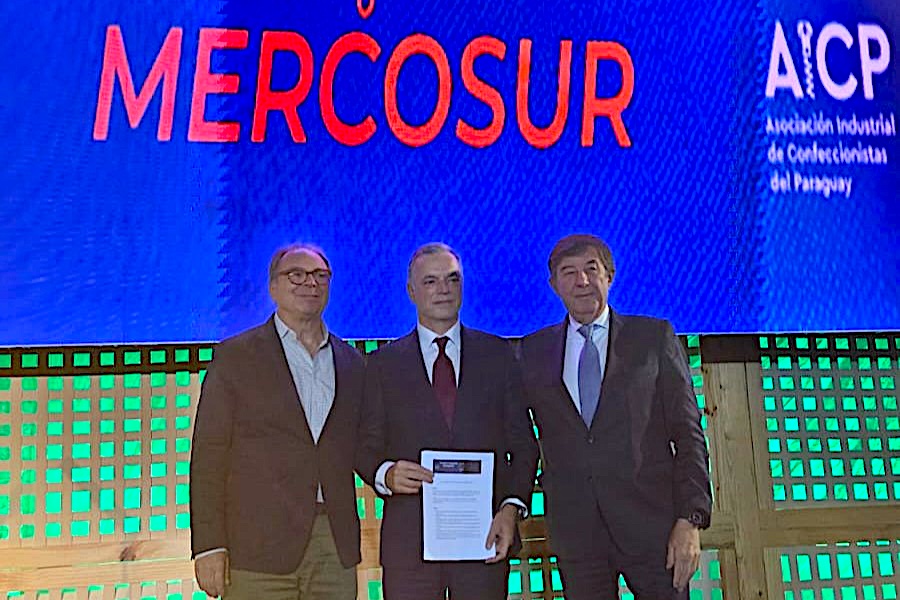
FITA, ABIT and EURATEX underline strategic importance of Mercosur – EU Partnership Agreement for the textile and apparel industry

The Argentine Textile Industry Federation (FITA), the Brazilian Textile and Apparel Industry Association (ABIT), and the European Apparel and Textile Confederation (EURATEX) continue to monitor the process of internalizing the Mercosur-European Union Partnership Agreement. This agreement is essential for the competitiveness of our industries, on both sides of the Atlantic.

#Associations

Industry associations warn against state-run EPR models in the EU

European industry associations, led by Euratex, have raised concerns over a growing trend in several EU Member States to introduce state-run Producer Responsibility Organisations (PROs) within Extended Producer Responsibility (EPR) schemes.

Latest News

#Weaving

Stäubli demonstrates how innovation translates into real benefits for weaving mills at SITEX 2026

One of India’s most prominent textile industry events, SITEX 2026, is held from February 21 to 23 in Surat. Committed to empowering Indian weaving mills with state‑of‑the‑art solutions tailored to regional needs, Stäubli will present a selection of solutions designed for performance, reliability, and power efficiency. Through its weaving preparation, cam and dobby shedding solutions and Jacquard technologies, Stäubli highlights its global expertise tailored to the specific needs of the local market.

#Weaving

Itema exhibits the two best-selling high-end rapier weaving machines of the Region, R9500EVO and Galileo-RX at SITEX 2026

Following the opening of its new Surat Service Center in November, Itema will exhibit at SITEX (Stand 286) from February 21st to 23rd at the Surat International Exhibition and Convention Centre (SIECC). Surat has long been one of Itema’s most strategic markets, a role further reinforced by the inauguration of the Surat Service Center last November. Equipped with an advanced electronic repair center, a weaving machine behavior simulator, and a local spare parts warehouse, the new facility strengthens Itema’s presence in the region while bringing the company even closer to its Customers.

#ITM 2026

The hub of smart and sustainable transformation in yarn technologies: ITM 2026

With global fiber production projected to reach 169 million tons by 2030, yarn manufacturing is becoming one of the most strategic fields within the textile machinery industry. Located in Halls 6, 7, and 10, the Yarn Hall at ITM 2026 is set to bring together industry professionals with innovative solutions developed around automation, energy efficiency, digitalization, and circular production.

#Research & Development

New DIN SPEC assesses environmental impact of textile fragments in soil

Textile products made from synthetic fibres, finished fabrics or dyed materials release fibre fragments into the environment at every stage of their life cycle. With the new DIN SPEC 19296, Hohenstein has developed a standardised testing method to analyse how these fragments behave in soil under natural conditions. Until now, little was known about their environmental behaviour or potential ecological effects once released.

TOP