#Advertorial
Rethinking Process Control: Precise. Digital. Future-Proof.
New Gravimax MMX-R X-ray sensor platform opens up new application fields
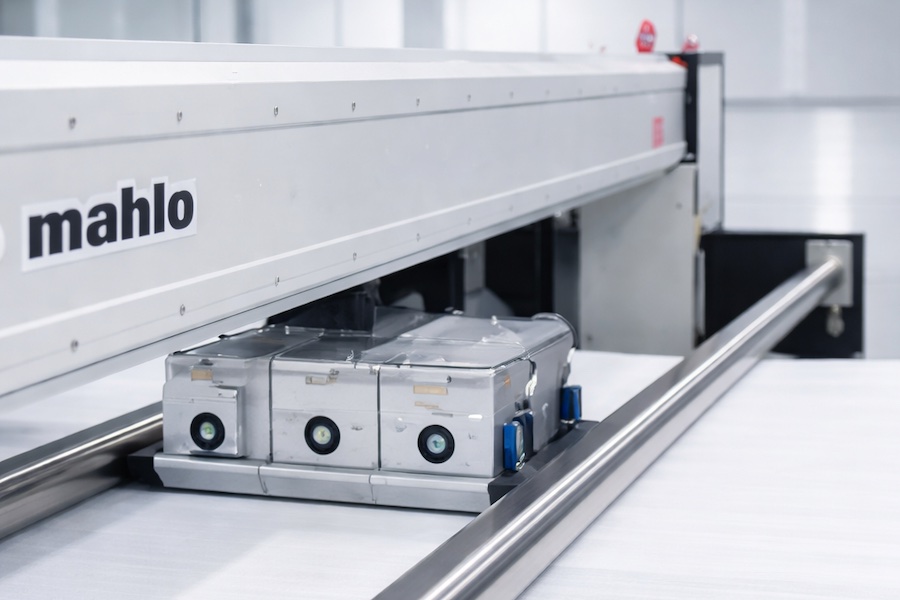
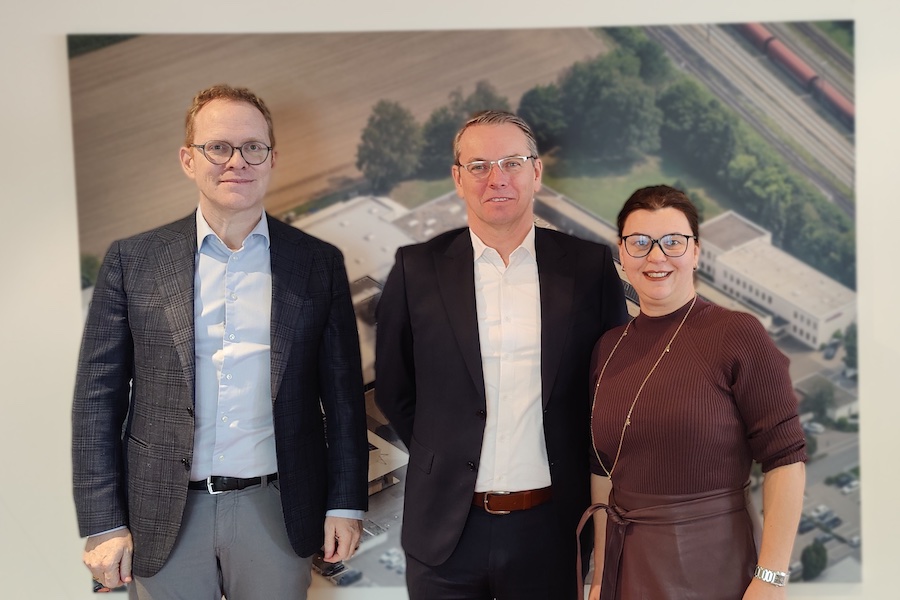
“With the MMX-R platform, we are setting a new technological benchmark. Our goal was to combine maximum precision with true suitability for everyday industrial use,” explains Product Manager Matthias Wulbeck.
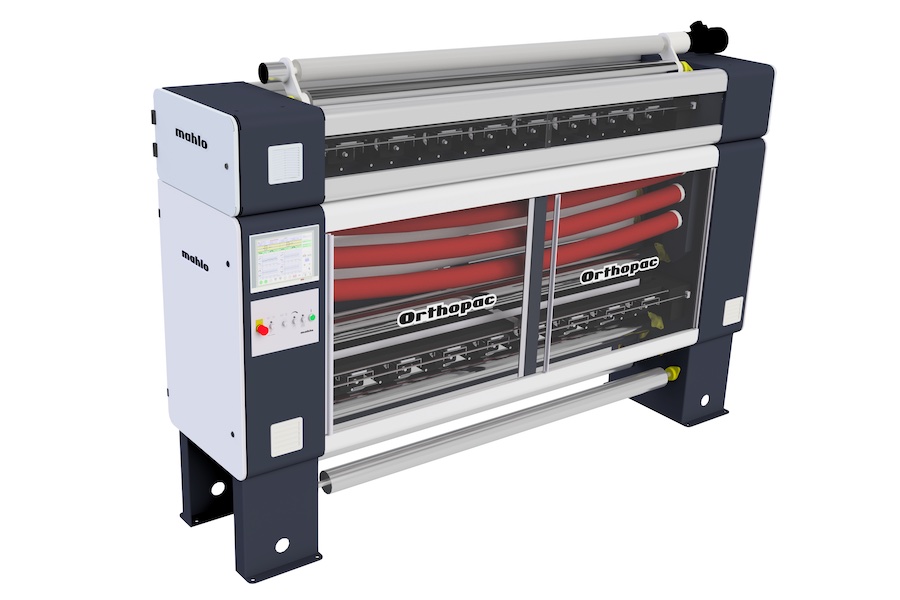
Mahlo has designed the platform as a modular system. The specific application—from ultra-light nonwovens to materials with very high basis weights—determines the appropriate sensor type. This flexibility also allows applications to be covered that previously relied on beta or transmission technologies.
“The modular platform opens up entirely new possibilities for meeting customer requirements with pinpoint accuracy,” says Wulbeck. Available variants include absorption sensors, backscatter sensors, and hybrid versions.

Practical applications from industry
The versatility of the new sensor platform is demonstrated by a range of real-world industrial applications.
One example is the replacement of traditional beta absorption sensors for materials with high basis weights. In multilayer graphite nonwovens ranging from 600 to 1,200 g/m², the backscatter sensor delivers cross profiles and trend curves nearly identical to those of a Kr-85 system—yet without the need for a radioactive source. For users, this means reduced regulatory requirements, simplified radiation protection, and lower operating costs.
The technology also proves advantageous when measuring unconsolidated nonwovens on metallic substrates (e.g., rollers or sheets). At the same time, tube voltage can be significantly reduced, simplifying radiation protection while still enabling highly precise measurements—particularly for lightweight nonwovens.
Another key benefit lies in the analysis of material composition. In a hybrid configuration, the sensor can simultaneously capture total basis weight, fiber content, binder content or loss on ignition (LOI), as well as heavy components in glass fiber nonwovens. Tests have shown that even subtle variations in binder content can be clearly visualized.
Overall, the platform covers an exceptionally wide measurement range—from very light nonwovens to materials with basis weights exceeding 15,000 g/m². This makes the system suitable for numerous applications, including hygiene products, filtration media, automotive textiles, construction and insulation materials, as well as various composites.
Easy integration into existing systems
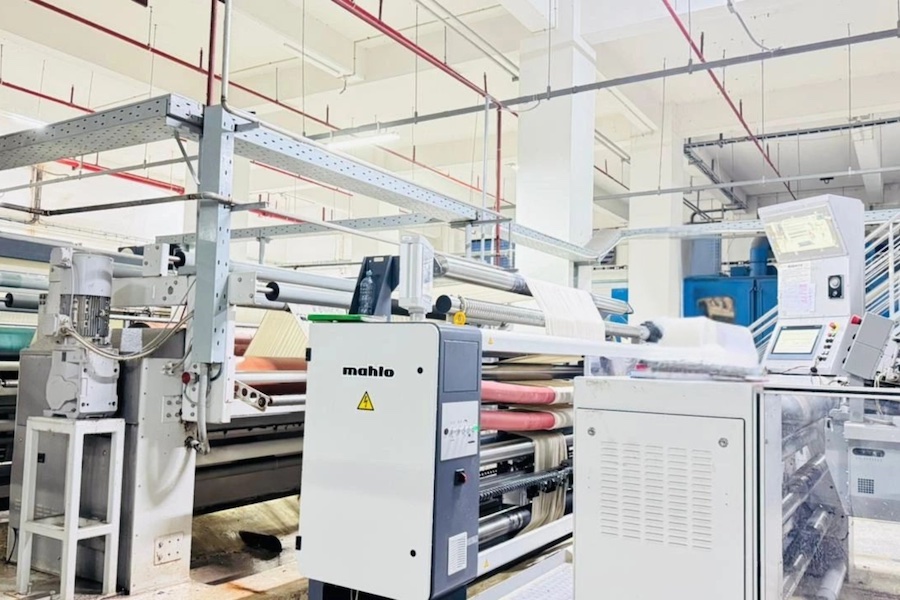
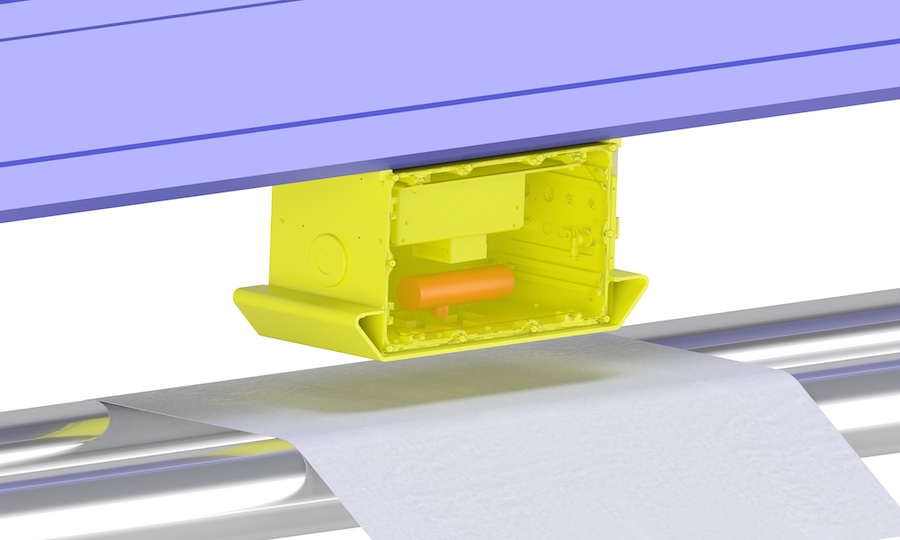
In addition to measurement performance, ease of integration into existing production environments was a key focus during development. The sensor platform can be seamlessly integrated into both new and existing O-frame scanners.
Design features such as enclosed radiation collectors further reduce radiation exposure without compromising measurement quality. This increases operational safety and makes the system particularly attractive for modernization projects.
It is clear that modern sensor technology is evolving from a pure measurement tool into a central element of digital process control.
From sensor data to digital process intelligence
Even the most precise sensors only deliver their full value when the data they generate is clearly presented and integrated into the production process. This is exactly where Mahlo’s latest developments come in.
The systems continuously capture quality data across the entire web width and make it available in real time. Production profiles are visualized instantly, while trend analyses detect gradual changes at an early stage, enabling predictive maintenance. Automatic compensation mechanisms and flexible calibration procedures ensure stable measurement results even under changing process conditions.
“For our customers, one thing matters above all: reliability,” says Sales Director Thomas Höpfl. “The new sensor platform not only delivers more precise data but makes it immediately usable—that is a real competitive advantage.”
Premiere at Techtextil
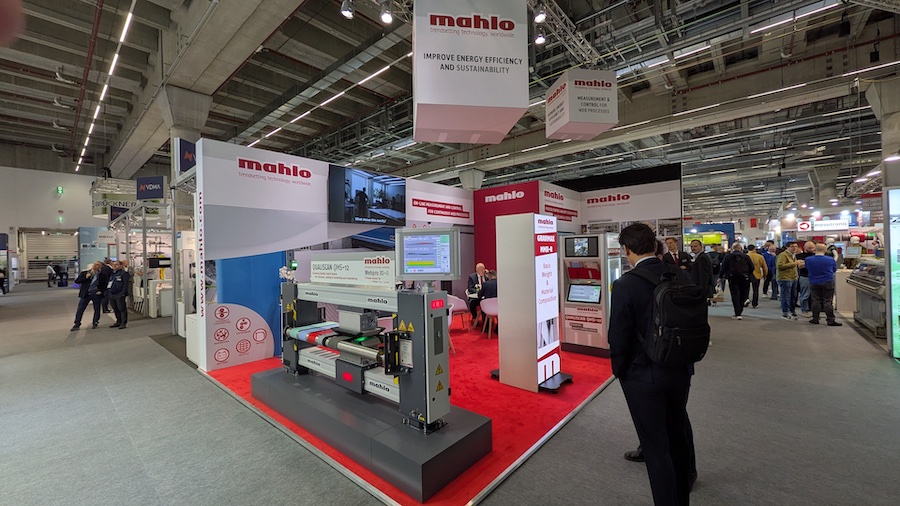
Mahlo will showcase how modern sensor technology and digital process control complement each other in practice for the first time at Techtextil. The company will present the new MMX-R sensor family alongside solutions that make production data visible and analyzable in real time.
Visitors will be able to experience how quality profiles are displayed across the full web width, how trend analyses detect process changes early, and how production data can be used to optimize material usage and process stability.
This clearly highlights the direction in which quality control in the textile industry is heading: away from isolated measurements and toward continuous, data-driven production processes that make quality transparent and enable ongoing improvement.