[pageLogInLogOut]

#Sustainability

BASF to build new chelating agent plant for more sustainable detergents and cleaners
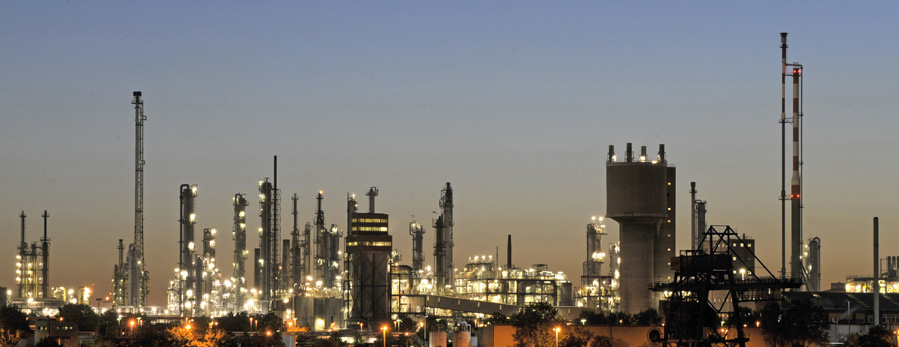
BASF headquarter in Ludwigshafen (c) 2014 BASF
In order to meet the fast growing global market demand for its innovative chelating agent, BASF will build a new Trilon® M (methylglycinediacetic acid) world scaleplant at Evonik’s Theodore, Alabamasite. The investment will be about $90 million and create around 20 additional jobs. The new production facilityis planned to start up in the second half of 2015.
  • Facility for Trilon® M to start up in 2015
  • Investment responds to growing worldwide demand for phosphate alternatives
BASF’s innovative chelating agent is readily biodegradable and improves the cleaning effect of detergents and cleaners inhome care and industrial and institutional (I&I) cleaning applications.It isemerging as the preferred alternative to phosphates in modern, high-performance, ecological dishwashing detergents.

“We continue to see rapid market growth for more eco-friendly cleaning products,” saidGabriel Tanbourgi, President of BASF’s Care Chemicals division. "With the expansion and globalization of our Trilon® M production capacity we will beable to serve the global demand for Trilon® M and supportour customers on their path towards sustainable cleaning solutions."

The investment in Theodore, Alabama, will free up capacity in Ludwigshafen, Germany, to serve the increasing European demand for Trilon® M triggered by the phosphate regulation for consumer automatic dishwashing detergents which is expected in 2017. In the United States, phosphates were already banned from consumer automatic dishwashing detergents in 16 states in 2010.

BASF brought a new world scale plant expansion for Trilon® M on stream in Ludwigshafen in 2010. Trilon® M  was approved by the Environmental Protection Agency’s (EPA) Design for the Environment (DfE) certification programin 2011.BASF currently manufactures its chelating agents at its Ludwigshafen site, in Lima, Ohio and in Guaratinguetá, Brazil. Trilon® M is available worldwide in liquid and various solid forms.
More News from BASF Aktiengesellschaft
Performance Chemicals for Textiles

More News on Sustainability

#Natural Fibers

Global Standard gGmbH launches second public consultation for GRTS Draft 2 for the textile industry (1–30 April 2026)

Global Standard gGmbH is pleased to announce the release of Draft 2 of the Global Responsible Textile Standard (GRTS) for its second public consultation. The consultation will be open from 1 April 2026 to 30 April 2026, inviting stakeholders across the textile and apparel value chain to provide input and contribute to the further development of this new Standard.

#Sustainability

Practical toolkit to drive coordinated climate action launched

An open-access workshop toolkit enables brands, suppliers, policymakers and investors across the textile industry to apply the System Map in their own work, identifying leverage points to halve emissions and enable a just transition.

#Raw Materials

Textile Exchange publishes cotton Life Cycle Assessment study to strengthen impact data

Textile Exchange has published the first in a series of seven Life Cycle Assessment (LCA) studies designed to improve the quality and robustness of environmental impact data for raw material production across the fashion, textile, and apparel industry. The first LCA study focuses on cotton and addresses critical data gaps and methodology variability through new high-quality data across key producing countries. The study includes organic, regenerative, recycled, and country averages for conventional cotton production systems, providing a clearer picture of the associated environmental impact.

#Sustainability

Experts publish APAC policy priorities

Cascale today announced the publication of its APAC Policy Priorities Paper, developed by the Asia-Pacific (APAC) Policy Member Expert Team (MET) to identify key regional sustainability challenges and provide practical, aligned recommendations for policymakers and industry stakeholders across Asia-Pacific.

Latest News

#Raw Materials

New study shows low environmental impact by Cotton made in Africa Organic Cotton from Tanzania

Today, the Aid by Trade Foundation (AbTF) is announcing the results of a comprehensive life-cycle analysis (LCA) for cotton produced in Tanzania under the Cotton made in Africa Organic (CmiA Organic) standard. The study emphasises the small ecological footprint of CmiA Organic verified cotton. This can largely be traced back to the absence of synthetic pesticides, artificial fertilisers, and artificial irrigation. Consequently, CmiA Organic cotton can help the textile industry meet regulatory requirements as well as science-based targets. The results also show that the consequences of climate change threaten the livelihoods of these cotton farmers, even though the type of agriculture they practise barely contributes to climate change.

#Raw Materials

Better Cotton Initiative strengthens regenerative focus in standard update

The Better Cotton Initiative (BCI) has strengthened the regenerative focus of its field-level standard with the launch of a new version of its Principles & Criteria (P&C), which marks the next step in the organisation’s journey to becoming a regenerative standards system.

#Man-Made Fibers

Selenis and Kintra Fibers partner to scale 100% bio-based synthetic fiber technology

Selenis, a leading global specialty polyester manufacturer, today announced a strategic manufacturing partnership with materials science company Kintra Fibers to scale Kintra’s patented fiber-grade PBS resin - a 100% bio-based and biodegradable material designed for textile applications.

#Functional Fabrics

PERFORMANCE DAYS proves its relevance as the industry’s key meeting point

Held on March 18–19, 2026, PERFORMANCE DAYS once again confirmed its position as a leading international platform for functional textiles. A total of 3.366 trade visitors and around 560 exhibitors gathered in Munich, with the event already kicking off successfully on DAY 0, which received highly positive feedback for its interactive format. Despite challenging conditions caused by the public transport strike in Munich, the event saw strong attendance and a consistently high level of activity across both exhibition days.

TOP