[pageLogInLogOut]

#Yarn & Fiber

Perfect partners for filament yarn producers worldwide
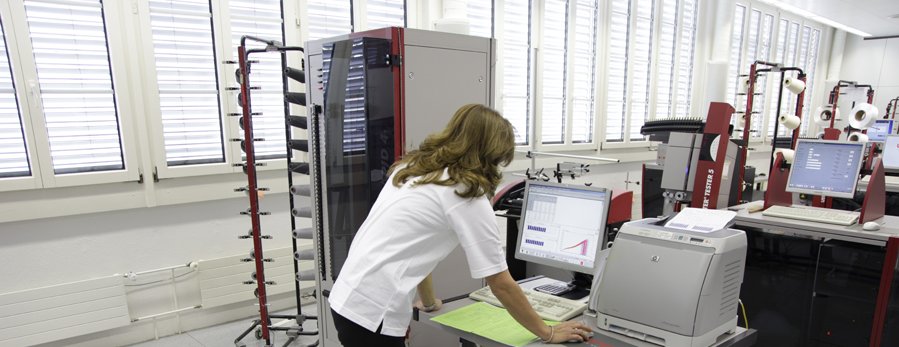
Testing with the USTER® TENSORAPID 4-C (c) 2012 USTER
Global demand for synthetic fibers is at an all-time high, with more than 80% capacity utilization and a production total of almost 50 million tonnes expected for 2011, following a strong recovery in 2010. Mass variation as well as strength and elongation are the essential quality characteristics for this big business. The USTER® TESTER 5-C800 and TENSORAPID 4-C are the indispensable and specialized testing instruments for filament yarn producers.

Ensuring quality standards with the USTER® TESTER 5-C800 and USTER® TENSORAPID 4-C

Reflecting the filament industry’s needs leads to the conclusion that two USTER® testing instruments offer what is necessary to ensure requested quality standards: The USTER® TESTER 5-C800 – part of the renowned USTER® tester family – is tailor-made for this industry and has become a synonym for unevenness measurements. The USTER® TENSORAPID 4-C measures the key quality parameters of force, elongation and tenacity, using software specially designed for filament yarns. Both systems can test a wide range of counts across all the main filament yarn types, including polyester, polyamide, polypropylene, viscose and aramid. Gabriela Peters, Product Manager Yarn within Uster Technologies says: “Our long expertise in this area means we understand that the testing of monofilament or multifilament is not as simple as it looks.” In fact, it can be a complex process, requiring the specialized know-how, hardware and software that is integrated into the USTER® instruments. “We work with filament producers to keep pace with fast-moving changes in manufacturing technology and new demands on yarn characteristics as competition intensifies through the textile sector, including high-volume applications such as polyester for apparel, sport textiles and home textiles,” explains Peters.

The perfect couple The USTER® TESTER 5-C800, as the name suggests, operates at the unrivaled testing speed of 800 m/min, while a vital technical benefit is its unique method of applying mechanical twist, which guarantees ultimate accuracy and reliability. The system provides a precise analysis of mass variations in the yarn, which can arise from polymer inconsistencies, irregularities in the spinning process and subsequent yarn cooling and winding and drawing operations, or from machine defects. Because of the high speeds in filament yarn production, undetected mass variations can damage thousands of meters of valuable material. These faults can then cause more problems in subsequent processes such as draw-twisting, texturing and dyeing. That is why comprehensive evenness testing is essential to avoid the danger of below-par yarn quality being delivered to the customer.
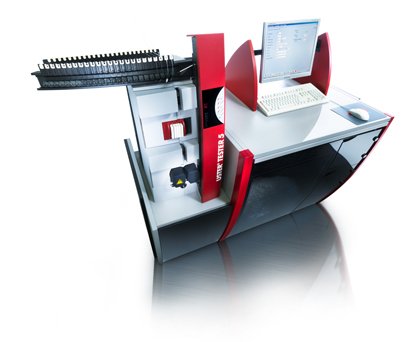
The perfect partner for the USTER® TESTER 5-C800, is the USTER® TENSORAPID tensile testing system, with the latest USTER® TENSORAPID 4-C model offering a range of important features for filament yarns. Producers need to cope with continuous developments in the synthetic fiber sector, including new yarn types and different application. Recognizing these special requirements, USTER has devised a purpose-designed software package for the USTER® TENSORAPID 4-C. As well as handling the basic measurements of force, elongation and tenacity, the software now provides a number of important additional options. For example, users can select data on the force value at which the first filament breaks, or obtain reference values for strength and elongation. Various modulus values, yield points and natural draw ratio for stress and strain are among other useful data offered. Together, the USTER® TESTER 5-C800 and USTER® TENSORAPID 4-C provide the perfect partnership for progress in the global filament yarn industry. 

Growing Importance of Synthetic Fibers Soaring domestic demand in emerging countries, coupled with continuing high cotton prices, has fueled the synthetics boom, and estimates put annual growth in capacity at 4.5%, reaching a global manufacturing capability of 64 million tonnes by 2014. Polyester is projected to retain its dominant position, with filament yarn capacity set to increase from its 2009 level of 26 million tonnes to a new high of 34 million by 2014.

Experts predict Asian markets will be even more significant over this period, as greater affluence and the rise of the middle classes creates new demand for all types of synthetic textiles, with a particularly strong focus on growth in sophisticated applications and non-apparel end-uses. The situation presents great potential for synthetics producers who can meet the new requirements for higher quality standards in an increasingly competitive market. The need to optimize raw material values and achieve right-first-time quality is the key to ensuring profitability.


Data and forecasts in this document are taken from a paper on 'The Future Development of the Man-made Fibers Industry in Japan & Asian region' presented by Tsunehiro OGAWA, of the Japan Chemical Fibers Association (JCFA) at the recent Dornbirn Man-Made Fibres Congress.
More News from Uster Technologies AG

#Spinning

Measure and control the fiber – optimize yarn quality

Producing consistent yarn quality is an everyday challenge – and a very difficult one. Detailed knowledge and understanding of the fiber raw material is absolutely critical to achieving the best possible quality in the yarn. To help spinners, Uster experts have put together guidelines for avoiding yarn irregularity claims, in a special edition of the Uster News Bulletin.

#ITMA Asia + CITME Singapore 2025

Uster presents novelties at ITMA Asia + CITME 2025

There’s news from Uster Technologies to be announced for the industry’s upcoming event in Singapore. The Uster 360Q universe is growing with new products, solutions and services. Innovation developments can also be recorded in the fields of man-made fiber testing and fabric inspection. Uster innovations address the industry’s trending topics as mill management and process control, optimization of delivered fabric quality and yield.

#Spinning

Uster Technologies marks 150 years of empowering quality excellence

Uster Technologies marks 150 years of excellence – a milestone that reflects continuous adaptation to customer needs and industry change. Over the decades, Uster has evolved from manufacturing quality testing instruments into a trusted partner shaping the future of textile production.

#Recycling / Circular Economy

Challenges of making yarn from recycled fibers

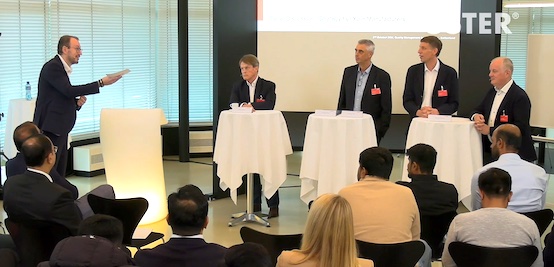
What does it take to spin quality yarn from recycled fibers? Uster Technologies brought textile industry leaders together to discuss the role of technology, data and automation – as well as the current challenges in using recycled raw material. Experts from Rieter, Säntis Textiles, Otto Yarns, and TVU commented on the current situation and looked into the future of spinning in a panel discussion organized at Uster headquarters.

More News on Yarn & Fiber

#Man-Made Fibers

Indorama Ventures supports Southeast Asia’s textile customers with reliable regional supply and global innovative portfolio

Indorama Ventures, one of the leading global polyester fiber and filament yarn suppliers globally, will participate in Indo Intertex 2026 in Jakarta this April, making its diverse global portfolio available to apparel, home textile, and hygiene customers across Southeast Asia.

#Yarns

Yarn Expo Spring 2026 concludes, connecting buyers with innovative selection of sustainable yarns and fibres

Yarn Expo Spring 2026 wrapped up successfully on 13 March, as a record-high of over 600 exhibitors from 12 countries and regions welcomed more than 25,000 visitors from 113 countries and regions. Held across 27,000 sqm in Hall 8.2 of the National Exhibition and Convention Center (Shanghai), the fair highlighted the textile industry’s accelerating shift toward a lower-impact, more functional future. Exhibitors presented eco-friendly organic, regenerated and recycled yarns and fibres, alongside innovative options such as sweat-resistant and high-performance materials. A comprehensive fringe programme further enriched the event, offering practical market insights and new networking opportunities.

#Man-Made Fibers

Lenzing advances its transformation: Higher EBITDA, stronger free cash flow and more than EUR 200 million in cost savings

The business performance of the Lenzing Group in 2025 was affected particularly in the second half of the year by external factors such as international tariff measures, subdued demand and declining market prices. As a result, revenue decreased slightly by 2.3 percent to EUR 2.6 billion, primarily due to lower fiber sales volumes and lower prices for fibers and pulp, which were further negatively impacted by currency developments. Nevertheless, thanks to the comprehensive Performance Program, Lenzing was able to improve its operating performance and key financial indicators compared with the previous year.

#Man-Made Fibers

“Lead Transformation – Generate Impact”: Lenzing presents its 2025 Annual and Sustainability Report

The Lenzing Group has published its 2025 Annual and Sustainability Report, entitled LEAD TRANSFORMATION – GENERATE IMPACT. The report shows how Lenzing is actively shaping change in the industry and making a lasting impact: economically, ecologically, and socially. Lenzing is consistently focused on the future: with targeted investments in premiumization, excellence, innovation, and sustainability, the company is strengthening its position as a leading provider of sustainable, cellulose-based premium fibers. The combined report is available in digital format.

Latest News

TOP