[pageLogInLogOut]

#Sustainability

Naia from Eastman partners with ESDI for sustainable fashion educational project
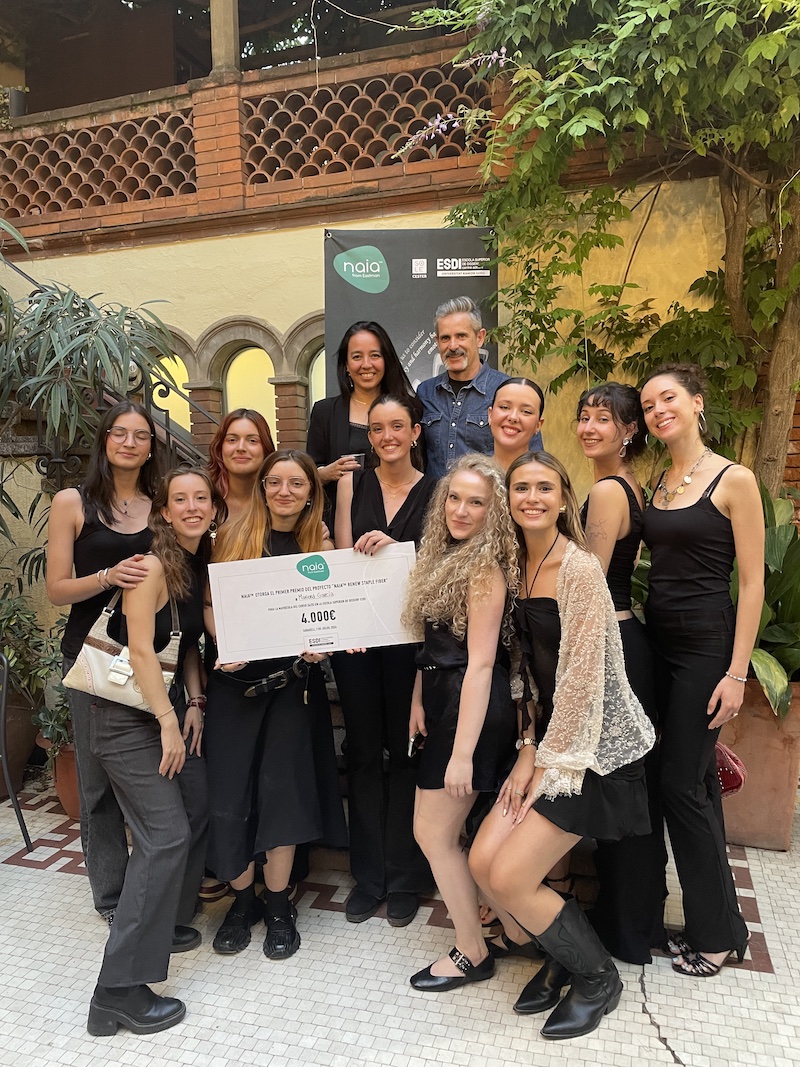
In a significant step towards promoting a culture of ecoconsciousness, Naia™ from Eastman partnered for an educational project with ESDI Escola Superior de Disseny in Sabadell (Barcelona). This collaboration underscores a commitment to integrating sustainable practices with academic excellence, providing ESDI students with the opportunity to design and produce garments using Naia™ fibers to participate in a fashion competition that celebrates the eternal tale of heaven and hell, Dante Alighieri's “The Divine Comedy.”
EKOS, was created and curated by a group of ten third-year ESDI fashion students © 2024 Eastman


The talents of the Escola Superior de Disseny ESDI in Barcelona challenged each other in a fashion competition in the name of sustainability and style

The event took place on July 1, 2024, at the Alliance Francaise in Sabadell, Barcelona, and was judged by a select jury of internationally renowned leaders within the fashion and textile industries. Including Abel Ortiz, owner of Naia™ partner mill, Textiles Ortiz; Montserrat Figueras, owner of the Sita Murt brand; the Italian-born and Barcelona-based designer Claudia Ligari, owner of the eponymous brand; and Carolina Wilches, Senior Application Development Representative at Eastman.

Naia™, in collaboration with ESDI, developed the project to create a seamless production process that prepares students for the dynamics and challenges that lie ahead in their future as industry players. The aim is to create and to enhance supply chain relationships, involving weavers, garment manufacturers and schools, as well as recognizing and rewarding the most innovative young designers during a special event. As part of this initiative, Eastman provided students with fabrics made from its Naia™ Renew fiber, in partnership with two esteemed textile manufacturers, Hallotex from Spain and Riopele from Portugal. Naia™ Renew cellulosic fibers are made from 60% sustainably sourced pulp and 40% certified recycled content*. The recycled component is obtained through Eastman’s patented carbon renewal technology to convert hard-to-recycle waste materials into molecular building blocks, which can be used, re-used and recycled time and time again. These building blocks are combined with sustainable wood pulp to produce biodegradable and compostable fibers for use in new textiles.

The fashion collection that derived from the program, named EKOS, was created and curated by a group of ten third-year ESDI fashion students: Mariona Garcia, the winner of the competition, Inés Borrego, Andra Criado, Júlia Escudero, Aurora Gallardo, Clàudia Gómez, Ingrid Sala, Sila Sánchez, Queralt Turull and Aina Vila. EKOS is a proposal that invites us to consider a new order of beauty and harmony based on emotional balance. Made with sustainable fibers that originated from the concept of inner struggle, it is a testament to human anguish, emotional and spiritual purgatory. Through their work, the designers aimed to capture the complexity of existence and the incessant search for clarity and peace.

A dress from the EKOS collection  © 2024 Eastman
A dress from the EKOS collection © 2024 Eastman


This educational collaboration is a reflection of Naia™ from Eastman's commitment to the United Nations’ Sustainable Development Goals (SDGs) and showcases its leadership in reducing environmental impact through advanced molecular recycling technologies. These are pivotal not just for their role in diminishing the carbon footprint of textiles but also for setting a new standard in mainstreaming circularity. Naia™ is at the forefront of promoting a circular economy within the fashion industry, both by converting waste into valuable, sustainable materials and by focusing on education and enabling students to work with them.

“At Eastman, we believe in the power of education to foster a more sustainable future. Partnering with ESDI allows us to support the next generation of designers by providing them with the tools and opportunities to innovate responsibly,” states Carolina Wilches. “Education is a cornerstone of our sustainability strategy, which is why we prioritize initiatives that enhance student learning and development.” "This collaboration has been very beneficial for ESDI students because they have been able to work in a very similar way to the professional one: choosing from a number of predetermined fabrics, visiting suppliers and devising the project as a team, to end up doing individual work that they will have to put together again for the fashion show presentation," says Jorge Zuazo, head of the Fashion Design Department at ESDI.
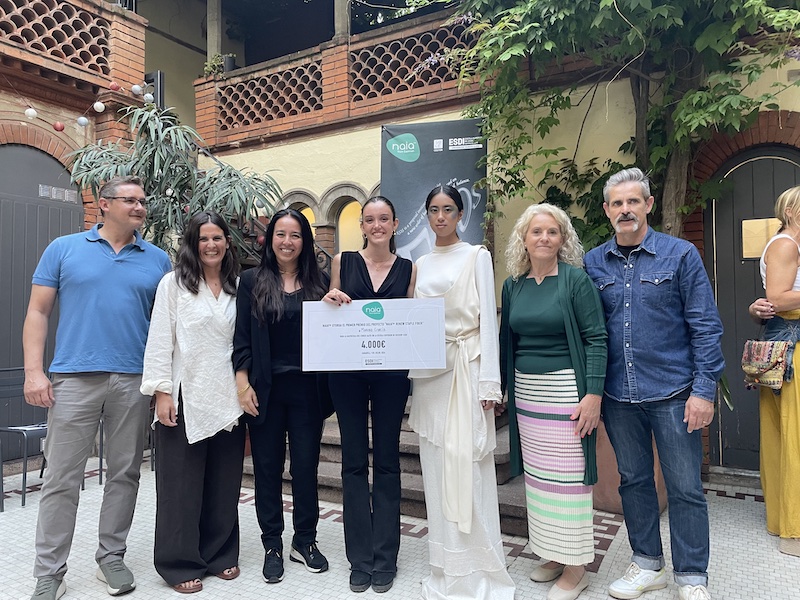
Mariona Garcia receives 'Naia™ Renew Staple Fibre' award from jury and school © 2024 Eastman


*Naia™ Renew recycled content is achieved by allocation of recycled waste material using a GRS-certified mass balance process.

More News from Eastman

#Recycled Fibers

Eastman Naia™ highlights circularity and responsible sourcing at Textile Exchange 2026

Scaling sustainable practices across businesses, supply chains and landscapes is one of the defining challenges facing the textile industry. At the 2026 Textile Exchange Conference, held October 12–16 in Vancouver under the theme “The Implementation Era,” Eastman Naia™ showcased how its commitments to circularity, responsible sourcing and forest conservation translate into practical action.

#Recycled Fibers

Eastman Naia™ brings versatility to Kingpins Amsterdam

Denim continues to evolve, responding to changing consumer expectations for comfort, adaptability and functionality across different styles, occasions and seasons. At Kingpins Amsterdam, taking place October 14–15, Eastman Naia™ highlights how the versatility of Naia™ Renew staple fiber can help manufacturers address different denim needs through thoughtful fiber blending, while preserving the distinctive character of denim.

#Recycled Fibers

Naia™ from Eastman strengthens western hemisphere textile connections at Apparel Sourcing Show Guatemala

As brands and retailers explore more diversified and responsive sourcing networks, the Naia™ brand from Eastman is strengthening its engagement with the textile and apparel value chain across the western hemisphere. From August 18–20, the company will participate for the first time in Apparel Sourcing Show Guatemala, a regional meeting point for apparel sourcing, manufacturing and nearshoring.

#Man-Made Fibers

Eastman Naia™ brings the SEEDS theme to life at PREFACE LA

Eastman Naia™ is participating in PREFACE LA, taking place July 29–30, to present applications of its filament yarn and staple fiber across fashion and denim.

More News on Sustainability

#Sustainability

Inside the Making at Ecomondo 2026: Textile supply chain calls for transparency and measurable sustainability

Transparency, verifiable environmental claims and closer cooperation across the textile value chain were the central themes of the “Inside the Making: The Power of the Process” panel at Ecomondo 2026 in Rimini. Representatives from denim and sportswear manufacturing, textile finishing, digital printing and branding discussed how technological innovation and supply chain collaboration can help companies meet new European regulatory requirements while making sustainability economically viable.

#Recycling / Circular Economy

H&M Foundation highlights economic barriers to scaling circular textile systems

Discussions at Textile Exchange 2026 underline the need for coordinated investment, reliable material flows and a fair distribution of costs and risks across the textile recycling value chain.

#Recycled Fibers

C&A and Zalando join Altag® Fiber Club to accelerate adoption of agricultural waste-based fibres

Fashion for Good and AltMat announced today that C&A and Zalando have joined the Altag® Fiber Club as its first brand signatories, marking a critical commercial milestone in the journey to mainstream adoption of next-generation fibres derived from agricultural waste.

#Industry 4.0 / Digitalization

Jeanologia and BCome connect factory data with Life Cycle Assessment and Digital Product Passports

A new white paper by EIM by Jeanologia and BCome demonstrates how primary environmental data from denim finishing processes can be integrated into a garment's Life Cycle Assessment (LCA) and prepared for use in a Digital Product Passport (DPP). A comparative case study highlights significant improvements at the production stage while also showing how these translate into the environmental performance of the finished garment.

Latest News

#Research & Development

Empa develops liquid-core fibre for insecticide-treated mosquito nets

Empa researchers have developed a liquid-core fibre for mosquito nets that can incorporate insecticides unsuitable for conventional melt spinning. The fibre gradually releases the active ingredient through a polymer sheath. The team developed and tested the yarn over three years in the Innosuisse project MalCoFil with Swiss industry partners Vestergaard and Monosuisse.

#Raw Materials

Sourcing of traceable BCI cotton rises 43.5% to 33,000 tonnes

Retailers and brands sourced a record 33,000 metric tonnes of Traceable BCI Cotton over the past year, up 43.5% from 23,000 tonnes in 2024–2025, the Better Cotton Initiative (BCI) reported on 17 November 2026.

#Industry 4.0 / Digitalization

Smartex.ai names Tony Fadell chairman and previews new fabric inspection system

Smartex.ai has appointed Tony Fadell as chairman and will present its new fabric inspection hardware and software at SmartCollab Hong Kong on 27 November. Fadell co-designed Inspect, the hardware at the centre of the system, which Smartex developed with a supplier in H&M Group’s network.

#Digital Printing

From a bedroom startup to 3,000 designs: How Lonely Kids Club built its business with DTG printing

Founded in Sydney in 2011, independent clothing label Lonely Kids Club has grown from a bedroom startup into a business offering around 3,000 graphic T-shirt designs. With its own production studio, direct-to-garment printing and a demand-driven manufacturing model, the company demonstrates how smaller apparel brands can combine creative independence with flexible production – while navigating the everyday challenges of quality control, workflow efficiency and sustainability.

TOP