[pageLogInLogOut]

#Yarn & Fiber

Woodspin ramps up production of sustainable, wood-based SPINNOVA® fibre at new zero-emission factory

© 2023 SPINNOVA®
The first commercial facility producing SPINNOVA® fibre is scaling up production to 1,000 tonnes of sustainable textile fibre annually.

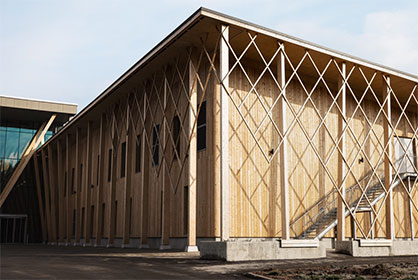
Finnish sustainable textile pioneer Spinnova and the world's largest pulp producer Suzano have officially opened their first commercial-scale facility producing wood-based SPINNOVA® fibre. Operated by Woodspin – Spinnova and Suzano’s joint venture – the plant will produce 1,000 tonnes of sustainable, recyclable and fully biodegradable textile fibre from responsibly-grown wood each year. This facility marks the first industrial operations Suzano has outside of Brazil. Woodspin has also announced plans to open a second site to scale production further. Their aim is to build one million tonnes of wood-based SPINNOVA® fibre annual production capacity by 2033.
© 2023 SPINNOVA®
© 2023 SPINNOVA®


Christian Orglmeister, Executive Director New Business at Suzano said:

“The global fashion and textile industry needs high quality sustainable and recyclable materials. At Woodspin we are bringing to the market Spinnova's innovative biodegradable textile fibre, made using Suzano's abundant supply of responsibly-sourced eucalyptus pulp. This has a radically lower environmental impact than alternative fibres such as cotton, offering one of the few genuinely scalable solutions to support sustainable production. We're excited to ramp up production and create positive change.”

Capable of producing textile fibre with zero emissions, the modern facility also has a comprehensive approach to circularity and sustainability. As the only by-product of SPINNOVA® production is heat, the facility doesn’t require an environmental permit to operate. Using an advanced energy recovery system, excess heat is recycled into the local district heating system, estimated to save 2.4kg CO2e per kg of fibre produced, that would otherwise be required to generate district heat. Coupled with an environmentally friendly production process, Woodspin’s pioneering large-scale facility saves more emissions than it creates.

Juha Salmela, CTO and Co-Founder at Spinnova said:

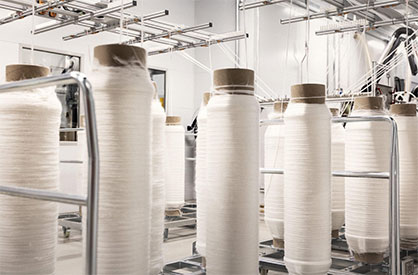
“Spinnova’s patented fibre production process doesn’t require any harmful chemicals or dissolving, nor does it generate waste or microplastics. It has a 74% smaller life cycle carbon footprint and uses 99.5% less water compared to conventional cotton production. The result is a natural, cotton-like textile fibre that meets the rigorous environmental and performance demands of brands and consumers alike – and, through facilities such as this one, can now be produced at scale.”


SPINNOVA® fibre spun at Woodspin’s facility is produced from wood pulp made from certified, sustainably grown eucalyptus trees. All pulp is sourced from Suzano, which has a strict zero deforestation policy and only plants on land that was previously degraded.

The wood-based SPINNOVA® fibre has previously been used by global fashion brands such as adidas, H&M Group’s ARKET, Marimekko and JACK&JONES.

© 2023 SPINNOVA®
© 2023 SPINNOVA®


More News from TEXDATA International

#ITM 2026

ITM 2026: The new geography of textile production

New production hubs are emerging across North Africa and Central Asia, while Türkiye is accelerating its transformation toward higher-value, technology-driven and more sustainable textile manufacturing.

#Research & Development

“Production is a product”

From technical textiles and AI-driven robotics to the limitations of textile circularity: Professor Dr Thomas Gries looks back on more than two decades of development at ITA Aachen. In the interview, he explains why production technology remains a decisive success factor, discusses international collaborations and innovation ecosystems, and shares his views on the transformation of production landscapes and the challenges facing an increasingly regulated industry.

#Knitting & Hosiery

“We need to move away from the price trap and return to a value-driven mindset.”

With its new Textile Innovation Center, KARL MAYER is sending a strong signal for innovation, collaboration, and the future of textile applications. In this interview, Karl Josef Mayer discusses new opportunities in warp knitting, the processing of staple fibres, recycling, the changing role of machinery manufacturers, and why the textile industry must once again focus more strongly on the value of textiles. by Oliver Schmidt

#Associations

“Innovation, resilience and international experience remain the great strengths of the Swiss textile machinery industry”

Geopolitical uncertainty, growing competitive pressure from China, new free trade agreements and the shift towards a circular economy are currently reshaping the global textile industry. In this interview, Cornelia Buchwalder discusses the current mood within the Swiss textile machinery sector, the industry’s distinctive innovative strength, new market opportunities in India and Asia, and the technological trends that could shape the upcoming trade fair cycle leading up to ITMA 2027.

More News on Yarn & Fiber

#Sustainability

The first widely accessible Life Cycle Assessment study for cashmere production published by Textile Exchange.

Crucial new data to better understand, measure, and address the impacts of cashmere production has been made available to the fashion, textile, and apparel industry through a new Life Cycle Assessment (LCA) published by Textile Exchange.

#Yarn & Fiber

R-Evenge chooses Q-NOVA® yarn by Fulgar for its line of technical socks dedicated to wellness

Q-NOVA®, Fulgar’s sustainable polyamide 6.6 yarn, has been selected by R-Evenge for the development of its collection of technical socks dedicated to wellness, fitness, and water-based activities.

#Yarns

Yarn Expo Shenzhen 2026 closes doors, advancing sustainable and innovative sourcing in South China

Yarn Expo Shenzhen 2026 served as a strategically positioned mid-year sourcing platform for the Greater Bay Area, highlighting Shenzhen’s role in connecting regional demand, supply and innovation exchange across the textile value chain. During the three-day fair, over 20,000 visits were drawn from 74 countries and regions[1], as exhibitors and buyers engaged with new developments in greener, performance-led, and value-added yarn and fibre solutions. Held in conjunction with Intertextile Shenzhen Apparel Fabrics and PH Value, the fair underscored the benefits of closer synergy and new materials across yarn, fabric and apparel platforms for the South China market.

#Yarns

Yarns and technologies in symbiosis: Biella Yarn presents Fall/Winter 2027/2028 collection “New Romance_”

Biella Yarn, the flat knitting brand of Suedwolle Group, launches new Fall/Winter 2027/2028 collection, inspired by the symbiosis of yarns and technologies – elements that blend, adapt and evolve together, forming something new without losing their origin. The name “Neu Romance_” reflects the emotional and neurological dimension of the yarns: a connection that engages the senses, experienced through material, touch and interaction. The collection is further brought to life through design collaborations, featuring selected yarns used in different design approaches.

Latest News

#Digital Printing

Where every detail counts: Experiential applications of DTF and UV-DTF printing

Personalisation has moved far beyond the traditional logo on a t-shirt. Today, brands want to create complete experiences, where every detail – from clothing and accessories to décor and packaging – feels distinctive and reflective of their identity.

#Europe

The Digital Product Passport registry is now live

On 20 July, the European Commission launched the Digital Product Passport Registry together with a testing environment, marking an important milestone in making the Digital Product Passport (DPP) a practical reality for businesses placing products on the EU market.

#Europe

EU ban on destroying unsold clothing and footwear now in force

The European Union's ban on the destruction of unsold clothing, clothing accessories and footwear has entered into force. Since July 19, 2026, large companies across the EU have been prohibited from destroying unsold textile products, while medium-sized companies will be required to comply with the same rules from 2030.

#Recycled Fibers

Eastman Naia™ brings its inside-out denim vision to Kingpins New York

Following its debut at Kingpins Amsterdam, Eastman Naia™ brings the next chapter of its denim story to Kingpins New York, taking place July 22–23. At Booth Green 7, Naia™ presents its denim proposition built around three complementary design directions: Performance Denim, Fashion Denim and Authentic Denim.

TOP