[pageLogInLogOut]

#Recycling / Circular Economy

Sanyou and Renewcell announce goal to accelerate viscose fibers made from 100 percent recycled textiles

On the sidelines of the Intertextile Shanghai fair, the Swedish textile-to-textile recycling innovator Renewcell and the leading Chinese viscose manufacturer Tangshan Sanyou announced the next step in their partnership to make fashion circular that stretches back to 2018. The two companies’ new shared ambition is to offer manufacturers and brands Circulose® viscose fibers made from 100% recycled textiles in commercial quantities starting in 2024. The collaboration has been facilitated by Ekman Group, Renewcell’s exclusive global trading partner.

“I am very happy to announce this acceleration of our long-standing partnership with Tangshan Sanyou. They were the first commercial producer of Circulose®-based fibers in the world, and the first to commit to sourcing significant volumes from us. Now, they aim to also be the first to commercialize 100% Circulose® content fibers” said Patrik Lundström, CEO of Renewcell, adding "I applaud Tangshan Sanyou’s vision and support to scaling next gen raw materials like Circulose®.”

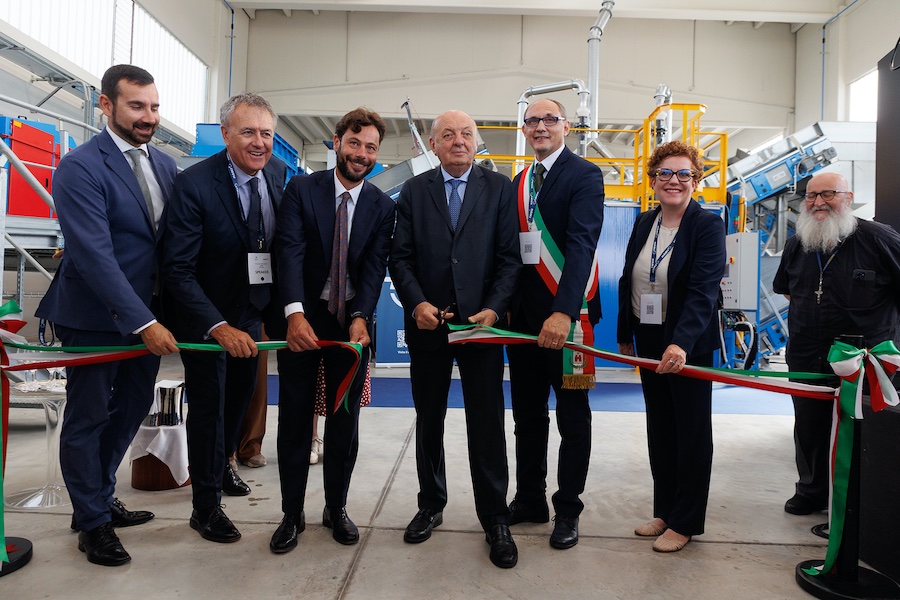
The announcement, which follows the recent start of deliveries of 100% recycled textile Circulose® pulp from Renewcell’s newly opened Renewcell 1 recycling plant, is the result of successful validation of Circulose®’s quality in production at Tangshan Sanyou’s commercial-scale manufacturing lines. Tangshan Sanyou would strive to finish the mission of producing commercial volumes of 50% Circulose® content fibers during 2023 and work towards achieving the delivery of 100% Circulose® content branded viscose fibers to selected fashion brands and manufacturers starting in 2024. The two companies will cooperate to market the fibers globally using Renewcell’s Circulose® ingredient brand name.


Mr. Zhang Dongbin, Executive Vice General Manager of Tangshan Sanyou Chemical Fiber, says, "Through the collaboration with Renewcell, we have achieved to use Circulose® made from recycled cotton in the production of our viscose fibers, which is great beneficial to improving resource utilization efficiency and lowering carbon footprint of the industry. It has brought a huge impact in the sustainable fashion industry. We will continue putting efforts in forming good interaction between consumers, brands and enterprises, convey the concept of circular sustainable fashion, promote the greening of textile industry, and ensure a more sustainable way to ensure the sustainable development of the textile industry. Protecting the global ecological environment by applying sustainable solutions is our common goal."




More News from TEXDATA International

#ITM 2026

ITM 2026: The new geography of textile production

New production hubs are emerging across North Africa and Central Asia, while Türkiye is accelerating its transformation toward higher-value, technology-driven and more sustainable textile manufacturing.

#Research & Development

“Production is a product”

From technical textiles and AI-driven robotics to the limitations of textile circularity: Professor Dr Thomas Gries looks back on more than two decades of development at ITA Aachen. In the interview, he explains why production technology remains a decisive success factor, discusses international collaborations and innovation ecosystems, and shares his views on the transformation of production landscapes and the challenges facing an increasingly regulated industry.

#Knitting & Hosiery

“We need to move away from the price trap and return to a value-driven mindset.”

With its new Textile Innovation Center, KARL MAYER is sending a strong signal for innovation, collaboration, and the future of textile applications. In this interview, Karl Josef Mayer discusses new opportunities in warp knitting, the processing of staple fibres, recycling, the changing role of machinery manufacturers, and why the textile industry must once again focus more strongly on the value of textiles. by Oliver Schmidt

#Associations

“Innovation, resilience and international experience remain the great strengths of the Swiss textile machinery industry”

Geopolitical uncertainty, growing competitive pressure from China, new free trade agreements and the shift towards a circular economy are currently reshaping the global textile industry. In this interview, Cornelia Buchwalder discusses the current mood within the Swiss textile machinery sector, the industry’s distinctive innovative strength, new market opportunities in India and Asia, and the technological trends that could shape the upcoming trade fair cycle leading up to ITMA 2027.

More News on Recycling / Circular Economy

#Spinning

"We will become a recycling powerhouse"

The textile industry is now in its fourth consecutive year of crisis, while automation, artificial intelligence and recycling are reshaping the rules of the game. In this interview, Rieter CEO Thomas Oetterli discusses the first signs of a market recovery, reflects on his first three years at the helm of the company, explains the integration of Barmag, outlines Rieter’s vision of the fully automated spinning mill and highlights the strategic importance of recycling. In doing so, he explains why the new Rieter Group aims to play a leading role in transforming the textile value chain into a circular economy.

#Recycling / Circular Economy

Countdown to Textiles Recycling Expo 2026: Brussels prepares for Europe’s textile recycling gathering

With only two weeks remaining until the start of the second edition of the Textiles Recycling Expo 2026, preparations are entering the final phase. The exhibition and conference, dedicated exclusively to textile recycling and circularity, will take place on 24–25 June 2026 at Brussels Expo and is expected to attract stakeholders from across the textile recycling value chain.

#Recycled Fibers

Indorama Ventures enables brands to scale circular textiles through proven, traceable supply chains

Indorama Ventures, a global leader in recycled polyester staple fibers and filament yarns, will exhibit at Textiles Recycling Expo in Brussels on June 24–25. At the event, the company will show how brands and textile manufacturers can build traceable, circular textile supply chains by working with proven partners who deliver recycled materials on an industrial scale.

#Recycled Fibers

RECOVER™ launches Recover™ Yarns to accelerate recycled cotton uptake

Recover™, a leading materials science company and one of the world’s largest producers of recycled cotton fiber, today announces the launch of Recover™ Yarns, a curated portfolio of ready-to-use yarn solutions designed to accelerate the adoption of recycled cotton across the apparel supply chain.

Latest News

#

TERNAfil wins first place at PitchMiUp Night 2026 in Minden

The RWTH spin-off TERNAfil has developed MAXCarbon, a new high-performance hybrid fibre that combines the mechanical performance of carbon with the temperature and corrosion resistance of ceramic materials. For this development, TERNAfil was awarded first prize at the PitchMiUp Night in Minden on 21 May 2026.

#Nonwovens

Lenzing Group highlights scalable, bio-based nonwovens solutions at leading global industry fairs

From CIDPEX in China to Techtextil in Frankfurt and INDEX in Geneva, the Lenzing Group showcases ready-for-market, bio-based nonwoven solutions and receives industry recognition for LENZING™ Nonwoven Technology.

#Research & Development

Carbon-ceramic hybrid fibre proves its worth – NRW Minister for Science Mona Neubaur congratulates ITA start-up TERNAfil

MAXCarbon technology, a novel carbon-ceramic hybrid fibre developed by ITA spin-off TERNAfil, secured third place at the HIGH-TECH.NRW Demo Day on the TÜV NORD campus in Essen. The technology combines the strength of carbon fibres with the temperature and corrosion resistance of ceramic materials. Mona Neubaur, Minister for Science in North Rhine-Westphalia, congratulated the team on their success and on winning prize money of 4,000 euros.

#

DTF vs DTG Printing - The technologies shaping today’s custom merchandise market

From sportswear to branded tote bags, custom merchandise continues to grow in popularity across sectors, driving print shops to cater to short runs, personalisation, and rapid turnaround. As print providers look to this market, two printing technologies often stand out: Direct‑to‑Film (DTF) and Direct‑to‑Garment (DTG). Each offers its own benefits, and understanding these differences helps determine the most suitable production method for print service providers.

TOP