[pageLogInLogOut]

#Yarn & Fiber

The sustainability our mountains deserve: RadiciGroup and DKB introduce the first “circular” ski suit

A garment made of yarn obtained from recycled materials and designed with end-of-life recyclability in mind, without compromising style, design and technical performance. RadiciGroup Ski Club athletes will be the first ambassadors of this sustainability project

The first truly sustainable ski suit, featuring Italian style and design and azero-kilometre supply chain, is finally here. Two Bergamo companies of excellence played the leading roles in the conception and realization of this highly innovative fashion-sport garment: RadiciGroup, a world leading producer of chemical intermediates, polyamide polymers, high-performance engineering polymers and advanced textile solutions, and DKB, a company specializing in technical sportswear with the same brand name.
© 2021 RadiciGroup
© 2021 RadiciGroup


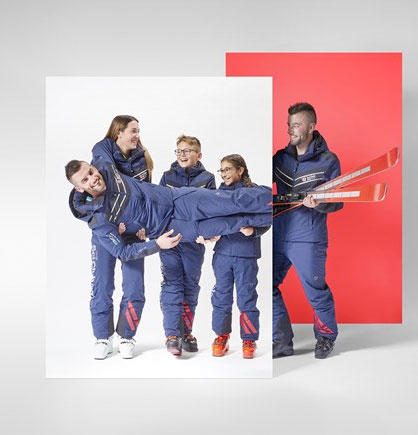
The ski suit, consisting of jacket and trousers, is fashioned with a fabric made of RENYCLE, a RadiciGroup yarn obtained from mechanically recycled polyamide (nylon), which affords notable savings in energy and water consumption, as well as lower CO2 emissions. In addition, the suit’s padding and numerous accessories, such as zippers, Velcro, buttons and thread, are also made of polyamide.

This achievement was made possible by the great teamwork of RadiciGroup and DKB on the research and development of chemically compatible materials that can be used in special applications requiring high technical performance. The end result is an almost mono-material garment that significantly facilitates end-of-life recycling. It can be more easily converted into polymers for use in the manufacture of ski boot components and bindings, in addition to applications in the automotive and furnishing industries, or in any other sector requiring the characteristics of high performance polyamides.

The ski suit by RadiciGroup is thus an all-round application of ecodesign and circular economy principles to fashion and garment making, which justifies the claim “Una sostenibilità all’altezza delle nostre montagne” [Sustainability worthy of our mountains] written in a logo patch on the inside of the jacket.

“I am particularly proud of this achievement, a synthesis of my passion and effort,” said Angelo Radici, president of RadiciGroup. “I’ve always loved mountaineering and skiing, and, together with my collaborators, I work hard at our company day in and day out to find innovative solutions that improve the sustainability of our industry. This ski suit is concrete proof of the fact that textiles and apparel can be made sustainable without compromising on comfort, design, looks or performance. I will never get tired of repeating that collaboration among the firms along the production chain is crucial to manufacturing goods with an ecodesign approach, considering their end-of-life recyclability and, thus, potentially giving them unlimited durability. Upstream producers, like us, gladly share our know-how in materials chemistry and experience in recycling with our downstream partners, so that, together, we can find sustainable and viable solutions in the various sectors where we operate.”


Thanks the very nature of nylon, the fabric made of RENYCLE makes the new ski suit significantly much lighter and extremely less bulky, compared to the conventional kind of suit. Moreover, the suit provides impact and wear resistance far superior to that of equivalent garments available today on the market.

In the design phase, special attention was given to style and design details, so as to combine comfort with competitive requirements, all the while keeping the main sustainability elements in mind, that is, mono-material composition and ease of recycling. Even though the yarn used was obtained from recycled scraps and rejects, the resulting fabric has a nice blue matte colour, a soft touch, and a very clean and elegant line. Other details worthy of note are the hexagonal inserts made of black polyamide fabric on both the jacket and trousers, specially designed to reinforce the external fabric layer and increase abrasion, tear and low temperature resistance.

“I had the privilege of trying on the ski suit,” concluded Angelo Radici, who has a background in competitive alpine skiing and is the winner of a world championship title in masters competitions. “As a snow lover, I can guarantee that the suit perfectly meets the requirements of comfort and performance needed by skiers on the slopes. With DKB, a company of excellence in the sportswear market, we carried out a continuous and synergistic collaboration, also facilitated by the proximity of our companies and the opportunity to have in-person meetings. I believe that valorizing local and traceable supply chains is an additional plus of the ski suit project.” 
© 2021 RadiciGroup
© 2021 RadiciGroup


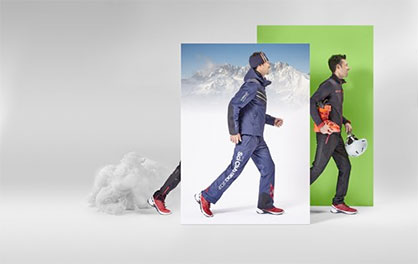
RadiciGroup Ski Club athletes and coaches will be the first to wear this ski uniform during the winter season 2021-2022, thereby becoming the ambassadors of the sustainability initiative. Founded in 1975, the RadiciGroup Ski Club today has more than 100 athletes, aged 6 to 18, competing in the various youth categories.

The RadiciGroup ski suit will be included in a new collection that DKB is offering to the best sports shops starting with the 2022 winter season, refashioned to fit the company’s style choices for athletes and ski enthusiasts who follow fashion and design trends, but also care about performance and the environment.


More News from Radici Partecipazioni SpA

#Recycled Fibers

Recycling mixed-fibre garments becomes a reality: RadiciGroup, The LYCRA Company and Triumph take circular fashion a step forward

The process, which is both economically and environmentally sustainable, has enabled the production of an underwear set made from 100% recycled nylon and LYCRA® fibre in a closed-loop system.

#Sustainability

RadiciGroup: 21st Sustainability Report published

RadiciGroup has published its 21st Sustainability Report, covering the year 2024, confirming more than two decades of transparency and measurement in the economic, environmental, and social dimensions. From its first Social Report in 2004 to the current reporting aligned with the GRI Universal Standards, the Group is now preparing for its next challenge: the adoption of the criteria that will be set out by the Corporate Sustainability Reporting Directive (CSRD).

#Recycling / Circular Economy

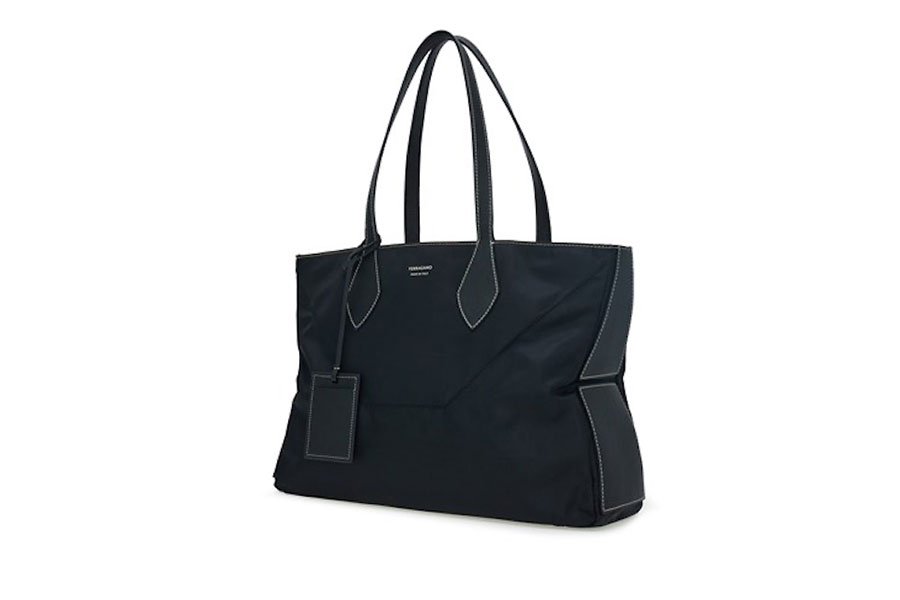
RadiciGroup and Ferragamo team up for an eco-design project under the Monitor for Circular Fashion initiative

RadiciGroup, a leading player in sustainable textile solutions, has partnered with Ferragamo to develop “Nova – The evolution of a Star”, an eco-design project that reimagines one of the Maison’s iconic handbags through the lens of circularity.

#Yarn & Fiber

Twenty years of Sustainability Report for RadiciGroup

The RadiciGroup Sustainability Report reaches an important milestone this year: twenty years have in fact passed since the Group published its first Social Report in 2004, qualifying it as one of the pioneering companies in the realisation of voluntary non-financial reporting. The document measures the Group’s achievements and the actions it has taken to reduce its environmental impact, respect social values, and implement good business management practices.

More News on Yarn & Fiber

#Man-Made Fibers

Indorama Ventures supports Southeast Asia’s textile customers with reliable regional supply and global innovative portfolio

Indorama Ventures, one of the leading global polyester fiber and filament yarn suppliers globally, will participate in Indo Intertex 2026 in Jakarta this April, making its diverse global portfolio available to apparel, home textile, and hygiene customers across Southeast Asia.

#Yarns

Yarn Expo Spring 2026 concludes, connecting buyers with innovative selection of sustainable yarns and fibres

Yarn Expo Spring 2026 wrapped up successfully on 13 March, as a record-high of over 600 exhibitors from 12 countries and regions welcomed more than 25,000 visitors from 113 countries and regions. Held across 27,000 sqm in Hall 8.2 of the National Exhibition and Convention Center (Shanghai), the fair highlighted the textile industry’s accelerating shift toward a lower-impact, more functional future. Exhibitors presented eco-friendly organic, regenerated and recycled yarns and fibres, alongside innovative options such as sweat-resistant and high-performance materials. A comprehensive fringe programme further enriched the event, offering practical market insights and new networking opportunities.

#Man-Made Fibers

Lenzing advances its transformation: Higher EBITDA, stronger free cash flow and more than EUR 200 million in cost savings

The business performance of the Lenzing Group in 2025 was affected particularly in the second half of the year by external factors such as international tariff measures, subdued demand and declining market prices. As a result, revenue decreased slightly by 2.3 percent to EUR 2.6 billion, primarily due to lower fiber sales volumes and lower prices for fibers and pulp, which were further negatively impacted by currency developments. Nevertheless, thanks to the comprehensive Performance Program, Lenzing was able to improve its operating performance and key financial indicators compared with the previous year.

#Man-Made Fibers

“Lead Transformation – Generate Impact”: Lenzing presents its 2025 Annual and Sustainability Report

The Lenzing Group has published its 2025 Annual and Sustainability Report, entitled LEAD TRANSFORMATION – GENERATE IMPACT. The report shows how Lenzing is actively shaping change in the industry and making a lasting impact: economically, ecologically, and socially. Lenzing is consistently focused on the future: with targeted investments in premiumization, excellence, innovation, and sustainability, the company is strengthening its position as a leading provider of sustainable, cellulose-based premium fibers. The combined report is available in digital format.

Latest News

#Texprocess 2026

Texprocess 2026: Automation, digitalisation and AI redefine textile processing

Making investment decisions in textile processing has become significantly more demanding. Increasing energy costs, a shortage of skilled labour and ongoing geopolitical uncertainties are compelling companies to focus on technologies that deliver clear gains in efficiency and process reliability. This applies equally to apparel manufacturing and to the processing of technical textiles and high-performance materials. As a result, modernisation initiatives are assessed more carefully – even as the need to upgrade production systems continues to intensify.

#Techtextil 2026

VDMA members at Techtextil: Smart technologies for technical textiles

At Techtextil 2026 in Frankfurt, the members of VDMA Textile Machinery underline their key role as global technology leaders for technical textiles and textile processing. With a strong presence of more than 50 members they will highlight how engineering excellence, innovation strength and sustainability expertise from Germany and Europe are shaping the future of the textile industry. Seven companies will be present at the VDMA group stand in the centre of hall 12.0.

#Techtextil 2026

Techtextil 2026: Between innovation pressure & market reality

From 21 to 24 April 2026, Techtextil in Frankfurt am Main will once again become the central meeting point for the international technical textiles and nonwovens industry. Running in parallel, Texprocess will focus on the industrial implementation of textile processing technologies as the leading platform in this field. Together, the two trade fairs form a closely integrated presentation and working platform along the entire textile value chain – from material development to finished applications.

#Techtextil 2026

Between geopolitical pressure and industrial resilience

In this interview, Dr. Janpeter Horn (VDMA) discusses the current challenges facing textile machinery manufacturers, shaped by geopolitical tensions, regulatory developments and subdued investment. He also outlines why innovation strength, integrated solutions and strategic positioning remain key to global competitiveness.

TOP