[pageLogInLogOut]

#Yarn & Fiber

3D BioFibR Inc. raises new capital to scale up manufacturing in an oversubscribed round

3D BioFibR Inc., a biofibre manufacturing company, announced today it has raised over $700,000 in an oversubscribed follow-on round. Proceeds from the financing will be used to continue to scale-up manufacturing capabilities of their collagen and spider silk fibres with an eye towards securing commercial partnerships.

Participants in this capital raise included further investments from current investors, including Concrete Ventures, as well as new investors, including Globalive Capital.

“We appreciate the continued confidence our investors have in the Company’s ability to advance our proprietary biofibre manufacturing process,” said Kevin Sullivan, CEO of 3D BioFibR. “As we continue to de-risk our manufacturing platform, our focus is now shifting to a higher level of engagement with industry to secure commercial partnerships, with our first focus on the tissue culture and tissue engineering applications.”

3D BioFibR Inc. was incorporated in July of 2020. The Company closed its first round of financing on October 19, 2020, raising $550,000. These funds were used to successfully demonstrate that their proprietary biofiber manufacturing process works well for diverse sets of cell types used in a range of biocomposite applications. Funds from this current round of financing will allow the Company to focus on optimizing the automation of its manufacturing process to be ready for first market sales in the second half of 2022.


“Our unique dry spinning manufacturing process can generate high quality collagen scaffolds that are ideal for 3D cell culture and tissue-engineering applications,” said Dr. John Frampton, Chief Scientific Officer at 3D BioFibR. “It is exciting to see the transition from a lab based process to an automated system of production. These advancements will enable us to meet the market need for consistent, high quality products at commercial scale production levels.”

“We are excited to see 3D BioFibR producing collagen and spider silk fibres at a scale and quantity that no other commercial process can match,” said Patrick Hankinson, Partner at Concrete Ventures. “The team at 3D BioFibR has real potential to become a best-in-class biofibre manufacturer of premium products for use in tissue culture and medical applications, as well as in the performance textile industry.”
More News from TEXDATA International

#ITM 2026

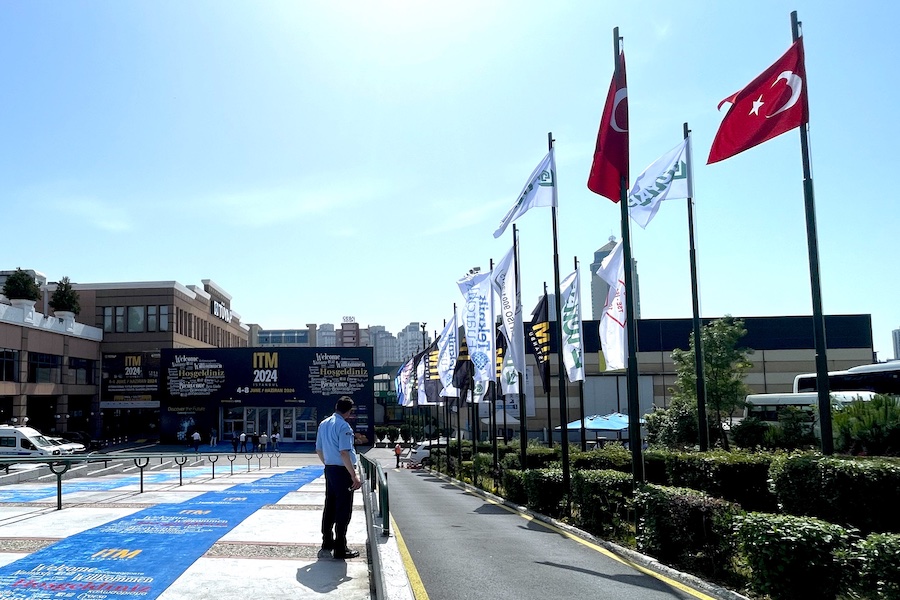
ITM 2026: The new geography of textile production

New production hubs are emerging across North Africa and Central Asia, while Türkiye is accelerating its transformation toward higher-value, technology-driven and more sustainable textile manufacturing.

#Research & Development

“Production is a product”

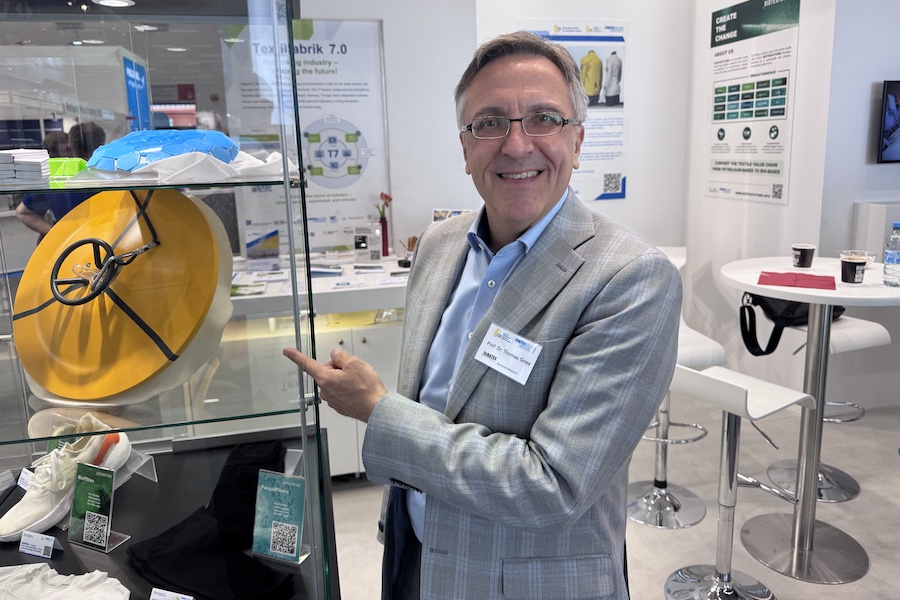
From technical textiles and AI-driven robotics to the limitations of textile circularity: Professor Dr Thomas Gries looks back on more than two decades of development at ITA Aachen. In the interview, he explains why production technology remains a decisive success factor, discusses international collaborations and innovation ecosystems, and shares his views on the transformation of production landscapes and the challenges facing an increasingly regulated industry.

#Knitting & Hosiery

“We need to move away from the price trap and return to a value-driven mindset.”

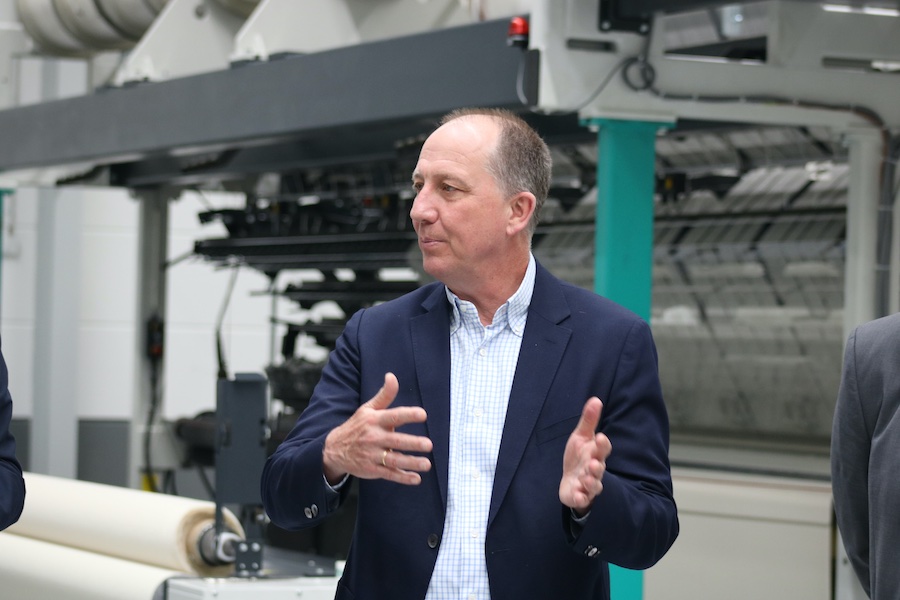
With its new Textile Innovation Center, KARL MAYER is sending a strong signal for innovation, collaboration, and the future of textile applications. In this interview, Karl Josef Mayer discusses new opportunities in warp knitting, the processing of staple fibres, recycling, the changing role of machinery manufacturers, and why the textile industry must once again focus more strongly on the value of textiles. by Oliver Schmidt

#Associations

“Innovation, resilience and international experience remain the great strengths of the Swiss textile machinery industry”

Geopolitical uncertainty, growing competitive pressure from China, new free trade agreements and the shift towards a circular economy are currently reshaping the global textile industry. In this interview, Cornelia Buchwalder discusses the current mood within the Swiss textile machinery sector, the industry’s distinctive innovative strength, new market opportunities in India and Asia, and the technological trends that could shape the upcoming trade fair cycle leading up to ITMA 2027.

More News on Yarn & Fiber

#Man-Made Fibers

Sorona® and WGSN announce top bio-based material trends of 2027

Sorona®, the partially bio-based polymer from Covation Biomaterials (CovationBio™), and global trend forecasting authority WGSN today release the material trends shaping the textile industry through 2027 and beyond following a comprehensive examination of bio-based functional fiber applications and global data.

#Sustainability

The first widely accessible Life Cycle Assessment study for cashmere production published by Textile Exchange.

Crucial new data to better understand, measure, and address the impacts of cashmere production has been made available to the fashion, textile, and apparel industry through a new Life Cycle Assessment (LCA) published by Textile Exchange.

#Yarn & Fiber

R-Evenge chooses Q-NOVA® yarn by Fulgar for its line of technical socks dedicated to wellness

Q-NOVA®, Fulgar’s sustainable polyamide 6.6 yarn, has been selected by R-Evenge for the development of its collection of technical socks dedicated to wellness, fitness, and water-based activities.

#Yarns

Yarn Expo Shenzhen 2026 closes doors, advancing sustainable and innovative sourcing in South China

Yarn Expo Shenzhen 2026 served as a strategically positioned mid-year sourcing platform for the Greater Bay Area, highlighting Shenzhen’s role in connecting regional demand, supply and innovation exchange across the textile value chain. During the three-day fair, over 20,000 visits were drawn from 74 countries and regions[1], as exhibitors and buyers engaged with new developments in greener, performance-led, and value-added yarn and fibre solutions. Held in conjunction with Intertextile Shenzhen Apparel Fabrics and PH Value, the fair underscored the benefits of closer synergy and new materials across yarn, fabric and apparel platforms for the South China market.

Latest News

#Associations

IVGT membership: expertise that pays off

For energy-intensive textile companies, government compensation mechanisms are an important economic factor. The IVGT successfully supports its member companies in applying for state aid and thereby regularly contributes to significant financial relief.

#Research & Development

Networking Day 2026: Industry stakeholders unite around textile recycling

In 2026, the Industry Research Group (IRG) Polymer Recycling once again brought together some of the key stakeholders in textile recycling for its annual Networking Day. This year, the event took place at EREMA’s premises in Ansfelden, Austria. It brought together key players from across the textile recycling value chain for a day of structured exchange and in-depth discussions.

#Knitting & Hosiery

The new RDJ 7/3 defines the design footprint of modern athletic shoes

Stylish, functional, and efficient to produce – spacer fabrics are the all-arounders among textile materials. These versatile fabrics are particularly in demand in the sports and casual footwear sector, as they combine comfort, breathability, and design freedom. At the same time, this industry is trend-driven, dynamic, and price-sensitive like few others. Innovations are therefore a decisive factor for success. With the RDJ 7/3, KARL MAYER offers a solution specifically tailored to these requirements. The particular strength of the new double raschel machine: its exceptional flexibility, thanks to its three jacquard bars.

#Research & Development

Smart textiles reversibly change shape in an energy-efficient manner in response to ambient temperature

Self-actuating textile structures are used in a wide range of applications, such as medical technology, automation, architecture, agriculture, and the apparel industry. An example is the use of shading nets in greenhouses, which can be deployed and retracted depending on the sunlight intensity. The German Institutes of Textile and Fiber Research Denkendorf (DITF) are developing textiles based on shape-memory polymers with reversibly controllable geometry.

TOP