[pageLogInLogOut]
USTER Think Quality

#Yarn & Fiber

Lenzing collaborates with Orange Fiber as part of new TENCEL™ Limited Edition initiative

TENCEL™ Limited Edition x Orange Fiber © 2021 Lenzing / Orange Fiber
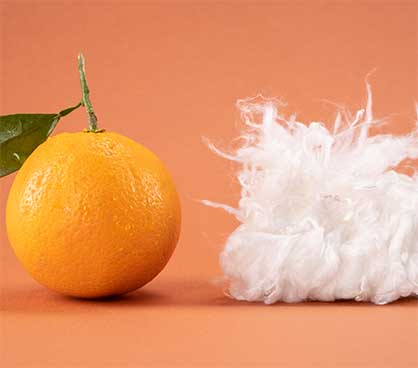
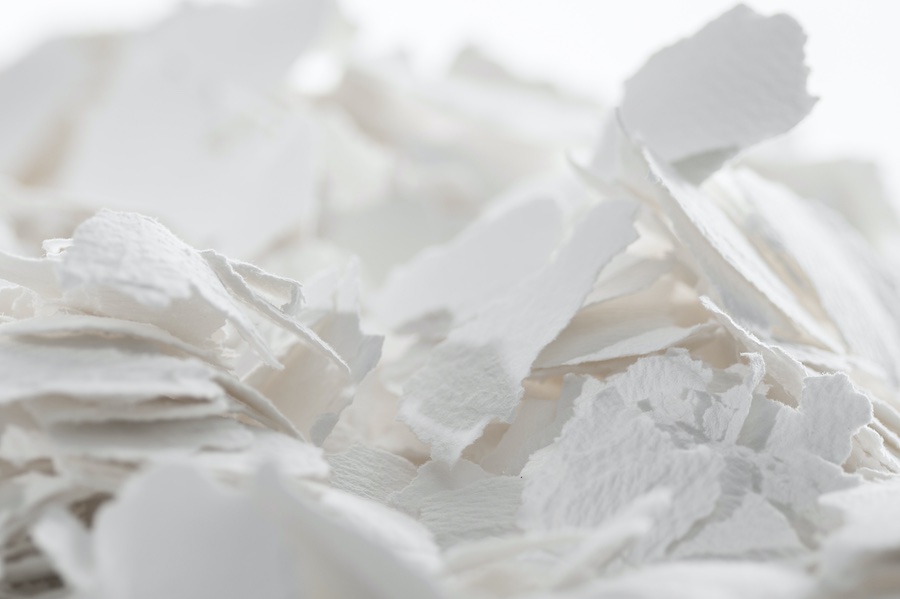
Lenzing & Catania – Lenzing Group, a leading global producer of wood-based specialty fibers, is partnering with Orange Fiber, an Italian company which has patented the pulp production process for citrus by-products, to produce the first ever TENCEL™ branded lyocell fiber made of orange and wood pulp. This new product aims to realize both companies’ shared vision to enhance sustainability in the textile and fashion industry. The new TENCEL™ Limited Edition initiative combines the imagination, innovation and inspiration of eco-responsible textiles, through reinventing TENCEL™ branded fibers using unconventional sustainable raw materials.

Lenzing and Orange Fiber introduce the first TENCEL™ branded lyocell fiber made of orange pulp and wood sources – presenting a new sustainable offering for the fashion industry

“The introduction of TENCEL™ Limited Edition leverages our leading edge in highly sustainable production processes and we are proud to collaborate on this special edition fiber series with Orange Fiber.” said Gert Kroner, Vice President of Global Research and Development at the Lenzing Group. “By upcycling waste materials such as orange peels in our products, we are taking proactive steps towards a more sustainable future and minimizing the environmental impact of waste.”

Seeking outside of what is conventionally available

The TENCEL™ Limited Edition in partnership with Orange Fiber presents a novel cellulosic fiber to further inspire sustainability across the industry value chain and push the boundaries of innovation. The fibers are currently being transformed into a new collection of fabrics which Orange Fiber will present to the market in October 2021.

“Lenzing is an industry leader in sustainable fibers and we are proud to partner with them to create this new material which will become a valuable resource for the textile and fashion industry. This pioneering production model can help revolutionize the fashion industry and empower brands who are looking for eco-responsible textile value chains,” said Enrica Arena, Chief Executive Officer of Orange Fiber. “With consumers becoming more eco-conscious, it is imperative for the industry to evolve in tangent and innovate with sustainable materials to stay efficient, competitive and save our planet for future generations. This virtuous synergy represents a fundamental step in our journey towards sustainable fabric production from renewable sources, validates our patent industrially, and enables us to increase our production capacity thus satisfying the needs of fashion brands.”


Innovating with partners across the supply chain

As increased regulations for sustainability pose new challenges for all levels of the supply chain, every stakeholder must work together to support this transition. From manufacturers to retailers, partnerships facilitate the exchange of resources and expertise to resolve the issue of textile pollution. The TENCEL™ brand aims to guide its many global textile partners in adopting and achieving an efficient closed-loop process, as well as to achieve high industry standards.
TENCEL™ Limited Edition x Orange Fiber © 2021 Lenzing / Orange Fiber


“Our cooperation with Orange Fiber showcases Lenzing’s commitment to partnering for change. We are excited to support rising industry trailblazers to bring their innovative ideas to fruition,” adds Kroner. “Collaborations like these can bring about groundbreaking change, and our TENCEL™ Limited Edition initiative offers an opportunity for companies of all sizes to join forces with Lenzing.”

Collections produced from TENCEL™ Limited Edition with Orange Fiber will have dedicated marketing materials, such as special edition co-branded swing tags, which will provide relevant information about the process of production and materials involved. The goal is to encourage co-development of innovative solutions to give waste a new life and promote greater transparency in the textile and fashion industry to fully achieve sustainable industry practices.
More News from Lenzing

#Nonwovens

Lenzing invests EUR 27 million in US facility to expand specialty fibers for nonwovens

The Lenzing Group is investing EUR 27 million (USD 31 million) to expand specialty fiber production capabilities at its lyocell fiber site in Mobile, Alabama, USA. The investment forms part of the company’s “Grow NW. Reset TX.” strategy and will strengthen its global Nonwovens business, with a particular focus on short-cut fibers and customized wood-based solutions for specialty applications.

#Man-Made Fibers

Lenzing improves profitability as strategic transformation gains momentum

The Lenzing Group reported improved operating profitability in the first nine months of 2026 despite declining revenue and a challenging market environment. Revenue decreased by 2.3 percent to EUR 1.93 billion, while adjusted EBITDA remained stable at EUR 353 million. The adjusted EBITDA margin increased from 17.9 percent to 18.3 percent, reflecting progress in the company's strategic transformation under its “Grow Nonwovens. Reset Textiles.” strategy.

#Man-Made Fibers

Lenzing and Kaihara to debut REMOD denim collection at Kingpins Amsterdam

The Lenzing Group, a global producer of wood-based fibers for the textile and nonwovens industries, has partnered with Japanese denim manufacturer Kaihara Corporation to launch the “REMOD Collection”. The collection combines three of Lenzing's fiber offerings for denim applications: TENCEL™ Lyocell Standard, TENCEL™ Lyocell – HV100 and TENCEL™ Lyocell dtex 2.2.

#Man-Made Fibers

Lenzing shareholders approve €300 million capital increase

Shareholders of Lenzing AG have approved a capital increase of approximately €300 million, providing financial support for the company's recently announced "Grow Nonwovens, Reset Textiles" strategy.

More News on Yarn & Fiber

#India ITME 2026

Uster to present novel solutions at India ITME 2026

Tackling contamination is a critical quality target in yarn production – and Uster now enables spinners to make the right choices for optimized profitability, with top technology, precise data and integrated analysis across the entire process. The new Uster Contamination Control solution and latest Uster Vision Shield 3i put spinners in command of contaminant removal, ensuring yarn quality, minimizing waste and protecting profits. These exciting developments – and even more news – will be featured at India ITME 2026.

#Recycled Fibers

C&A and Zalando join Altag® Fiber Club to accelerate adoption of agricultural waste-based fibres

Fashion for Good and AltMat announced today that C&A and Zalando have joined the Altag® Fiber Club as its first brand signatories, marking a critical commercial milestone in the journey to mainstream adoption of next-generation fibres derived from agricultural waste.

#Man-Made Fibers

Kraig Biocraft Laboratories launches performance yarn development program based on spider silk

Kraig Biocraft Laboratories has launched a development program for high-performance yarns based on its recombinant spider silk technology. The initiative follows the company's first commercial shipment of a custom spider silk yarn to a performance apparel customer and includes the delivery of spider silk samples to a textile technology company with experience in aerospace-related material development.

#Recycled Fibers

Circ and Huafon partner to scale textile-to-textile recycling in China

Circ® and Huafon, a leading spandex producer in China, are partnering to build and scale a new multi-phase textile-to-textile recycling site in China, expanding Circ's global pathway to industrial scale. The project will be located within Huafon's industrial footprint and will use Circ's technology to process polycotton textile waste and recycle both inputs, recovering recycled PTA, recycled MEG and recycled cellulosic pulp for use in new textiles. The site will be developed in phases, with Phase 1 designed for approximately 200 metric tons of textile waste per day and additional capacity planned.

Latest News

#Digital Printing

From a bedroom startup to 3,000 designs: How Lonely Kids Club built its business with DTG printing

Founded in Sydney in 2011, independent clothing label Lonely Kids Club has grown from a bedroom startup into a business offering around 3,000 graphic T-shirt designs. With its own production studio, direct-to-garment printing and a demand-driven manufacturing model, the company demonstrates how smaller apparel brands can combine creative independence with flexible production – while navigating the everyday challenges of quality control, workflow efficiency and sustainability.

#Recycled Fibers

Recover and SUPIMA partner to develop recycled Pima cotton fibers and yarns

Recover and SUPIMA have partnered to turn waste from SUPIMA cotton production into a new line of recycled fibers and yarns. The collaboration will explore how recycled American-grown Pima cotton can be used in a wider range of yarns and garments for the premium market.

#India ITME 2026

India’s textile industry: Current position, growth targets and industrial development

With ambitious export targets, major investments in manufacturing infrastructure and new international trade agreements, India is pursuing a comprehensive development strategy for its textile and apparel industry. An overview of the industry’s current position, government initiatives, progress achieved and challenges ahead.

#Weaving

“A complex design is only useful if the machine can reproduce it consistently”

Andreas Schnabel, Head of R&D for Technical Weaving Systems at Stäubli, discusses how 3D weaving can create textile reinforcements tailored to the loads within a composite component, where near-net-shape weaving can reduce processing steps and material waste, and what it takes to produce complex structures reliably and economically. He also explains how manufacturers can adapt Stäubli’s modular TF weaving platforms to new applications and how the company’s centre of excellence in Bayreuth supports the transition from research to industrial production.

TOP