[pageLogInLogOut]

#Yarn & Fiber

Birla Cellulose and Nanollose file joint patent for high tenacity lyocell

Birla Cellulose, the Pulp and Fibre business of Aditya Birla Group, and one of the world’s largest man-made cellulosic fibre producers, is pleased to announce that it has filed a joint patent application with Nanollose for a high tenacity lyocell fibre made from bacterial cellulose.

Highlights:

  • Grasim Industries Limited, a company listed on National Stock Exchange of India, Bombay Stock Exchange and Luxembourg Stock Exchange and Nanollose Limited, (ASX:NC6) a company listed on the Australian Securities Exchange have filed a joint patent application for a high tenacity lyocell fibre made from bacterial Cellulose.
  • A team of fibre experts at Birla Cellulose, Pulp and Fibre business of Grasim Industries Limited, Aditya Birla Group at its Pulp and Fibre Innovation Centre have produced nullarborTM lyocell fibre that is finer than silk and significantly stronger than conventional lyocell made from wood pulp.
  • The lyocell market is predicted to be worth US$1.5 billion by 2024, growing 1
  • Birla Cellulose and Nanollose will now focus on taking this success to the pilot production phase to produce initial commercial quantities of fibre to enable commercial agreements with fashion brands.
  • The joint patent provides the Companies with additional intellectual property, a superior fibre and enhances the collaboration between Birla Cellulose and Nanollose.
  • In February 2020, Grasim Industries Limited signed a Collaboration Agreement with Nanollose, to exclusively explore and develop Nanollose’s Tree-Free fibres including nullarborTM and nufoliumTM.

The patent application, entitled High Tenacity Lyocell Fibres From Bacterial Cellulose and Method of Preparation Thereof, represents a major advancement over Nanollose’s previous viscose versions of nullarborTM and nufoliumTM. Using the lyocell process, a team of fibre experts at Birla Cellulose, Pulp and Fibre Innovation Centre have produced nullarbor fibre that is finer than silk and significantly stronger than conventional lyocell that is traditionally produced from wood pulp.

Lyocell is a form of rayon, made using a closed loop process with low demand on chemical and water usage and low waste generation. This makes it very environment-friendly and brings with it an elevated demand from clothing brands. Lyocell is widely used in textile and nonwoven applications and has become popular due to a number of desirable strength and comfort characteristics. Furthermore, the combination of the Nanollose’s Tree-Free cellulose, along with Birla Cellulose’s closed-loop lyocell production process, could potentially make this Tree-Free lyocell one of the most eco-friendly and sustainable fibres available.


The joint patent application strengthens the intellectual property portfolio of both companies and provides protection for this innovative Tree-Free fibre technology. The nullarborTM lyocell fibers are produced using feedstock from industrial and agricultural organic waste.

Commenting on the patent, the Chief Technology Officer of the Aditya Birla Group and Birla Cellulose, Dr. Aspi Patel, said: “This innovative development is another important step in our continuing journey to make our fibres more sustainable. This is an exciting development in the area of next generation alternative feedstock and we are looking forward to scaling up this technology in collaboration with Nanollose.”

Commenting on the patent, Nanollose Executive Chairman, Wayne Best, said: “We are extremely pleased with the progress of our collaboration with Birla Cellulose which has already delivered this joint patent application. The nullarbor fibre produced by the team at Birla Cellulose has exceeded our expectations, and we now have a fibre that is not only more eco- friendly but has superior properties over conventional tree-based fibres. We are very much looking forward to commencing the pilot production and presenting textiles made from this remarkable fibre to the fashion industry.”

The Collaboration Agreement provides Nanollose with a world class and globally recognised industrial partner, with the ability to accelerate development, commercialisation and provide a manufacturing foundation for future textile and clothing brands that uptake Nanollose’s Tree- Free fibres.
More News from TEXDATA International

#ITM 2026

ITM 2026: The new geography of textile production

New production hubs are emerging across North Africa and Central Asia, while Türkiye is accelerating its transformation toward higher-value, technology-driven and more sustainable textile manufacturing.

#Research & Development

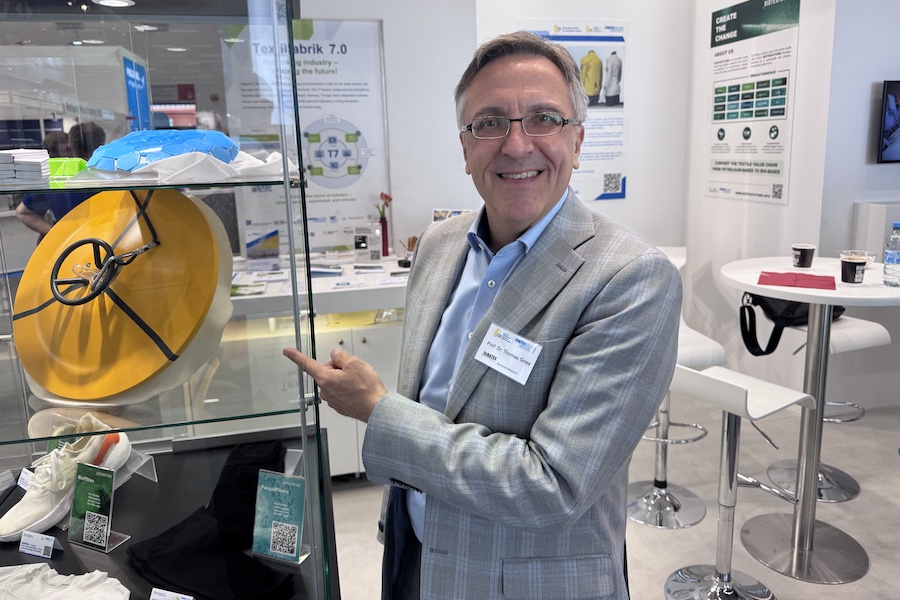
“Production is a product”

From technical textiles and AI-driven robotics to the limitations of textile circularity: Professor Dr Thomas Gries looks back on more than two decades of development at ITA Aachen. In the interview, he explains why production technology remains a decisive success factor, discusses international collaborations and innovation ecosystems, and shares his views on the transformation of production landscapes and the challenges facing an increasingly regulated industry.

#Knitting & Hosiery

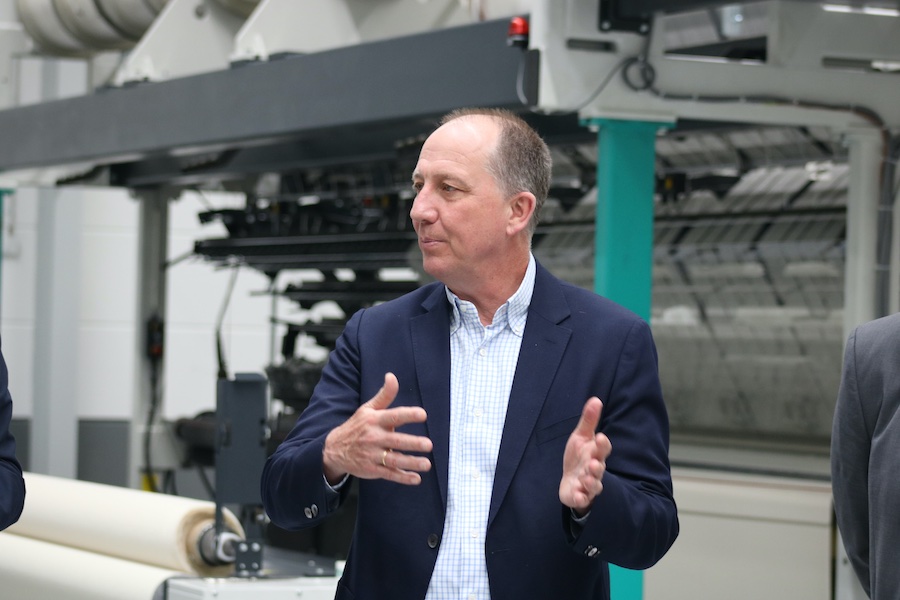
“We need to move away from the price trap and return to a value-driven mindset.”

With its new Textile Innovation Center, KARL MAYER is sending a strong signal for innovation, collaboration, and the future of textile applications. In this interview, Karl Josef Mayer discusses new opportunities in warp knitting, the processing of staple fibres, recycling, the changing role of machinery manufacturers, and why the textile industry must once again focus more strongly on the value of textiles. by Oliver Schmidt

#Associations

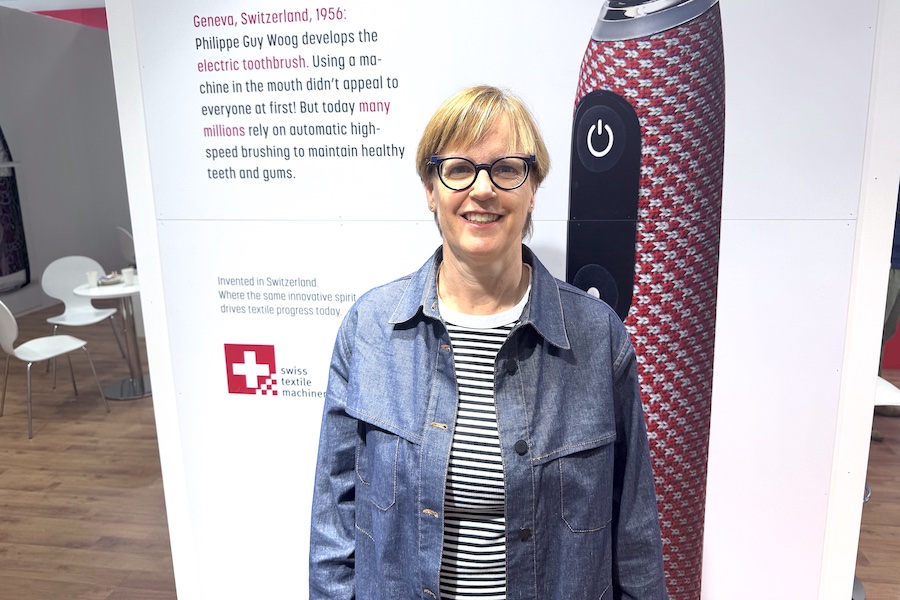
“Innovation, resilience and international experience remain the great strengths of the Swiss textile machinery industry”

Geopolitical uncertainty, growing competitive pressure from China, new free trade agreements and the shift towards a circular economy are currently reshaping the global textile industry. In this interview, Cornelia Buchwalder discusses the current mood within the Swiss textile machinery sector, the industry’s distinctive innovative strength, new market opportunities in India and Asia, and the technological trends that could shape the upcoming trade fair cycle leading up to ITMA 2027.

More News on Yarn & Fiber

#Yarn & Fiber

R-Evenge chooses Q-NOVA® yarn by Fulgar for its line of technical socks dedicated to wellness

Q-NOVA®, Fulgar’s sustainable polyamide 6.6 yarn, has been selected by R-Evenge for the development of its collection of technical socks dedicated to wellness, fitness, and water-based activities.

#Yarns

Yarn Expo Shenzhen 2026 closes doors, advancing sustainable and innovative sourcing in South China

Yarn Expo Shenzhen 2026 served as a strategically positioned mid-year sourcing platform for the Greater Bay Area, highlighting Shenzhen’s role in connecting regional demand, supply and innovation exchange across the textile value chain. During the three-day fair, over 20,000 visits were drawn from 74 countries and regions[1], as exhibitors and buyers engaged with new developments in greener, performance-led, and value-added yarn and fibre solutions. Held in conjunction with Intertextile Shenzhen Apparel Fabrics and PH Value, the fair underscored the benefits of closer synergy and new materials across yarn, fabric and apparel platforms for the South China market.

#Yarns

Yarns and technologies in symbiosis: Biella Yarn presents Fall/Winter 2027/2028 collection “New Romance_”

Biella Yarn, the flat knitting brand of Suedwolle Group, launches new Fall/Winter 2027/2028 collection, inspired by the symbiosis of yarns and technologies – elements that blend, adapt and evolve together, forming something new without losing their origin. The name “Neu Romance_” reflects the emotional and neurological dimension of the yarns: a connection that engages the senses, experienced through material, touch and interaction. The collection is further brought to life through design collaborations, featuring selected yarns used in different design approaches.

#Recycling / Circular Economy

The textile industry in transition

Recycling, traceability, eco-design and digitalisation are among the key future challenges facing the European textile industry. The Erasmus+ project Skills4Circularity, involving 21 partners from twelve countries, is investigating the skills required to address these challenges. As the German industry partner, the Industry Association for Finishing – Yarns – Fabrics – Technical Textiles (IVGT) is bringing the industry’s perspective to the project.

Latest News

#Research & Development

ALADIN paves the way for circular and demand-driven textile production in Europe

Textile production can be organized sustainably by utilizing short supply chains and preventing overproduction. This can already be achieved today by intelligently connecting and efficiently utilizing existing infrastructure. At the same time, production becomes circular when innovative technologies and materials are used that enable high-quality recycling. The ALADIN research project, launched in May 2026 and co-funded with five million euros under the EU Horizon Europe program, is creating the conditions for this.

#Nonwovens

Katharina Obergruber appointed to the Management Board of Sandler AG

The Supervisory Board of Sandler AG has appointed Katharina Obergruber to the company’s Management Board. Effective September 1, 2026, the Board will consist of Philipp Ebbinghaus (CEO), Dr. Ulrich Hornfeck (currently CCO, future COO), and Katharina Obergruber (CCO). Katharina Obergruber, currently Chief Sales Officer Hygiene and member of the Management Team of Sandler AG, will assume responsibility for all sales activities as Chief Commercial Officer. She will assume this role from Dr. Ulrich Hornfeck, who will focus primarily on production and supply chain topics.

#Recycling / Circular Economy

Ence and ShareTex begin initial testing of the ATENEA innovation project to promote textile recycling in Spain

Ence and ShareTex are making progress on the Atenea R&D project, which aims to develop a complete value chain for textile recycling in Spain. Specifically, the goal of the ATENEA project—which is funded by the Center for Technological Development and Innovation (CDTI)—is to connect all the necessary stages for the recovery of textile waste, from collection and management, through recycling and transformation into new raw materials, to their incorporation into new textile products.

#Recycling / Circular Economy

DePoly Inaugurates its Showcase Plant in Monthey Switzerland

What if used plastic bottles, PET packaging material and polyester textiles could become raw materials just as high performing as virgin resources? That is the ambition of DePoly, a circular materials company based in Sion, Switzerland which inaugurated its Showcase Plant in Monthey on July 6th & 7th. The first depolymerization facility of its kind and scale in Switzerland, this industrial Showcase Plant represents a major milestone in the company's growth and its journey toward commercialization.

TOP