[pageLogInLogOut]

#Yarn & Fiber

Leading fiber producer sets bold 2030 sustainability targets for a positive impact on climate, nature and people

Leading global producer of sustainable fiber and bio-based products, Asia Pacific Resources International Limited (APRIL), has announced a slate of progressive targets to 2030 that will have a positive impact on climate, nature and people while transforming its business.
  • Targetsinclude net zero emissions from land use, measurable gains in nature, and zero extreme poverty in APRIL’s communities, while transforming its business for sustainable growth
  • Partnershipsto support wildlife protection and conservation in Indonesia
  • Establishment of tropical peatland science hub at its new Restorasi Ekosistem Riau (RER) Eco-Research Campin Riau Province, Indonesia.

Supporting the achievement of the Sustainable Development Goals in Indonesia, APRIL2030 targets a drastic reduction of carbon emissions to achieve net zero emissions from land use and a 25% cut in product carbon emissions. The company also commits to net zero loss of protected areas and measurable gains in biodiversity and ecosystem benefits in the conservation and restoration areas under its active management.

APRIL2030 will drive vital inclusive progress in Indonesia’s developing economy through transformative initiatives in livelihoods, education, healthcare and championing equal opportunity for women. The company also commits to embracing circularity in its business and the use of recycled textiles as an alternative fiber source.

Announcing the 2030 commitments and targets, RGE Director Anderson Tanoto said: “Continued investment in climate, nature and sustainable development assumes even greater urgency if the global economy is to achieve a strong recovery from the impacts of COVID-19. As challenging as the current situation is, it presents businesses with an opportunity, if seized decisively, to boldly transform the future for the better.

“We are determined to ensure the next decade is one of action and further transformation for our company as we play our part to achieve a lower carbon economy and make a positive impact on climate, nature and people.”

APRIL2030 includes a series of concrete, time-bound and science-based targets structured around four core commitments:

Climate Positive includes four targets that will drastically reduce and mitigate carbon emissions based on science-based solutions, including net zero emissions from land use and 25% less product carbon emissions. These will be achieved through investment in technology, enhancement of operating systems and sourcing most of the mill and fibre operation’s energy needs from cleaner, renewable energy. Net zero emissions from land use will be achieved by implementing mitigation solutions across APRIL’s concessions, including those on peatland, and minimising emissions in fiber plantation operations.

Thriving Landscapes includes six targets to champion conservation and biodiversity, aligned with the growing call for science-based target setting for nature. APRIL targets net zero loss in protected areas and significant enhancements in biodiversity and other ecosystem benefits. Related to this is the target to support wildlife protection and conservation in Indonesia, in support of the Indonesian government and in partnership and collaboration with other parties. It will also extend its conservation and restoration commitment to support other initiatives through partnerships and collaboration. Another critical target is to achieve a 50% increase in fiber productivity through intensification and investments in silviculture and tropical peatland science. Achievement of these will be made possible through an average annual funding of $10 million to be invested in nature that is guaranteed by APRIL’s production-protection approach.


Inclusive Progress includes five targets to empower people and communities through transformative initiatives in healthcare, education and the championing of equal opportunity for women. Extreme poverty in APRIL’s communities will be eradicated within a 50 km radius of its operations while education and universal access to essential and affordable healthcare will be boosted. As part of this, APRIL will focus on reducing the prevalence of stunting by 50% among children below 5 years of age in Riau Province and will work to boost women’s effective social and economic participation through opportunities for employment and advancement within the company. 

Sustainable Growth includes three targets on diversification, circularity and responsible production as strategies for sustainable business growth. This will include increasing material efficiency and chemical recovery, using less water per product tonne and reducing solid waste to landfill. As part of investments in research and innovation on next-generation fiber, APRIL targets to source up to 20% of cellulosic fiber for viscose from recycled textiles.

APRIL Group President Praveen Singhavi added: “We’re making these 2030 commitments from a developing economy where the responsibility to achieve sustainable business growth and deliver essential progress for communities is greater than ever. No company’s sustainability vision can be enduring if communities are left behind.” 

In an immediate move to deliver and take action, APRIL is in advanced discussion on a cooperation with Wildlife Conservation Society on wildlife protection and conservation in Indonesia, including of endangered species, in support of the Indonesian Government’s biodiversity goals. This is in addition to the ongoing collaboration with long-time partner Fauna & Flora International on the Riau Ecosystem Restoration (RER) initiative. A new tropical peatland science hub has been established at the RER Eco-Research Camp on Riau’s Kampar Peninsula that will serve as a hub for national and international scientists and academics and for stakeholders who wish to experience ecosystem restoration work on the ground. APRIL has also signed up with the Science-Based Target Initiative (SBTi) and will work to set a science-based emission reduction target aligned with the SBTi’s target-setting criteria. 

To immediately kick off the company’s shift to renewable energy sources, as part of the commitment to reduce its carbon emissions, APRIL will be installing 20MW solar panels at its operational sites starting in 2021. When completed in 2025, this will be one of the largest, private sector, solar panel installations in Indonesia. 

“APRIL2030 is about taking ownership of our agenda and proactively defining how we evolve our sustainability commitments to make them even more relevant to the greatest challenges of our times. We have this critical window of the next 10 years to work collectively and make this truly a decade of decisive action,” said Lucita Jasmin, Director of Sustainability and External Affairs. 

APRIL2030 builds on the company’s existing Sustainable Forest Management Policy 2.0 which the company will continue to implement under the independent scrutiny of its Stakeholder Advisory Committee. 

More News from TEXDATA International

#ITM 2026

ITM 2026: The new geography of textile production

New production hubs are emerging across North Africa and Central Asia, while Türkiye is accelerating its transformation toward higher-value, technology-driven and more sustainable textile manufacturing.

#Research & Development

“Production is a product”

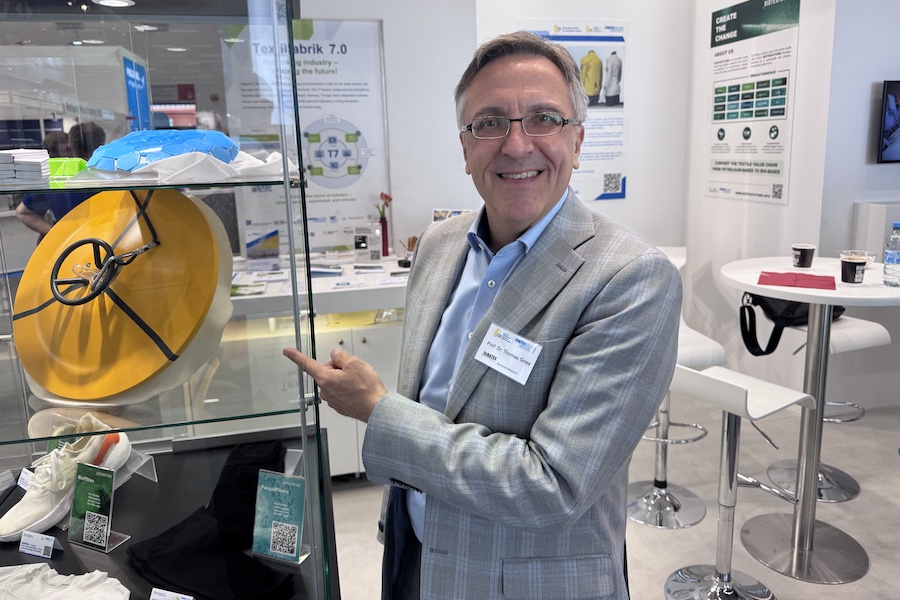
From technical textiles and AI-driven robotics to the limitations of textile circularity: Professor Dr Thomas Gries looks back on more than two decades of development at ITA Aachen. In the interview, he explains why production technology remains a decisive success factor, discusses international collaborations and innovation ecosystems, and shares his views on the transformation of production landscapes and the challenges facing an increasingly regulated industry.

#Knitting & Hosiery

“We need to move away from the price trap and return to a value-driven mindset.”

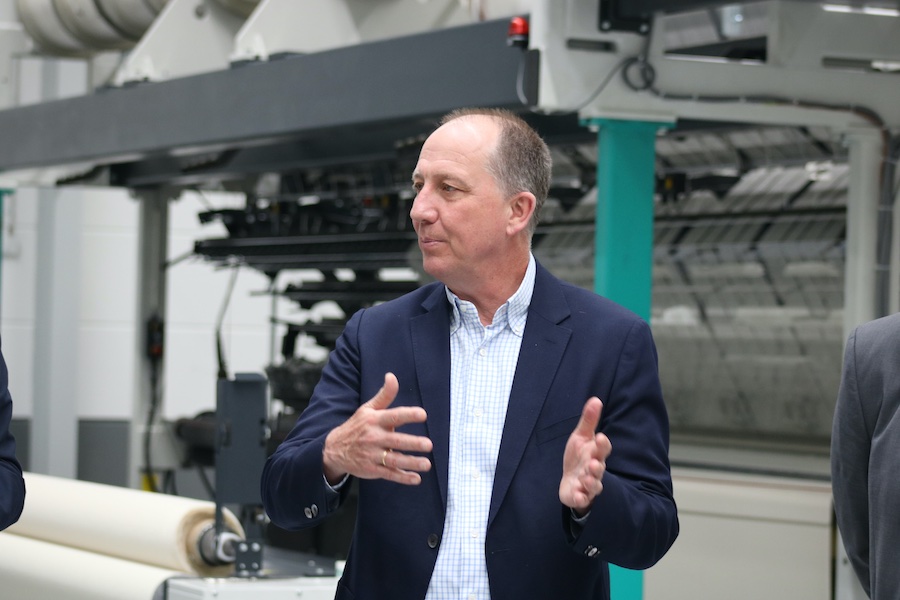
With its new Textile Innovation Center, KARL MAYER is sending a strong signal for innovation, collaboration, and the future of textile applications. In this interview, Karl Josef Mayer discusses new opportunities in warp knitting, the processing of staple fibres, recycling, the changing role of machinery manufacturers, and why the textile industry must once again focus more strongly on the value of textiles. by Oliver Schmidt

#Associations

“Innovation, resilience and international experience remain the great strengths of the Swiss textile machinery industry”

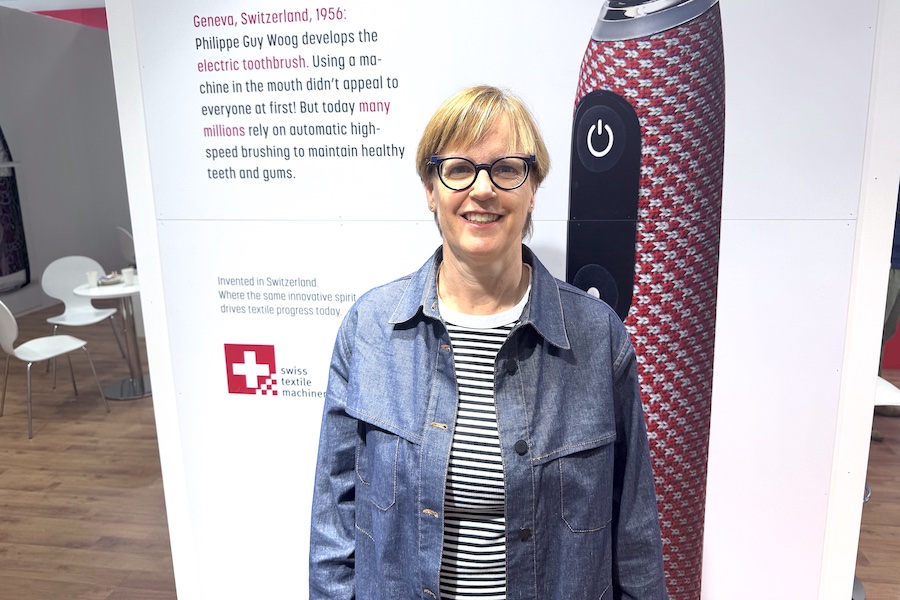
Geopolitical uncertainty, growing competitive pressure from China, new free trade agreements and the shift towards a circular economy are currently reshaping the global textile industry. In this interview, Cornelia Buchwalder discusses the current mood within the Swiss textile machinery sector, the industry’s distinctive innovative strength, new market opportunities in India and Asia, and the technological trends that could shape the upcoming trade fair cycle leading up to ITMA 2027.

More News on Yarn & Fiber

#Yarns

Yarn Expo Shenzhen 2026 closes doors, advancing sustainable and innovative sourcing in South China

Yarn Expo Shenzhen 2026 served as a strategically positioned mid-year sourcing platform for the Greater Bay Area, highlighting Shenzhen’s role in connecting regional demand, supply and innovation exchange across the textile value chain. During the three-day fair, over 20,000 visits were drawn from 74 countries and regions[1], as exhibitors and buyers engaged with new developments in greener, performance-led, and value-added yarn and fibre solutions. Held in conjunction with Intertextile Shenzhen Apparel Fabrics and PH Value, the fair underscored the benefits of closer synergy and new materials across yarn, fabric and apparel platforms for the South China market.

#Yarns

Yarns and technologies in symbiosis: Biella Yarn presents Fall/Winter 2027/2028 collection “New Romance_”

Biella Yarn, the flat knitting brand of Suedwolle Group, launches new Fall/Winter 2027/2028 collection, inspired by the symbiosis of yarns and technologies – elements that blend, adapt and evolve together, forming something new without losing their origin. The name “Neu Romance_” reflects the emotional and neurological dimension of the yarns: a connection that engages the senses, experienced through material, touch and interaction. The collection is further brought to life through design collaborations, featuring selected yarns used in different design approaches.

#Recycling / Circular Economy

The textile industry in transition

Recycling, traceability, eco-design and digitalisation are among the key future challenges facing the European textile industry. The Erasmus+ project Skills4Circularity, involving 21 partners from twelve countries, is investigating the skills required to address these challenges. As the German industry partner, the Industry Association for Finishing – Yarns – Fabrics – Technical Textiles (IVGT) is bringing the industry’s perspective to the project.

#Research & Development

GenuTrace client advisory: Is your cotton supply chain UFLPA ready?

U.S. Customs and Border Protection has released updated operational guidance (CBP Publication No. 5560-0526) expanding its forced labor enforcement framework. The guidance supersedes the original 2022 UFLPA Operational Guidance and now covers all forced labor enforcement authorities — UFLPA, CAATSA, and WROs/Findings — in a single unified document. For cotton importers, the enforcement posture has not softened. It has become more structured, more documented, and more demanding. Learn more about UFLPA.

Latest News

#Recycling / Circular Economy

Reju opens its first R&D Center in the U.S. in Conshohocken, Pennsylvania

Reju, the company specializing in textile regeneration, today announced the opening of a Research and Development (R&D) Center in Conshohocken, Pennsylvania, the company's first proprietary research center in North America. Located within Technip Energies' existing Advanced Materials and Catalysts research center, the lab will allow Reju to accelerate the rollout of its recycling technologies and develop its next-generation circular solutions.

#Weaving

Itema reaffirms its commitment to the Syrian textile industry at NasTex 2026

From July 18th to 21st, Itema will exhibit at NasTex at the Damascus Fairground (Hall 11 – Stand C02), marking its return to one of the Middle East’s historically significant textile markets. Itema will showcase advanced weaving technology designed to support the competitiveness and technological evolution of Syrian manufacturers and announces a new partnership with Growfast Agency as the sole agent of Itema in Syria.

#Knitting & Hosiery

KARL MAYER's HKS 2-SE Expands Possibilities for Premium Stretch WARP KNITS

Warp knitted fabrics with a woven look are more in demand than ever in the fashion and apparel industries. Stretch WARP KNITS, in particular, impress with their freedom of movement, breathability, and virtually wrinkle-free wear – thereby opening up new style worlds such as smart casual or business casual. When it comes to the highly efficient production of premium-quality stretch WARP KNITS, the HKS 2-SE has long been the machine of choice. KARL MAYER’s best-selling tricot machine produces standard elastic fabrics characterized by high gauges, smooth, delicate surfaces, and a soft hand feel.

#Textiles & Apparel / Garment

Catalyst Club launches in Florence: Where conversations become catalysts for change

The first chapter of Catalyst Club debuted in Florence, bringing together creative directors, entrepreneurs, manufacturers, journalists and innovators from across the fashion and textile industry for an evening of dialogue, exchange and connection.

TOP