[pageLogInLogOut]

#Yarn & Fiber

Two more Sateri mills confirmed EU-BAT compliant

Two more Sateri mills in China, Sateri Jiujiang and Sateri Jiangxi, have received verification of compliance to the emissions limits set out in the European Union Best Available Techniques Reference Document (EU-BAT BREF) on Polymers. This brings the total number of EU-BAT compliant mills to three of five, accounting for over 60 per cent of Sateri’s overall fibre production capacity. In April this year, Sateri Fujian was the company’s first mill to be verified as being EU-BAT compliant.

World’s largest viscose producer well on track for all of its five mills to be EU-BAT compliant by 2023

Verified by independent consultant Sustainable Textile Solutions (STS), a division of BluWin Limited (UK), the parameters of the EU-BAT BREF assessed included resource utility efficiency, wastewater discharge and air emission. As a highlight, STS’ assessment concluded that the energy intensity and air emission of Sateri Jiujiang and Sateri Jiangxi were well under EU-BAT norms for viscose production. Considering the EU-BAT energy requirements limit of 30GJ/MTf, the mills were each saving about 1,100 kg CO2/MT of fibre production. The mills also followed local requirements for controlling ecological impact for viscose production, and there were no gaps identified against EU-BAT.

Sateri Jiangxi is a 16-year-old mill and the company’s first and oldest, while Sateri Jiujiang was acquired and expanded in 2015. Said Allen Zhang, President of Sateri, “For three of our five mills to meet the EU-BAT emissions limits in such a short span of time is a testament to our continued investment in best-in-class technologies. This applies to all our mills – regardless of whether they are existing, acquired, or newly constructed ones – as we aim to achieve a high level of sustainability performance across all our operations.”


The company is well on track for its remaining two mills, Sateri Jiangsu and Sateri China which were acquired and newly-built in 2019 respectively, to comply with EU-BAT’s recommended emission levels by 2023.

More News from TEXDATA International

#ITM 2026

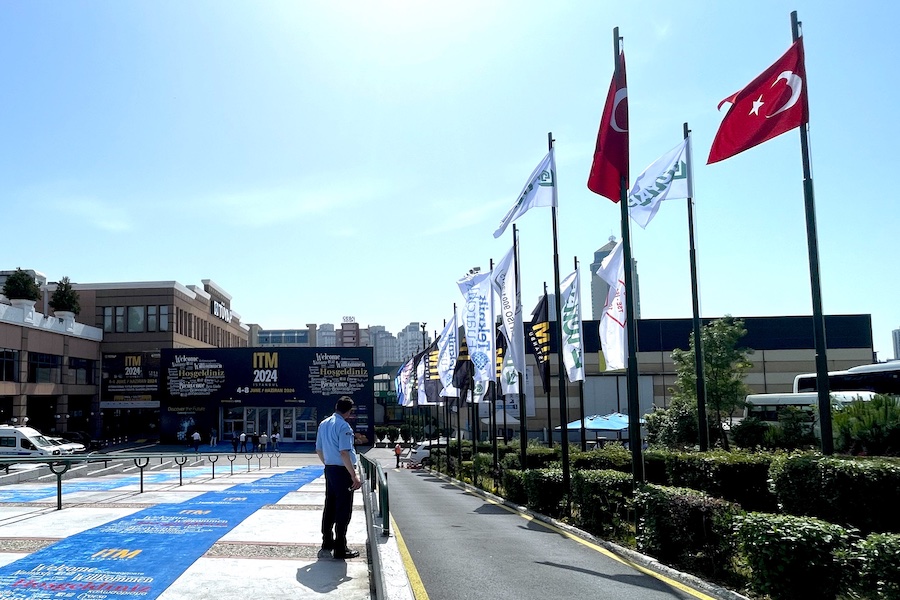
ITM 2026: The new geography of textile production

New production hubs are emerging across North Africa and Central Asia, while Türkiye is accelerating its transformation toward higher-value, technology-driven and more sustainable textile manufacturing.

#Research & Development

“Production is a product”

From technical textiles and AI-driven robotics to the limitations of textile circularity: Professor Dr Thomas Gries looks back on more than two decades of development at ITA Aachen. In the interview, he explains why production technology remains a decisive success factor, discusses international collaborations and innovation ecosystems, and shares his views on the transformation of production landscapes and the challenges facing an increasingly regulated industry.

#Knitting & Hosiery

“We need to move away from the price trap and return to a value-driven mindset.”

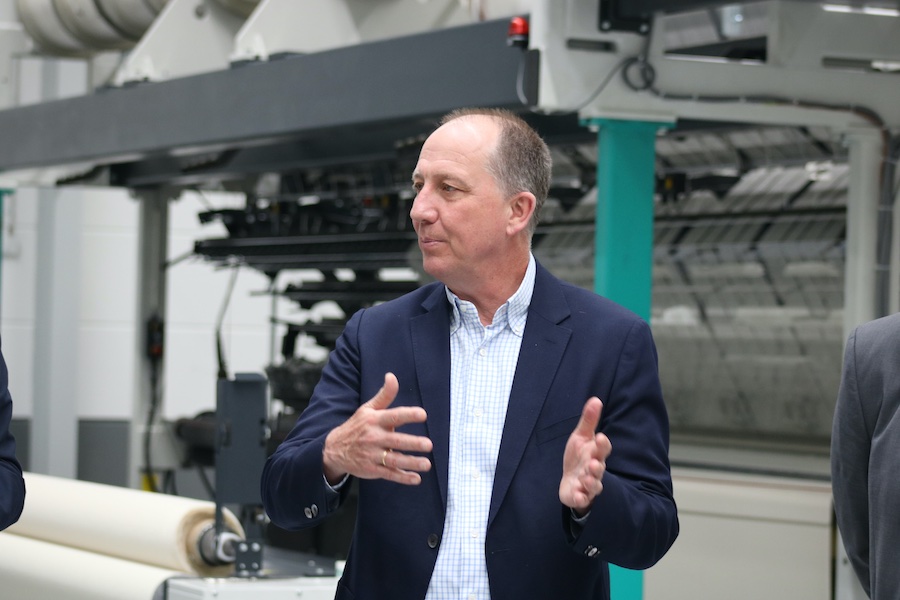
With its new Textile Innovation Center, KARL MAYER is sending a strong signal for innovation, collaboration, and the future of textile applications. In this interview, Karl Josef Mayer discusses new opportunities in warp knitting, the processing of staple fibres, recycling, the changing role of machinery manufacturers, and why the textile industry must once again focus more strongly on the value of textiles. by Oliver Schmidt

#Associations

“Innovation, resilience and international experience remain the great strengths of the Swiss textile machinery industry”

Geopolitical uncertainty, growing competitive pressure from China, new free trade agreements and the shift towards a circular economy are currently reshaping the global textile industry. In this interview, Cornelia Buchwalder discusses the current mood within the Swiss textile machinery sector, the industry’s distinctive innovative strength, new market opportunities in India and Asia, and the technological trends that could shape the upcoming trade fair cycle leading up to ITMA 2027.

More News on Yarn & Fiber

#Man-Made Fibers

Dyneema® to unveil next-generation mooring fiber at SMM 2026

Dyneema®, the world's strongest fiber™, will introduce Dyneema® SK80 fiber at SMM 2026 (Shipbuilding, Machinery, and Marine Technology), the world’s leading international maritime trade fair, held in Hamburg, Germany.

#Man-Made Fibers

Capturing malodor rather than masking it: Indorama Ventures presents innovative odor capturing technology at Dornbirn Global Fiber Congress

Indorama Ventures, a global leader in fibers and nonwovens serving customers in hygiene and technical markets, will present its latest technological innovation in odor management at the Dornbirn Global Fiber Congress.

#Yarn & Fiber

Expansive innovations converge in Shanghai as Yarn Expo Autumn 2026 opens doors next week

With just days to go, industry enthusiasm is building for the opening of Yarn Expo Autumn, Asia’s premier yarn and fibre trade fair, running from 25 – 27 August at the National Exhibition and Convention Center (Shanghai). Across 27,000 sqm in Hall 8.2, buyers will find nearly 600 exhibitors from 14 countries and regions, spread across seven specialised zones that range from cutting-edge man-made and regenerated fibres to time-honoured cashmere and silk. Beyond the extensive sourcing options, a fringe programme of trend showcases, presentations and product launches rounds out the three¬day event with design, innovation and market intelligence.

#Man-Made Fibers

Dornbirn GFC 2026 expands conference program with new thematic sessions

For 65 years, Dornbirn GFC has stood for innovation and is one of the world’s leading conferences in the fiber industry. From September 16 to 18, 2026, the international fiber community will meet in Dornbirn, Austria, to discuss current trends, technological developments, and forward-looking solutions. More than 600 experts from industry and academia from over 30 countries are expected to attend. With around 100 presentations by renowned speakers, a 2,5-day conference program, and three parallel presentation rooms with moderated sessions, Dornbirn GFC provides a first-class platform for knowledge exchange, networking, and international collaboration. Together, participants will generate ideas and impulses that will sustainably shape the future of the global fiber industry.

Latest News

#Industry 4.0 / Digitalization

Coats Digital launches AI-powered GSD RealMotion for motion analysis

Coats Digital has launched GSD RealMotion, an AI-powered solution designed to provide apparel manufacturers with greater visibility into factory-floor operations. By analysing shop-floor video and applying Coats Digital’s GSD methodology, the solution turns video recordings into structured, motion-by-motion method studies.

#Textile chemistry

Archroma and Lameirinho partner in pioneering deployment of InOneGO single-step dyeing

Archroma, a global leader in specialty chemicals, and Lameirinho, a leading home textiles manufacturer based in Portugal, are collaborating to bring InOneGO by Archroma, a new single-step dyeing process, into commercial production. Lameirinho’s first InOneGo bedlinens collection is now available worldwide.

#Knitting & Hosiery

KARL MAYER launches extra-wide HKS 3-M EL for increased productivity

KARL MAYER has launched a new extra-wide version of its HKS 3-M EL tricot machine, designed to increase productivity particularly in the manufacture of textiles for sports, activewear and athleisure applications.

#Research & Development

Reducing development times for technical textiles by accelerated thermo-oxidative aging in a high-pressure autoclave

Synthetic polymers used in technical textiles can be effectively protected against degradation caused by heat, oxygen, and water through the use of stabilizer systems. This enables service lives of several decades, extending to more than 50 years. As the use of durable technical textiles continues to grow, so does the demand for reliable methods to predict their service life within economically feasible testing periods. For the first time the German Institutes of Textile and Fiber Research Denkendorf (DITF) developed methods for robust service life prediction for textiles in an IGF research project.

TOP