#Yarn & Fiber
210 participants joined “1st International Conference on Cellulose Fibres”
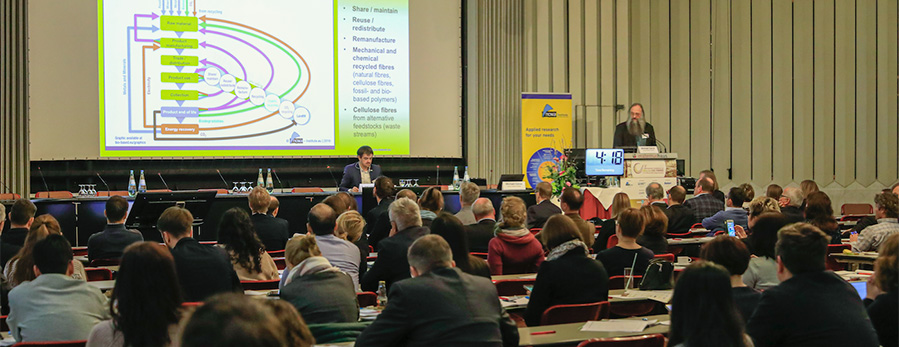
Cellulose fibres are a success story within the textiles market with a cumulated annual growth rate (CAGR) between 5 and 10% over the last ten years – similar growth rates are expected in the next decade. This makes cellulose fibres the fastest growing fibre group in the textile industry and also the largest investment sector in the bio-based economy worldwide. The entire cellulosic segment, including viscose staple fibres and filaments as well as acetate tow, accounts for about 6% of the world market. However, this segment has continuously gained weight thanks to dynamic growth rates of viscose and lyocell fibres that succeeded to outperform all other mainstream fibre types in each and every single year after the financial crisis. The challenge now is to achieve a balance between the ongoing capacity expansion and the growing demand – to avoid over capacities, but also to cover the growing demand of the big brands.
The high growth rates are driven by the demand for natural fibres (and bottlenecks in cotton), the microplastic problem and possible bans for plastic fibres. All three drivers will continue to play a significant role in the future development of the sector. The conference covered the entire value chain from the lignocellulosic feedstock, dissolving pulp, cellulose fibres – such as rayon, viscose, modal or lyocell and new developments, to a wide range of applications, woven textiles (clothing) and non-wovens (wipes and technical applications). All these sectors have significantly gained in dynamics over the last few years. The sponsors of the conference, leading producers of cellulose fibres, confirmed this positive market development:
Jean Sun, from the Communication and Sustainability department of Sateri (China), global producer of viscose fibres: „Cellulose fibres are natural and biodegradable and have immense potential to meet global textile demand and consumer needs in an environmentally sustainable way.”
Josef Innerlohinger, head of global R&D department at Lenzing (Austria), leading producer of pulp and fibres for the textile industry: “There are many exciting developments going on – like textile recycling or new technologies and applications – and there is a growing demand for sustainable fibres made from renewable materials. So, I see a huge potential for cellulose fibres in various fields. But there are also some potential obstacles, which may hinder developments, where a strong cooperation is needed to overcome these topics”.
Alessandro Pellegrini, Business Manager at Bozzetto Group (Italy), global provider of chemical auxiliaries for the textile industry: “It’s a challenging time for the market, but we also see it’s the right time for new fibres, because the market and especially the retailers are looking for sustainable alternatives”.
Jukka Kantola, CEO at NC Partnering (Finland), one of the leading consultancy companies in the bioeconomy, and Chairman of the World Bioeconomy Forum: “There is a great momentum for cellulosic textile fibres. As there are consumers' pull, brands’ expectations, industry interest, research support and environmental acceptance, I’m pretty optimistic that we will see more cellulosic fibres in the market place.”
Annamari Luukkainen, Digital Marketing Manager of Stora Enso (Sweden/Finland), leading producer of a wide range of wood-based solutions: “We believe that everything that is made from fossil-based materials today can be made from wood tomorrow.”
Many new ideas are on the way and although this path will be a challenging one, manufacturers are looking forward to future technologies and business opportunities for a sustainable bio-based and circular economy in the textile industry.
Sustainability
Life cycle assessments show that modern cellulose fibres have a significantly lower environmental impact than petrochemical fibres or cotton with its artificial irrigation and heavy use of pesticides. But this is not enough, as Nicole Rycroft from the environmental organisation Canopy (Canada) pointed out. In its strategy, Canopy stresses that wood for cellulose fibres may only be obtained from certified sustainable forestry, but it is even more important to use alternative feedstock sources. It was fascinating to hear in various presentations that high-quality cellulose fibres can be obtained from recycled textiles, cotton waste, agricultural by-products and even used toilet paper (in the sewage treatment plant). Thus, future cellulose textiles will meet the high demands of the recycling economy.
Success of the conference
The conference showed that such a networking event of the growing cellulose industry was more than overdue. This view was also shared by the sponsors of the conference, who were as satisfied as the participants.
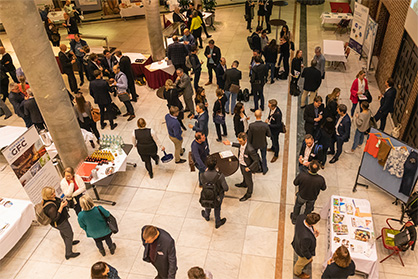
„It was a really successful first edition of the International Conference on Cellulose Fibres and I hope that many more will follow. The talks and accompanying discussions covered a wide area of topics related to cellulose fibres at a very high level. And there was also enough time for networking and further in-depths discussion, which also proved very valuable.” (Josef Innerlohinger, Lenzing (Austria))
“Already more than 200 participants is a good start for a new conference. We really enjoyed the informative presentations” (Alessandro Pellegrini, Bozzetto Group, (Italy)).
“It was very successful conference – well done. Already the first conference has attracted over 200 stakeholders along cellulosic textile fibre value chains. It has been a vivid dialogue between the parties during the high-level sessions. Would expect that the event will solidify its position as meeting point for cellulosic fibre society – industry and research “(Jukka Kantola, NC Partnering, Finland).
Ralf Nyhofen, Manager for fibre Solutions at LEVACO Chemicals, leading manufacturer of utilities for fibre production, painting and coatings also enjoyed the conference. “The conference was great, we had interesting discussions and for the first of its kind it was really good!”.
Sponsors of the conference: Bozzetto (Italy), Lenzing (Austria) and Sateri (China) supported the conference as gold sponsors. In addition, LEVACO Chemicals (Germany) was involved as a silver sponsor. NC Partnering (Finland) and Stora Enso (Sweden/Finland) were bronze sponsors.
Premium partner of the conference was the environmental advocacy group Canopy (Canada). Other well-known partners of the conference were ATP - Russian Textile Association (Russia)
BCNP Consultants (Germany), C.A.R.M.E.N. (Germany), CLIB (Germany), FSC - Forest Stewardship Council (Germany), Institute of Textile Technology (ITA) of RWTH Aachen University (Germany), PEFC International (Switzerland/Germany), Textile Exchange (Germany/USA), The Fiber Year Consulting (Switzerland) and the World Bioeconomy Forum (Finland).
Save the date – For the “2nd International Conference on Cellulose Fibres”
This year’s conference presentations will be available in early March at www.bio-based.eu.
And, of course, nova will fulfil the wishes of sponsors, partners and participants and will organise a follow-up to this year’s conference next year: In 2021, the “2nd International Conference on Cellulose Fibres” will take place in Cologne on 2–3 February at the same venue.