[pageLogInLogOut]

#Yarn & Fiber

Hyosung is taking a big step to become a global top three carbon fiber company through large-scale investment
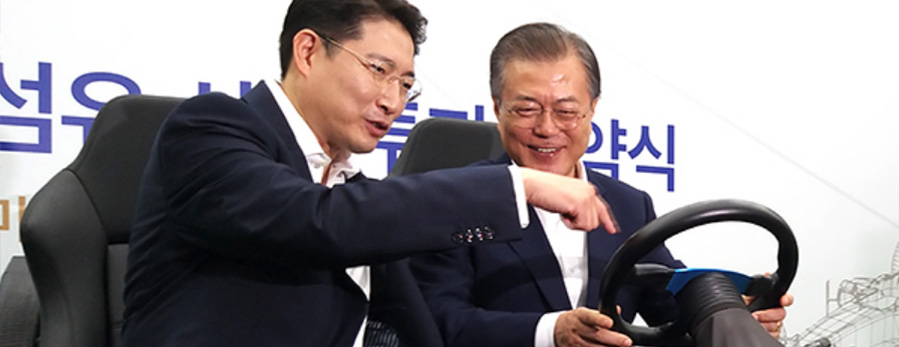
Hyosung vows to take the lead in a ‘Material Powerhouse Korea’ with carbon fiber(c) 2019 Hyosung
Hyosung laid out this vision at an “agreement ceremony for a new investment in carbon fiber” at the carbon fiber plant of Hyosung Advanced Materials in Jeonju on August 20.

Plans to increase its annual output to 24,000 tons by 2028 with a total investment of KRW 1 trillion by 2028

Under the agreement, Hyosung will invest a total of KRW 1 trillion in the carbon fiber business by 2028 and expand its annual production capacity from the current 2,000 tons (1 line) to 24,000 tons (10 lines). This would be the largest capacity of a single plant in the world. With the first expansion underway, the company plans to complete a carbon fiber plant with an annual capacity of 2,000 tons in January 2020 and begin full-scale production in February.

When the addition of 10 lines is completed by 2028, Hyosung’s global market share will rise from 11th (2 %) as of 2019 to 3rd (10 %) in the world. Employment is also expected to increase significantly from the current 400 to more than 2,300 new jobs by 2028.

The event included ? an “agreement ceremony for facility expansion and investment support” between Hyosung and the government and local municipalities, including Jeollabuk-do and Jeonju and ? an “alliance MOU ceremony” aimed at strengthening cooperation including joint testing between the Ministry of Trade, Industry and Energy, Hyosung, and relevant companies, such as Iljin Materials, and Korea Aerospace Industries (KAI).

Carbon fiber, which is lighter but 10 times stronger than steel, is a “staple of future industries”

Carbon fiber is a “new dream material” that can be applied to all industries where iron is used, from internal and external materials for automobiles and building reinforcements to sports and leisure sectors and advanced future industries such as space aviation. Carbon fiber weighs one-fourth the weight of steel but is 10 times stronger and 7 times more elastic. It is called a “staple of future industries” because of its superior corrosion resistance, conductivity and heat resistance.

As a strategic material used in aviation, space, and defense, it is difficult to transfer technology as well as develop it independently, which is why only a few countries have such technology. Hyosung became the first Korean company to develop carbon fiber "TANSOME®" based on its own technology in collaboration with Jeollabuk-do, Jeonju and the Korea Institute of Carbon Convergence Technology in 2011 and has been manufacturing products since 2013. It marked the world's fourth development after Japan, the U.S., and Germany.


Infinite expandability of upstream industries including the hydrogen sector

Carbon fiber is also regarded as a key material in the hydrogen economy.

The government announced a roadmap to revitalize the hydrogen economy in January and said that it will use hydrogen, which has wide-ranging economic and industrial impacts, as its future growth engine.

To this end, the company plans to expand the number of hydrogen cars from around 1,800 in 2018 to about 81,000 by 2022 and around 6.2 million by 2040. Hydrogen cars are gaining attention as future eco-friendly vehicles that reduce carbon dioxide emissions thanks to their lightweight.

Carbon fiber is a key material for hydrogen vehicle's fuel tanks and is essential for the safe storage, transportation and utilization of hydrogen energy. The hydrogen fuel tank is a cylindrical container made of plastic, which is wrapped with carbon fiber to increase its strength and stability. Carbon fiber is a core material for hydrogen fuel tanks that are light but must withstand hundreds of times higher pressure than normal air.

The carbon fiber market for hydrogen fuel tanks is expected to grow more than 120 times by 2030.

Chairman Hyun-Joon Cho said, “We will play a pivotal role in making Korea a ‘material powerhouse’ by growing carbon fiber”

Chairman Hyun-Joon Cho said during the event, “We took note of the future value of carbon fiber and started to develop our own technology. The potential for the upstream industry of carbon fiber is limitless. As the hydrogen economy has opened a new market of carbon fiber, we will play a pivotal role in making Korea a ‘material powerhouse’.”

“We were able to become the world’s No.1 in many areas including spandex and tire cords because we were fully committed to staying ahead of our competitors by developing our own technologies from material to production. We will continue our challenges to plant seeds for another material business.” stressed the chairman.
More News from TEXDATA International

#Texprocess 2026

Texprocess 2026: Automation, digitalisation and AI reshape textile processing

Investment decisions in textile processing have become increasingly complex. Rising energy prices, labour shortages and geopolitical uncertainties are forcing companies to prioritise technologies that deliver measurable improvements in efficiency and process stability. This applies not only to apparel production, but also to the processing of technical textiles and high-performance materials. Modernisation projects are therefore being evaluated more selectively – but the pressure to upgrade production systems continues to grow. Texprocess 2026 reflects this tension between cautious investment behaviour and increasing technological demand.

#Techtextil 2026

Textile Chemicals & Dyes: Innovation in Textile Chemistry moves into focus at Techtextil 2026

From PFAS-free finishes and water-saving dyeing technologies to advanced coatings and recycling-compatible formulations, innovation in textile chemistry is accelerating across the industry. Reflecting this development, Techtextil 2026 introduces Textile Chemicals & Dyes as a dedicated product segment, highlighting the growing role of chemical solutions in shaping the next generation of technical textiles.

#Recycling / Circular Economy

textile.4U publishes special edition “Top 100 Textile Recycling Companies 2025”

With a comprehensive 176-page special edition, textile.4U is dedicating its latest issue entirely to one of the most dynamic and influential topics in today’s textile industry: textile recycling. The new issue, published exclusively in high-quality print, presents the Top 100 textile recycling companies researched and selected by TexData – organizations that already play a key role in the transition to circular textiles or are expected to have a significant impact in the near future.

#Recycling / Circular Economy

Responsible Textile Recovery Act of 2024 signed by Governor

Senator Josh Newman (D-Fullerton) is proud to announce that Senate Bill 707 (SB 707), the Responsible Textile Recovery Act of 2024, has been signed into law by the Governor of California, Gavin Newsom. This groundbreaking legislation establishes the country’s first Extended Producer Responsibility (EPR) textile recycling program, marking a significant step forward in the state’s efforts to combat waste and promote sustainability.

More News on Yarn & Fiber

#Man-Made Fibers

Lenzing advances its transformation: Higher EBITDA, stronger free cash flow and more than EUR 200 million in cost savings

The business performance of the Lenzing Group in 2025 was affected particularly in the second half of the year by external factors such as international tariff measures, subdued demand and declining market prices. As a result, revenue decreased slightly by 2.3 percent to EUR 2.6 billion, primarily due to lower fiber sales volumes and lower prices for fibers and pulp, which were further negatively impacted by currency developments. Nevertheless, thanks to the comprehensive Performance Program, Lenzing was able to improve its operating performance and key financial indicators compared with the previous year.

#Man-Made Fibers

“Lead Transformation – Generate Impact”: Lenzing presents its 2025 Annual and Sustainability Report

The Lenzing Group has published its 2025 Annual and Sustainability Report, entitled LEAD TRANSFORMATION – GENERATE IMPACT. The report shows how Lenzing is actively shaping change in the industry and making a lasting impact: economically, ecologically, and socially. Lenzing is consistently focused on the future: with targeted investments in premiumization, excellence, innovation, and sustainability, the company is strengthening its position as a leading provider of sustainable, cellulose-based premium fibers. The combined report is available in digital format.

#Raw Materials

Lenzing Group positions bio‑based materials as a strategic asset for Europe’s economic security

The Lenzing Group, a leading supplier of regenerated cellulose fibers for the textile and nonwovens industries, hosted a high‑level roundtable in Brussels to discuss how bio‑based materials can strengthen Europe’s economic security and support the shift toward a fossil‑free future. Organized in cooperation with Euractiv, the event brought together representatives of the European Commission, the UK Mission to the EU, academia, civil society, and industry.

#Yarn & Fiber

Teijin Carbon strengthens high‑end sports offering with advanced prepreg and resin technologies for next‑generation bicycle performance

High‑end bicycle manufacturers are entering a new era in which modern frames and components must be lighter, stiffer, tougher and more sustainable – all while enabling fast, repeatable and cost‑efficient production. To support this shift, Teijin Carbon is expanding its portfolio of advanced prepreg systems developed specifically for premium road, gravel and mountain bike applications.

Latest News

#Techtextil 2026

Gebr. Otto highlights versatility at Techtextil with regional supply chains, yarn innovations and new hygiene segment

At this year’s Techtextil, Gebr. Otto places its versatility at the center of its presentation. In addition to spinning, twisting and dyeing – traditionally focused on fine cotton – textile processors will also find a competent development partner for technical specialty solutions. The Dietenheim-based spinning mill has now built up a decade of experience in the production of technical yarns, particularly from aramids. A new hygiene segment has also been established, where yarns for medical and hygiene products are currently being produced. In the future, this department could also develop textile products for the food sector. Gebr. Otto will once again be present at the BW-i joint stand, booth D81, hall 12.1. What is wound onto the spool is determined by the customer: Gebr. Otto develops according to specific customer requirements and transforms its own ideas into yarn innovations.

#Europe

Commission presents proposal for EU Inc. - unlocking the full potential of the Single Market for Europe's entrepreneurs

Today, the European Commission presented its proposal for EU Inc., a new single set of corporate rules, building the cornerstone and starting point for the EU's 28th regime. EU Inc. is an optional, digital-by-default European corporate framework. It will make it easier for businesses to start, operate and grow across the EU – incentivising them to stay in Europe, and encourage those who once looked elsewhere to return.

#Man-Made Fibers

OnceMore® from Södra brings end-to-end traceability for circular Man-made Cellulosic Fibers (MMCF) using TextileGenesis

OnceMore® from Södra, the world’s first large-scale process for recycling blended fabrics into high‐quality dissolving pulp, will begin using TextileGenesis, a Lectra company, to strengthen traceability from raw material to retail across the value chain. OnceMore® produces dissolving pulp made from blended textile waste and wood sourced from responsibly managed Swedish forests. By integrating TextileGenesis, OnceMore® supports the growing need for verified data and secure, transparent tracking throughout increasingly complex supply chain.

#Sustainability

Experts publish APAC policy priorities

Cascale today announced the publication of its APAC Policy Priorities Paper, developed by the Asia-Pacific (APAC) Policy Member Expert Team (MET) to identify key regional sustainability challenges and provide practical, aligned recommendations for policymakers and industry stakeholders across Asia-Pacific.

TOP