[pageLogInLogOut]

#Yarn & Fiber

Case study: Birla Cellulose talks trends in the global textile market
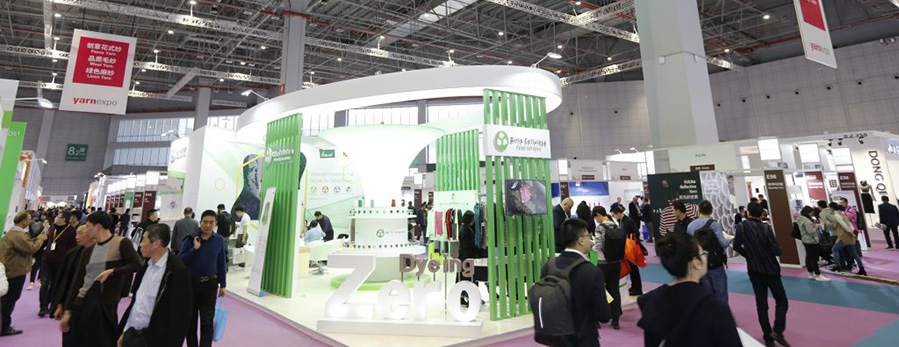
The Birla Pavilion at Yarn Expo Spring 2019 (c) 2019 Messe Frankfurt
At Yarn Expo Spring 2019, Messe Frankfurt visited the ever-busy Birla Pavilion to chat with Mr Manohar Samuel, Senior President of Marketing & Business Development at Grasim Industries Ltd (of the Aditya Birla Group), about shifting trends that open up new collaborative opportunities for the yarn and fibre market.

Messe Frankfurt: Thank you for taking some time to meet with us, Mr Samuel! To begin, please could you tell us more about current industry trends?

Mr Manohar Samuel: The global textile market is going through an exciting time! We find that there are four key trends, which are evolving very quickly. First of all, there’s sustainability, and in turn traceability, digitalisation and innovation. In recent years, we’ve seen a quantum jump for sustainability from brands across the world. What’s shifted is the traceability of products. Our role now, as a fibre manufacturer, is to establish a common definition of sustainability. We understand our brands’ requirements and translate that on the ground – for example, with the Birla LivaEco brand, as well as eco-friendly Birla Spunshades and Birla Excel.

Circularity in the textile supply chain still needs to be worked on, but interestingly, we now see all stages of the supply chain working together to be more sustainable. A spinner cannot be sustainable by themselves. We see it as B2B2C. All of us face the common consumer, because the entire textile supply chain is now visible to the consumer. It’s through meaningful collaboration that we can prove to consumers that a product is fully sustainable, from start to finish.

MF: And how do you see digitalisation impacting the yarn and fibre industry?

MS: The entire industry is going through a metamorphosis. Firstly, there’s e-commerce – yes, it’s known for fast fashion, but the advantage is that each click of the smartphone creates data, which provides a lot of market insight. By aligning with e-commerce brands, we can better understand consumer demand and adjust production accordingly. There’s enough information for us all to innovate and find sustainable solutions. The market is full of innovation now, everyone is focusing on innovation! I’ve been at this fair for eight years, and I feel this trend has shifted a lot in China. Everybody at Yarn Expo is exhibiting something interesting now.

MF: Last year, Birla Cellulose described Yarn Expo as a platform where yarn and fibre companies can be visible to the wider textile industry. Are you still experiencing this?

MS: This sourcing trend is definitely growing, for two important reasons. The first being sustainability – creating an environmentally-friendly product begins with fibre, and brands are increasingly recognising this. The second reason is innovation – in order to create product differentiation, to be more rooted in industry trends, brands are required to collaborate with companies further up the supply chain.


Birla Cellulose’s innovative fibres from nature (c) 2019 Messe frankfurt

For example, at Birla Cellulose we come up with our own innovations, and we even work with trend forecasters around the world, like WGSN. This can be very useful for brands.

MF: How do you capture these opportunities with fashion brands?

MS: We access the market through different levels of engagement. We work with the headquarters of globally acclaimed big brands, and we work with buying houses and brand offices. To find these opportunities, we always participate in Yarn Expo. It’s important to be here, because it provides a good platform to meet everybody in one place over just three days. We’ve also met more brand offices, coming from different stages of the supply chain, at this fair. And to work with smaller companies, we use technology as a major tool. We have started a website called LAPF Connect to make networking easier.

MF: It’s great to hear that the Birla Pavilion continues to find exciting opportunities at this platform. As one of Yarn Expo’s most prominent pavilion leaders, what do you think are the strongest benefits of exhibiting here?

MS: The strongest pillars of Yarn Expo are the opportunities to connect with customers, and the opportunities to see what is new in innovation. Birla Cellulose has a lot of customers here at Yarn Expo – not only spinners, but from the entire supply chain. The concurrent events, like Intertextile, also support this. We meet brands from Europe, the US, Hong Kong and more here – and our existing customers all come here to see what is new. We use Yarn Expo as a marketing platform to tell our own innovative story. We are happy to see that our peers in this hall also have yarn and fibre innovations, which are more relatable to our own brand. The fair has grown a lot, it’s huge – we would like to bring a larger team next time!

MF: Thank you Mr Samuel, and enjoy the rest of the fair!


More News from Messe Frankfurt (HK) Ltd.

#Yarns

Yarn Expo Shenzhen 2026 closes doors, advancing sustainable and innovative sourcing in South China

Yarn Expo Shenzhen 2026 served as a strategically positioned mid-year sourcing platform for the Greater Bay Area, highlighting Shenzhen’s role in connecting regional demand, supply and innovation exchange across the textile value chain. During the three-day fair, over 20,000 visits were drawn from 74 countries and regions[1], as exhibitors and buyers engaged with new developments in greener, performance-led, and value-added yarn and fibre solutions. Held in conjunction with Intertextile Shenzhen Apparel Fabrics and PH Value, the fair underscored the benefits of closer synergy and new materials across yarn, fabric and apparel platforms for the South China market.

#Technical Textiles

Cinte Techtextil China maps textile future with specialised zones and forward-looking fringe events

As global demand for high-performance materials evolves, Cinte Techtextil China is set to steer the industry’s next growth phase by driving the convergence of global expertise, specialised zones, and forward-looking tech and insights. Building on its diverse scope, the upcoming edition will especially spotlight critical sub-sectors such as Medtech & Protech, Indutech and Buildtech. The offering will be augmented by the well-received Mobiltech and Textile Chemicals and Dyes Zones, alongside the high-calibre German and European Zones. Beyond the booths, the fringe programme structured around four core pillars will chart a definitive roadmap for technical textiles and nonwovens.

#Yarn & Fiber

Next week’s focus: Intertextile Shenzhen & Yarn Expo Shenzhen fuse textile tradition with sustainable, digital trends

Fashion will not be left behind in one of the world’s undisputed tech and manufacturing capitals. Which is why next week, at Intertextile Shenzhen Apparel Fabrics and Yarn Expo Shenzhen 2026, the organisers have made special efforts to integrate textile topics such as materials innovation, holistic sustainability, digitalisation and AI. Yet, from 9 – 11 June at the Shenzhen Convention and Exhibition Center, the platform also includes timeless tradition and heritage-inspired evolution in equal measure. Across both shows, over 600 exhibitors from 11 countries and regions are set to showcase everything from Peruvian alpaca wool fabrics to tea-derived fibres, while their fringe programmes will explore diverse solutions along the entire value chain.

#Home Textiles

Intertextile Shanghai Home Textiles unveils Trends 2027 alongside new lifestyle zone and product expansion

Intertextile Shanghai Home Textiles – Autumn Edition 2026 will spotlight forward-looking design directions and evolving consumer demand, as the global home and lifestyle market continues to adapt to sustainability priorities, emotional well-being, and diversified living spaces. Taking place from 18 – 20 August 2026 at the National Exhibition and Convention Center (Shanghai), the fair will present its latest trend theme, ‘BREATHE UP!’, developed in collaboration with leading international trend forecaster NellyRodi™ Agency, alongside expanded product categories, and the debut of the Home Textiles Lifestyle Zone.

More News on Yarn & Fiber

#Yarns

Yarns and technologies in symbiosis: Biella Yarn presents Fall/Winter 2027/2028 collection “New Romance_”

Biella Yarn, the flat knitting brand of Suedwolle Group, launches new Fall/Winter 2027/2028 collection, inspired by the symbiosis of yarns and technologies – elements that blend, adapt and evolve together, forming something new without losing their origin. The name “Neu Romance_” reflects the emotional and neurological dimension of the yarns: a connection that engages the senses, experienced through material, touch and interaction. The collection is further brought to life through design collaborations, featuring selected yarns used in different design approaches.

#Recycling / Circular Economy

The textile industry in transition

Recycling, traceability, eco-design and digitalisation are among the key future challenges facing the European textile industry. The Erasmus+ project Skills4Circularity, involving 21 partners from twelve countries, is investigating the skills required to address these challenges. As the German industry partner, the Industry Association for Finishing – Yarns – Fabrics – Technical Textiles (IVGT) is bringing the industry’s perspective to the project.

#Research & Development

GenuTrace client advisory: Is your cotton supply chain UFLPA ready?

U.S. Customs and Border Protection has released updated operational guidance (CBP Publication No. 5560-0526) expanding its forced labor enforcement framework. The guidance supersedes the original 2022 UFLPA Operational Guidance and now covers all forced labor enforcement authorities — UFLPA, CAATSA, and WROs/Findings — in a single unified document. For cotton importers, the enforcement posture has not softened. It has become more structured, more documented, and more demanding. Learn more about UFLPA.

#Spinning

"We will become a recycling powerhouse"

The textile industry is now in its fourth consecutive year of crisis, while automation, artificial intelligence and recycling are reshaping the rules of the game. In this interview, Rieter CEO Thomas Oetterli discusses the first signs of a market recovery, reflects on his first three years at the helm of the company, explains the integration of Barmag, outlines Rieter’s vision of the fully automated spinning mill and highlights the strategic importance of recycling. In doing so, he explains why the new Rieter Group aims to play a leading role in transforming the textile value chain into a circular economy.

Latest News

#Dyeing, Drying, Finishing

Ferraro S.p.A. acquires the “Finishing” business unit of Cibitex S.r.l.

Ferraro S.p.A. and Cibitex S.r.l. are pleased to announce the completion of the agreement pursuant to which Ferraro S.p.A. has acquired the “Finishing” business unit of Cibitex S.r.l., specialized in the development and manufacturing of technological solutions for textile finishing.

#Recycling / Circular Economy

Reju opens its first R&D Center in the U.S. in Conshohocken, Pennsylvania

Reju, the company specializing in textile regeneration, today announced the opening of a Research and Development (R&D) Center in Conshohocken, Pennsylvania, the company's first proprietary research center in North America. Located within Technip Energies' existing Advanced Materials and Catalysts research center, the lab will allow Reju to accelerate the rollout of its recycling technologies and develop its next-generation circular solutions.

#Weaving

Itema reaffirms its commitment to the Syrian textile industry at NasTex 2026

From July 18th to 21st, Itema will exhibit at NasTex at the Damascus Fairground (Hall 11 – Stand C02), marking its return to one of the Middle East’s historically significant textile markets. Itema will showcase advanced weaving technology designed to support the competitiveness and technological evolution of Syrian manufacturers and announces a new partnership with Growfast Agency as the sole agent of Itema in Syria.

#Knitting & Hosiery

KARL MAYER's HKS 2-SE Expands Possibilities for Premium Stretch WARP KNITS

Warp knitted fabrics with a woven look are more in demand than ever in the fashion and apparel industries. Stretch WARP KNITS, in particular, impress with their freedom of movement, breathability, and virtually wrinkle-free wear – thereby opening up new style worlds such as smart casual or business casual. When it comes to the highly efficient production of premium-quality stretch WARP KNITS, the HKS 2-SE has long been the machine of choice. KARL MAYER’s best-selling tricot machine produces standard elastic fabrics characterized by high gauges, smooth, delicate surfaces, and a soft hand feel.

TOP