#Weaving
40 years of the Peter Dornier Foundation: Four decades of non-profit commitment to people, culture and the environment in Lindau, Germany and worldwide
From demolition project to meeting place: Haug am Brückele
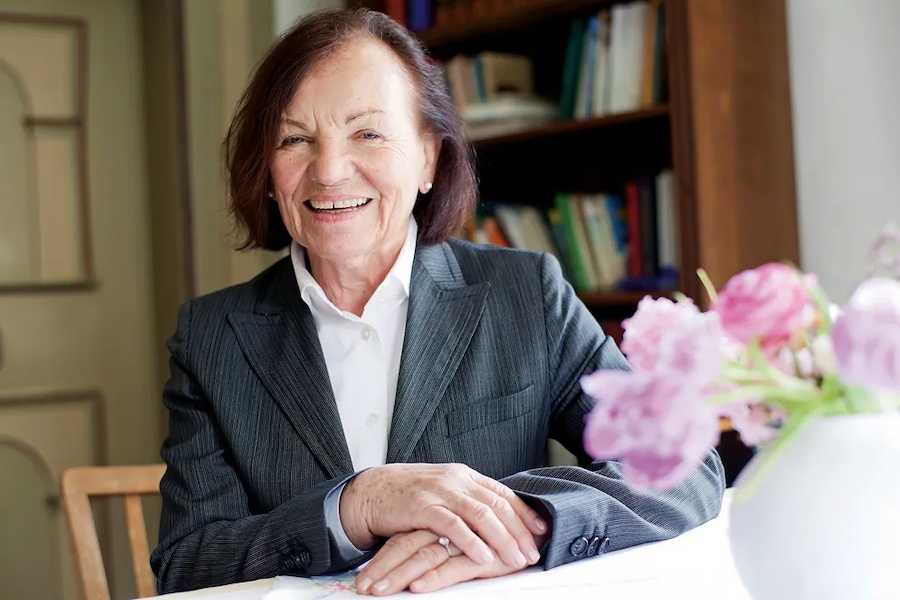
Since its establishment, the Peter Dornier Foundation has supported cultural and social life in Lindau and the surrounding region. The projects it has supported, often in collaboration with other foundations, include the Lindau Nobel Laureate Meetings, the concert hall in the Town Theatre, the Rococo Hall in the district administration office, the Lindau Chamber Choir and the historic farm “Haug am Brückele” in Lindau-Reutin. The farm, whose history dates back to the 17th century, was in danger of collapsing and was scheduled for demolition in 2002. At that time, Maja Dornier and the foundation acquired the property, thus laying the foundation for its rescue. “My husband drove past the farm every day on his way to work and was always fascinated by the blooming cottage garden,” recalls Maja Dornier, who has been chairwoman of the foundation since the death of her husband Peter Dornier in 2002. Together with Luise Mussack, then district farmer, and Anneliese Spangehl, former city councillor and now honorary citizen of the city of Lindau, she saved the farm from demolition.
In order to breathe new life into it and give it an educational purpose, the Peter Dornier Foundation handed over its management to the association “Bauernhof für Jung und Alt – Haug am Brückele” (Farm for Young and Old – Haug am Brückele), which was founded specifically for this purpose. Over the years, the association has restored the old farm with a great deal of voluntary work. Since then, the farm has been run as a cross-generational meeting place thanks to the great commitment of Lindau citizens such as Klaus Burger (Retired Head of City Planning). The Haughof serves as a lively learning centre for kindergarten groups and school classes: here they make juice from fruit, make chips from potatoes they have harvested themselves, dye clothes with plant dyes and look after the animals. “What the Löhr family is doing here with the children is simply wonderful,” says Maja Dornier. Numerous Lindau residents of all ages come together for action days, jazz matinees or legendary festivals such as the Poppy Festival and “Christmas as it used to be”. “You have to experience a jazz matinee here at least once – everyone comes with their kids and the whole family,” says the foundation chairwoman happily. “I think it's wonderful that the farm has become a place of togetherness in times when so many people sit alone in front of their screens.”
Pioneering work in hospice care: Haus Brög zum Engel
Another local focus of the Peter Dornier Foundation is supporting hospice work, which is particularly close to Maja Dornier's heart. Her commitment to hospice work was shaped by an early personal experience: as a nursing assistant in the cancer ward of London University Hospital in the 1950s, she witnessed how the curtains were simply drawn around dying patients. “That never left me,” she recalls. Against this backdrop, she founded the “Ambulant Visiting Service for the Sick and Dying” in 1986 together with Christa Popper (Head of the “Cancer Aftercare” department (deceased 2003) – one of the first hospice groups of its kind in Germany. “Back then, we simply went to hospitals, nursing homes and people's homes to accompany them,” says Maja Dornier.
The result of the experience in outpatient end-of-life care was the desire to have a permanent location where seriously ill and dying people could be cared for with dignity in a protected atmosphere. Sponsorship from the Peter Dornier Foundation helped to secure the historic town house “Brög zum Engel” in Lindau-Aeschach for this purpose. The members of the visiting service for the sick and dying rolled up their sleeves, furnished the empty house with second-hand furniture and made it habitable again. They founded the association “Hospizzentrum Haus Brög zum Engel”, which has since been running the inpatient hospice in cooperation with volunteers under the chairmanship of Maja Dornier. This is how the Lindau hospice, one of the first inpatient hospices in Bavaria, came into being. Today, around 70 guests a year are accompanied in their final phase of life by professional carers and trained volunteers in eight guest rooms.
For her decades of commitment, Maja Dornier, once described in the press as a “pioneer of the German hospice movement,” was awarded the Bavarian Hospice Foundation's Prize in 2016 and the Federal Cross of Merit on Ribbon in 2012, among other honours. In order to secure the long-term future of the hospice, she also established the Maja Dornier Hospice Foundation in 2007, which acquired the Brög zum Engel property and, with financial support from the Peter Dornier Foundation, was able to carry out a necessary extension.
From the Liszt organ to the prosthetics project in Ethiopia
Despite its local roots, the Peter Dornier Foundation is also active far beyond Lindau. In its 40 years of existence, it has supported more than 500 projects and organisations in Germany and around the world – often over many years. Among other things, the foundation has enabled the renovation of numerous churches, many of them in the new federal states – a prominent example is the Liszt organ in the village church in Denstedt near Weimar. The Thomanerchor Leipzig and the Junge Deutsche Philharmonie have also been supported.
Internationally, the foundation's activities include the construction of a dam as a water reserve and an education centre in Kenya, projects for street children in Mexico and Bolivia, the protection of tropical forests in Guatemala and Brazil, archaeological excavations in Turkey and medical projects for children in Ethiopia. The latter are of particular interest to trauma surgeon Prof. Dr. Wolf Mutschler: The physician, who is a member of the German National Academy of Sciences Leopoldina, was Medical Director of the Surgical Clinic and Polyclinic at Ludwig Maximilian University in Munich from 1999 to 2012 and has been involved in the work of the Peter Dornier Foundation since 2014, initially on the Advisory Board and now on the Executive Board.
“Actually, you should ask what the foundation doesn't do.”
“When someone asks what the Peter Dornier Foundation does, I sometimes say, “Actually, you should ask what it doesn't do,” says Maja Dornier with a laugh. The foundation's statutes, drafted by Peter Dornier, Maja Dornier and long-standing Foundation Advisory Board member Dr Heinrich Ahner, are broadlly based to reflect the diverse interests of their founder. They range from environmental, nature and species conservation to heritage and monument preservation, public health, education and development aid to art, culture and sport.
Early on, the foundation's activities also included science and research – two areas that were particularly close to the heart of engineer and aircraft designer Peter Dornier, son of aviation pioneer Claude Dornier. In the late 1980s, for example, the foundation supported the establishment of the Interdisciplinary Centre for Scientific Computing at the University of Heidelberg, where Peter Dornier was a patron and honorary senator. In 1990, it funded a chair for scientific nature conservation at Philipps University in Marburg, enabling the first lecture on this topic to be held in Germany.
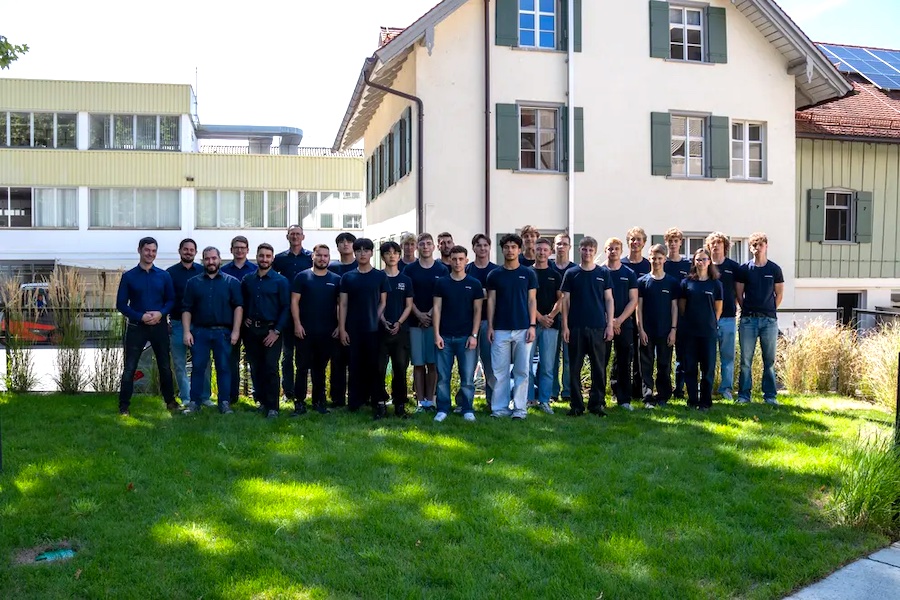
Passing on craftsmanship knowledge was also important to the founder. Even before the foundation was established, he supported the experienced hand weaver and Jacquard specialist Hermann Wendlinger. With the support of the Peter Dornier Foundation, Wendlinger established the “KUHAtex” association in Wangen im Allgäu to promote textile craftsmanship. Now over 80 years old, he teaches basic textile skills such as spinning and weaving on historical hand looms. DORNIER trainees can also volunteer here to gain a deeper understanding of what goes on inside the company's highly complex weaving machines, which are used by highly specialised suppliers to weave airbags in one piece or even manufacture lightweight yet high-strength turbine parts for modern aircraft.
Woven heart valves and foldable aeroplane wings: The Peter Dornier Foundation Prize
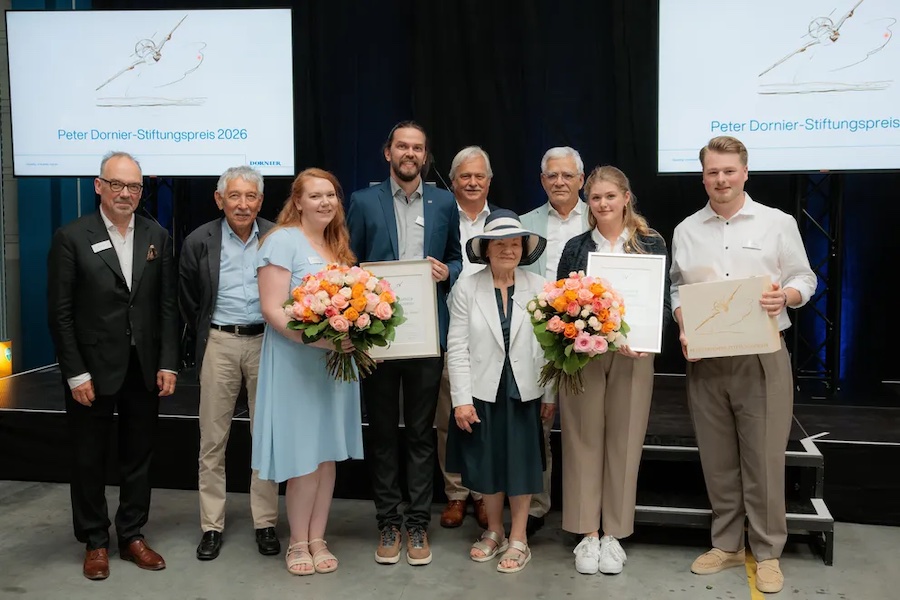
The year 2021 marks a special milestone in the foundation's 40-year history: this year, the Peter Dornier Foundation Prize was awarded for the first time. “My husband was always a supporter of young people,” recalls Maja Dornier. “He was incredibly happy to see trainees in his company making their way.” That is why it was particularly important to her to establish an award for outstanding scientific work by young talents on the occasion of Peter Dornier's 100th birthday. The prize, worth €5,000, has since been awarded to young researchers who developed a woven heart valve, gained new insights into reducing noise and surface heat in aircraft and spacecraft, developed a new weaving technology for producing complex 3D fabrics, and conducted bionically inspired research into foldable aircraft wings. The winners are selected by a jury of experts, which includes Dr Adnan Wahhoud. He headed the air-jet loom development department at DORNIER for 26 years. Born in Syria, he is also involved in the ‘Medical Points’ project, which is also supported by the Peter Dornier Foundation, providing free basic medical care for children and families in Syria.
The Peter Dornier Foundation Prize will continue to recognise outstanding scientific work in the founder's fields of expertise, namely weaving, film and fibre composite technology and aviation, thereby keeping alive his vision of promoting future-orientated innovations. ‘I am certain that if my husband had remained in good health longer, he would have created such an award himself,’ says Maja Dornier.
Responsibility over generations
Even though Peter Dornier had already formulated the social responsibility of entrepreneurs as a guiding principle in early writings from the 1940s, charitable donations remained a purely private matter for him for a long time. “It was a tradition for him to retreat to his study on Sundays to devote himself to charitable causes,” recalls his son Peter D. Dornier, long-time Managing Director of DORNIER and now Chairman of the Supervisory Board of the family business. That changed in 1985 when Daimler-Benz AG acquired a majority stake in the Dornier Group. In the course of the restructuring, Peter Dornier succeeded in separating Lindauer DORNIER, which at that time still belonged to the Dornier Group, from the group and maintaining it as an independent family business. During the complex negotiations, he was supported legally by Prof. Dr Dieter Feddersen, who later served as Chairman of the Supervisory Board of Lindauer DORNIER for many years. Feddersen also played a central role in the establishment of the Peter Dornier Foundation, of which he was a member of the Board until his death in 2016. “Dieter Feddersen played a key role in helping my father fulfil his heart's desire to become an independent entrepreneur and also to leave a lasting social legacy with the foundation,” said Peter D. Dornier.
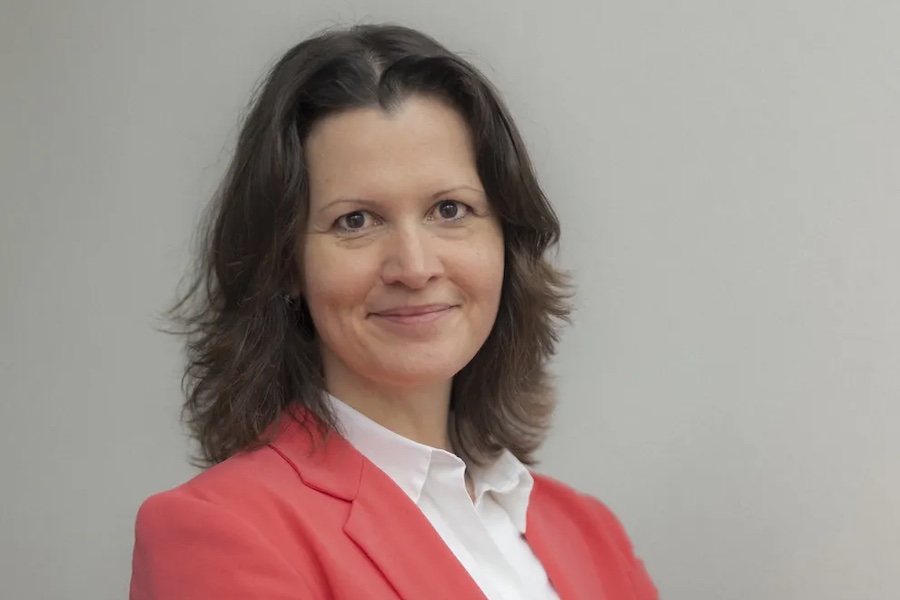
Since Peter Dornier's death in 2002, Maja Dornier has been chairing the foundation, which is not operational but purely promotional. She is supported in this by Prof. Dr. Wolf Mutschler as Deputy Chairman of the Foundation, her children Peter D. Dornier, Karin Preisser, Kerstin Dornier and Aimée Dornier, as well as Hans-Jürgen Schmidt and Franz-Peter Matheis, who are all members of the foundation's Advisory Board. Looking back on the foundation's 40 years, Maja Dornier says: “I am delighted every day when I see what has become of my husband's vision – thanks to the many people who stand behind the individual projects and are committed to them.”
With the next generation on the foundation's Advisory Board, the future of the foundation is also secure: the family will carry on the founder's vision – with new projects, contemporary accents and the prospect that the grandchildren’s generation will also gradually grow into the foundation's work. “Society is changing – you have to go with it,” says Maja Dornier. One important principle of the foundation must be retained: carefully checking funding applications to ensure that they can actually be implemented locally. Precisely because the Peter Dornier Foundation prefers to support smaller projects that would otherwise be difficult to realise, particular attention is paid to the personal commitment of the applicants. “After decades of working with foundations, I know that it's not just the amount of money that matters, but the attitude behind it,” says Prof. Dr. Wolf Mutschler, who, as a surgeon, was often on site himself. “At the Peter Dornier Foundation, both are true: here, the people and projects supported in an unbureaucratic way are well-known and accompanied over the long term.”