[pageLogInLogOut]

#Weaving

Getzner Textil considers closure of Swiss weaving mill Russikon
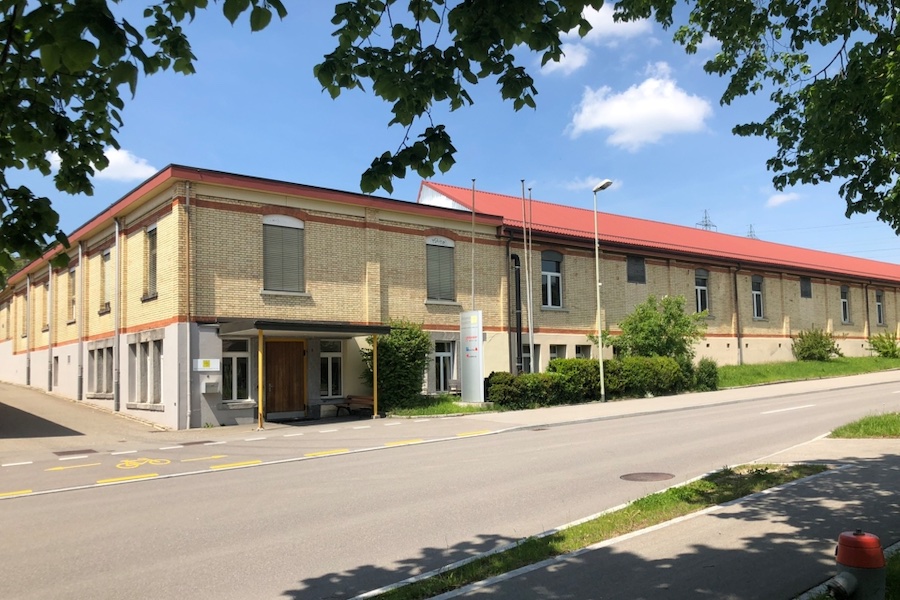
WR Weberei Russikon AG, which belongs to Getzner Textil AG, produces high-quality jacquard fabrics in Switzerland. This raw material is intended exclusively for the African market. In view of the global economic situation and the associated reduced demand in this area, Getzner Textil AG is reviewing its production planning and is considering the closure of the Swiss site in this context.
Due to the reduced volume requirements and the cost structure in Switzerland, Getzner is considering the closure of its Swiss site © 2025 Getzner Textil


Quality is perfect

The 55 employees of the Russikon weaving mill produce high-quality fabrics. However, compared to its international competitors, the Swiss weaving mill has a much higher cost structure, and the strong Swiss Franc poses an additional disadvantage. In consequence, the Swiss textile company is no longer able to compete in the international market, despite its production efficiency and the good quality of its products, and the future of the Swiss production site is therefore being questioned.

Employees involved

Today, the employees were informed in person about the intended closure. At the same time, the consultation process, a legal requirement that permits the employees to become actively involved before the final decision, has been initiated. As the owner, Getzner Textil AG has already reassured them that it will voluntarily come up with a redundancy scheme in the event of the closure of the company.

More News from Getzner Textil AG

More News on Weaving

Latest News

#INDEX 2026

“We clearly see that reliability, flexibility, service and total cost of ownership are becoming increasingly important again.”

The nonwovens industry continues to face a challenging market environment. Nevertheless, AUTEFA Solutions reports successful projects, new line sales and growing demand for energy-efficient and flexible solutions. In this interview, André Imhof of AUTEFA Solutions talks about competitiveness against Chinese suppliers, new service and recycling concepts, the growing importance of application development and the opportunities created by countercyclical investments.

#INDEX 2026

“Needle punching technology is more universal and sustainable than ever!”

Needle punching technology was long regarded as a rather traditional and comparatively slow technology within the nonwovens industry. In this interview, Johann Philipp Dilo explains why needle punching is more relevant than ever today – ranging from energy efficiency and resource conservation to hygiene applications, new machine concepts and design-oriented nonwoven solutions.

#Research & Development

Textile climate control system in workwear – exhibition at the 2026 SME Innovation Day!

Conventional protective workwear often reaches its limits during strenuous physical activity. In particular, the transport of sweat and excess body heat poses a problem. The German Institutes of Textile and Fiber Research (DITF) conducted research on flow-optimized, air-conducting textile structures that enable targeted climate control directly on the body. These structures can be integrated straight into protective work garments. The textile climate control system supports the body’s natural thermoregulation. This contributes to improved workplace safety and comfort.

#Nonwovens

PET spunbond from China – EDANA welcomes imposition of provisional anti-dumping measures

On 13 May 2026, after eight months of investigation, the European Commission imposed provisional anti-dumping duties of 45.6-50.0% on imports of PET spunbond from China. EDANA welcomes this expression of the Commission’s clear determination to protect EU industries from the unfair trade practices of Chinese producers.

TOP



