[pageLogInLogOut]

#ITMA 2023

Starlinger presents new FXa 6.0 at ITMA 2023

The Austrian machinery provider is showing its latest developments for sustainable woven sack production at ITMA in Milan. The highlight: the new circular loom FXa 6.0.

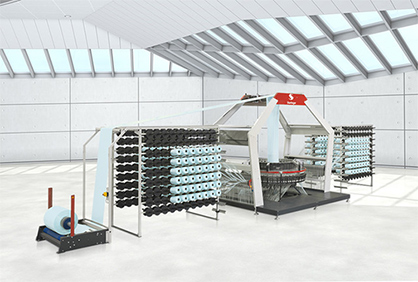
For over 50 years, Starlinger has been a leader in the technological development of circular looms for the production of woven sacks from plastic tapes. With the new six-shuttle circular loom FXa 6.0, the company is introducing an even more efficient and user-friendly machine that produces polypropylene tape fabric of highest quality.

"With the new FXa 6.0, we offer a circular loom with significantly reduced energy requirements and a low noise level," said Harald Neumüller, CSO of Starlinger. "At the same time, longer spare parts lifetime ensures significant cost savings. By investing in new processes and innovative manufacturing methods for our in-house production we have been able to significantly minimise quality fluctuations in shuttle roller production and increase their service life." Regarding machine control, a 7-inch touchscreen display and a high-performance CPU ensure convenient operation. 
© 2023 Starlinger & Co GmbH


"The FXa 6.0 also features a so-called IQ of 350. This means that on average there is only one warp tape break every 350 metres – an immense advantage in terms of machine downtime and work for the machine operators," Neumüller added.

The FXa 6.0 circular loom achieves a production speed of up to 1200 picks per minute and is designed for the gentle and energy-efficient production of light tape fabrics from 45 g/m² to 140 g/m². The circular loom will be shown in operation at the stand of Starlinger textile packaging in Hall 3.

Closed packaging loops for woven bags made of PP and PET

The use of recycled materials has become one of the leading topics in the packaging industry. In this respect, Starlinger is a pioneer when it comes to woven plastic packaging. With its "Circular Packaging" concept, the company has developed a closed packaging cycle for big bags, in which used big bags are turned into new big bags again. "As part of our "Circular Packaging" concept, big bags made of polypropylene fabric are equipped with a material passport that allows to trace their life cycle from production to use to return and recycling," explains Neumüller. "This means that used big bags can be recycled without significant loss of quality and the regranulate used for producing new big bags – the packaging cycle is closed." Fabric for big bags produced on Starlinger equipment with high shares of recycled polypropylene has the same specifications as fabric produced from virgin material and has been tested with standardised test procedures.


With the technology for the production of tape fabric from PET and rPET, Starlinger has harnessed the great advantage of this material for woven packaging. Correctly processed, PET recyclate has properties like virgin material and can be recycled repeatedly. PET tape fabric is strong, food-safe, has excellent creep resistance and can be made from 100% recycled material. As with bottle-to-bottle recycling, "bag-to-bag" recycling is possible in this case to close the packaging loop. This not only reduces raw material requirements, but also CO2 emissions and energy consumption. Both PET and rPET tape fabric are already being used successfully in the production of big bags.

Post-consumer rPET for textile applications

Starlinger recycling technology will be present at ITMA with its own stand in Hall 9, providing information on recycling solutions for fibre and filament production. In addition to recycling production waste, Starlinger also offers solutions for the use of recycled post-consumer plastics such as rPET in textile production. In order to be able to use recycled PET for the production of polyester filaments and fibres, it must meet the highest quality standards – any foreign particles and polymers must be removed before extrusion. In order to optimally clean the melt in the recycling process, Starlinger has developed a special cartridge filter for fibre applications, the so-called Rapid Sleeve Changer (RSC). It guarantees finest filtration of the melt down to 15 ?m and achieves a throughput of up to 2000 kg per hour. The filter elements can be changed without interrupting production, which significantly reduces melt loss and machine downtime.

For PET bottle-to-bottle recycling applications, Starlinger offers the new recoSTAR PET art, an energy-efficient and user-friendly recycling system. It achieves 15% more output with less maintenance and space requirements than the previous model and saves around 21% in production costs.


Starlinger textile packaging: Hall 3, B103

Starlinger recycling technology: Hall 9, C315


More News from TEXDATA International

#ITM 2026

ITM 2026: The new geography of textile production

New production hubs are emerging across North Africa and Central Asia, while Türkiye is accelerating its transformation toward higher-value, technology-driven and more sustainable textile manufacturing.

#Research & Development

“Production is a product”

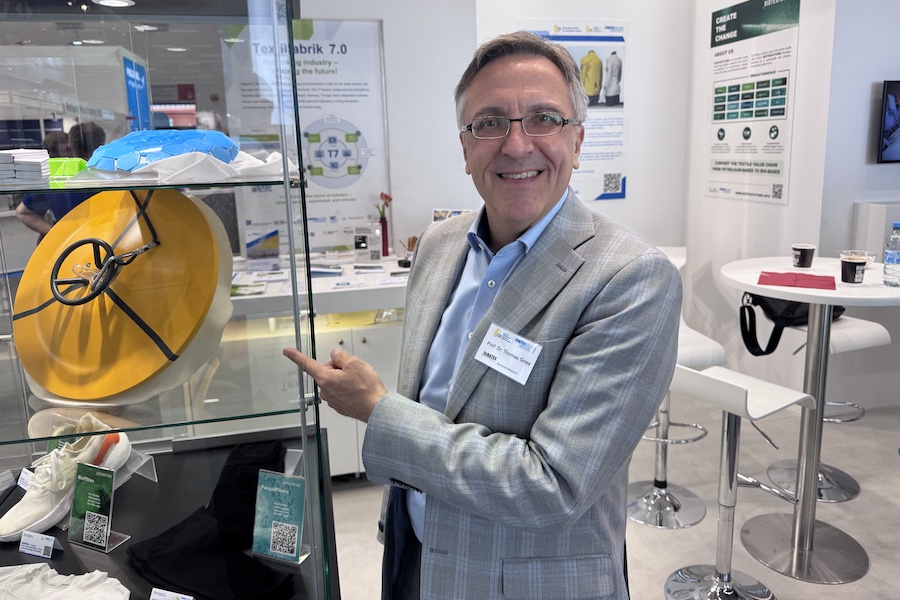
From technical textiles and AI-driven robotics to the limitations of textile circularity: Professor Dr Thomas Gries looks back on more than two decades of development at ITA Aachen. In the interview, he explains why production technology remains a decisive success factor, discusses international collaborations and innovation ecosystems, and shares his views on the transformation of production landscapes and the challenges facing an increasingly regulated industry.

#Knitting & Hosiery

“We need to move away from the price trap and return to a value-driven mindset.”

With its new Textile Innovation Center, KARL MAYER is sending a strong signal for innovation, collaboration, and the future of textile applications. In this interview, Karl Josef Mayer discusses new opportunities in warp knitting, the processing of staple fibres, recycling, the changing role of machinery manufacturers, and why the textile industry must once again focus more strongly on the value of textiles. by Oliver Schmidt

#Associations

“Innovation, resilience and international experience remain the great strengths of the Swiss textile machinery industry”

Geopolitical uncertainty, growing competitive pressure from China, new free trade agreements and the shift towards a circular economy are currently reshaping the global textile industry. In this interview, Cornelia Buchwalder discusses the current mood within the Swiss textile machinery sector, the industry’s distinctive innovative strength, new market opportunities in India and Asia, and the technological trends that could shape the upcoming trade fair cycle leading up to ITMA 2027.

More News on ITMA 2023

Latest News

#Knitting & Hosiery

SHIMA SEIKI brings new flat knitting technologies to FEBRATEX 2026

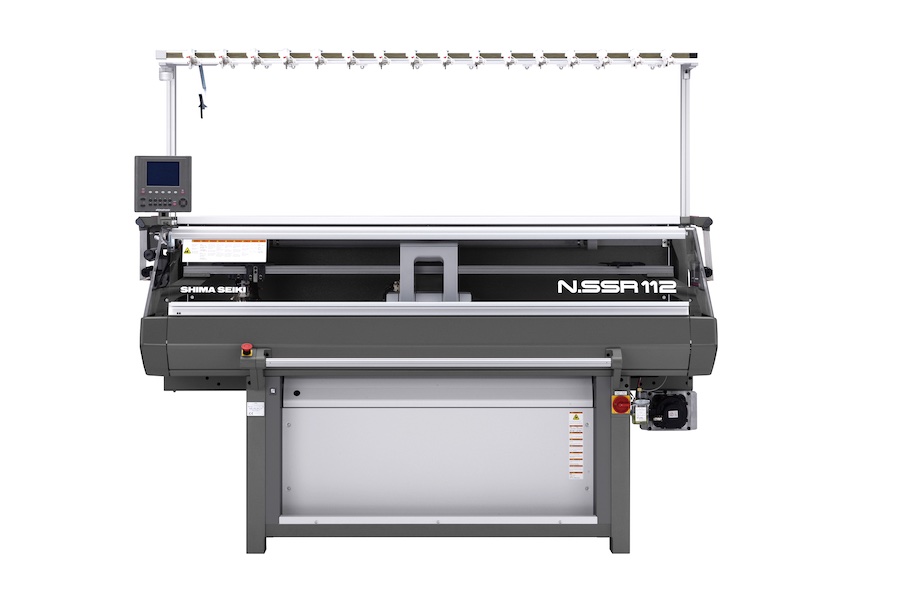
Leading flat knitting solutions provider SHIMA SEIKI MFG., LTD. of Wakayama, Japan, together with its Brazilian representative BRASTEMA TECNOLOGIA TEXTIL LTDA., will exhibit at the Brazilian Textile Industry Fair (FEBRATEX 2026) this month. On display will be a roundup of SHIMA SEIKI computerized flat knitting technology, represented by WHOLEGARMENT® knitting machines, computerized flat knitting machines featuring a brand-new model with high productivity and excellent cost performance, a glove knitting machine and the latest digital solutions.

#Man-Made Fibers

Lenzing reports improved half-year results and advances strategic transformation

Despite a persistently challenging market environment in the first half of 2026, characterized by volatile energy and raw material prices, subdued global consumer demand and intensified competition from Asia, the Lenzing Group significantly improved its financial performance. Net result after tax more than doubled to EUR 35.6 million, compared with EUR 15.2 million in the first half of 2025. Free cash flow increased to EUR 45.8 million, while EBITDA amounted to EUR 239.2 million. Revenue totaled EUR 1.27 billion, compared with EUR 1.34 billion in the previous year.

#Recycling / Circular Economy

German 'ZOLL' turns end-of-life uniforms into valuable raw materials

Together with CWS Workwear, the German Customs Administration is extending the life cycle of service uniforms through reuse, recycling and material recovery, demonstrating how circular economy principles can be successfully implemented in the public sector while delivering significant savings.

#Spinning

Trützschler’s latest spinning and card clothing innovations at CAITME 2026

From September 8 to 10, 2026, Trützschler will present its latest innovations in spinning and card clothing for state-of-the-art fiber processing at CAITME in Tashkent, Uzbekistan. Visitors are invited to meet the experts at Pavilion 2, Booth D50 and explore solutions designed to increase productivity, streamline processes, and ensure consistently high yarn quality. Key topics include the next-generation card TC 30i, the integrated draw frame IDF 3, the high-performance comber TCO 21XL as well as Trützschler Card Clothing’s new flat top series STEELTOP®.

TOP