[pageLogInLogOut]

#Weaving

Perfect control of the weft at all times from IRO AB
(c) 2019 IRO AB
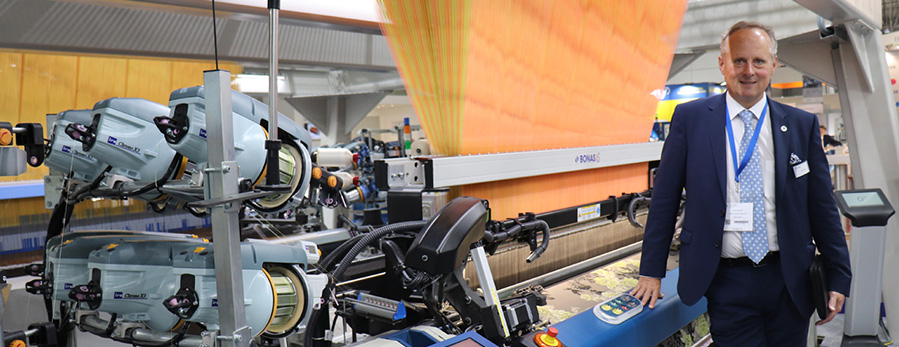
Following significant investment in the R&D capabilities at its base in Ulricehamn, Sweden, IRO AB introduced a range of new Industry 4.0-ready weft yarn feeding and tension control innovations for weaving looms at the recent ITMA 2019 in Barcelona, Spain.

IRO AB, a Vandewiele company, has been the market leader in this field for many decades, supplying systems to the majority of the leading weaving machine manufacturers, as well as advanced new products for retrofitting to working mills around the world.

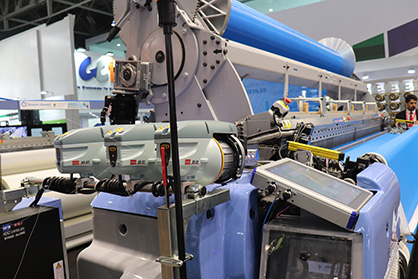
The new Blue11 EasySet airjet feeder for the latest Picanol OMNIPlus Summum airjet weaving machines, for example, allows the pick length of weft yarns to be set in millimetres from the loom panel at the start-up of a new style and to be fully adjusted while the machine is running. Automatic calculations and perfect synchronization between the spool body and the oscillating fingers of the Blue 11 result in reduced and simplified settings on the weaving machine.
(c) 2019 IRO AB
(c) 2019 IRO AB


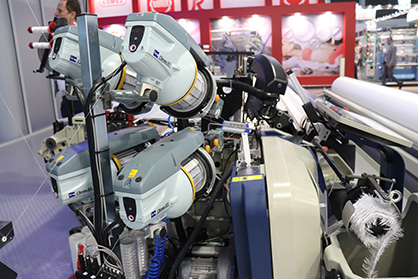
The new PosiFlex weft tensioner system, meanwhile, is now an integral part of the Chrono X3 weft feeder and is currently available for use on Picanol OptiMax-i rapier machines. Allowing perfectly reproducible and transferable settings for complete weft insertion cycles, it is equipped with an integrated electromagnet controlling a specially-developed and self-cleaning flex brake which ensures the correct tension at all times.

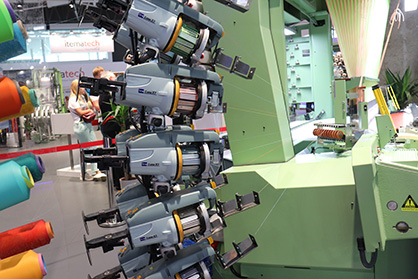
In the field of advanced tension control, the constantly-regulating new ATC-W unit has been designed for use with Luna X3, Chrono X3 and XD X3 weft feeders. It automatically maintains consistent yarn tension at a pre-determined level, unaffected by variable external factors such as bobbin size or yarn quality.
(c) 2019 IRO AB
(c) 2019 IRO AB


(c) 2019 IRO AB
(c) 2019 IRO AB


 For X3 weft feeding systems, the TED is a new tension display unit that allows weft tension settings to be easily transferred from one machine to another, while the Wi-Feeder is a wireless access point for mobile phones, tablets and PCs allowing remote access to X3 feeders. The Wi-Feeder is a useful tool for troubleshooting and maintenance, providing easy access to key data during the weaving process.

The Super Elf S3 weft feeder for air and water-jet looms benefits from the latest optical sensor technology based on the principle of “signal reflection”, for reliable reading of very fine yarns down to 7 denier. It ensures accurate measurement of the weft insertion length, with a double check sensor for both Z and S winding directions. Real time control of the yarn take-off point by a reserve sensor ensures the yarn flight time is as fast and consistent as possible.

“The response to these new innovations at ITMA 2019 was much better than we expected, particularly since overall business in the weaving sector is currently going through a downturn,” said IRO AB Sales and Marketing Manager Pär Hedman. “We are now anticipating a pick-up in business as a result of the interest in our new products that was shown in Barcelona.”

IRO AB is a member of TMAS – the textile machinery association of Sweden.

More News from Textile Machinery Association of Sweden

More News on Weaving

#Weaving

Lindauer Dornier announces leadership transition in weaving machine business

After more than ten successful years at Lindauer DORNIER GmbH, Mr Wolfgang Schöffl will leave the family-owned company at the end of the year to enter well-deserved retirement.

#Research & Development

More safety and comfort for protective clothing thanks to auxetic fabrics

When everyday materials are pulled, they stretch or elongate in the direction of the pull and become narrower in cross-section. We can also observe this property in two-dimensional textiles. Auxetic structures behave differently here. They have the striking property of not changing under tensile stress or even increasing their width or thickness. These properties are advantageous, for example, in protective textiles or textile filter media. The DITF are researching auxetic fabrics for various applications.

#Weaving

Itema announces strategic partnership with Ivy Decarb to accelerate decarbonization in weaving process

Itema is pleased to announce the strategic partnership with Ivy Decarb, the digital platform helping textile companies measure and reduce their carbon footprint.

#Exhibitions & Events

Groz-Beckert showcases textile innovation at ShanghaiTex 2025

From December 16 to 19, 2025, the global textile industry will gather at ShanghaiTex at the Shanghai New International Expo Center (SNIEC), where Groz-Beckert will present its latest highlights and innovations across its five product areas – Knitting, Weaving, Nonwovens, Sewing, and Spinning – at Hall N3, Booth A05.

Latest News

#Knitting & Hosiery

KARL MAYER and Lenzing partner to advance warp knitting with scalable cellulose fiber solutions

The Lenzing Group, a leading supplier of regenerated cellulosic fibers for the textile and nonwovens industries, together with KARL MAYER, the global market leader in warp knitting machines and warp preparation systems, debut a joint innovation project during Premiere Vision, Paris.

#Europe

ICAC to support European Commission on pending PEF legislation

The International Cotton Advisory Committee (ICAC) is proud to announce that it has been included as a member of the European Commission’s Technical Advisory Board (TAB) on the Product Environmental Footprint methodology. The Commission developed the Product Environmental Footprint (PEF) to assess and communicate the life cycle environmental performance of products and organizations.

#Raw Materials

Cotton production continues to exceed consumption, some growers shift away from cotton

World cotton lint production in the 2025/26 season is currently estimated at 26 million tonnes, continuing to exceed world consumption, which is estimated at 25.2 million tonnes, according to the February 2026 edition of Cotton This Month. Global production is estimated to be 1% higher than the previous season, while consumption is estimated to be 0.4% higher, resulting in a continued supply surplus in the world cotton market.

#Home Textiles

‘Crucial for sourcing’ why buyers plan to return for Intertextile Shanghai Home Textiles – Spring Edition 2026

From 11 – 13 March 2026, Intertextile Shanghai Home Textiles – Spring Edition will return to National Exhibition and Convention Center, with a strong lineup of exhibitors set to present new products and collections. As one of the region’s key platforms for home textile trade, the fair attracts numerous buyers each spring who rely on the show to refresh assortments across contract spaces and every corner of the home, from bedroom and bathroom to living, dining, and outdoor.

TOP