[pageLogInLogOut]

#Textiles & Apparel / Garment

Texon’s Dongguan site secures SATRA & GRS status

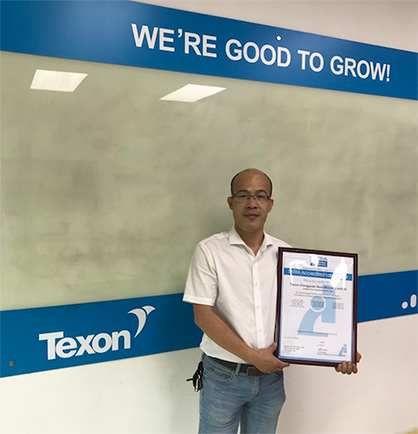
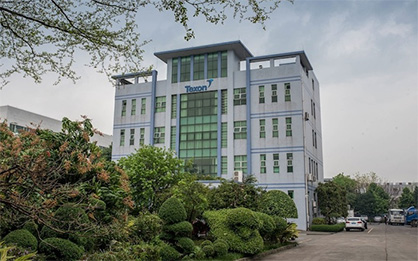
Texon – a world leader in sustainable, structural material solutions for the footwear industry – has been awarded two significant industry accreditations for its Non Woven Facility in Dongguan, China. The site, which produces millions of square metres of box toe, heel counter, insole and lining technologies each year, now has SATRA Laboratory Accreditation Status and is certified to the Global Recycled Standard (GRS).

The accreditations follow in-depth assessments by independent auditors and reflect Texon’s long-standing commitment to sustainability, and to prioritising the health and safety of its sites, employees and the environment. 
© 2020 Texon
© 2020 Texon


SATRA’s Accredited Laboratory programme is a stamp of quality that is recognised throughout the global footwear and leather goods industries. The scheme provides reassurances to parties doing business together that the most rigorous material testing standards have been adhered to at all times. To become a SATRA Accredited Laboratory, Texon’s Dongguan site had to undergo a demanding assessment process. SATRA auditors visited the facility several times to confirm that the overall working environment, Texon’s testing equipment, its quality management system, and its technicians met its exacting standards. Texon also had to commit to regular SATRA audits. With SATRA Laboratory status in place, the site can now issue test reports for customers that include the SATRA logo - a sign of the validity of the physical tests conducted on its materials.

GRS is an international, voluntary, full product standard that aims to increase the use of recycled materials in products and reduce / eliminate the harm caused by production processes and social policies. On a mission to accelerate sustainable practices across the textile industry, the standard sets out requirements for the third-party certification of recycled content. It also specifies conditions relating to social and environmental practices and chemical restrictions. 
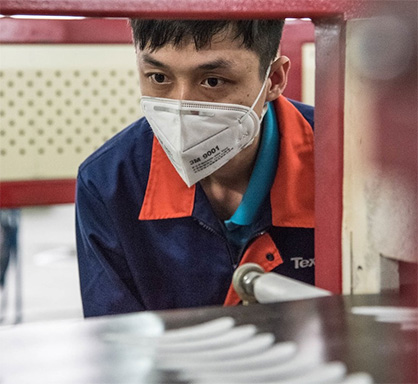
© 2020 Texon
© 2020 Texon


© 2020 Texon
© 2020 Texon


During the GRS evaluation process, Texon had to demonstrate that all of its products and processes at Dongguan lived up to GRS requirements across all aspects of its supply chain. It also had to provide evidence of its policies on employment; showcase its environmental management system; provide figures on its energy and water use; and disclose its record keeping around chemical storage and management.

Kevin Lowe, Head of Operations (Asia) at Texon, said: “Securing these accreditations shows our customers that our business operates to the highest possible standards and that absolutely everything we do is underpinned by a firm commitment to quality, safety and the environment. Added to the long list of ISO standards already in place at Dongguan, these standards help reinforce that we are a trusted partner to work with.”

Dongguan is Texon’s second SATRA accredited laboratory. The company’s facility in Mockmuhl, Germany is already accredited for its production of cellulose products. Texon employs 180 people at its Dongguan facility.



More News from TEXDATA International

#Techtextil 2026

Performance Apparels: Functional textiles drive innovation at Techtextil 2026

From high-performance fibres and advanced membranes to smart textiles and sustainable material concepts – functional apparel is becoming one of the most dynamic innovation fields in technical textiles. At Techtextil 2026, exhibitors demonstrate how new materials, finishing technologies and digital functions are shaping the next generation of protective, workwear and outdoor systems.

#Texprocess 2026

Texprocess 2026: Automation, digitalisation and AI reshape textile processing

Investment decisions in textile processing have become increasingly complex. Rising energy prices, labour shortages and geopolitical uncertainties are forcing companies to prioritise technologies that deliver measurable improvements in efficiency and process stability. This applies not only to apparel production, but also to the processing of technical textiles and high-performance materials. Modernisation projects are therefore being evaluated more selectively – but the pressure to upgrade production systems continues to grow. Texprocess 2026 reflects this tension between cautious investment behaviour and increasing technological demand.

#Techtextil 2026

Textile Chemicals & Dyes: Innovation in Textile Chemistry moves into focus at Techtextil 2026

From PFAS-free finishes and water-saving dyeing technologies to advanced coatings and recycling-compatible formulations, innovation in textile chemistry is accelerating across the industry. Reflecting this development, Techtextil 2026 introduces Textile Chemicals & Dyes as a dedicated product segment, highlighting the growing role of chemical solutions in shaping the next generation of technical textiles.

#Recycling / Circular Economy

textile.4U publishes special edition “Top 100 Textile Recycling Companies 2025”

With a comprehensive 176-page special edition, textile.4U is dedicating its latest issue entirely to one of the most dynamic and influential topics in today’s textile industry: textile recycling. The new issue, published exclusively in high-quality print, presents the Top 100 textile recycling companies researched and selected by TexData – organizations that already play a key role in the transition to circular textiles or are expected to have a significant impact in the near future.

More News on Textiles & Apparel / Garment

#Textiles & Apparel / Garment

YKK launches “YZiP® Light” aluminum alloy zipper for cotton pants

YKK Corporation (Headquarters: Chiyoda-ku, Tokyo; President: Koichi Matsushima; hereafter, YKK) has launched YZiP® Light, a lightweight aluminum alloy zipper for cotton pants, with sales beginning in late March. The introduction of YZiP® Light expands YKK’s zipper portfolio—led by the flagship YZiP® copper alloy zipper—providing customers with greater flexibility to meet diverse garment needs.

#Textiles & Apparel / Garment

Coats to showcase innovative reinforcement and filler materials for leather goods and accessories at APLF 2026

Coats, a world-class Tier 2 manufacturer and trusted partner for the apparel and footwear industries, will be promoting four advanced materials from its ‘Lifestyle Solutions’ portfolio at APLF 2026 in Hong Kong in March. Each innovation has been specifically engineered to help luxury and premium brands elevate the craft, durability, sustainability and creative expression required in the manufacturing of handbags, purses, and other high-end designer accessories.

#Textiles & Apparel / Garment

Design, innovation and sustainability propel VIATT 2026’s expanding role in ASEAN textile sourcing

At its third edition, the Vietnam International Trade Fair for Apparel, Textiles, and Textile Technologies (VIATT) further reinforced its role as a key sourcing and business platform for ASEAN’s textile industry. The three-day fair welcomed over 17,000 visits from 54 countries and regions, and featured over 460 exhibitors from 21 countries and regions across 18,000 sqm. The 2026 edition was marked by the introduction of new international pavilions and zones, broadening the fair’s sourcing scope across new geographies and product categories. The fringe programme, headlined by the debut Trend Forum, further distinguished VIATT as the region’s most integrated textile trade platform – uniquely spanning the entire value chain.

#Textiles & Apparel / Garment

Revived Replacement Elements for VISLON® wins the iF Design Award 2026

YKK Corporation (Headquarters: Chiyoda-ku, Tokyo; President: Koichi Matsushima; hereinafter “YKK”) is proud to announce that its Revived Replacement Elements for VISLON® has been awarded the prestigious iF DESIGN AWARD 2026, an award that recognizes excellence in design and quality, organized by iF Design Foundation.

Latest News

#Textile chemistry

A flagship for chemical production: BASF inaugurates world-scale Verbund site in China

BASF today (March 26, 2026) celebrated the official inauguration of its newly built, world-scale Verbund site in Zhanjiang, Guangdong Province in southern China. Covering an area of around four square kilometers, it is more than a major BASF project in the chemical growth market of China. “Zhanjiang shows what the future of chemistry looks like: efficient, digital and sustainable by design. The site showcases a smart integrated Verbund structure on an industrial scale,” said Dr. Markus Kamieth, CEO of BASF, at the ceremony attended by representatives from government, customers, business partners and employees.

#Nonwovens

VEOCEL™ Lyocell production expands to Asia – Launching a new chapter for nonwovens in the region

VEOCEL™, Lenzing's flagship specialty nonwovens brand, expands production at its Thai plant in Prachinburi. This is the first-ever production of its nonwoven-grade lyocell fibers in Asia. Built in 2022 with a 100,000-ton annual production capacity, the facility - previously focused on fibers for textile applications - now can directly meet the demand for VEOCEL™’s biodegradable¹, wood-based lyocell fibers for nonwovens products. These fibers are an essential ingredient for high-quality nonwovens products, ranging from baby wipes to facial sheet masks and everyday personal hygiene items.

#Research & Development

Hof University develops sustainable textile coating for the fashion of tomorrow from mushrooms

Clothing is often treated as disposable: T-shirts for events, general merchandise, or short-term campaigns frequently end up in the trash after only a few uses. This is particularly problematic given that their production still largely relies on fossil-based materials. This is precisely where a new research project at Hof University of Applied Sciences comes in.

#Raw Materials

Fashion for Good mobilises industry to adopt mass balance attribution and accelerate decarbonisation

Fashion for Good launches today the Mass Balance Demonstrator project, a collaborative industry initiative to implement and scale the mass balance attribution (MBA) chain-of-custody model for biomass-attributed PET in textile applications. The project represents a concrete step toward accelerating brand-driven decarbonisation across the apparel value chain.

TOP