[pageLogInLogOut]

#Textiles & Apparel / Garment

Maroc in mode - Maroc sourcing
(c) 2019 Maroc in Mode
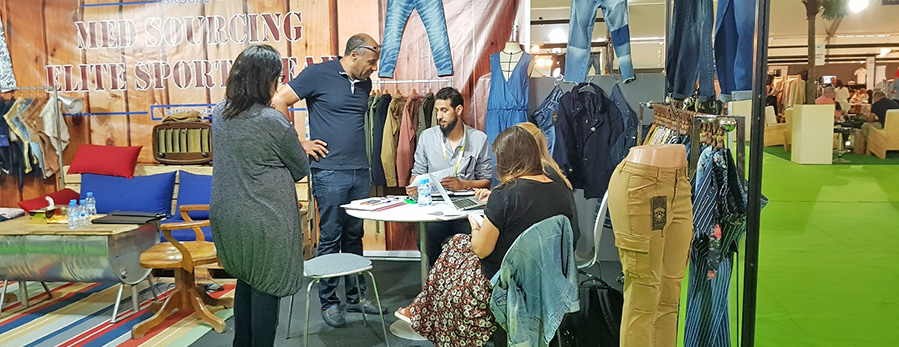
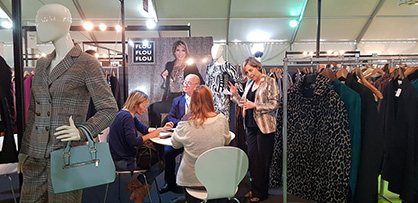
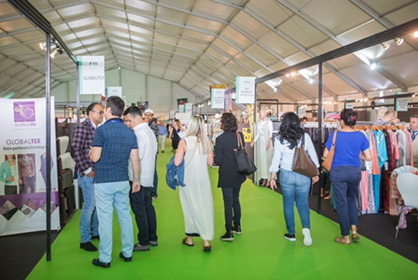
From October 17 to 18, 2019 around 200 top suppliers, all-round suppliers and CMT producers from the Mediterranean area present themselves at Maroc in Mode – Maroc Sourcing to buyers and retailers from Europe and overseas on an exhibition area of around 5.000 sqm on the site of the motor racing circuit Moulay Hassan. The fair offers an comprehensive overview of the Moroccan textile and garment industry from fast fashion to high-quality production of trend peaks up to offers of sustainably produced collections.

Smart sourcing in Morocco – competitive advantages through nearshoring

  • Nearshoring, the future trend of sourcing
  • Morocco rising: economic growth and expansion of the textile industry
  • Optimization of the supply chain through production in Morocco
  • Marrakech, the first African culture capital

The fair will be segmented in the fields

  • FAST FASHION
  • DENIM
  • JERSEY, KNIT, LINGERIE
  • >
  • SPORTSWEAR, LEISURE WEAR, TECHNICAL GARMENTS
  • LEATHER, SHOES

The fair program will be supplemented by special B2B meetings and conferences, which deal with current production topics. Around 1,500 visitors from all around the world are expected.
(c) 2019 Maroc in Mode


Sourcing trend: nearshoring

The rising production costs in Asian countries make near shoringcountries like Morocco attractive and put them in the focus. The price difference between the production countries decreases continuously.

Especially short-lived trends, which develop from street styles and instagram posts, require a quick response market with short lead times.

For fashion focused companies a quick adaption and offering of trends is essential to stay competitive. These trends spread independent from seasons, the importance of in-season-flexibility increases constantly.

A current McKinsey study sees nearshoring, amongst others for online retailers, as decisive relevant. An agile supply chain being very important to master the stability of the business model. For short product development processes and low quantities nearshoring is the key. Moroccan producers are progressively adjusting to this demand and offer more and more options of low quantity production.

The survey of 100 executives in the course of the study shows that 79 percent of the study's participants see a shift from offshoring to nearshoring in the future of sourcing.
(c) 2019 Maroc in Mode


Production country Morocco

Continuous economic growth and expansion of the textile industry in Morocco

Morocco is in a phase of continuous growth due to foreign investments and an expansion of its infrastructure. For this year an economic growth of 3% is expected, the GDP is supposed to rise from 118,5 billion US$ in 2018 to 125,5 billion US$ in 2019, based on estimations of Economist Intelligence.
(c) 2019 Maroc in Mode


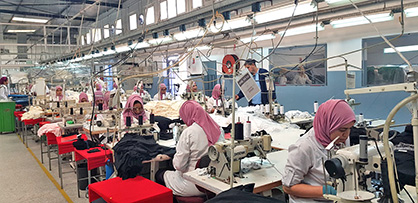
In 2018 the garment industry generated 15% of the industrial GPD of the country and 25% of the Moroccan export goods, around 3,6 billion Euro. The over 1,600 companies of the industry employ over 190,000 workers and have a production capacity of over one billion items. For 2020 Morocco set ambitious goals for the expansion of the textile industry. With investments of around 450 million Euro the Moroccan textile federation wants to create 62.500 new jobs and increase the sales by 1,5 billion Euro. The fields knit, technical textiles and denim are in special focus.

The ecosystems, clusters, which forward the modern production, the design and the accordance with international standards, play an important role for the expansion of the textile industry. In this context the denim cluster is taking a leading position and is highly supported in the course of the industrial promotion and sustainable production.

Morocco convinces with substantial benefits

  • Fast fashion experts
  • Short delivery routes
  • Quick delivery with short-term delivery dates
  • Optimal price/performance ratio
  • Duty-free production by EU convention

Morocco is a reliable production location through its geopolitical situation as well as its political and social stability. Besides the worldwide leading position as fast fashion champion Morocco offers fast delivery by land with short-term delivery dates thanks to its proximity to Europe. The shortening of the delivery routes is also a way to reduce the ecological footprint of the companies, an important aspect in the course of sustainable production, a decisive factor for future competitiveness. In addition many producers in Morocco are BSCI and GOTS certified.

Morocco scores as well with an excellent price / performance ratio, through EU agreements production in Morocco is duty free.

Trade fair location Marrakech: first African culture capital and source of inspiration for the fashion world

Marrakech will become the first capital of culture in Africa in the coming year. Not least because of the opening of the museum MACAAL, which shows contemporary African art, and the art fair 1:54, which took place first time in Marrakech last year, the Moroccan metropolis could establish itself as a center of art and culture. The 2017 opened Yves Saint Laurent museum with the adjoining Jardin Majorelle thrills the art and fashion scene alike. For a long time Marrakech has served the Haute

Couture as a source of inspiration. Fashion house Dior just presented their African inspired cruise-collection in Marrakech this spring.

MAROC IN MODE – MAROC SOURCING is organized by Amith, the Moroccan Textile Association in cooperation with the Moroccan Foreign Trade Ministry and AMDIE.

MAROC IN MODE – MAROC SOURCING Marrakech, October 17-18, 2019
More News from TEXDATA International

#ITM 2026

ITM 2026: The new geography of textile production

New production hubs are emerging across North Africa and Central Asia, while Türkiye is accelerating its transformation toward higher-value, technology-driven and more sustainable textile manufacturing.

#Research & Development

“Production is a product”

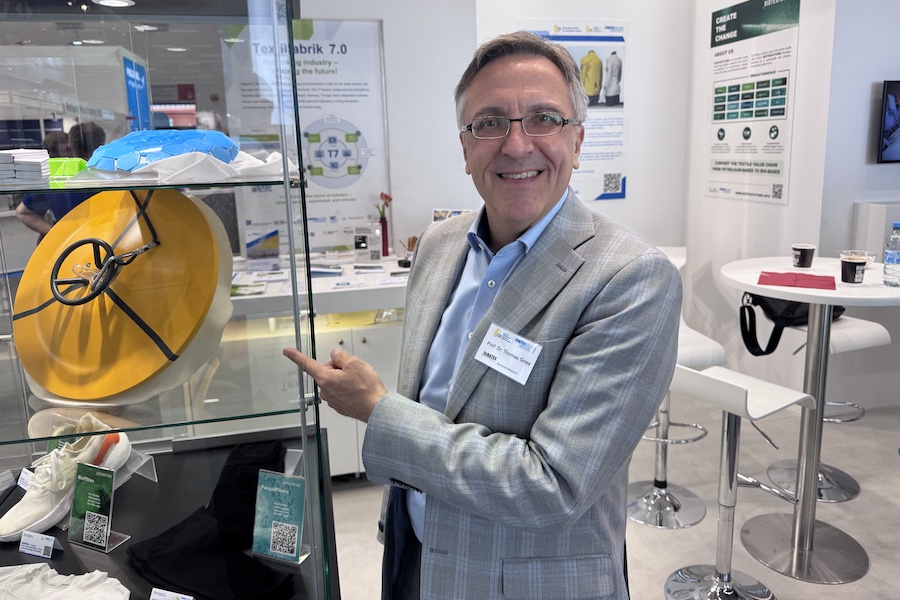
From technical textiles and AI-driven robotics to the limitations of textile circularity: Professor Dr Thomas Gries looks back on more than two decades of development at ITA Aachen. In the interview, he explains why production technology remains a decisive success factor, discusses international collaborations and innovation ecosystems, and shares his views on the transformation of production landscapes and the challenges facing an increasingly regulated industry.

#Knitting & Hosiery

“We need to move away from the price trap and return to a value-driven mindset.”

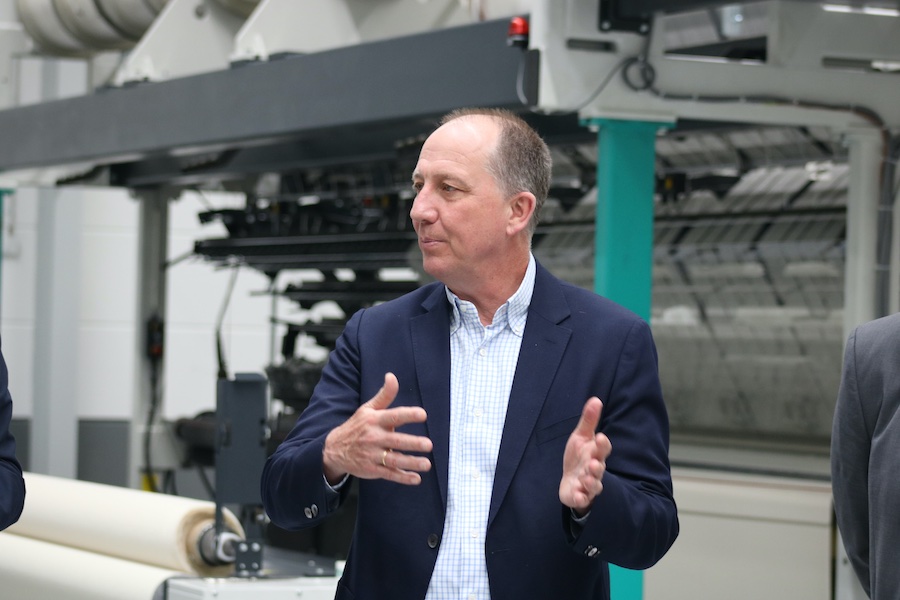
With its new Textile Innovation Center, KARL MAYER is sending a strong signal for innovation, collaboration, and the future of textile applications. In this interview, Karl Josef Mayer discusses new opportunities in warp knitting, the processing of staple fibres, recycling, the changing role of machinery manufacturers, and why the textile industry must once again focus more strongly on the value of textiles. by Oliver Schmidt

#Associations

“Innovation, resilience and international experience remain the great strengths of the Swiss textile machinery industry”

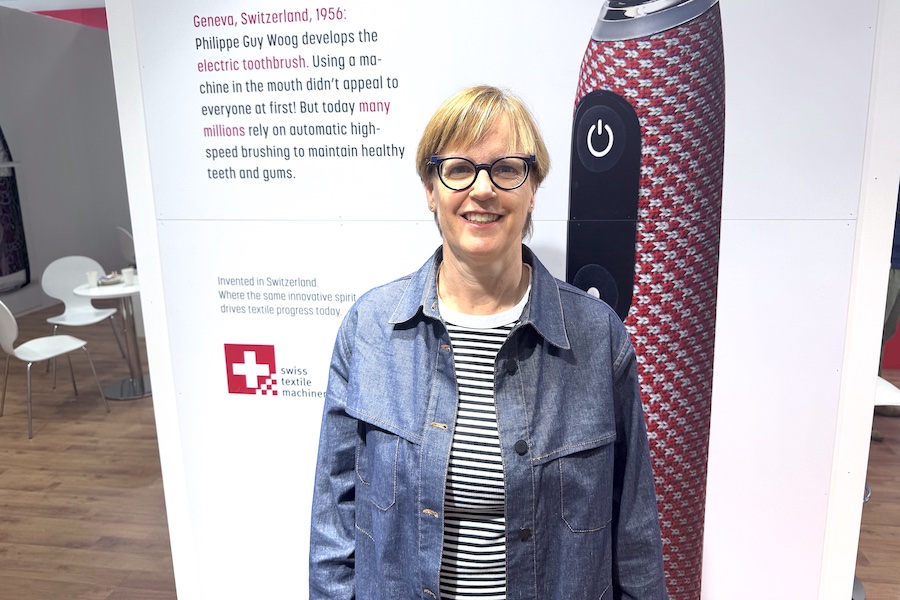
Geopolitical uncertainty, growing competitive pressure from China, new free trade agreements and the shift towards a circular economy are currently reshaping the global textile industry. In this interview, Cornelia Buchwalder discusses the current mood within the Swiss textile machinery sector, the industry’s distinctive innovative strength, new market opportunities in India and Asia, and the technological trends that could shape the upcoming trade fair cycle leading up to ITMA 2027.

More News on Textiles & Apparel / Garment

#Textile chemistry

Fashion for Good launches DW(O)R-X to navigate the emerging landscape of PFAS-free finishes

Fashion for Good announced the launch of Project DW(O)R-X, a collaborative initiative designed to benchmark PFAS alternative durable water- and oil-repellent (DW(O)R) chemistries. Responding to growing market demand for alternatives to PFAS‑based finishes, the project aims to generate reliable, comparable data that can support informed sourcing decisions and the assessment of emerging chemistries.

#Textiles & Apparel / Garment

C&S strengthens its governance to support its evolution

C&S announces the appointment of Marco Lucietti to its Board of Directors. With extensive international experience across the textile and denim industries, Lucietti will work alongside CEO Federico Corneli, contributing to the company’s managerial development, organizational structure and long-term strategic direction.

#Textiles & Apparel / Garment

Carrington Textiles publishes third Sustainability Report

Carrington Textiles has announced the publication of the third Sustainability Report from the RTS Textiles Group, highlighting another year of progress towards more responsible manufacturing across its global operations. The report outlines continued investment in technologies and initiatives designed to improve environmental performance and support long-term business resilience across the Group’s manufacturing facilities in the UK, Portugal and Pakistan.

#Textile processing

YKK develops concept EXCELLA® zipper tape using nonwoven fabric partially derived from used clothing

YKK Corporation has developed a concept version of its premium EXCELLA® zipper series made from nonwoven fabric sheets created by fiberizing used clothing and other textile materials. Based on a proposal by fashion designer Yuima Nakazato, this item was created as a result of collaboration between Nakazato, Seiko Epson Corporation and YKK. The concept zipper was incorporated as a material component for pieces in the newest YUIMA NAKAZATO Couture Collection, “INFERNO,” which was unveiled in Paris, France on July 8, 2026.

Latest News

#Functional Fabrics

PERFORMANCE DAYS announces new focus topic & forums for October 2026

With its upcoming October 13–14, 2026 edition, PERFORMANCE DAYS is placing the spotlight on one of the textile industry’s most important transformations: “Bio-Based Materials – From Fiber to Fabric”, a two-part Focus Topic exploring the future of bio-based innovation across the textile value chain. Part 1, presented in October 2026, will focus on fibers and next-generation material developments, while Part 2 at the March 2027 edition will shift the perspective toward dyeing, finishing, additives, and processing technologies.

#Nonwoven machines

MENANG rapidly resumes production with new ANDRITZ airlay line after major fire

MENANG, a Malaysian manufacturer of nonwoven automotive components, has resumed production after a major fire severely damaged its airlay line in mid-March 2026. A new airlay line supplied by ANDRITZ enabled production to restart within only four months.

#Exhibitions & Events

Febratex 2026 to be the largest edition of the leading textile trade fair in the Americas with 10 exhibition halls

Febratex 2026 will be the largest edition in the history of the leading textile trade fair in the Americas. Dedicated to the textile and apparel manufacturing industries, the event will take place from August 18–21, 2026, in Blumenau, Santa Catarina, Brazil, with a strong focus on technology, sustainability, and business generation.

#Raw Materials

Cotton Brazil Dialogues field trip brings international stakeholders closer to Brazil’s cotton production chain

How do you build trust across the global textile value chain? By opening the farm gates. This is the principle behind the Cotton Brazil Dialogues. At the end of July, the programme welcomed its first group of international participants for a five-day immersion into Brazilian cotton production, combining field visits with technical workshops to showcase the quality, sustainability, innovation and traceability behind one of the world’s leading cotton origins.

TOP