[pageLogInLogOut]

#Textile chemistry

Covestro expands portfolio of circular TPU products
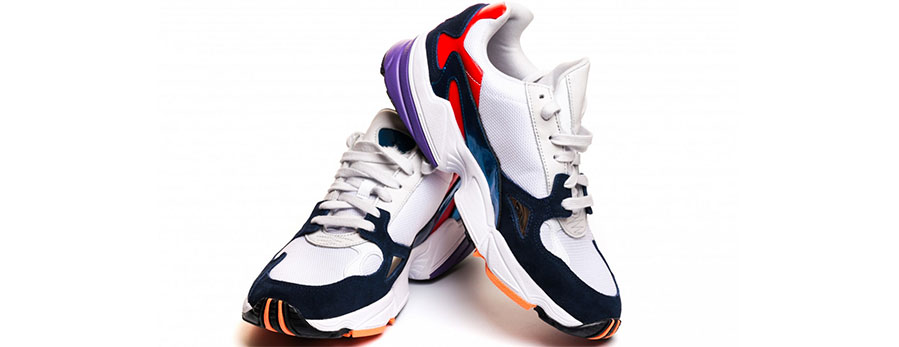
Covestro is currently expanding its portfolio of more sustainable and, above all, circular TPU products. Such sneakers could be manufactured with ISCC Plus-certified mass-balanced TPU grades from next year. © Covestro
As part of its program aimed at realizing the circular economy, Covestro is continuing to forge ahead with the expansion of its product portfolio based on alternative resources. As such, the company's product range in Europe is to be expanded to include mass-balanced thermoplastic polyurethanes (TPU) from as early as the beginning of 2022, and in Asia at a later date.

• Growing product portfolio based on alternative resources

• Production of mass-balanced thermoplastic polyurethanes with reduced carbon footprint planned

• Availability in Europe expected from early 2022, later also in Asia

The new products are produced using bioattributed raw materials and have a reduced carbon footprint in comparison to their fossil-based counterparts. At the same time, the mass-balanced products boast the same impressive quality and properties and can be integrated directly into manufacturing processes in downstream industries without technical modifications. In this context, the products are to be certified according to the ISCC Plus standard.

"I am thrilled that we will soon be able to help our customers in the electronics, footwear, automotive and other industries reduce their carbon footprint with this drop-in solution," said Dr. Andrea Maier-Richter, global head of the TPU business at Covestro. "With the ISCC Plus certification, we aim to achieve more transparency from raw material purchasing to our production and distribution to customer use. This is an important step in achieving our vision of becoming fully circular."

Extensive range of more sustainable TPU plastics

Covestro has already launched various TPU products based on alternative resources over the past few years, as more and more consumers prefer more sustainable products. Covestro is offering a webinar on this topic on October 28 as part of its CE Days event series. Outdoor outfitter VAUDE, for example, plans to use a foam midsole made partly from bio-based TPU in its new Lavik Eco hiking boot. Other product types contain a component that has been manufactured proportionately using CO2 instead of fossil raw materials. Covestro's range of Desmopan® brand TPU plastics also includes a range of fully recycled products. They are used, for example, in smartphone cases from the Dutch manufacturer Fairphone.

Thermoplastic polyurethanes are very versatile plastics. They come in a variety of hardnesses, are flexible yet impact resistant, and are therefore highly suitable for a wide range of applications.


Mass balancing creates transparency

Supplying mass-balanced products is part of Covestro's comprehensive global program designed to fully align itself with the circular economy. In doing so, the company is focusing on increasing the use of alternative resources such as bio-based materials, plastic waste and CO2, as well as renewable energies. The company is also collaborating with partners to develop innovative recycling technologies.

In mass balancing, fossil and alternative raw materials are mixed in production but treated separately in accounting. The chain-of-custody method enables materials to be tracked along the entire value chain and allows alternative resources, such as bioattributed components, to be allocated to selected end products. To date, a total of three Covestro production sites in Europe and Asia-Pacific have been certified in compliance with the ISCC Plus standard, with further sites to follow.

ISCC ("International Sustainability and Carbon Certification") is an internationally recognized system for the sustainability certification of biomass and bioenergy. The standard applies to all stages of the value chain and is recognized worldwide.


More News from Covestro AG

#Smart Textiles

Covestro, FILK Freiberg, and OUT e.V. develop flexible, conductive polymer smart textile system

As the smart textiles market continues to grow across healthcare, personal protection, sportswear, and automotive applications, developers are seeking new ways to integrate electronic functionality directly into textiles, without the rigidity and complexity of conventional wiring. To address this challenge, FILK Freiberg Institute, an independent research institution with expertise in polymer coatings for textile applications, collaborated with Optotransmitter-Umweltschutz-Technologie (OUT) e.V. The joint project, funded under the German Industrielle Gemeinschaftsforschung (IGF) program of the Bundesministerium für Wirtschaft und Energie (BMWE), focused on developing flexible, conductive polymer surfaces for next-generation smart textiles.

#Techtextil 2026

Covestro to exhibit solutions for a more sustainable and productive textile industry at Techtextil 2026

Covestro will present a broad portfolio of material innovations for textile coatings, adhesive films and thermoplastic polyurethanes (TPUs) at Techtextil 2026 (Hall 11.0, Booth C79). The exhibits will demonstrate how advanced solutions can enhance durability, recyclability and manufacturing efficiency across applications such as automotive, infrastructure, protective apparel and sportswear. A particular focus will be on more sustainable coating technologies, including antimicrobial systems based on INSQIN® in combination with AGXX from Heraeus Precious Metals, as well as the integration of Pontacol® thermoplastic adhesive films into Covestro’s offering.

#Technical Textiles

Covestro showcases monomaterial concept in autonomous SUE People Mover

UE | STUDIOS has unveiled the fully autonomous electric minibus “Self-driving Urban E-Shuttle” (SUE), placing strong emphasis on sustainable material design. Developed within a project funded by the Federal Ministry for Economic Affairs and Energy (BMWE) and the European Union, the vehicle will begin public road testing this year. At the core of the concept is the consistent use of recyclable monomaterials to improve circularity at end of life.

#Textile chemistry

Covestro and Heraeus Precious Metals collaborate to enable safer, more sustainable antimicrobial textile coatings

Laboratory tests reveal that AGXX antimicrobial surface technology from Heraeus Precious Metals is fully compatible with Impranil® PU dispersions which are part of the waterborne INSQIN® textile coating technology from Covestro, paving the way for more sustainable antimicrobial textile coatings. This discovery comes at a key moment for the textile coatings industry. As the sharing economy continues to grow, more people are coming into regular contact with high-use surfaces, creating ideal conditions for bacteria, viruses, and other microorganisms to thrive.

More News on Textile chemistry

#Textile chemistry

ZymoChem secures $4 million in renewed federal funding to advance U.S. biomanufacturing of critical materials and their supply chains

ZymoChem, the specialty chemicals company dedicated to bringing decarbonization, sustainability, and supply chain resiliency to the chemical industry through innovative biological manufacturing, today announced the resumption and expansion of its federal research portfolio. The company has been notified that previously paused work under a $5 million U.S. Department of Energy (DOE) program is officially back on, to be joined by continuing collaborations with three of the nation's premier national laboratories.

#Textile chemistry

bluesign updates chemical reference lists with stronger PFAS restrictions

bluesign has published the 2026 editions of its three core chemical reference lists, introducing updated substance limits and testing requirements in line with the latest scientific findings and regulatory developments.

#Textile chemistry

Fashion for Good launches DW(O)R-X to navigate the emerging landscape of PFAS-free finishes

Fashion for Good announced the launch of Project DW(O)R-X, a collaborative initiative designed to benchmark PFAS alternative durable water- and oil-repellent (DW(O)R) chemistries. Responding to growing market demand for alternatives to PFAS‑based finishes, the project aims to generate reliable, comparable data that can support informed sourcing decisions and the assessment of emerging chemistries.

#Sustainability

Indovinya advances sustainable solutions with agreement for the supply of renewable Oxygen from Air Liquide

Indovinya, the specialty chemicals and surfactants division of Indorama Ventures, has entered into an agreement with Air Liquide — a world leader in gases, technologies, and services for industry and healthcare — for the supply of renewable oxygen. The agreement represents a strategic advancement in Indovinya’s commitment to sustainability, as it increases the share of renewable raw materials in the production of ethylene oxide, one of its key products.

Latest News

#Weaving

Lindauer DORNIER GmbH welcomes new apprentices and dual-study students

For 22 new “DORNIER Talents”, these days mark the beginning of a new chapter at Lindauer DORNIER. For the family-owned company, in-house training is a key pillar in developing skilled professionals and retaining them within the company for the long term.

#Raw Materials

Cotton Brazil Dialogues 2026 concludes with 50 international participants immersed in Brazilian cotton production

The Cotton Brazil Dialogues concludes its 2026 edition after a series of technical visits to farms, cotton gins and reference centers, as well as workshops focused on Brazilian cotton production. A total of 50 participants from 14 countries took part in the field trips. The initiative is led by the Brazilian Association of Cotton Growers (Abrapa) and the National Association of Cotton Exporters (Anea), with support from the Brazilian Trade and Investment Promotion Agency (ApexBrasil).

#Research & Development

Novel flame-retardant and recyclable fiber-reinforced composite

Airplanes and passenger trains must meet strict safety requirements, including fire safety standards. This calls for materials that are flame-retardant, lightweight, robust, and scalable. Empa researchers, in collaboration with their industry partner Elantas, have now succeeded for the first time in making such a material – a composite – fully recyclable.

#Composites

WHILL selects Teijin’s tough, lightweight Carbon Fiber Composite for new last-mile mobility

Teijin Limited announced today that WHILL Inc., a global leader in inclusive mobility technology, has selected Sereebo® P CFP series, a carbon fiber-reinforced thermoplastic (CFRTP) material, for key structural components of the upcoming WHILL Model C Lite. Sereebo® P CFP series provides high strength, light weight, design flexibility and system cost advantages to the Model C Lite, which is a battery powered, single-seat, last-mile device. This new model combines maneuverability with light weight and one-handed folding to ensure ease of handling and operation.

TOP