[pageLogInLogOut]

#Textile chemistry

Huntsman Textile Effects and PPJ partner to tap growth potential in Vietnam

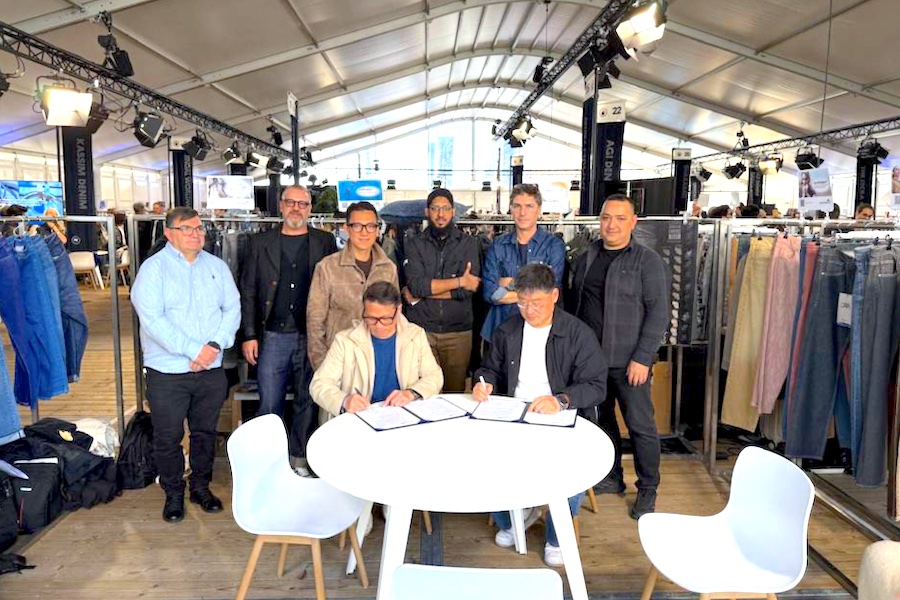
Huntsman Textile Effects and Phong Phu International (PPJ) today announced a strategic partnership agreement that aims to promote PPJ’s growth in Vietnam as a leading manufacturer of sustainable, high-performance textiles and garments for many of the world’s leading brands and retailers.

Vietnam-based PPJ will leverage best-in-class technical support from Huntsman Textile Effects to enhance its manufacturing processes across its  denim/twill and knit   mills, and develop new products that deliver optimal sustainability along with advanced performance, protection and comfort. The development of workwear and value-added textile for the American, European and Japan markets, such asinnovative textiles with functional finishes will be a key project for the two partners. They will use advanced Huntsman Textile Effects barrier solutions such as PHOBOL®, PHOBOTEX® and ZELAN™, along with other finishing effects.

Huntsman Textile Effects will additionally support PPJ to promote its Sinnika Fabric collection, leveraging Huntsman’s advanced dyeing technology and finishing effects to  deliver high-value market-focused solutions to brands and retailers.Dr. Dang Vu Hung, Chairman and CEO of PPJ, said, “PPJ was among the first in Vietnam to move away from traditional contract manufacturing and offer innovative designs, green solutions and a vertically integrated supply chain as a one-stop solutions provider. With Huntsman Textile Effects as our technology partner, we look forward to continuing to enhance our capabilities as the preferred supplier to global brands that believe in quality and sustainability.” 

(c) 2020 Huntsman / Phong Phu


The new agreement strengthens a longstanding relationship that has already seen PPJ develop innovative denim, knitwear and woven fabrics and garments using Huntsman Textile Effects technologies including AVITERA® SE dyes, NOVACRON® Atlantic dyes and High IQ® intelligent effects.


More News from Huntsman

More News on Textile chemistry

Latest News

#Spinning

Ibrahim Fibres and Trützschler: A strong partnership enters its next phase with the TC 30Si

For more than two decades, Ibrahim Fibres and Trützschler have grown side by side, driven by a shared ambition to continuously improve spinning performance, strengthen technology leadership and set new benchmarks in the textile industry. Today, Ibrahim Fibres is a leading yarn and polyester staple fiber manufacturer in Pakistan. The company operates the largest number of Trützschler cards in the country, with more than 200 machines running across its mills in Faisalabad, and plays an important role in one of Asia’s largest textile industries.

#Digital Printing

USColorworks expands digital platform with Kornit Atlas MATRIX and Atlas MAX PLUS solutions

Kornit Digital Ltd. (NASDAQ: KRNT), a global pioneer in sustainable, on-demand digital fashion and textile production, today announced that USColorworks, a North Carolina-based apparel decoration and fulfillment company specializing in custom and on-demand printing for retail and promotional markets, has expanded its Kornit digital production platform with the addition of Atlas MATRIX and Atlas MAX PLUS systems to deliver high-quality, on-demand apparel across cotton, blended fabrics and polyester.

#Functional Fabrics

CovationBio introduces two new bio-based innovations at Functional Fabric Fair New York

Covation Biomaterials LLC (“CovationBio®”) is showcasing its two new bio-based innovations, Xatryx® and Sorona® elasterell-p fiber, at this year’s Functional Fabric Fair in New York City, July 7–9, 2026. Attendees can visit CovationBio at Booth #404 to explore this next generation of bio-based performance materials.

#Research & Development

Geotextiles made from recycled materials: GREEN leads the way into the industry

For the industry, recycled materials are creating new opportunities in geotextile production. In the GREEN project, the Fraunhofer Cluster of Excellence Circular Plastics Economy CCPE demonstrates that recycled polypro-pylene (PP), polyethylene terephthalate (PET), and high-density polyeth-ylene (HDPE) can be processed into nonwovens, fibers, and membranes that meet industrial requirements. This creates opportunities for use in existing production lines and new value chains in the geotextile market.

TOP