[pageLogInLogOut]

#Textile chemistry

DOMO Chemicals to invest €12 million in new nylon plant in China

DOMO Chemicals, a leading producer of high-quality engineering materials for a diverse range of markets, has announced plans for a new state-of-the-art plant in Zhejiang, China. The new plant will be capable of producing 50,000 tons of sustainable and innovative engineered nylon compounds each year. The company signed a new factory project through “cloud contract” with PingHu DuShan port Economic Development District on February 20, 2020. Production is expected to commence in the fourth quarter of this year.

OMO Chemicals will invest €12 million in the new plant, which will have more than 11,500m2 floor space. The company plans to install multiple production lines at the first stage of development, which would offer an estimated capacity of 25,000 tons/year. There will be enough additional space available to cope with future demand requirements. The move is in line with the company’s global growth strategy with a strong focus on the Asia Pacific (APAC) region.

Speaking during a video ceremony of the signing, Vice President Global Engineering Plastics, Mr. Ludovic Tonnerre stated: “DOMO Chemicals has only been operating in China since 2015, but we are growing rapidly. Despite the current coronavirus challenges, we are confident that China will lead the world in embracing a future generation of sustainability and e-mobility solutions. We are very grateful to the government and relevant departments for their patience and assistance and are confident in our long term cooperation, relationships and mutual opportunities.”

The new plant will be located in the convenient transportation port area of DuShan Pinghu city, Zhejiang province, which is in close proximity to Shanghai and facing the East China Sea. The modern factory will integrate R&D, production, and sales. It will mainly develop and produce modified engineering plastics such as nylon 6, nylon 6.6* and high temperature nylon (HTN). These products meet the rising market demand for modified materials for the automotive, electronics and consumer industries.


DOMO will implement measures that exceed the requirements for environmental protection for the equipment, processes and technologies used at the new plant. The company will be investing in new air and water treatment technologies, and in the reduction of water and energy consumption. This is in line with the overarching DOMO Philosophy: “Caring is our formula.”

The contract, which was signed remotely during the ongoing coronavirus situation, demonstrates DOMO’s long term commitment to the Chinese economy and the resilience of local Chinese colleagues and partners. DOMO has strictly complied with the government's protection requirements at all times and diligently checked on the wellbeing of the work personnel.

Fabrizio Cochi, General Manager Asia/Pacific at DOMO Chemicals concludes: “When DOMO Engineering Plastics started in China, we operated a small plant with two machines, with the aim of supplying our global automotive customers. In 2019, despite the slowdown of the Chinese economy, we were already selling 6,000 tons of engineering nylon compounds to diverse local applications. I believe that we are about to enter a period of rapid development in China once today’s hurdles are overcome. We remain strongly committed to China and the APAC region.”

*DOMO does not sell or distribute any Technyl grades to customers and distributors outside the European Economic Area and Switzerland. TECHNYL® is a registered trademark of Domo.


More News from TEXDATA International

#India ITME 2026

India’s textile industry: Current position, growth targets and industrial development

With ambitious export targets, major investments in manufacturing infrastructure and new international trade agreements, India is pursuing a comprehensive development strategy for its textile and apparel industry. An overview of the industry’s current position, government initiatives, progress achieved and challenges ahead.

#India ITME 2026

India ITME 2026: Textile technology meets India's investment ambitions

With ambitious growth targets, government incentive programmes and industrial development initiatives already underway, India is preparing for the next stage of its textile transformation. Against this backdrop, the 12th India ITME, taking place in Greater Noida from 4 to 9 December 2026, arrives at a particularly important moment for machinery manufacturers and textile producers alike.

#Digital Printing

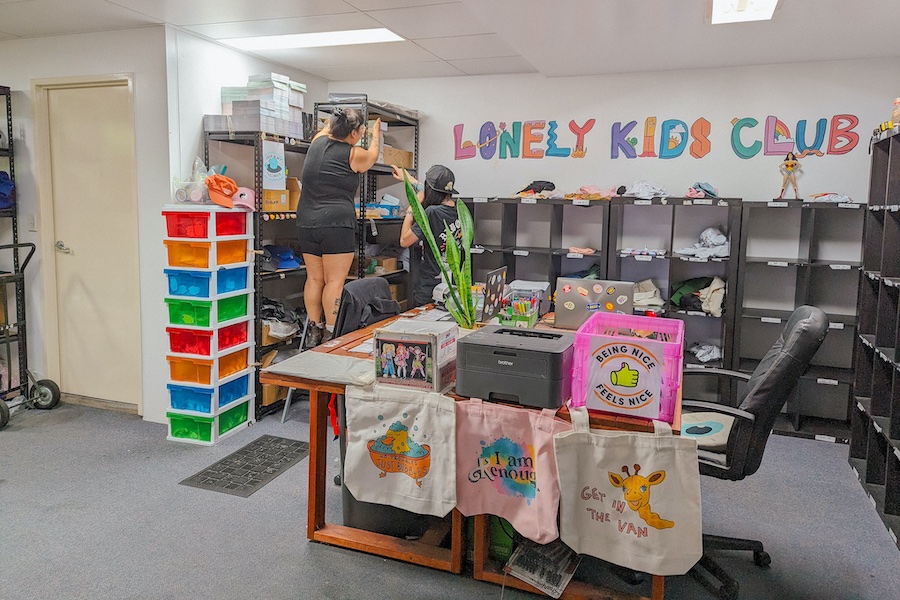
From a bedroom startup to 3,000 designs: How Lonely Kids Club built its business with DTG printing

Founded in Sydney in 2011, independent clothing label Lonely Kids Club has grown from a bedroom startup into a business offering around 3,000 graphic T-shirt designs. With its own production studio, direct-to-garment printing and a demand-driven manufacturing model, the company demonstrates how smaller apparel brands can combine creative independence with flexible production – while navigating the everyday challenges of quality control, workflow efficiency and sustainability.

#Weaving

“A complex design is only useful if the machine can reproduce it consistently”

Andreas Schnabel, Head of R&D for Technical Weaving Systems at Stäubli, discusses how 3D weaving can create textile reinforcements tailored to the loads within a composite component, where near-net-shape weaving can reduce processing steps and material waste, and what it takes to produce complex structures reliably and economically. He also explains how manufacturers can adapt Stäubli’s modular TF weaving platforms to new applications and how the company’s centre of excellence in Bayreuth supports the transition from research to industrial production.

More News on Textile chemistry

#Textile chemistry

Flame protection and OEKO-TEX® certification: Gulec Chemicals clears an important hurdle

Three halogen-free flame retardants from German specialist Gulec Chemicals have been included in the OEKO-TEX® list of accepted Active Chemical Products (ACP). The listing opens up additional opportunities for textile finishers, coaters and manufacturers of technical textiles seeking to combine demanding fire protection requirements with certification according to OEKO-TEX® STANDARD 100.

#Textile chemistry

PFAS restrictions drive innovation in waterproof breathable fabrics

Innovation in waterproof breathable fabrics and apparel is being driven by legislation restricting the use of per- and polyfluoroalkyl substances (PFASs) as manufacturers develop alternative membranes and finishes for use in outdoor apparel, according to “Waterproof breathable fabrics: changing legislation is driving innovation”, a 50-page report from the global business information company Textiles Intelligence.

#Techtextil & Texprocess 2028

Techtextil and Texprocess 2028 strengthen networking and business opportunities along the textile value chain

Techtextil and Texprocess are preparing for their next editions from 4 to 7 April 2028 in Frankfurt with an optimised hall layout designed to strengthen connections across the textile value chain. The new structure brings materials, production technologies and processing solutions closer together, while several leading international companies have already confirmed their participation. Exhibitors can benefit from early-booking rates until 30 November 2026.

#Textile chemistry

Archroma and Prosperity Textile to collaborate on denim innovation

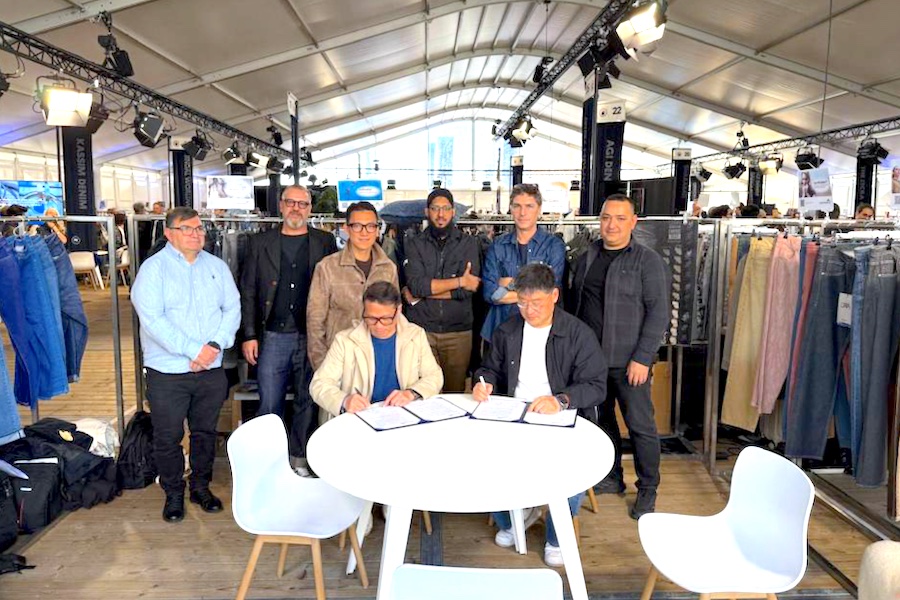
Archroma, a global leader in specialty chemicals, and Prosperity Textile, an international fabric manufacturer with production bases in China and Vietnam, have announced a partnership to drive denim innovation. They will collaborate to develop, evaluate and implement new approaches to improve denim aesthetics, durability and performance, with a shared commitment to sustainability.

Latest News

#Knitting & Hosiery

Monarch extends its Woven Look knitting technology from mattress ticking to apparel and performance textiles

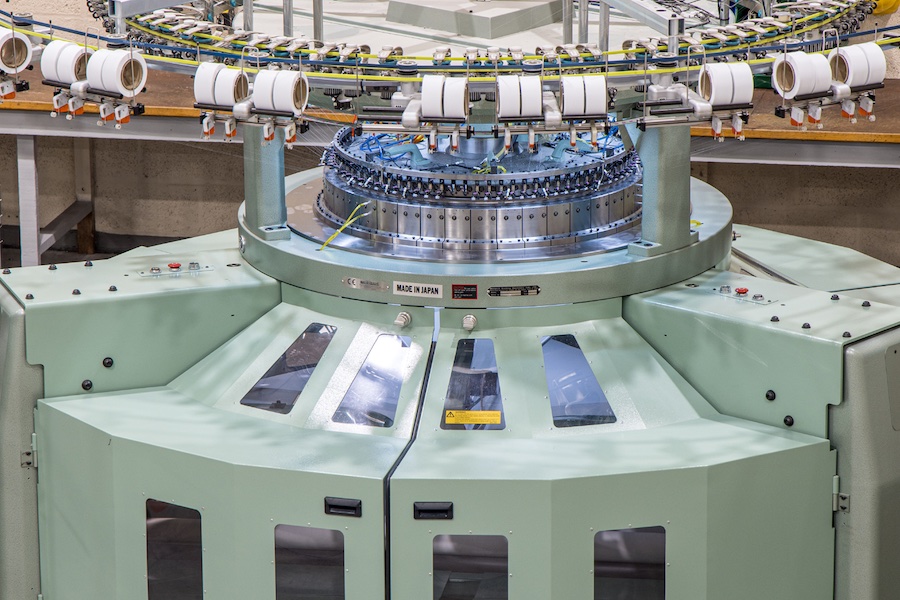
A fabric technology originally developed to reproduce the appearance of woven mattress ticking by Monarch Knitting Machinery, a member of the British Textile Machinery Association (BTMA), is finding new applications in apparel. With the introduction of its 36-gauge OD5B-M-7ED44 double-knit machine, Monarch is expanding the possibilities for producing fine knitted structures that closely resemble woven textiles while retaining the stretch and comfort associated with knitting.

#Recycling / Circular Economy

IVGT presents initial findings from the Erasmus+ project Skills4Circularity

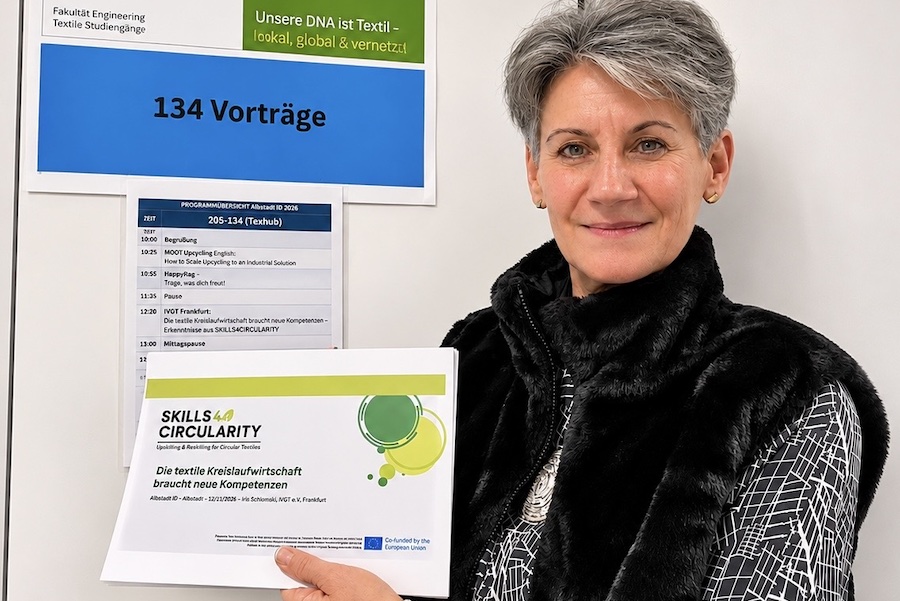
At Albstadt ID 2026, hosted by Albstadt-Sigmaringen University of Applied Sciences, IVGT project manager Iris Schlomski presented initial findings from Skills4Circularity on 12 November 2026. She opened her presentation with an estimate from the European Environment Agency: the EU generated around seven million tonnes of textile waste in 2022. The Erasmus+ project brings together 21 partners from twelve countries to identify the skills textile and clothing professionals need to design more durable products, use fewer resources in production and recover fibres after use.

#India ITME 2026

SHIMA SEIKI connects knitting innovation, digital product development and automated cutting at India ITME 2026

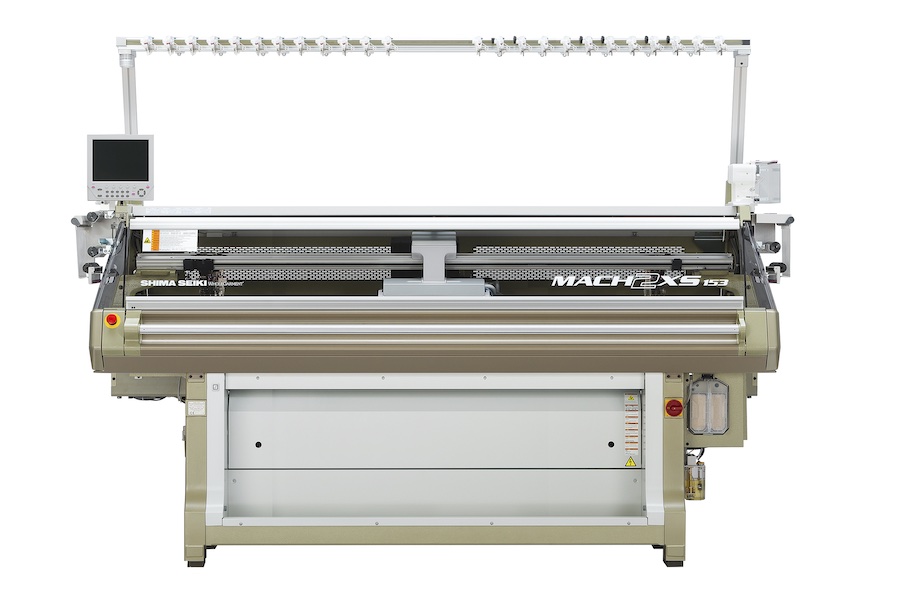
Japanese textile machinery and technology specialist SHIMA SEIKI MFG., LTD. will present a comprehensive portfolio of advanced knitting, digital design and automatic cutting solutions at India ITME 2026 in Greater Noida from 4 to 9 December. At Hall 14, Booth D1, the company will showcase its latest WHOLEGARMENT® and shaped knitting technologies, digital product development solutions and the Indian premiere of its new P-CAM® R multi-ply automatic cutting machine, designed for a wide variety of industries beyond fashion apparel.

#Raw Materials

Cotton Brazil calls for balanced textile sustainability regulations and stronger international cooperation

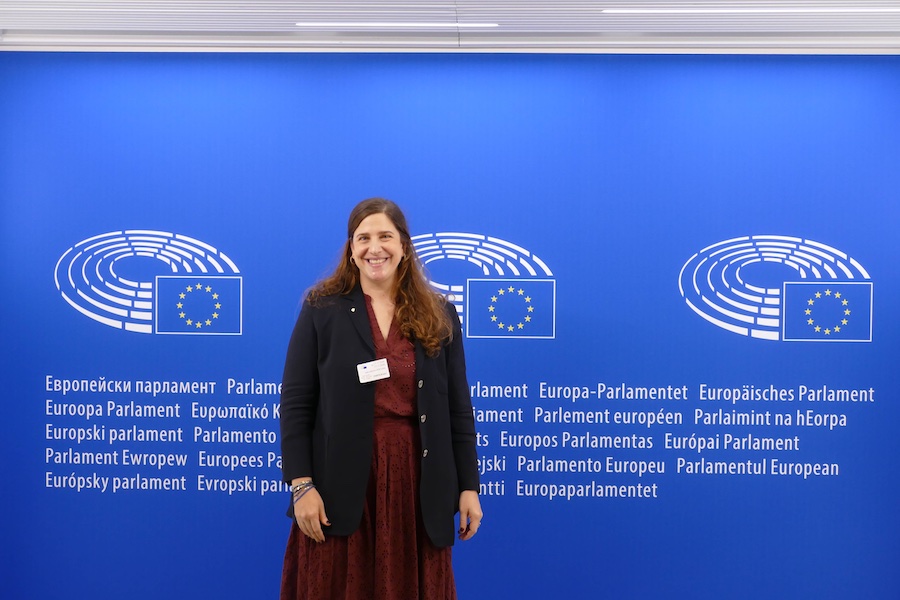
Cotton Brazil has concluded its strategic agenda in Brussels, Belgium, reinforcing the importance of recognising natural fibres in European sustainability policies and expanding exchanges with policymakers, agricultural attachés and representatives of cotton-producing countries. Discussions at the European Parliament highlighted the need for balanced textile sustainability regulations, while meetings with cotton-producing countries opened opportunities for international cooperation.

TOP