#Techtextil 2026
Performance Apparels: Functional textiles drive innovation at Techtextil 2026
by Oliver Schmidt
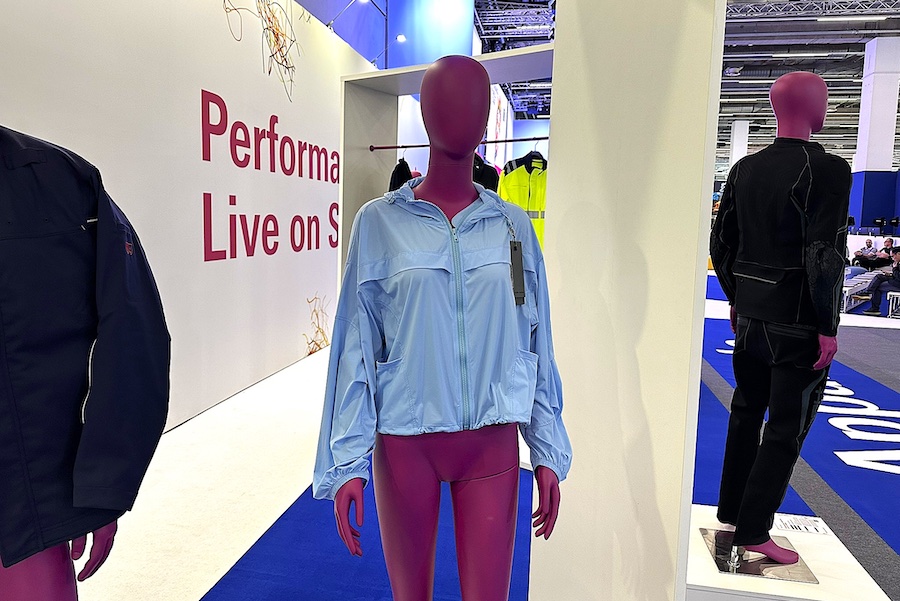
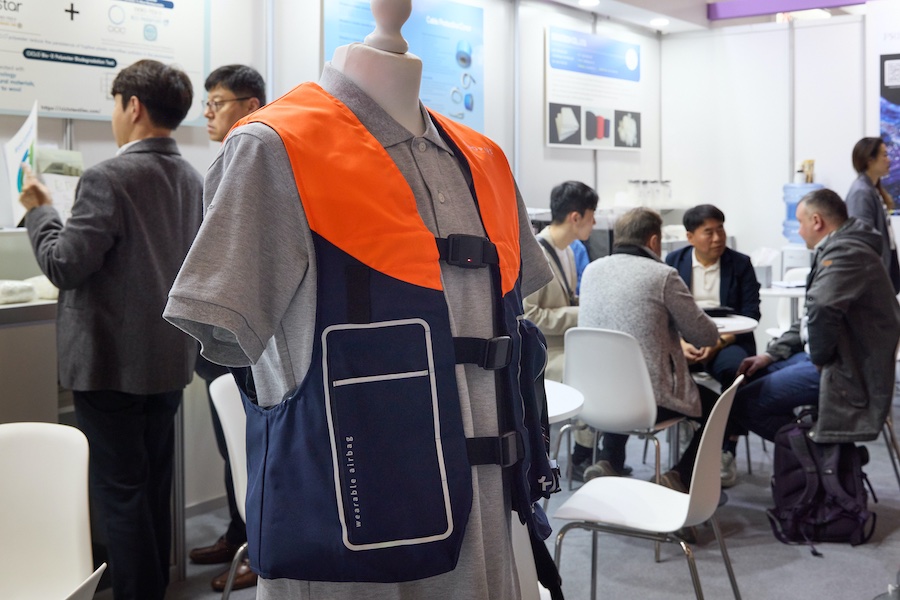
This development is particularly visible in the Performance Apparel Textiles segment (Hall 9.0), where around 130 exhibitors from 13 countries present innovative materials for applications ranging from workwear and protective clothing to smart fashion, outdoor and sportswear. Complementing the exhibition, the curated live show “Performance Apparels on Stage” translates material innovation into market-ready applications and stages smart wearables on. Selected by an independent expert jury, the showcased outfits demonstrate concrete use cases – from UV protection and heat and flame resistance to circular materials, thermoregulation and integrated lighting technologies.
From advanced fibre technologies and membrane systems to functional finishes and integrated electronics, Techtextil 2026 (21–24 April, Frankfurt am Main) illustrates how functional apparel has evolved into a dynamic innovation field within the broader technical textiles industry.
Increasing demands on functional textiles
The growing importance of functional apparel is closely linked to changing expectations across outdoor sports, industrial workwear and protective clothing. Garments must combine protection, weather protection, moisture management, durability and comfort within increasingly sophisticated, lightweight and flexible material systems. These requirements are particularly critical in professional environments where garments are worn for long periods and must withstand repeated washing, abrasion and exposure to chemicals. At the same time, sustainability has emerged as another powerful driver of innovation. Manufacturers are increasingly seeking solutions that combine high performance with reduced environmental impact through recycled fibres, bio-based materials and circular product concepts.
As a result, modern technical garments have become highly complex material systems in which fibre development, textile chemistry and advanced manufacturing technologies converge.
Advanced fibres and high-performance materials
At the core of modern functional apparel are advanced fibres that combine exceptional strength, durability and comfort with lightweight constructions. Continuous innovation in fibre development enables textile manufacturers to create materials capable of meeting demanding conditions in outdoor activities, industrial environments and protective applications.
Ultra-high-performance fibres play a particularly important role. Avient, for example, presents Dyneema®, widely regarded as one of the world’s strongest fibres. Its exceptional strength-to-weight ratio enables lightweight woven composites with high abrasion resistance used in protective equipment, outdoor gear and technical garments.
Japanese manufacturer Toray continues to develop synthetic fibres such as TORAY NYLON™ and TORAY TETORON™ polyester, combining tensile strength, abrasion resistance and durability for applications ranging from sportswear to demanding technical textiles. High-performance fibres are also translated into specialised fabrics. Polish textile producer Andropol presents firefighting fabrics combining Nomex® and Kevlar® fibres to deliver flame resistance, durability and antistatic protection under extreme conditions.
At the same time, sustainability considerations are shaping fibre innovation. Companies such as Teijin Frontier and Lenzing are advancing recycled polyester and bio-based cellulose fibres derived from renewable raw materials, combining technical performance with improved environmental compatibility. While fibre technologies define the mechanical performance of a textile, additional functionality often emerges only when these materials are combined with membranes, coatings and specialised finishing systems.
Membranes and climate management systems
Membrane systems and multilayer textile constructions play a crucial role in modern functional apparel by combining weather protection with breathability and efficient moisture transport.
Companies such as Sympatex Technologies develop pore-free polyester membranes designed to be waterproof, windproof and breathable while avoiding PFAS-based chemistries. French company ALPEX Protection integrates similar technologies into laminated fabrics used in personal protective equipment, rescue clothing and outdoor gear. These multilayer constructions combine protective outer layers with functional membranes and inner layers that promote moisture transport while maintaining flexibility and durability.
In addition to weather protection, thermal comfort is becoming an increasingly important aspect of garment performance. Companies such as Outlast Technologies develop temperature-regulating textile solutions that actively manage the microclimate within the garment. Materials incorporating Outlast® technology absorb excess body heat, store it and release it when needed, helping to reduce overheating and improve wearer comfort. Insulation technologies such as AERSULATE® further enhance thermal performance while maintaining a lightweight and flexible structure.
Such developments illustrate how membrane technologies and climate management systems are evolving beyond simple protection functions towards integrated solutions that combine weather resistance, breathability and active temperature regulation.
Functional finishes expanding textile performance
While fibres and membranes define the structural performance of modern textiles, many functional properties of technical garments are created through specialised finishing technologies.
Companies such as HeiQ are developing finishes designed to enhance thermal regulation and wearing comfort. Technologies like HeiQ Cool™ combine contact cooling with evaporative cooling to help regulate body temperature during physical activity or in demanding environments.
Chemical specialists such as CHT and RUDOLF Group are expanding their portfolios of functional textile finishes, including flame-retardant systems for protective clothing and durable water-repellent treatments for outdoor apparel and professional workwear. At the same time, regulatory pressure and sustainability targets are accelerating the development of fluorine-free alternatives to conventional PFAS-based treatments.
Smart textiles and integrated functions
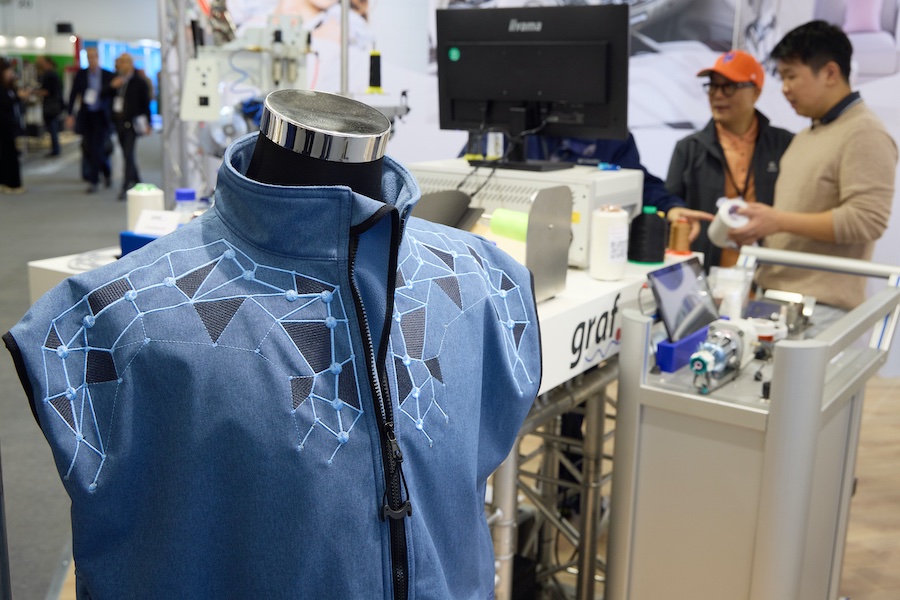
Another emerging field in functional apparel is the integration of electronic and sensor technologies directly into textile structures. Smart textiles enable garments to incorporate functions such as health monitoring, motion detection or environmental sensing.
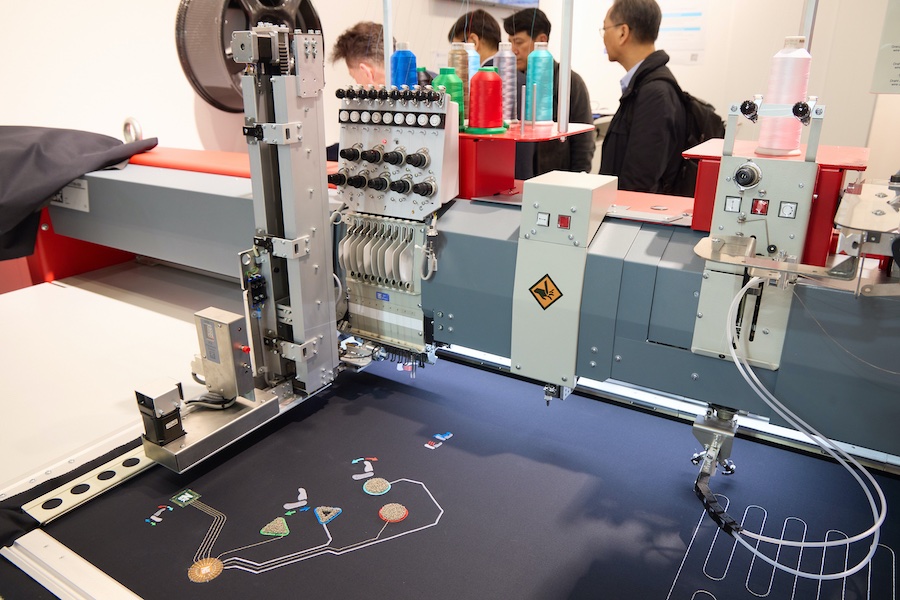
Companies such as Interlink Electronics are developing sensor technologies that can be integrated into wearable systems to measure parameters such as pressure, movement or physiological signals. At the same time, specialised material suppliers are enabling the textile integration of electronic functions. German company Elektrisola produces ultra-fine conductive wires that can be incorporated into fabrics, knits or nonwovens. These conductive elements allow textiles to capture signals and transmit data while remaining flexible, durable and compatible with industrial textile production.
Although many smart textile applications are still developing, they demonstrate how technical garments are gradually evolving into interactive systems that combine textile engineering with electronics and digital technologies.
From textile innovation to finished garments
The final performance of functional garments depends on how fibres, fabrics, membranes and finishing technologies are combined within the garment design. Textile manufacturers therefore play a crucial role in translating material innovations into practical solutions.
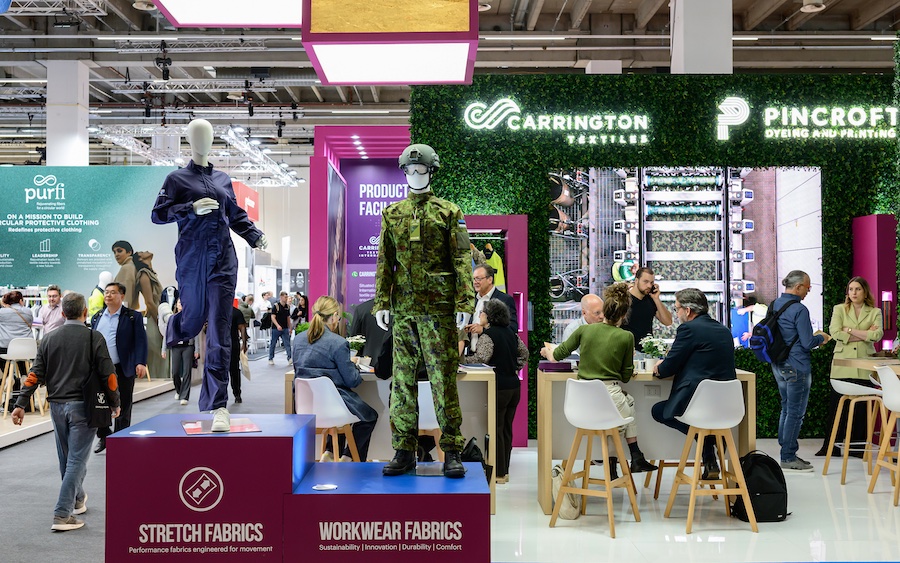
Companies such as Carrington Textiles develop specialised fabrics for industrial workwear designed to combine durability, comfort and long-term washability. Their fabrics are widely used in sectors such as healthcare, manufacturing and industrial services where garments must withstand intensive use and repeated laundering.
Austrian company Getzner Textil develops fabrics for protective clothing and tactical applications that combine abrasion resistance, flame retardancy and weather protection with ergonomic comfort for demanding working environments.
Sustainability shaping the next generation of functional apparel
Alongside increasing performance requirements, sustainability considerations are becoming a key driver of innovation in technical garments.
Companies such as Teijin Frontier are expanding the use of recycled polyester fibres and resource-efficient production technologies, while innovations such as dope-dyed fibres help reduce water consumption by eliminating conventional dyeing processes. At the same time, bio-based materials are gaining importance. Austrian fibre producer Lenzing develops cellulose-based fibres such as TENCEL™ Lyocell and LENZING™ FR, combining moisture management, wearing comfort and flame resistance with a renewable raw material base.
Membrane specialist Sympatex is also focusing on polyester-based technologies and mono-material laminate constructions designed to support fibre-to-fibre recycling concepts and improve the circularity of functional apparel systems.
A platform for innovation across the textile value chain
The development of modern functional apparel illustrates how closely interconnected the different stages of the textile value chain have become. Fibre producers, chemical suppliers, textile manufacturers and garment developers increasingly collaborate to create materials capable of meeting complex functional and sustainability requirements.
Trade fairs such as Techtextil provide an important platform for this exchange. By bringing together companies working on fibre technologies, functional finishes, membrane systems, smart textiles and advanced fabric constructions, the exhibition highlights how innovation emerges through cooperation across disciplines.
Functional apparel therefore illustrates particularly clearly how technological progress in fibres, chemistry, electronics and textile engineering converges to create new generations of garments designed for demanding applications in industry, sports and protective environments.