[pageLogInLogOut]

#Techtextil 2022

ITA at Techtextil 2022

CO2-sock © 2023 ITA
ITA Institut für Textiltechnik der RWTH Aachen University will once again be showcasing its entire research spectrum at the Elmatex joint stand in Hall 12.0 B55 at Techtextil 2022 in Frankfurt am Main, Germany.

1. 3D printing robot on textiles - experience it live in Hall 12.0 B55!

The 3D printing robot is a mobile and size-independent 3D printer for large-area components on textiles. For the first time, a 2.5D support structure can be printed on a textile with such a printer. Please find further information here:

https://techtextil.messefrankfurt.com/frankfurt/en/exhibitor-search.detail.html/institut-fuer-textiltechnik-der-rwth-aachen-university-ita.html
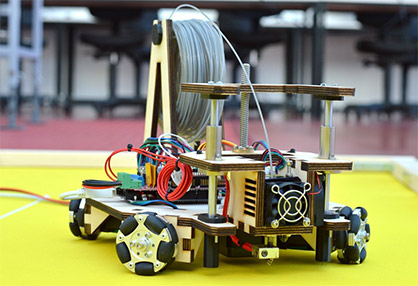
3D printing robot on textiles, source: ITA


2. Recycling rope

The recycled rope is a climbing rope that consists of 50 percent recycled rope production waste and is available on the market. Example of textile to textile recycling in PPE. ITA has developed 100 percent recycled, high-strength filament yarns for the rope.
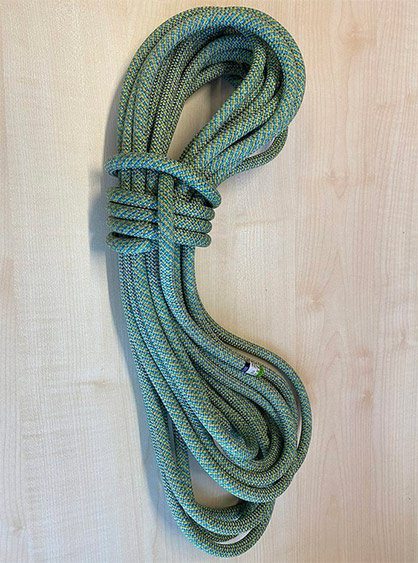
Recycled rope © 2022 ITA


3. CO2-sock

The CO2-sock is made of elastic TPU fibres, which are produced on the basis of CO2-. This results in a reduction of the carbon footprint. ITA has developed a melt spinning process for this special polymer, which is currently being scaled up to industrial scale. By reusing carbon dioxide from industrial waste as a raw material for textile and clothing products, the carbon footprint is improved.


4. Teddy bear with scarf made from recycled acrylic waste

The teddy bear wears a knitted scarf around its neck that is made of 50 percent recycled waste from blanket production using PAN fibres. In addition, intermediate products from all process steps of the solvent-based reprocessing of the waste are used in the production of this knitted fabric.
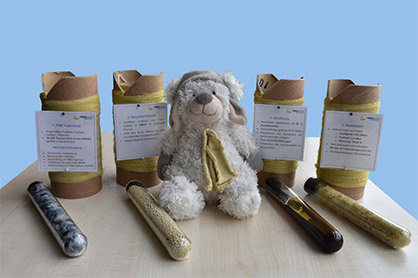
Teddy bear with scarf made from recycled acrylic waste © 2022 ITA


5. Bioresorbable stent

The most common materials for wire-based vascular stents Nitinol or Elgiloy can cause long-term problems such as thrombosis and other complications. In contrast, bioresorbable stents can perform their structural function for the required time (e.g. a few months) and then be resorbed without causing adverse reactions in the patient.
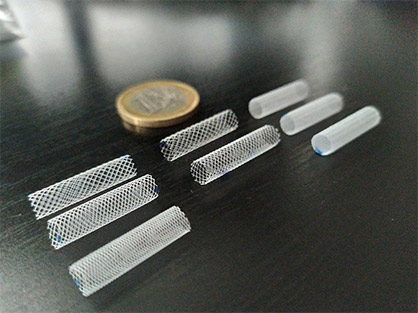
Bioresorbable stent © 2022 ITA


Detailed information on the above-mentioned exhibits can be found here:

https://techtextil.messefrankfurt.com/frankfurt/en/exhibitor-search.detail.html/institut-fuer-textiltechnik-der-rwth-aachen-university-ita.html

Please find these and other exhibits on our stand in hall 12.0 B55.

You will also find information on our stand about the opening of the Recycling Atelier of ITA Augsburg and Hochschule Augsburg University of Applied Science on 20 June 2022 in Augsburg. The Recycling Atelier represents a centre for research and development along the entire textile production chain for textile recycling and thus makes a decisive contribution to the transformation of the linear economy to the circular economy.

A virtual opening will follow at the VDMA stand at Techtextil 2022 in Frankfurt on Tuesday, 21 June 2022 at 14:00. For the virtual opening at Techtextil, please register under WEB-/SPOTLIGHT TALKS at www.industryarena.com/m4t.

We will inform you about our current degree programmes at a second booth in Hall 11.0 A10.

We look forward to your visit!


More News from Institut für Textiltechnik of RWTH Aachen University (ITA)

#Research & Development

Sustainable athletic wear made from bio-based Polyethylene

Conventional sports textiles made from petroleum-based synthetic fibres are to be replaced in the future by sustainable, bio-based, cooling textiles. Polyethylene, previously used mainly in the packaging industry, is thus qualified for use in textiles and, as a bio-based drop-in solution, offers a cost-effective, sustainable alternative for the future.

#Research & Development

India, ITA and innovation – enhanced cooperation in research, implementation and bilateral projects such as hydrogen mobility

The Indian Consul General, Dr Shuchita Kishore, visited the Institut für Textiltechnik (ITA) of RWTH Aachen University on 15 December to inspect the joint project between the ITA, the Indian Institute of Technology (IIT) Bombay and industrial partners from India and Germany and to tour the ITA.

#Research & Development

Small tolerances, big impact and a recyclable alternative to elastane

ITA Master's student Janne Warnecke investigated tension differences over the fabric width in the weaving process and thereby contributed to quality assurance; ITA Bachelor's student Jasmin Roos found a basis for the development of recyclable yarns and textiles. For these developments, they were awarded the Walter Reiners Foundation's Promotion and Sustainability Prizes on 27 November. Peter D. Dornier, Chairman of the Walter Reiners Foundation, presented the awards at the Aachen-Dresden-Denkendorf International Textile Conference (ADD-ITC) in Aachen, Germany.

#Research & Development

IRG Polymer Recycling wraps up productive 2025 project cycle

The Industry Research Group (IRG) Polymer Recycling has completed another successful project year. Last week, partners from across the textile value chain met at the Institute for Textile Technology (ITA) at RWTH Aachen University for the full-term project meeting.

More News on Techtextil 2022

Latest News

#Fabrics

MUNICH FABRIC START: Between Attitude and Sensuality

The future begins where we reimagine it. After seasons of restraint, Spring.Summer 27 marks a conscious counter-trend: optimism, sensuality, and creative freedom are replacing pragmatism and neutrality. Physical presence and individuality are regaining importance – as a response to uncertainty, exhaustion, and algorithmic predictability. The overarching theme of PLEASURE stands for fashion as an emotional space, as an expression of attitude and cultural reflection. Colours, surfaces, and materials become vehicles for self-confidence and joie de vivre.

#Denim

organIQ seek: smart alternative to potassium permanganate

CHT Group announces new technical findings within its organIQ seek platform that significantly advance the transition toward permanganate-free denim bleaching. Through extensive industrial testing and application research, CHT confirms that organIQ seek can now be used with remarkable effectiveness as a substitute for potassium permanganate in spray bleach, while remaining aligned with sustainability expectations and cost realities in the European market. At the COLOMBIATEX in Medellín as well as at the Exintex in Puebla and the Kingpins Show in Amsterdam the CHT Group will present organIQ seek as an alternative to potassium permanganate.

#Functional Fabrics

PERFORMANCE DAYS: Focus topic shifts to the beginning of the value chain

Following the last Focus Topic in October 2025, which placed Textile-to-Textile Recycling at its core, PERFORMANCE DAYS continues to drive the conversation around circularity – this time with an expanded and more upstream perspective. The upcoming Focus Topic, “Textile to Textile: The Role of Collectors and Sorters,” presented during the spring edition on March 18–19, will spotlight one of the most essential yet often overlooked components of a functioning circular textile system: the efficient collection and sorting of post-consumer textiles.

#Knitting & Hosiery

Proven performance, optimised costs – the new RE 6 EL

Nowadays textile companies increasingly need to produce small production runs and respond to market changes with instantaneous pattern changes in order to operate profitably – meaning they require machines that offer maximum flexibility, reliability and cost efficiency. KARL MAYER understands the challenges of the market and is launching its new RE 6 EL. The Raschel machine offers the core strengths of the classic RSE 6 EL and essentially the same performance parameters, but has been further cost-optimised largely due to local production advantages. This makes the newcomer an efficiency champion in production, especially when it comes to frequent pattern changes.

TOP