[pageLogInLogOut]

#Techtextil 2019

ITA at Techtextil 2019
(c) 2019 ITA
The Institut für Textiltechnik of RWTH Aachen University, short ITA, will present its expertise in the field of ambient lighting at Techtextil 2019 on the Elmatex stand in Hall 3.0, Stand D05, with the demonstrator light textiles that shows a new type of energy storage system for furniture applications (model vehicle for fuel cell drive), with efficient textile products (e.g. sports bra) and with new materials for aerospace applications (MoonFibre)

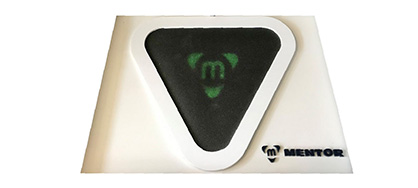
Ambient Lighting - Demonstrator Light Textiles

With the Demonstrator Light Textiles, ITA shows an illuminated textile by using light-guiding fibres and polymer optical fibres (POF). This is ideally suited to design illuminated surfaces in the interior, e.g. in the automotive or home sector. This textile solution offers a flexible, drapable surface with a soft, pleasant feel in a limited space. ITA provides the fibre and process development. The key partner is Mentor GmbH & Co. Präzisions-Bauteile KG in Erkrath, Germany.

Background:

The polymer optical fiber (POF) demonstrator was developed as part of an ongoing cooperation between Mentor and the ITA. This is a research & development model which is linked to a doctorate at ITA and at the cooperation partner. This model offers ITA's industrial partners the opportunity to conduct targeted research in a specific field and to train qualified employees. Further information is available from jan.kallweit@ita.rwth-aachen.de.
Ambient Lighting - Demonstrator Light Textiles (c) 2019 ITA


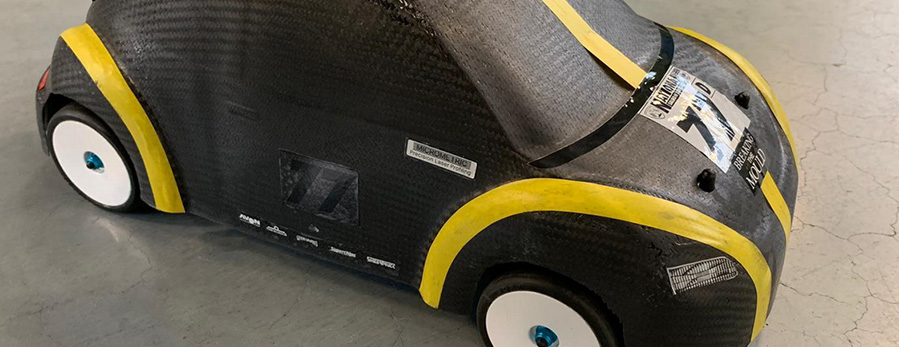
Novel Energy Storage for Mobility Applications - Remote-Controlled Model Vehicle with Fuel Cell Drive

The remote-controlled model vehicle with fuel cell drive (RC-Car) is an emission-free model car with lightweight tanks and body made of fibre composite plastics (FRP). It consists of kits from Tamiya-Carson Modellbau GmbH & Co. KG and Horizon Fuel Cell Technologies Pte. Ltd.

The pressure vessels (Composite Pressure Vessel-CPV) of the RC-Car were manufactured by ITA with a new winding technology for pressure vessels with carbon fibres on a machine from Murata, Japan. The CPVs are produced by multifilament winding, which promises a higher productivity than conventional wet winding. They CPV can withstand high pressures, e.g. 700 bar, and offers significant weight savings compared to batteries. The CPVs enable emission-free, long-range, hydrogen-based propulsion that can be refuelled quickly and represents ITA's contribution to mobility and energy revolution. The CPVs contribute to a sustainable energy balance, since, for example, rare earths are not required as in battery production.

The target group for the CPVs is the transport sector. In the automotive industry, CPVs provide the basis for a lighter drive concept, as they can be charged more quickly and offer greater lightweight potential than batteries. For the aerospace sector, the new winding technology represents an alternative, faster manufacturing process to wet-willing pressure vessels. Further information is available from tim.moelling@ita.rwth-aachen.de.
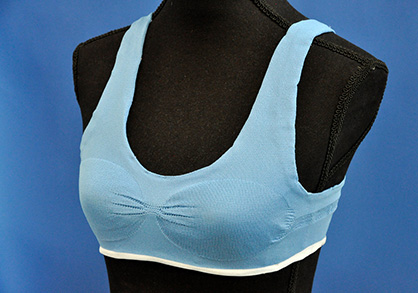
Efficient Textile Production - Sports Bra (c) 2019 ITA


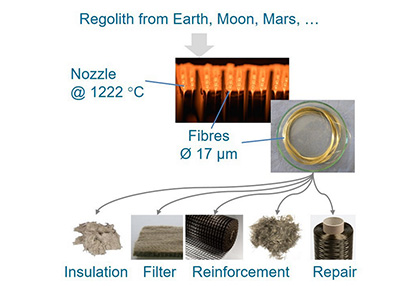
Aerospace materials – MoonFibre - From Regolith to Textiles (c) 2019 ITA


 Efficient Textile Production - Sports Bra 

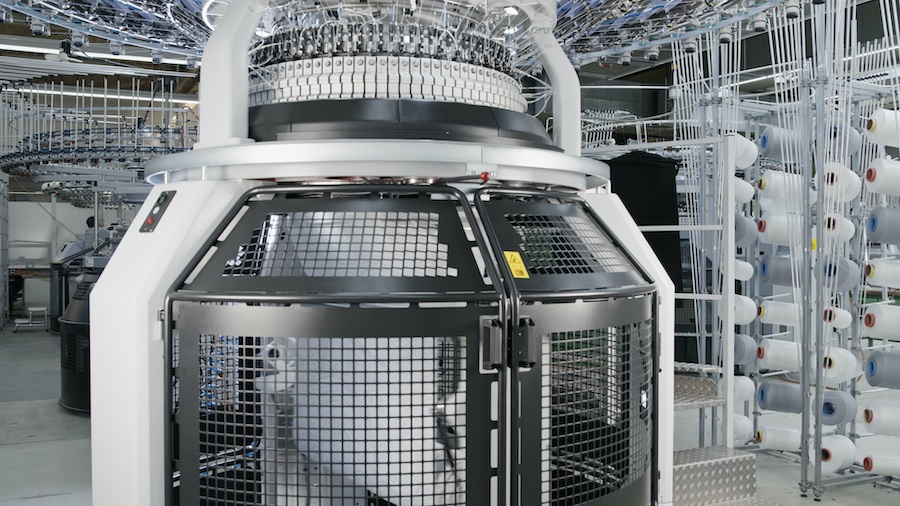
With ist new sports bra, ITA shows a newly developed innovative process for the highly productive manufacturing of three-dimensional knitted fabrics on large circular knitting machines without additional separating and joining steps. Large circular knitting is significantly faster and more efficient than flat knitting which was previously used.

The garments (here a sports bra) can be tailored seamlessly and individually to size in a single step and are thus an example of a store-factory approach, i.e. customer-specific just-in-time production in a specialist shop on site. This new process is patented and forms the basis for licensing this technology to new business fields and other industries. Further information is available from christoph.peiner@ita.rwth-aachen.de.

Aerospace materials - MoonFibre

Many nations are toying with the idea of setting up a lunar station and to use the moon as a source of raw materials, a research site, a stepping stone into the solar system and a tourist destination. But the transport of the material for a lunar station is very costly: to bring material from the earth to the moon costs up to 1 million € per kilogram. For a lunar station, at least 450 tons are needed.

ITA's solution: produce directly on the moon! A lot of moon rock is very similar to basalt. ITA has already developed a production process to spin mineral fibres based on lunar rock. Within MoonFibre, ITA uses this experience for the production of fibres for the reinforcement of three-dimensional structures on the basis of moon rock and produces the fibres for the construction of the moon station directly on site. ITA's approach is supported by the German Aerospace Center (DLR). In addition, the project is funded by Crowd-Funding. Further information is available from alexander.lueking@ita.rwth-aachen.de.

We look forward to meeting you at the joint stand of Elmatex in Hall 3.0, booth D05!


More News from Institut für Textiltechnik of RWTH Aachen University (ITA)

#Research & Development

TCLF: Resilient value chains in times of crises

The textiles, clothing, leather and footwear (TCLF) industry was at the centre of the webinar “Resilient value chains in times of crises”, which took place on 28 April 2026. Global supply chains continue to face increasing pressure, raw material dependencies are growing and economic uncertainties are affecting the entire sector.

#Research & Development

Elastic yarns to become more recyclable and environmentally friendly in future

On 29 April 2026, ITA student Tobias Dickmeiß was awarded a sponsorship prize by the Wilhelm Lorch-Stiftung for his innovative approach, to replacing conventional elastane with elastic yarns made from thermoplastic copolyester elastomers (TPC). Thanks to their thermoplastic nature and compatibility with typical polyesters used in the textile industry, elastic TPC yarns offer improved recyclability. Furthermore, the use of the melt-spinning process in yarn production eliminates the need for solvents that are harmful to the environment and human health.

#Research & Development

Walter Reiners Foundation Prize awarded to three ITA graduates

Sabina Dann, Lukas Balon and Annegret Storm from the Institut für Textiltechnik (ITA) of RWTH Aachen University were awarded the Walter Reiners Foundation Prize by the German Engineering Federation (VDMA) for their master’s and bachelor’s theses. Peter Dornier, Chairman of the Walter Reiners Foundation, presented the awards during Techtextil at the VDMA stand in Frankfurt am Main, Germany.

#Research & Development

ITA spin-off Solid Air (SA) Dynamics reaches the semi-finals of the Rice Business Plan Competition

The ITA spin-off SA Dynamics has been nominated for the semi-finals of this year’s Rice Business Plan Competition (RBPC), one of the world’s most prestigious start-up competitions, held at Rice University in Houston, Texas.

More News on Techtextil 2019

Latest News

#ITM 2026

SHIMA SEIKI to show complete knitting and cutting workflow at ITM 2026

Leading computerized flat knitting technology provider SHIMA SEIKI MFG., LTD. of Wakayama, Japan, together with its Turkish representative TETAS IC VE DIS TICARET A.S., will participate in the ITM 2026 International Textile Machinery Exhibition in Istanbul, Türkiye this month with a full product lineup. In addition to flat knitting machines and design software, visitors will also have the opportunity to experience the full range of SHIMA SEIKI textile machinery with its automatic cutting machine exhibit, all geared toward the fashion apparel market as well as non-apparel related businesses.

#Raw Materials

Global Cotton area and production are projected to decline in the 2026/27 Season

The June 2026 issue of Cotton This Month projects a modest contraction in global cotton area, production, and trade during the 2026/27 season, reflecting weaker demand sentiment, rising production costs, and shifting environmental factors across major producing nations.

#Natural Fibers

European Flax-Linen & Hemp step into advanced manufacturing: Enabling filament winding, 3D printing and high-performance composite processes

The Alliance for European Flax-Linen & Hemp announces a new wave of technological advancements demonstrating how flax-linen and hemp fibres are now being successfully integrated into advanced composite manufacturing processes. These developments mark a transition beyond traditional hand lay-up techniques, positioning natural fibres as credible, scalable solutions for high-performance industrial applications.

#ITM 2026

SETEX turns dyeing and finishing data into daily production control

At ITM 2026, SETEX will show how textile mills can use machine, recipe, quality and energy data for more reliable daily production decisions — not as another reporting layer, but as part of the running dyeing and finishing process. With OrgaTEX X3 MES, E390x/C390x controllers, CamCOUNT and FabricInspector Portable, SETEX connects planning, machine execution and fabric-related quality insight within existing mill structures.

TOP